NR 601 Ch 1 Study Guide: Aging Physiological Changes NR 601 Ch 1 Study Guide: Aging Physiological Changes

Study guide

NR 601 Chapter 1 Study Guide: Changes With Aging Notes, Discussions & Lab Value Interpretation For Nursing Students


Master NR 601 Changes With Aging. Covers Physiological Shifts, Lab Value Interpretation In Older Adults, And Clinical Decision-making.
Description

Develop a sophisticated understanding of geriatric nursing by mastering the distinct physiological adaptations that accompany advanced age. This resource provides a structured framework for differentiating benign age-related changes from pathological conditions, ensuring accurate clinical diagnosis without the bias of assuming decline is inevitable. It emphasises critical skills in interpreting laboratory values within the context of reduced homeostatic mechanisms and biochemical individuality, thereby preventing common errors such as underdiagnosis or overtreatment. By integrating these concepts into your study routine, you will enhance your ability to manage chronic illness with greater precision and empathy.
PDF Sample
1 / 3
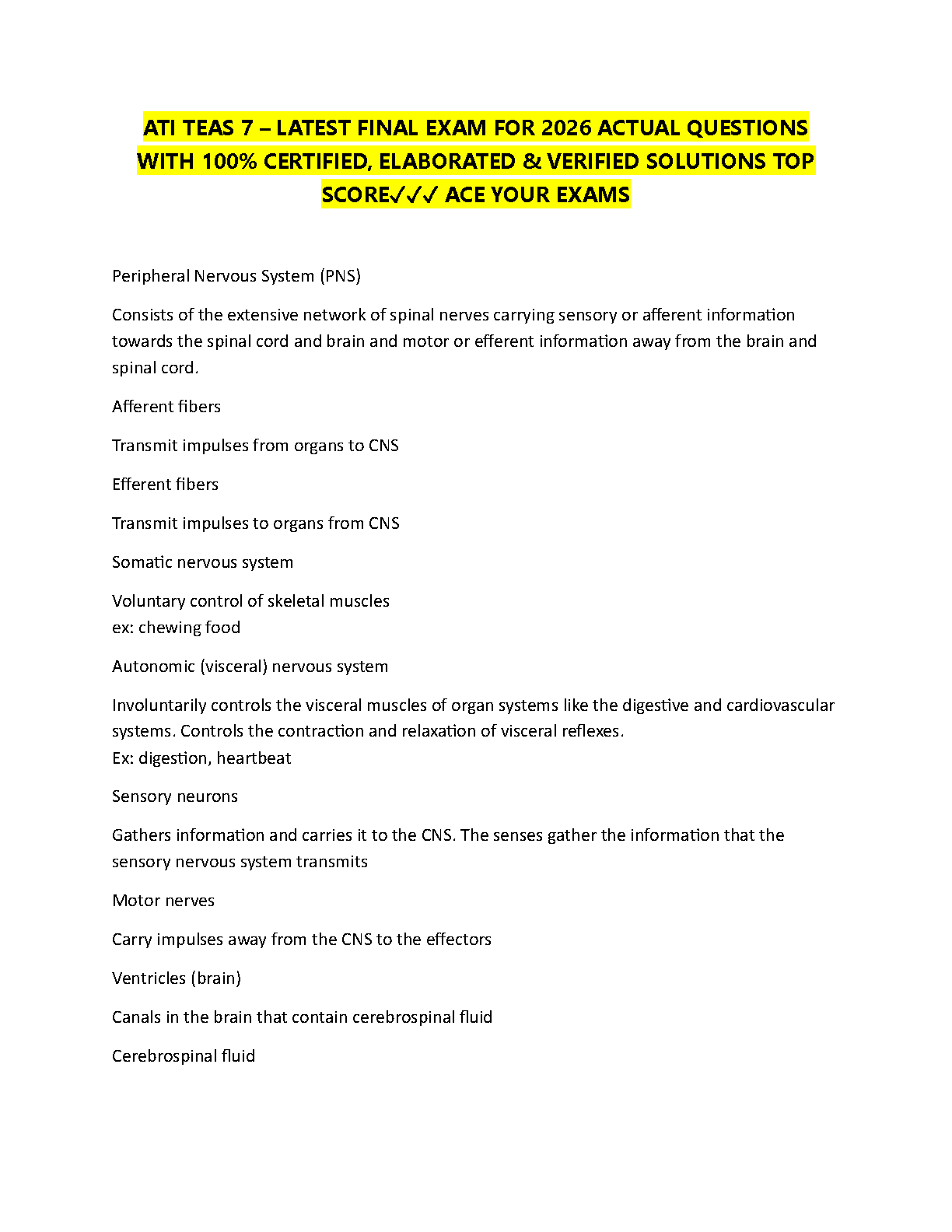
NR 601 Ch 1 Study Guide: Aging Physiological Changes IMG-1
NR 601 Ch 1 Study Guide: Aging Physiological Changes IMG-2
NR 601 Ch 1 Study Guide: Aging Physiological Changes IMG-3
Who is this Document for ?

This material is designed for undergraduate nursing students enrolled in NR 601 or equivalent geriatric health courses. It serves as a concise revision aid for candidates preparing for exams that test their knowledge of age-related physiological changes and clinical assessment skills. Tutors may also find it useful for reinforcing the distinction between normal aging processes and disease states during practical teaching sessions.
What you will learn ?
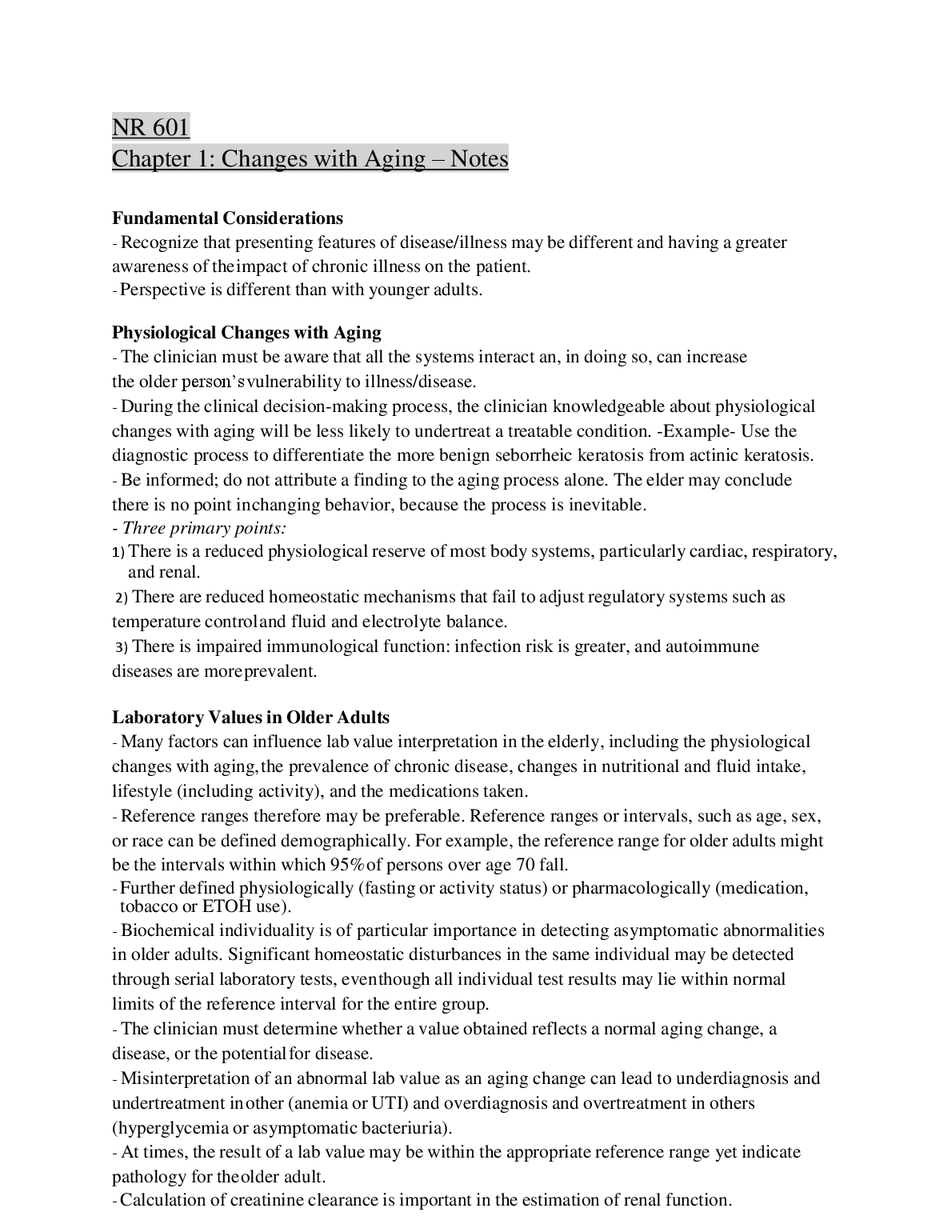
Differentiate between benign seborrheic keratoses and actinic keratoses to avoid misattributing diagnostic findings solely to the aging process.
Apply knowledge of reduced physiological reserve in cardiac, respiratory, and renal systems to prevent undertreatment of treatable conditions in older patients.
Interpret laboratory values by defining age-specific reference ranges (e.g., for adults over 70) rather than relying on standard population averages that may obscure pathology.
Identify biochemical individuality through serial testing to detect significant homeostatic disturbances even when single test results fall within normal group limits.
Recognise how impaired immunological function increases infection risk and alters the prevalence of autoimmune diseases, influencing clinical vigilance in geriatric care.
Calculate creatinine clearance accurately to estimate renal function, accounting for age-related changes that standard formulas might overlook.
You may also be interested in :
Recommendations for you
NR 601 Week 6 Quiz Review: Diabetes Screening, ADA Recommendations & Diagnostic Tests Study Guide
NR 601 Week 6 Quiz Review: Diabetes Screening, Ada Recommend...

Master NR 601 Diabetes Quiz Content With Detailed Coverage Of Ada Screening Recommend...

$16
NR 601 Comprehensive Final Exam Study Guide and Practice Questions with Solutions A+ Rated
NR 601 Comprehensive Final Exam Study Guide And Practice Que...

Master NR 601 Nursing Concepts Including Mini-cog, Delirium Causes, DM Criteria, And...

$16
NR 601 Comprehensive Final Exam Study Guide: Geriatric Nursing Practice and Clinical Assessments
NR 601 Comprehensive Final Exam Study Guide: Geriatric Nursi...

Master NR 601 Final Exam Concepts With Verified Study Guides Covering Mini-cog, Delir...

$16
NR 601 Week 3 TD 2 Study Guide for 2023/2024: Mental Health Nursing Case Analysis and Assessment Strategies
NR 601 Week 3 Td 2 Study Guide For 2023/2024: Mental Health...

Master NR 601 Mental Health Nursing Concepts With This Week 3 Study Guide, Featuring...

$16