NR 601 Week 1 Midterm Study Guide - Geriatric Pharma NR 601 Week 1 Midterm Study Guide - Geriatric Pharma

Study guide

NR 601 Week 1 Midterm Study Guide: Beers Criteria & Geriatric Pharmacology Review


Review Ags Beers Criteria And Pims For NR 601. Optimised Study Guide For Midterm Exam Prep In Geriatrics.
Description

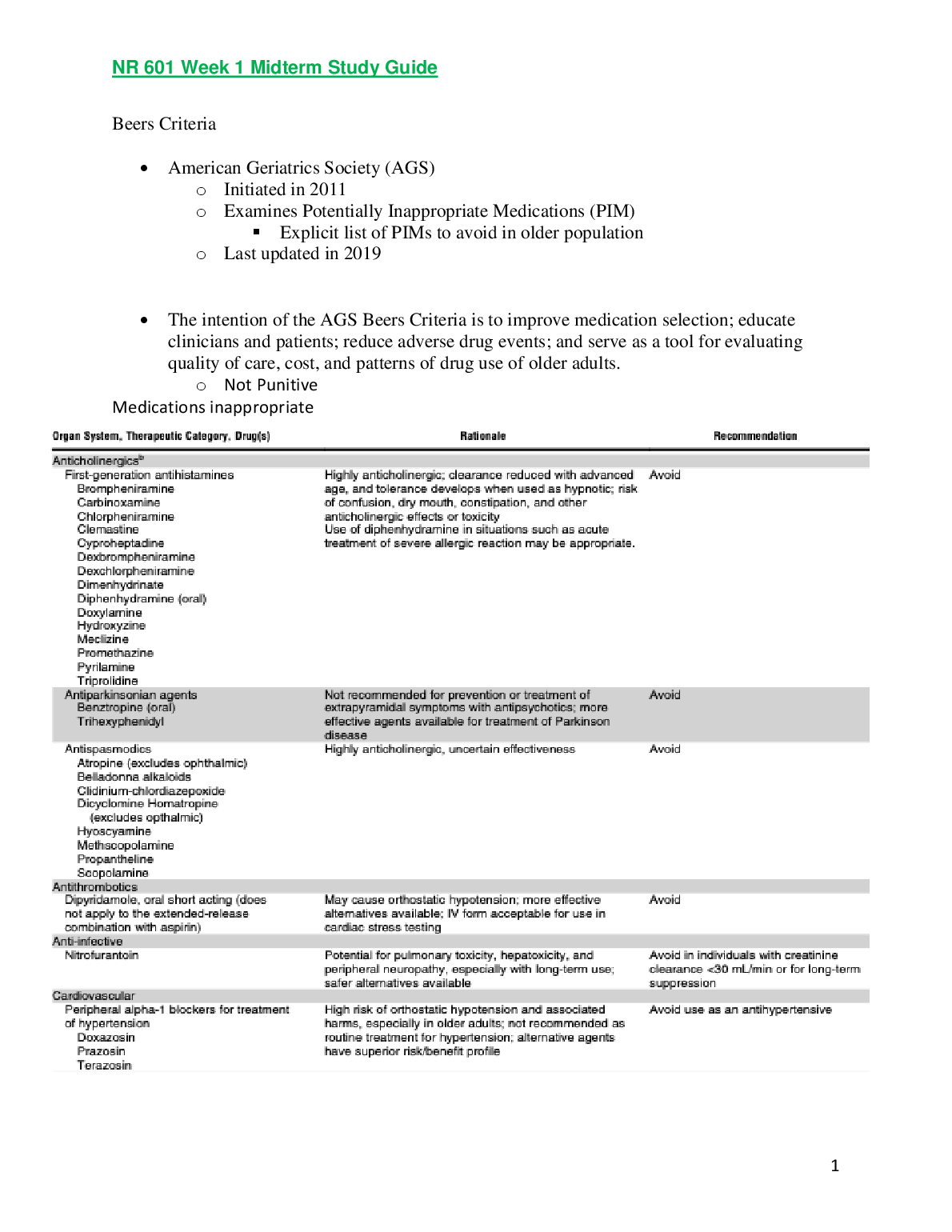
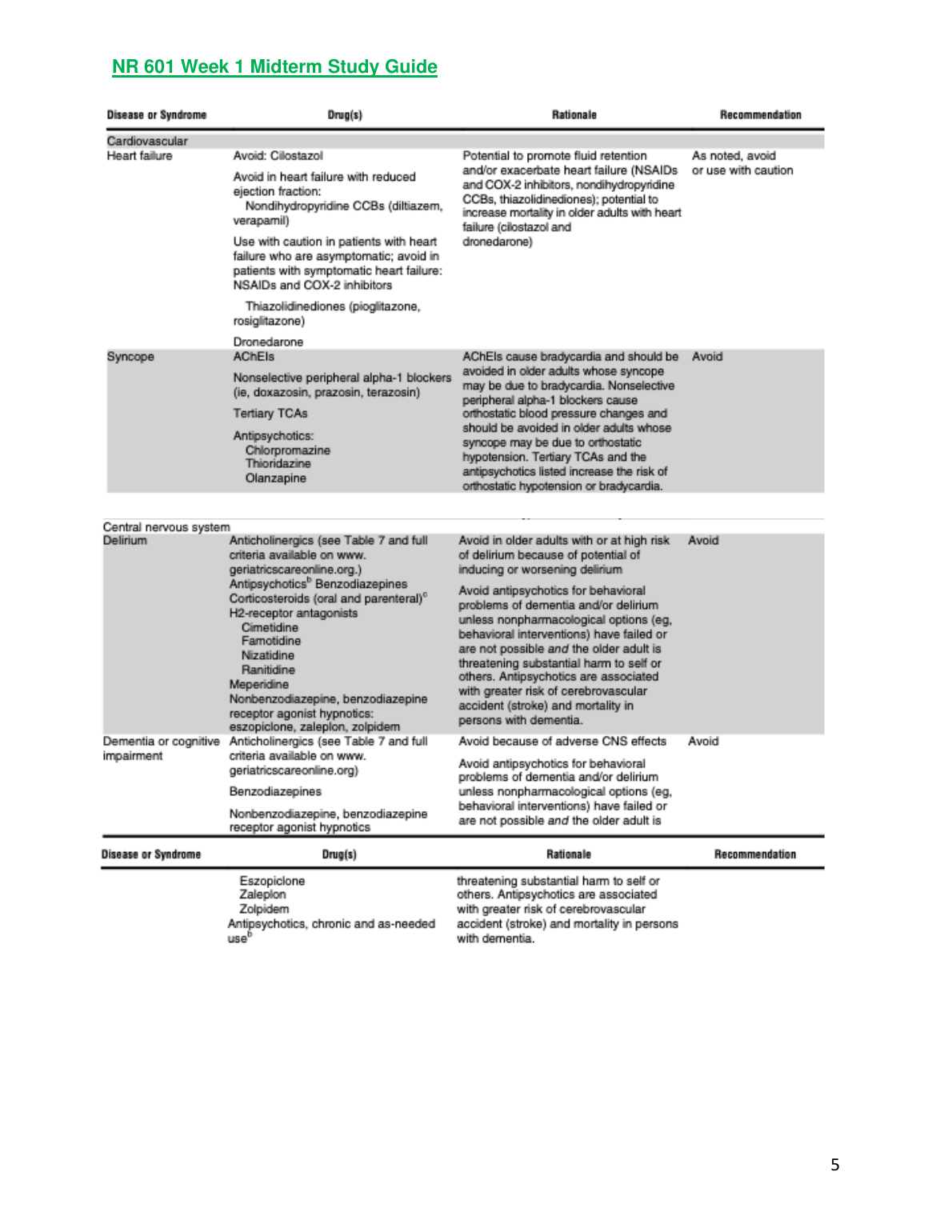
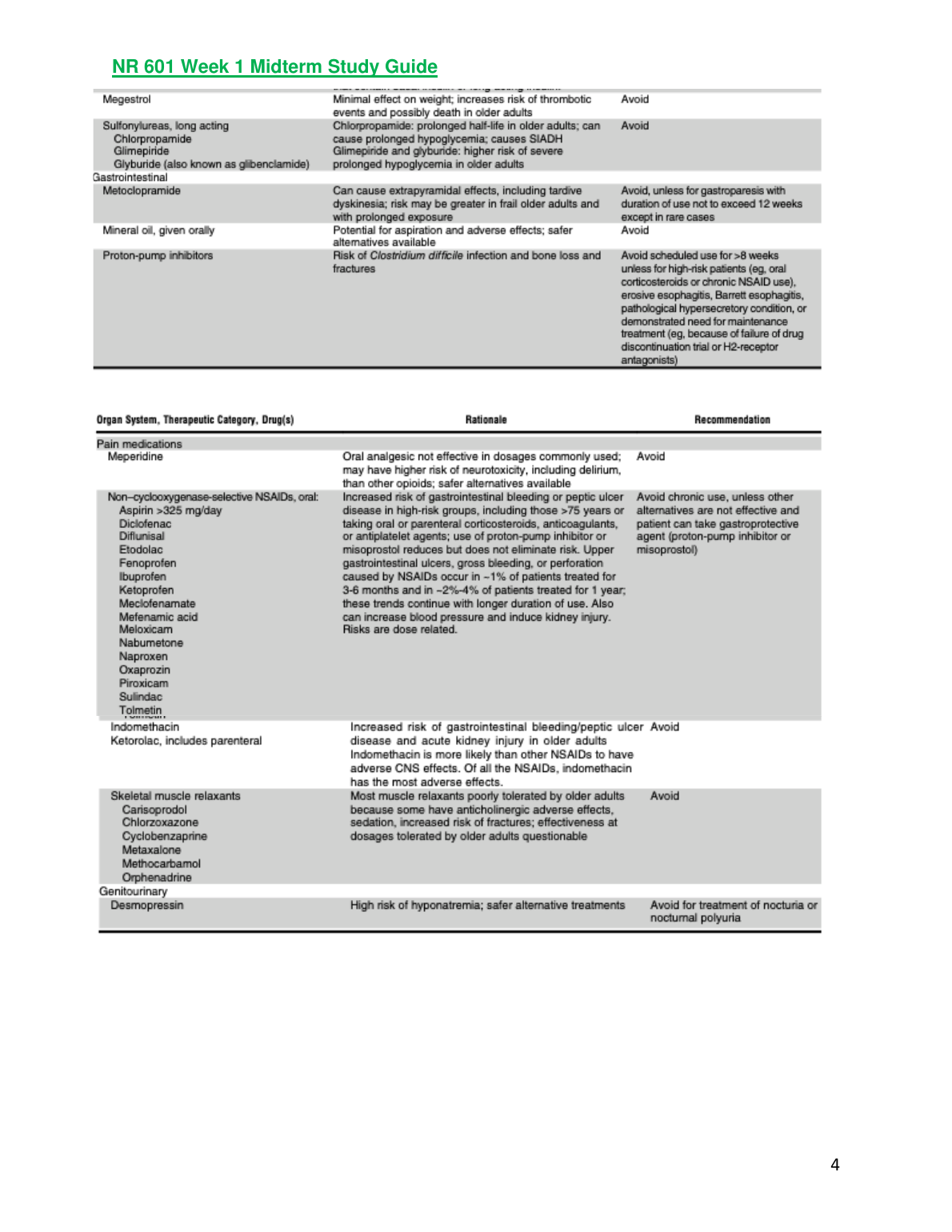
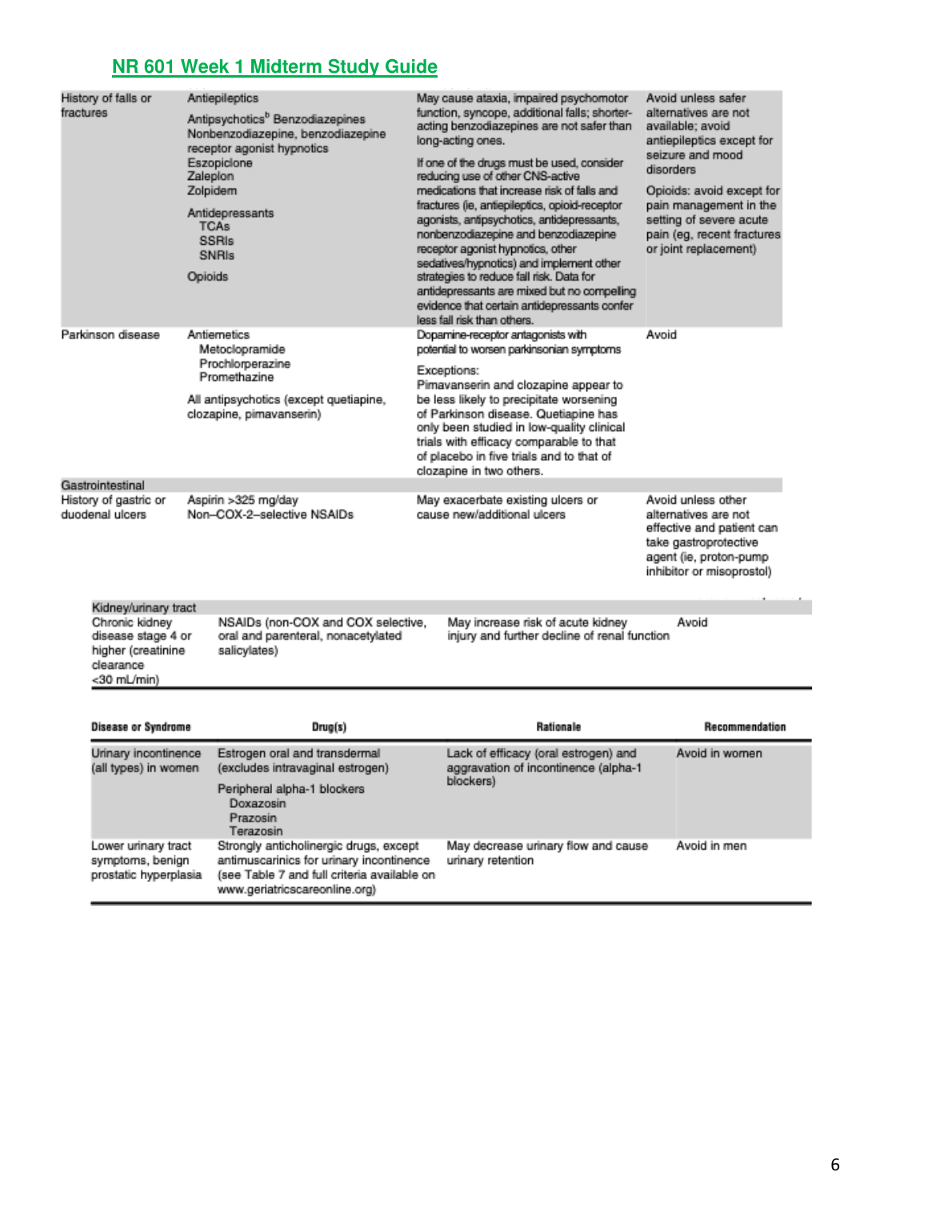
Accelerate your preparation for the NR 601 Week 1 Midterm with this targeted review of geriatric pharmacology essentials. This resource provides a streamlined approach to mastering the American Geriatrics Society (AGS) Beers Criteria, focusing specifically on identifying Potentially Inappropriate Medications (PIMs) in older populations. By highlighting key updates and clinical intentions, it enhances your ability to make safe medication selections while reducing adverse drug events. Ideal for candidates seeking clarity on quality of care metrics and cost-effective prescribing patterns.
PDF Sample
1 / 3
NR 601 Week 1 Midterm Study Guide - Geriatric Pharma IMG-1
NR 601 Week 1 Midterm Study Guide - Geriatric Pharma IMG-2
NR 601 Week 1 Midterm Study Guide - Geriatric Pharma IMG-3
Who is this Document for ?

This document is designed for nursing students enrolled in NR 601 who are preparing for their Week 1 Midterm examination. It serves as a concise revision aid for those requiring specific guidance on geriatric pharmacology and the Beers Criteria. Tutors and educators may also use it to verify key learning outcomes regarding Potentially Inappropriate Medications (PIMs).
What you will learn ?
Identify the core objectives of the AGS Beers Criteria, including improving medication selection and educating clinicians on safe prescribing for older adults.
Understand the historical context of the criteria, noting its initiation in 2011 and significant updates through 2019 to reflect current clinical standards.
Recognise Potentially Inappropriate Medications (PIMs) from the explicit lists provided, enabling you to avoid common prescribing errors in geriatric care.
Apply knowledge of how PIM avoidance reduces adverse drug events, directly linking pharmacological choices to improved patient safety outcomes.
Evaluate quality of care indicators by understanding how medication patterns and costs are assessed within older adult populations using the Beers Criteria framework.
You may also be interested in :
Recommendations for you
WGU Healthcare Ecosystems Verified Study Guide and Comprehensive Exam Prep Questions for Academic Year 2026-2027
WGU Healthcare Ecosystems Verified Study Guide And Comprehen...

Master WGU Healthcare Ecosystems With Verified Questions, Hhs Regulations, NCLEX Stan...

$16
WGU HESI Nutrition D440 Study Guide for the 2026 Academic Year with Verified Questions and Answers
WGU HESI Nutrition D440 Study Guide For The 2026 Academic Ye...

Master WGU HESI Nutrition D440 Concepts Including Bmi, Fluid Conversions, And Dietary...

$16
WGU D226 NQM1 Task 2 and C802 TXM2 Task 2 E-Portfolio Solutions for the 2026 Academic Year Nursing Capstone
WGU D226 Nqm1 Task 2 And C802 Txm2 Task 2 E-portfolio Soluti...

Complete WGU D226 Nqm1 And C802 Txm2 Task 2 E-portfolio Solutions Aligned With Qsen C...

$16
NR 601 Week 6 Quiz Review: Diabetes Screening, ADA Recommendations & Diagnostic Tests Study Guide
NR 601 Week 6 Quiz Review: Diabetes Screening, Ada Recommend...

Master NR 601 Diabetes Quiz Content With Detailed Coverage Of Ada Screening Recommend...

$16