
NR 601 PFT Interpretation Assignment Solutions

Study guide

NR 601 Week 1 Pulmonary Function Test Interpretation Assignment Solution Guide For Nursing Students


Master NR 601 Pulmonary Function Test Interpretation. Learn Fev1/fvc Criteria, Gold Stages, And Reversibility Tests.
Description

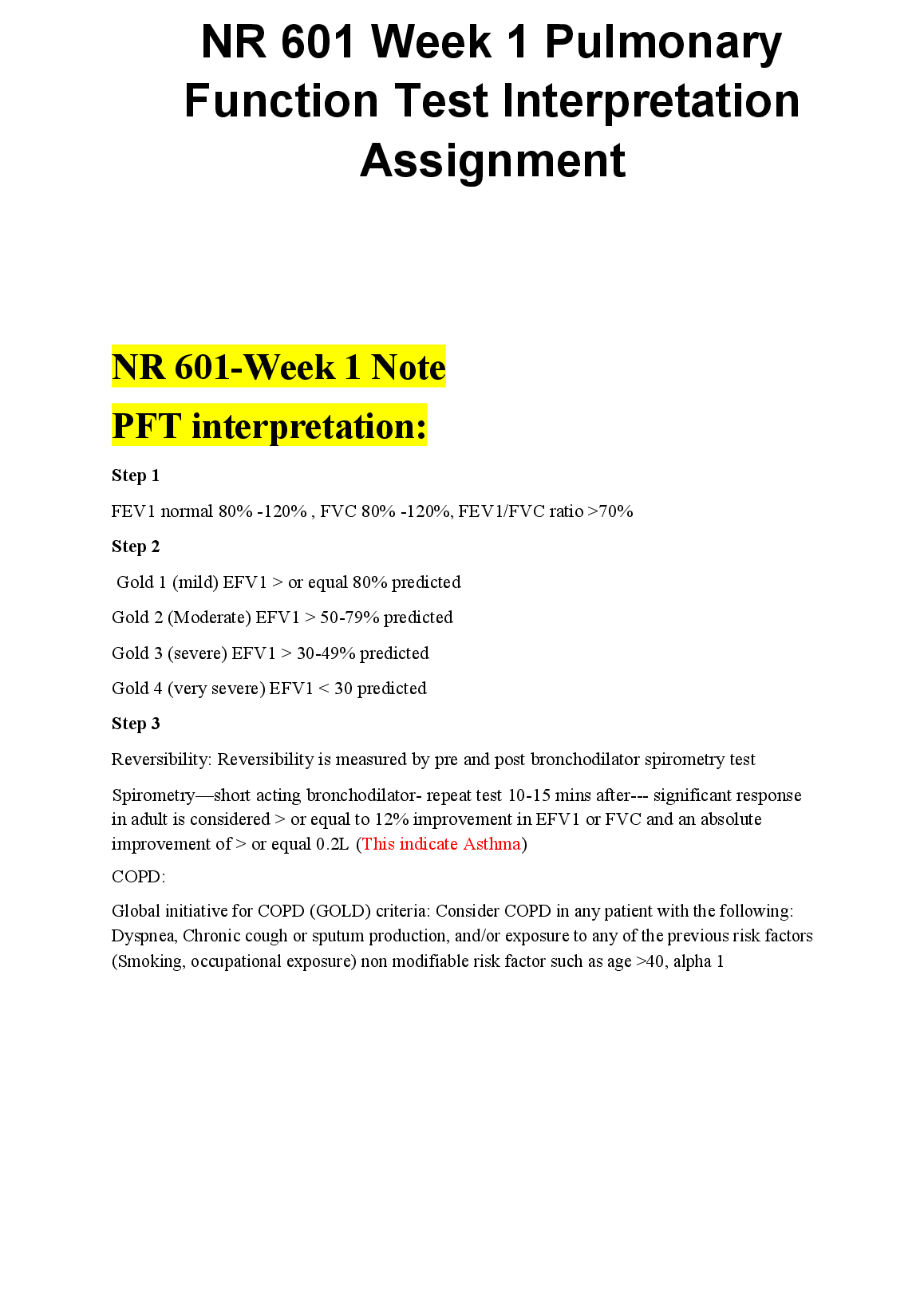
Develop a robust clinical competency in respiratory assessment by mastering the systematic interpretation of spirometry data for nursing practice. This resource provides a structured framework for evaluating FEV1, FVC, and their ratios to accurately identify obstructive versus restrictive patterns. It equips learners with precise criteria for categorising Chronic Obstructive Pulmonary Disease severity using GOLD standards and assessing bronchodilator reversibility to distinguish asthma from other conditions. By applying these specific thresholds and calculation methods, students can enhance their diagnostic reasoning and ensure accurate patient management in pulmonary contexts.
PDF Sample
1 / 1
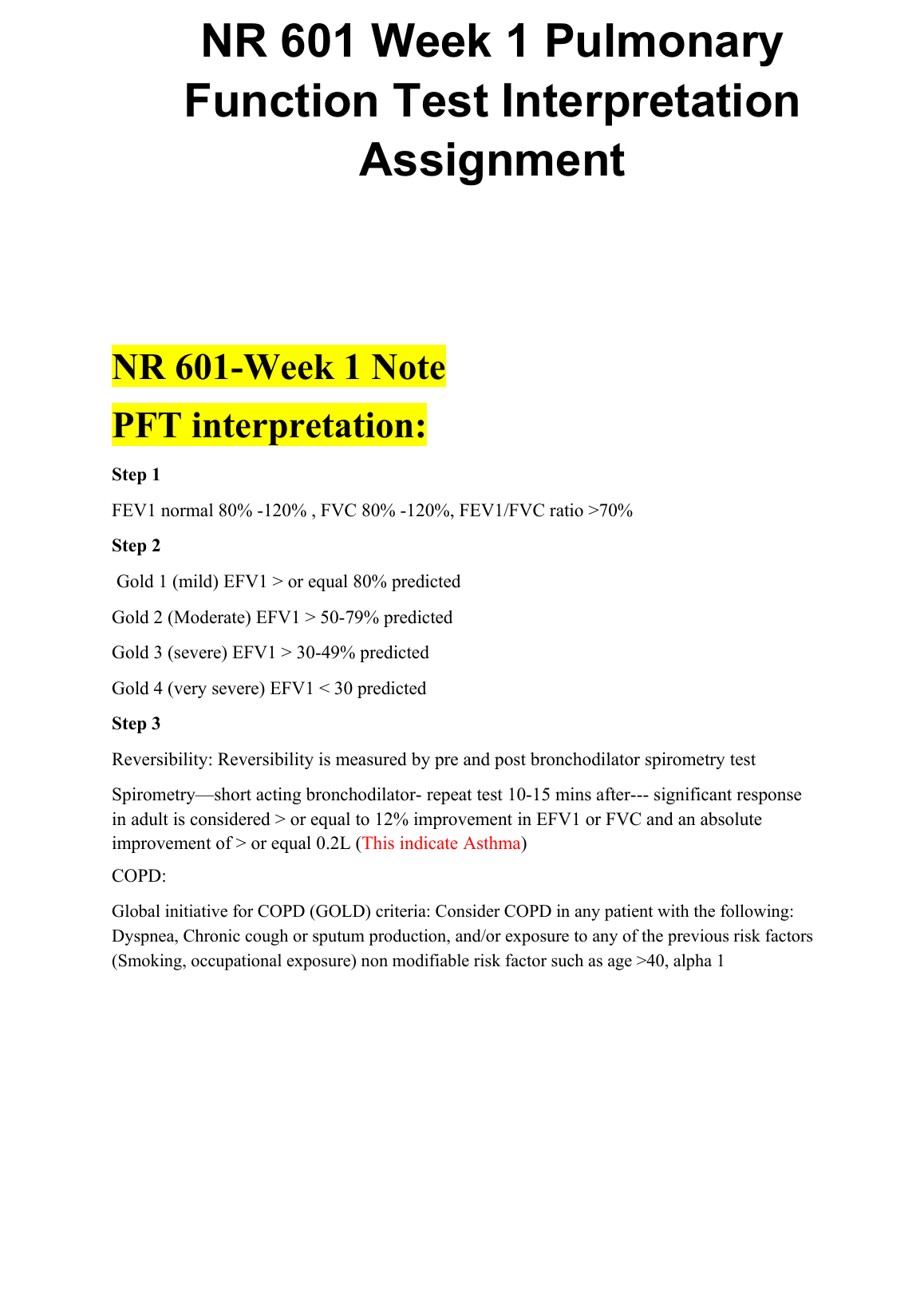
NR 601 PFT Interpretation Assignment Solutions IMG-1
Who is this Document for ?

This material is designed for undergraduate nursing students enrolled in the NR 601 course who are required to interpret pulmonary function tests. It serves as a concise reference tool for those preparing for week one assignments and clinical examinations involving respiratory system assessment. Tutoring professionals may also utilise this structured breakdown to clarify complex spirometry metrics and grading criteria during study sessions.
What you will learn ?
⬤Apply the standard diagnostic thresholds for normal pulmonary function, specifically identifying FEV1 between 80-120% of predicted, FVC between 80-120%, and an FEV1/FVC ratio greater than 70%.
⬤Differentiate between obstructive airway diseases by calculating the severity of COPD using GOLD classification stages from mild (FEV1 >= 80%) to very severe (FEV1 < 30%).
⬤Conduct reversibility testing protocols involving pre- and post-bronchodilator spirometry, ensuring correct timing of test repetition 10-15 minutes after short-acting bronchodilator administration.
⬤Identify asthma diagnoses based on specific response criteria, recognizing a significant improvement as an increase in FEV1 or FVC of at least 12% and an absolute gain of at least 0.2L.
⬤Interpret spirometric data to distinguish between fixed obstruction patterns indicative of severe COPD and variable obstruction suggestive of reactive airway disease like asthma.
You may also be interested in :
Recommendations for you
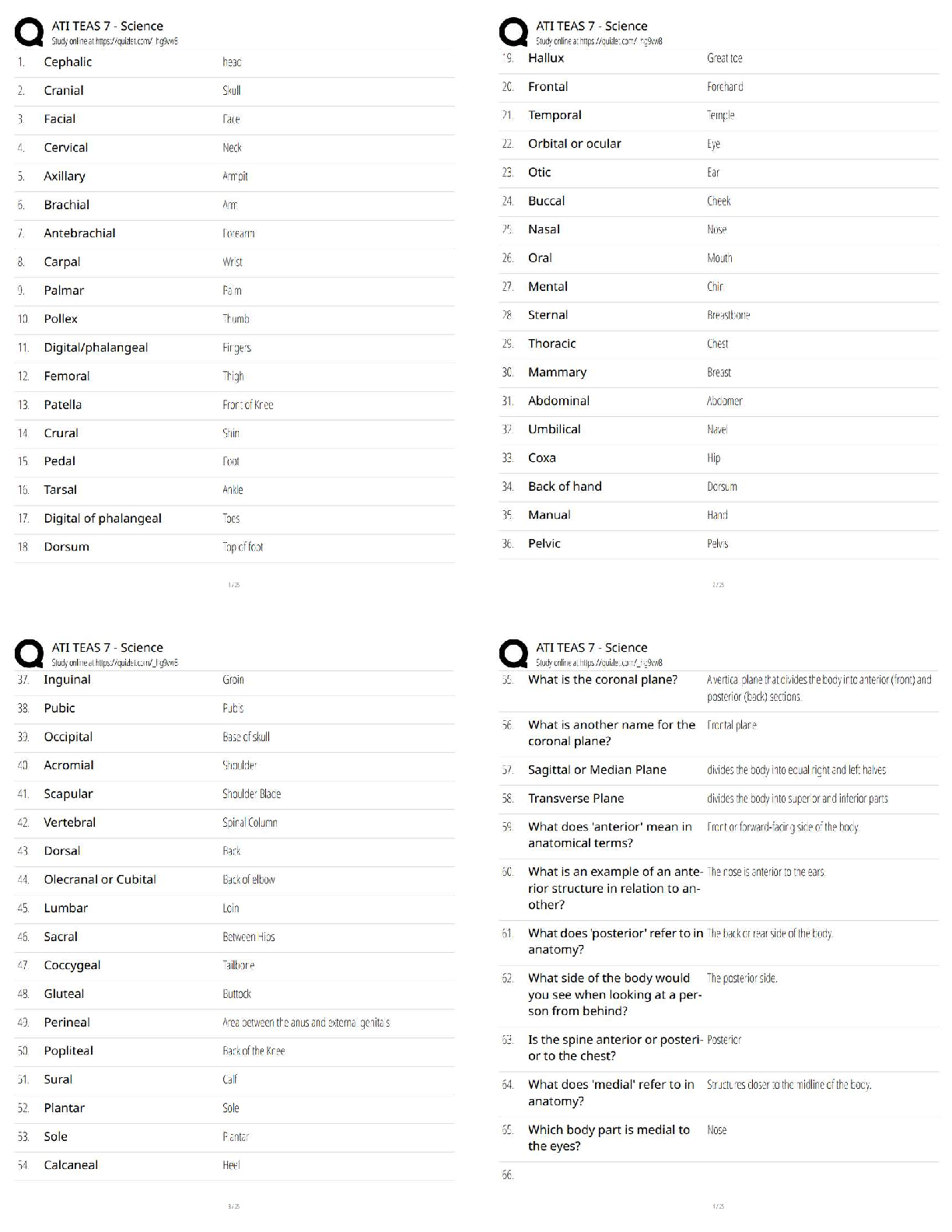
ATI TEAS 7 Science Exam Prep: Anatomy & Physiology Study Guide for Nursing Entrance Success in 2026/2027
ATI TEAS 7 Science Exam Prep: Anatomy & Physiology Study Gui...

Master TEAS 7 Anatomy And Physiology Terms, Planes And Directional Concepts With This...
$16
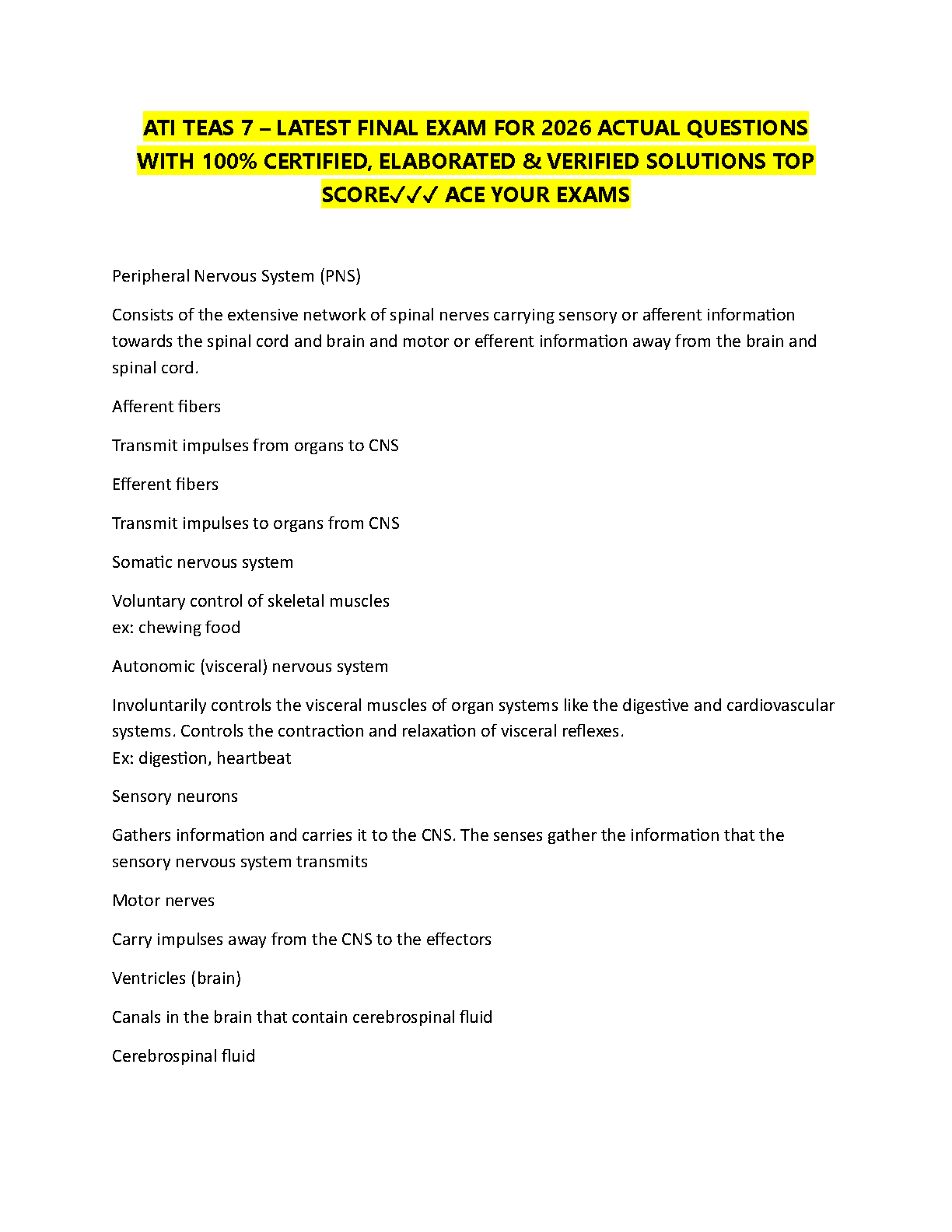
ATI TEAS 7 Final Exam Study Guide 2025/2026 Verified Questions and Elaborated Solutions for Nursing School Success
ATI TEAS 7 Final Exam Study Guide 2025/2026 Verified Questio...

Master ATI TEAS 7 Concepts With Verified Questions And Detailed Solutions. Pass On Fi...
$16
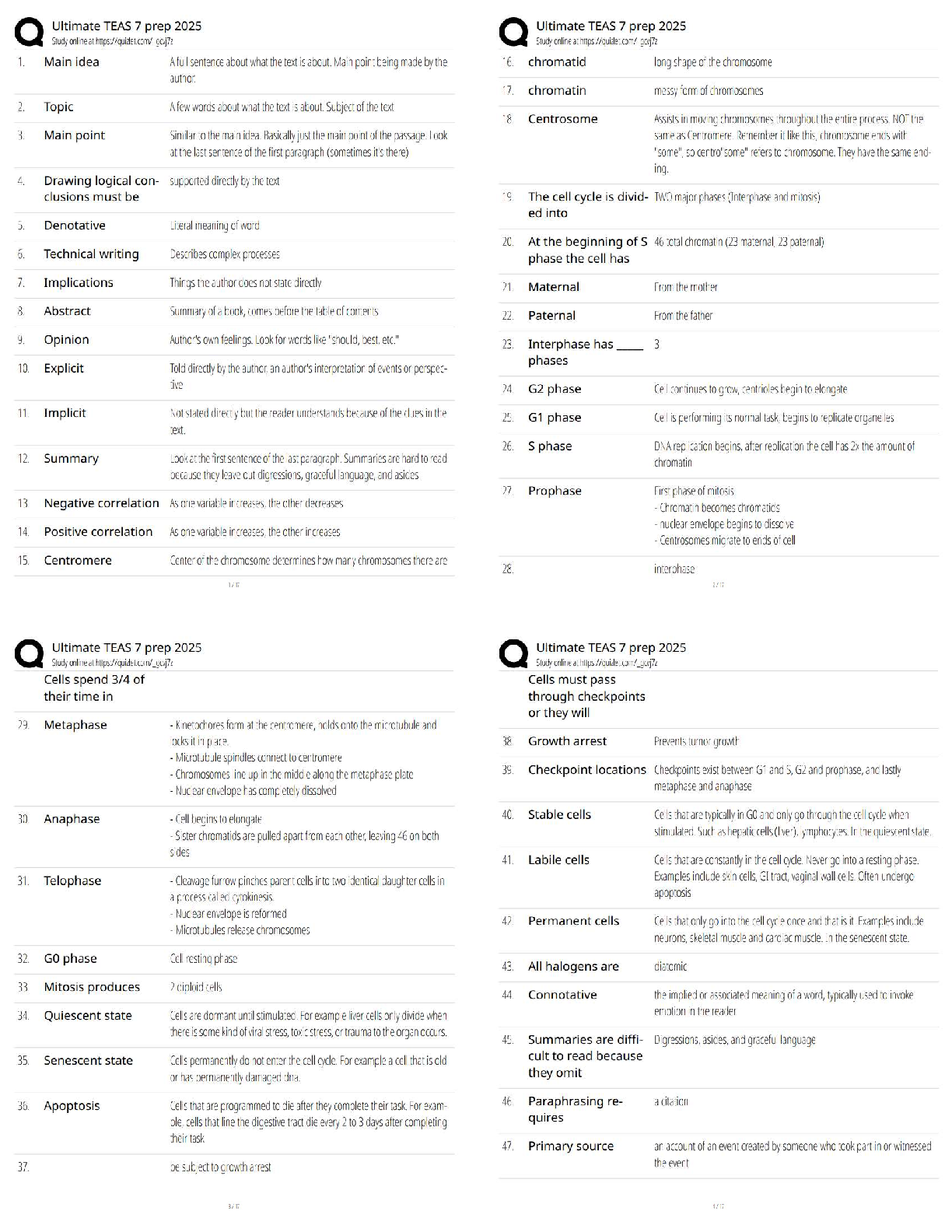
ATI TEAS 7 Ultimate Study Guide 2026/2027: Master Reading, Science & Cell Cycle Concepts for First-Time Success
ATI TEAS 7 Ultimate Study Guide 2026/2027: Master Reading, S...

Ace The ATI TEAS 7 In 2026. Condensed Study Guide Covering Reading, Science And Cell...
$16
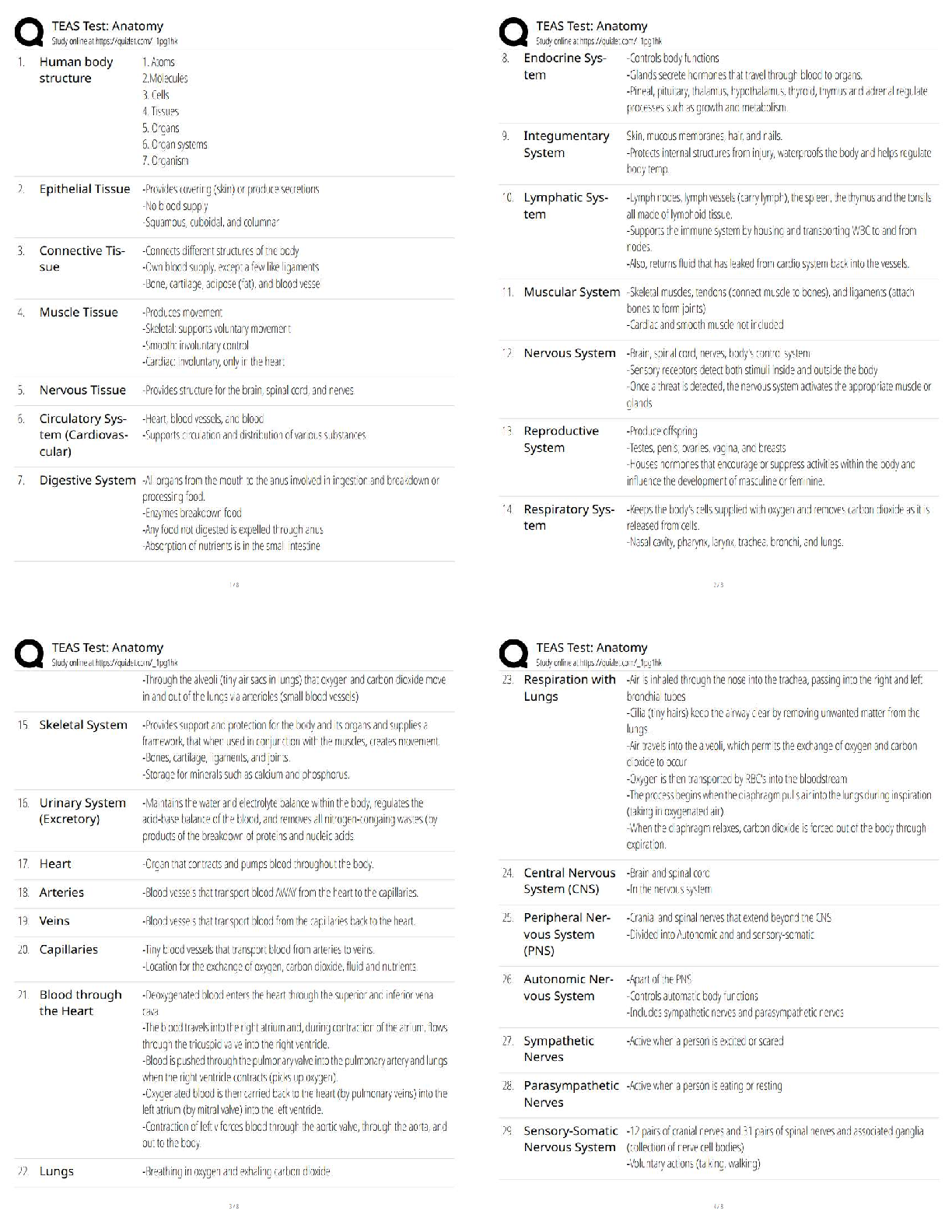
ATI TEAS 7 Anatomy Study Guide 2025/2026: Master Exam Content and Pass First Attempt
ATI TEAS 7 Anatomy Study Guide 2025/2026: Master Exam Conten...

Master Ti TEAS 7 Anatomy With This Concise 2026 Guide. Covers All Systems To Help You...

$16