NR 601 Chapter 40 Chronic Dyspnea Evaluation Notes NR 601 Chapter 40 Chronic Dyspnea Evaluation Notes

Study guide

NR 601 Chapter 40 Evaluation Of Chronic Dyspnea Study Guide 2023/2024 Nursing Course Materials


Master The Evaluation Of Chronic Dyspnea In NR 601. Covers Cardiac Vs Pulmonary Causes, CHF Signs, And Work Of Breathing Factors.
Description

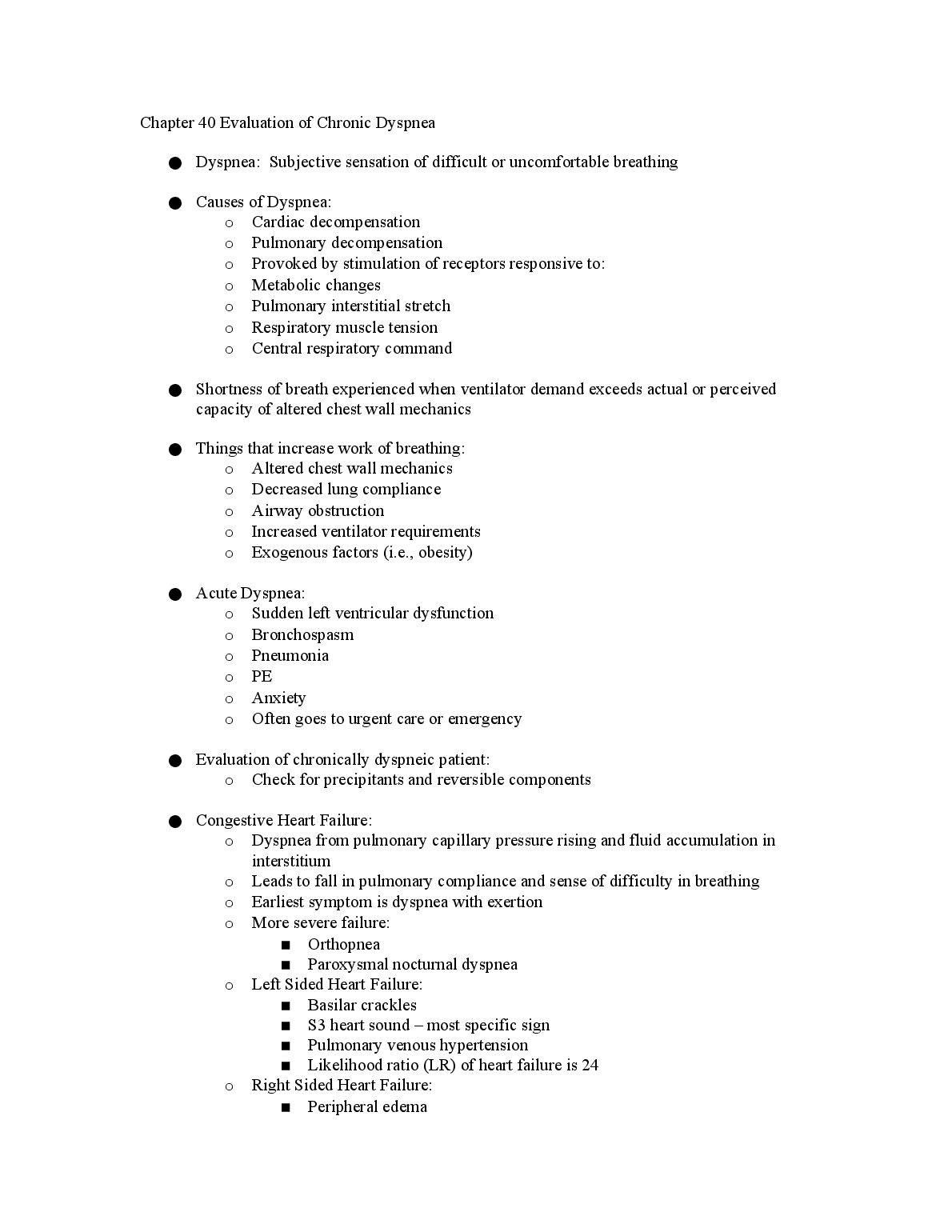
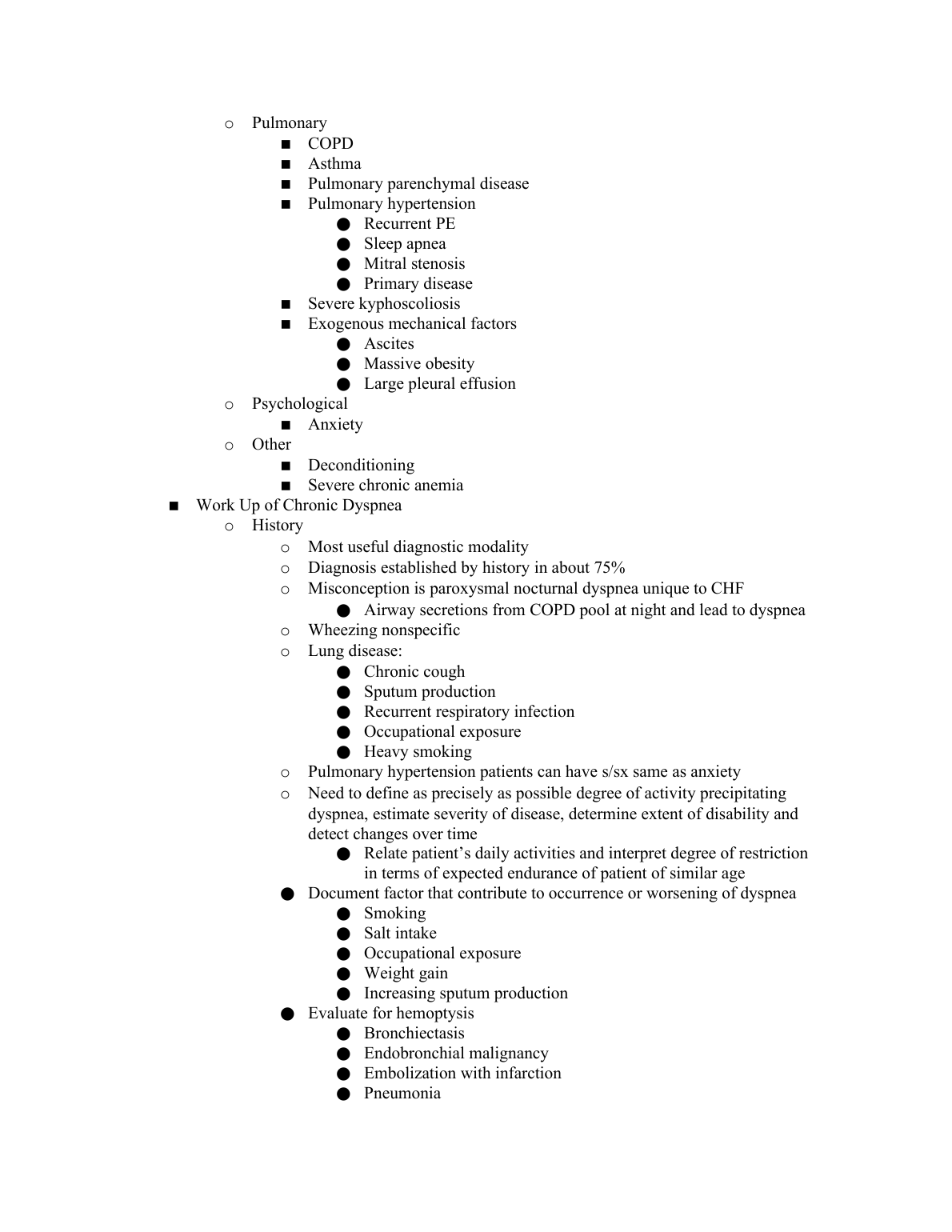
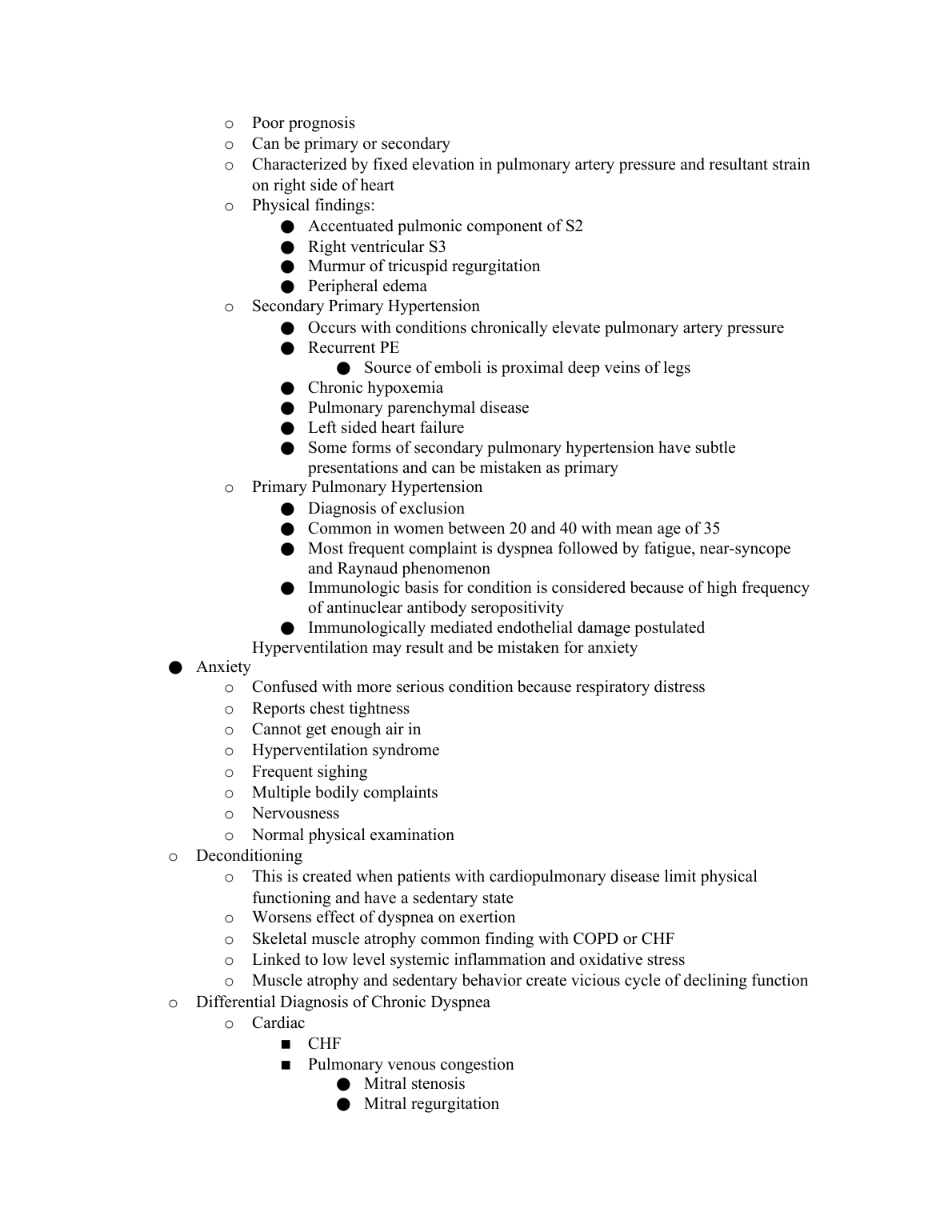
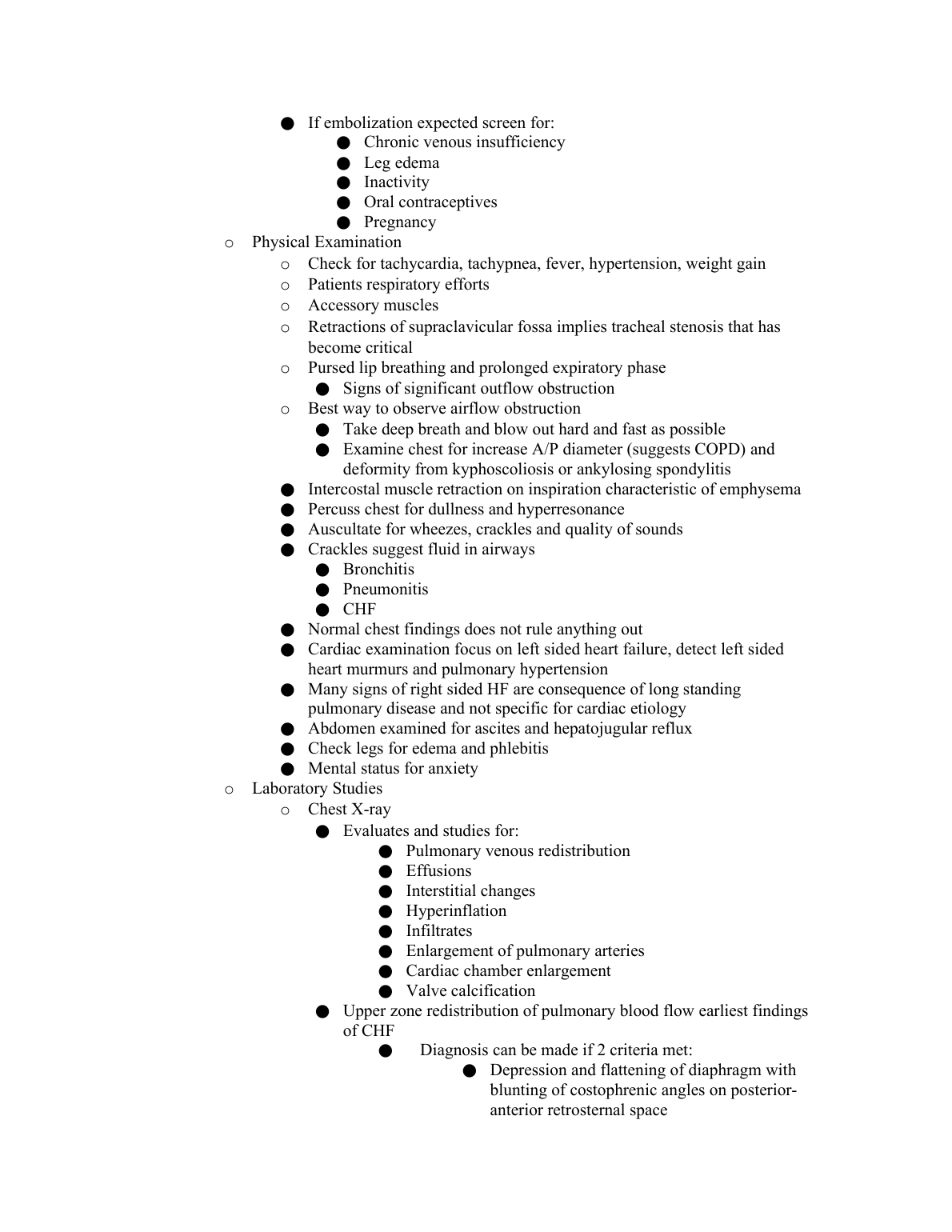
Accelerate clinical reasoning skills with a comprehensive analysis of the subjective sensation of difficult or uncomfortable breathing. This resource clarifies the complex pathophysiology behind dyspnea, distinguishing between acute events like bronchospasm and chronic conditions such as congestive heart failure. Learners gain practical insights into identifying specific diagnostic markers, including S3 heart sounds, basilar crackles, and paroxysmal nocturnal dyspnea, to differentiate left-sided from right-sided cardiac decompensation.
PDF Sample
1 / 3
NR 601 Chapter 40 Chronic Dyspnea Evaluation Notes IMG-1
NR 601 Chapter 40 Chronic Dyspnea Evaluation Notes IMG-2
NR 601 Chapter 40 Chronic Dyspnea Evaluation Notes IMG-3
Who is this Document for ?

This material is designed for nursing students enrolled in the NR 601 course during the 2023/2024 academic year. It serves as a focused revision tool for candidates preparing for examinations on respiratory and cardiovascular pathophysiology, particularly those needing to refine their ability to evaluate patients presenting with chronic breathlessness.
What you will learn ?
Identify the primary physiological triggers of dyspnea, including metabolic changes, pulmonary interstitial stretch, and central respiratory command, to enhance clinical assessment accuracy.
Differentiate between acute and chronic causes of shortness of breath by recognising specific precipitants such as sudden left ventricular dysfunction versus reversible components in chronic cases.
Analyse the impact of altered chest wall mechanics, decreased lung compliance, and airway obstruction on increased work of breathing to determine underlying respiratory inefficiencies.
Recognise key clinical signs of congestive heart failure, specifically distinguishing between basilar crackles and S3 heart sounds as indicators of left-sided versus right-sided decompensation.
Apply knowledge of pulmonary capillary pressure changes to explain the development of orthopnea and paroxysmal nocturnal dyspnea in patients with severe cardiac failure.
Evaluate the likelihood ratio associated with specific physical examination findings, such as the high specificity of S3 heart sounds for diagnosing congestive heart failure.
You may also be interested in :
Recommendations for you
NR 601 Week 6 Quiz Review: Diabetes Screening, ADA Recommendations & Diagnostic Tests Study Guide
NR 601 Week 6 Quiz Review: Diabetes Screening, Ada Recommend...

Master NR 601 Diabetes Quiz Content With Detailed Coverage Of Ada Screening Recommend...

$16
NR 601 Comprehensive Final Exam Study Guide and Practice Questions with Solutions A+ Rated
NR 601 Comprehensive Final Exam Study Guide And Practice Que...

Master NR 601 Nursing Concepts Including Mini-cog, Delirium Causes, DM Criteria, And...

$16
NR 601 Comprehensive Final Exam Study Guide: Geriatric Nursing Practice and Clinical Assessments
NR 601 Comprehensive Final Exam Study Guide: Geriatric Nursi...

Master NR 601 Final Exam Concepts With Verified Study Guides Covering Mini-cog, Delir...

$16
NR 601 Week 3 TD 2 Study Guide for 2023/2024: Mental Health Nursing Case Analysis and Assessment Strategies
NR 601 Week 3 Td 2 Study Guide For 2023/2024: Mental Health...

Master NR 601 Mental Health Nursing Concepts With This Week 3 Study Guide, Featuring...

$16