
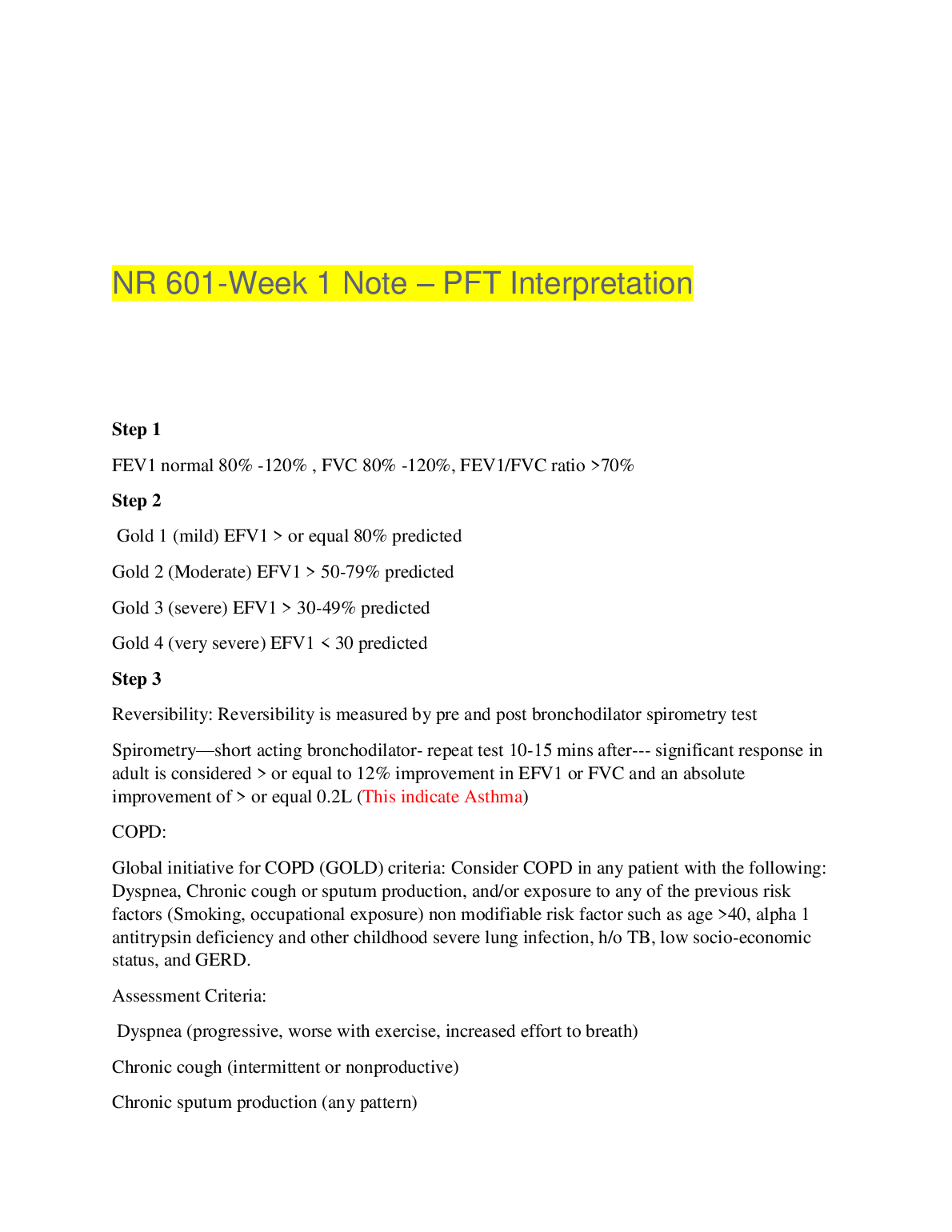
NR 601 PFT Interpretation and COPD Staging Notes

Study guide

NR 601 Week 1 Notes: Pulmonary Function Test Interpretation And Gold Classification Guide


Master NR 601 Spirometry Interpretation, Including Normal Values, Bronchodilator Reversibility, And Gold Staging Criteria For Asthma.
Description

Accelerate clinical competency in respiratory assessment by mastering the precise interpretation of pulmonary function tests. This resource provides a structured framework for analysing FEV1/FVC ratios, distinguishing between obstructive patterns like Asthma and COPD through reversibility testing, and applying GOLD classification stages from mild to very severe. It equips healthcare professionals with the diagnostic criteria necessary to identify risk factors such as smoking history, alpha-1 antitrypsin deficiency, and occupational exposures. By internalising these specific thresholds, clinicians can make confident, evidence-based decisions regarding patient management and diagnosis.
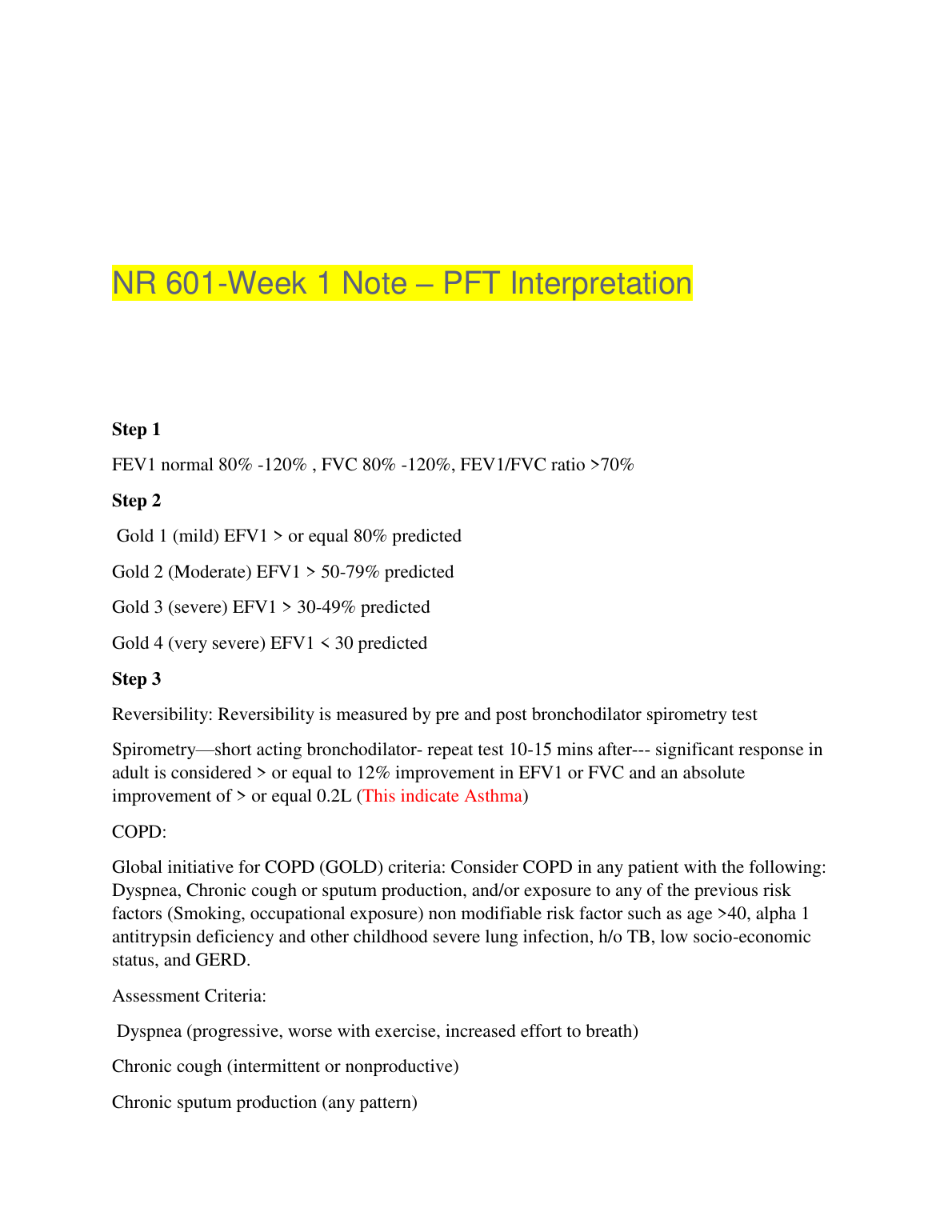
PDF Sample
1 / 1
NR 601 PFT Interpretation and COPD Staging Notes IMG-1
Who is this Document for ?

This document is designed for nursing students enrolled in NR 601 or similar respiratory health courses who need to interpret spirometry results. It serves as a concise revision tool for candidates preparing for examinations on pulmonary function testing and COPD management. Tutors and clinical educators may also use these notes to reinforce key diagnostic criteria and classification standards within their teaching modules.
What you will learn ?
⬤Identify normal spirometry parameters by recognising that FEV1 and FVC should fall between 80% and 120%, with an FEV1/FVC ratio exceeding 70%.
⬤Apply the GOLD classification system to stage COPD severity, distinguishing between Gold 1 (FEV1 ≥ 80%), Gold 2 (50-79%), Gold 3 (30-49%), and Gold 4 (< 30%) predicted values.
⬤Interpret bronchodilator reversibility tests to differentiate Asthma from COPD, noting that a significant response requires at least a 12% improvement in FEV1 or FVC plus an absolute increase of 0.2L.
⬤Recognise key non-modifiable risk factors for COPD, including age over 40, alpha-1 antitrypsin deficiency, history of tuberculosis, and severe childhood lung infections.
⬤Evaluate modifiable risk exposures such as smoking and occupational hazards to assess patient vulnerability to chronic obstructive pulmonary disease.
You may also be interested in :
Recommendations for you
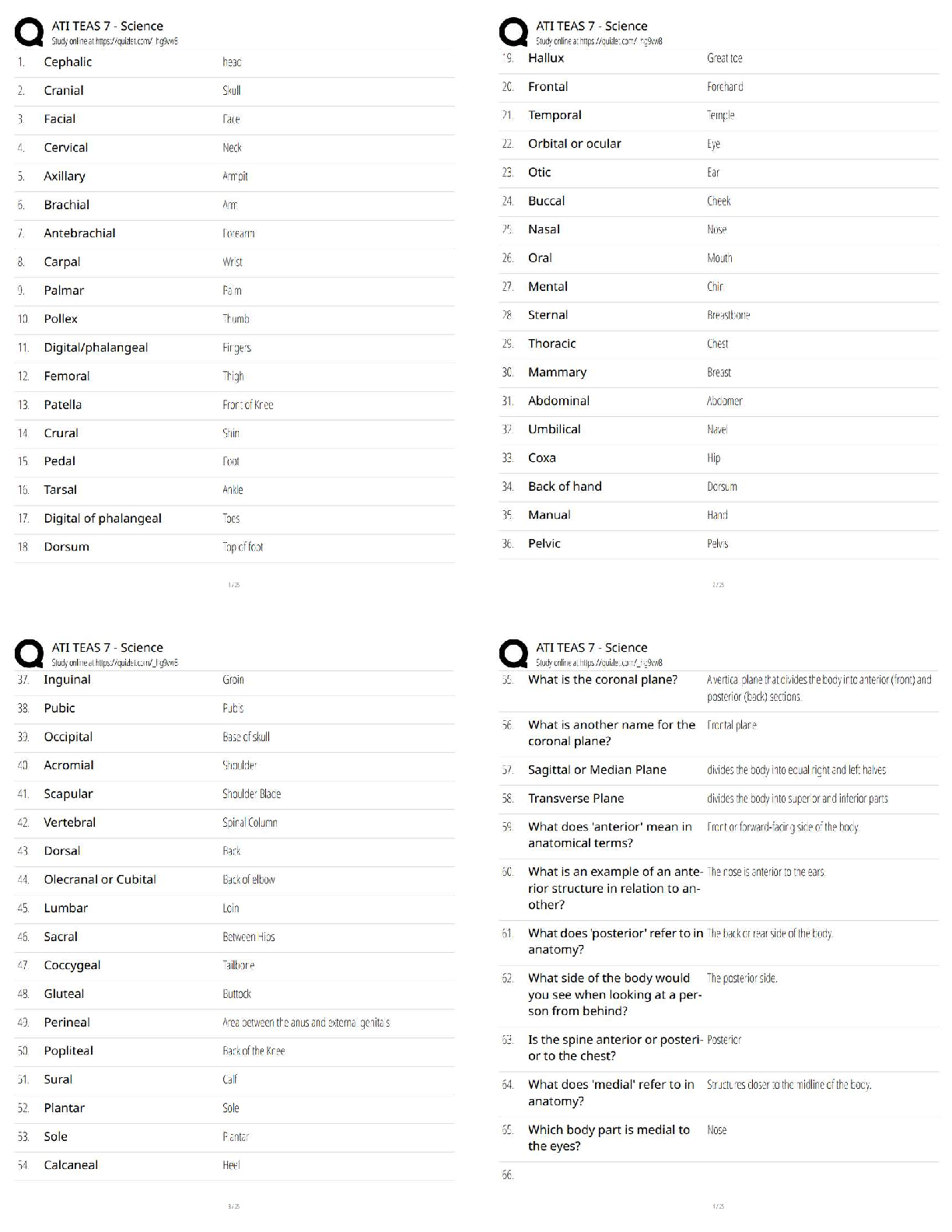
ATI TEAS 7 Science Exam Prep: Anatomy & Physiology Study Guide for Nursing Entrance Success in 2026/2027
ATI TEAS 7 Science Exam Prep: Anatomy & Physiology Study Gui...

Master TEAS 7 Anatomy And Physiology Terms, Planes And Directional Concepts With This...
$16
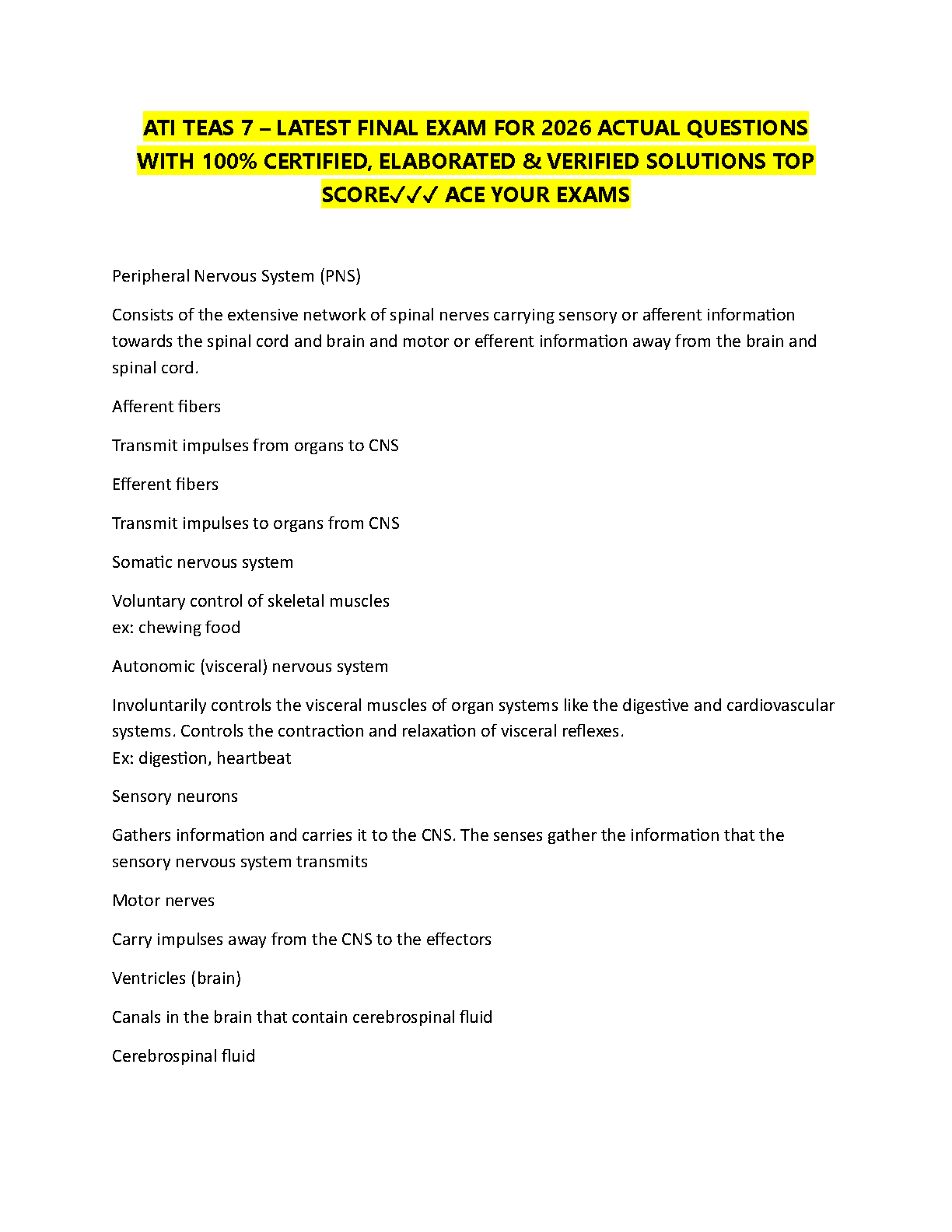
ATI TEAS 7 Final Exam Study Guide 2025/2026 Verified Questions and Elaborated Solutions for Nursing School Success
ATI TEAS 7 Final Exam Study Guide 2025/2026 Verified Questio...

Master ATI TEAS 7 Concepts With Verified Questions And Detailed Solutions. Pass On Fi...
$16
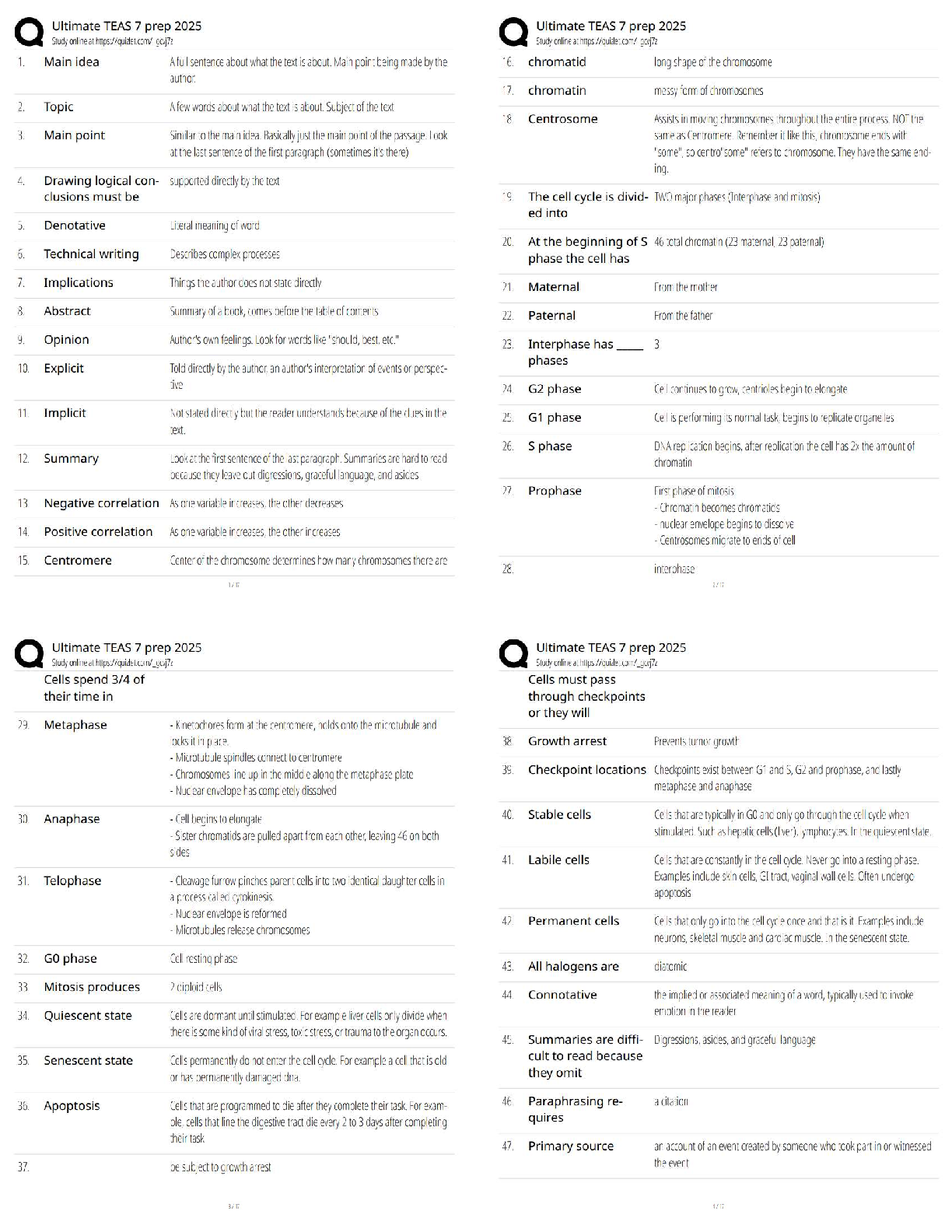
ATI TEAS 7 Ultimate Study Guide 2026/2027: Master Reading, Science & Cell Cycle Concepts for First-Time Success
ATI TEAS 7 Ultimate Study Guide 2026/2027: Master Reading, S...

Ace The ATI TEAS 7 In 2026. Condensed Study Guide Covering Reading, Science And Cell...
$16
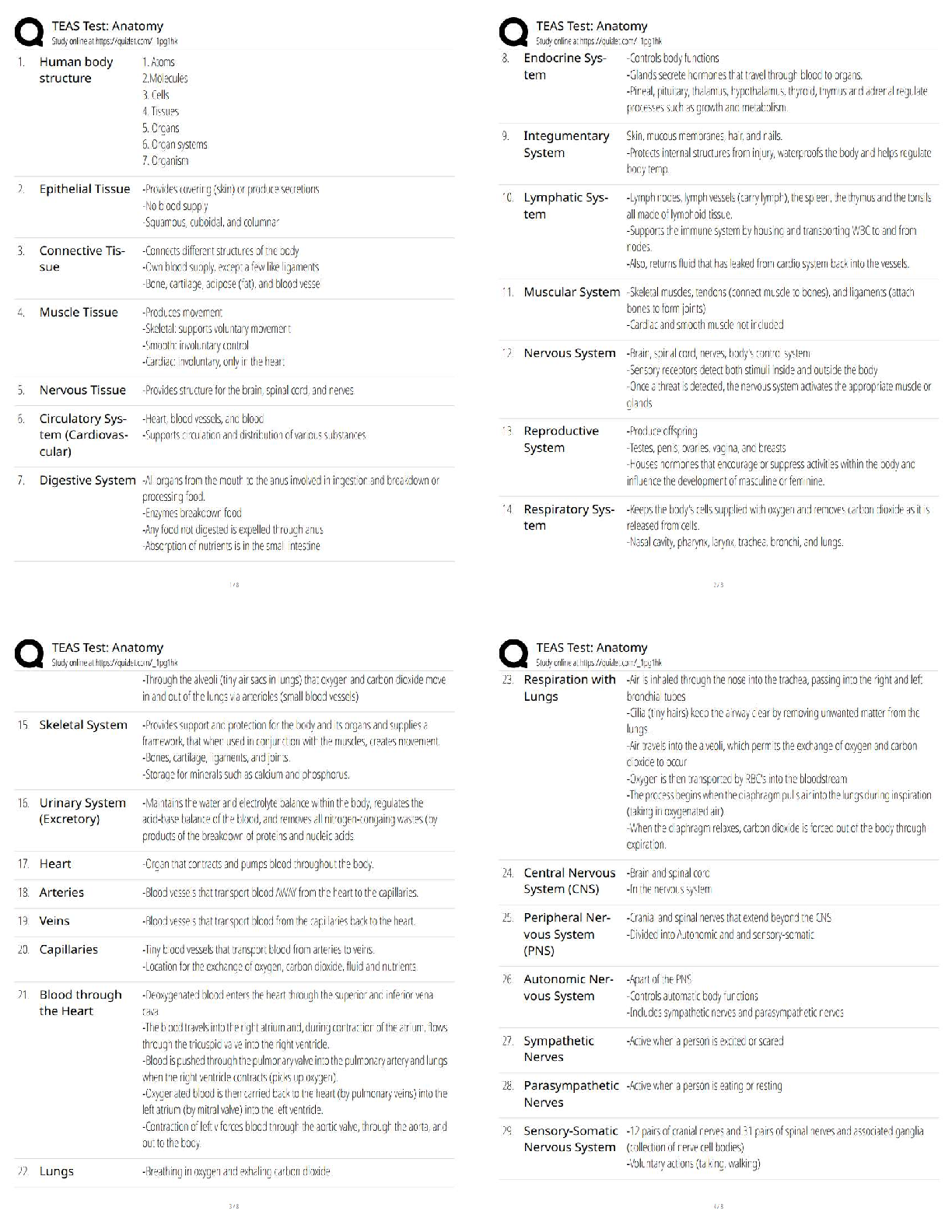
ATI TEAS 7 Anatomy Study Guide 2025/2026: Master Exam Content and Pass First Attempt
ATI TEAS 7 Anatomy Study Guide 2025/2026: Master Exam Conten...

Master Ti TEAS 7 Anatomy With This Concise 2026 Guide. Covers All Systems To Help You...

$16