NR 601 Week 1 Polypharmacy Discussion Solutions

Study guide

NR 601 Week 1 Discussion Board Polypharmacy Solution Manual 2023 Study Guide For Nursing Students


Detailed NR 601 Discussion On Polypharmacy Risks, Patient Populations, And Medication Reconciliation Strategies.
Description

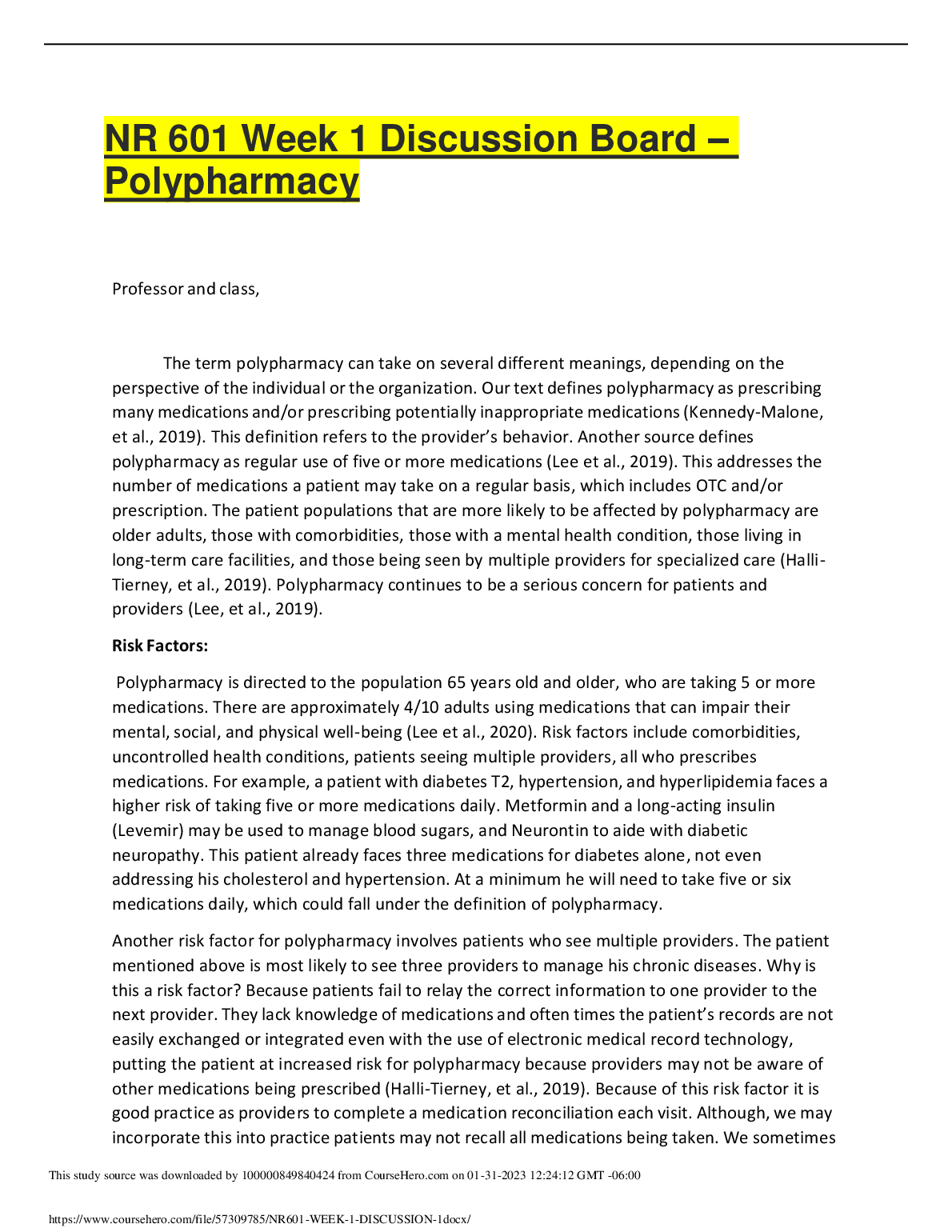
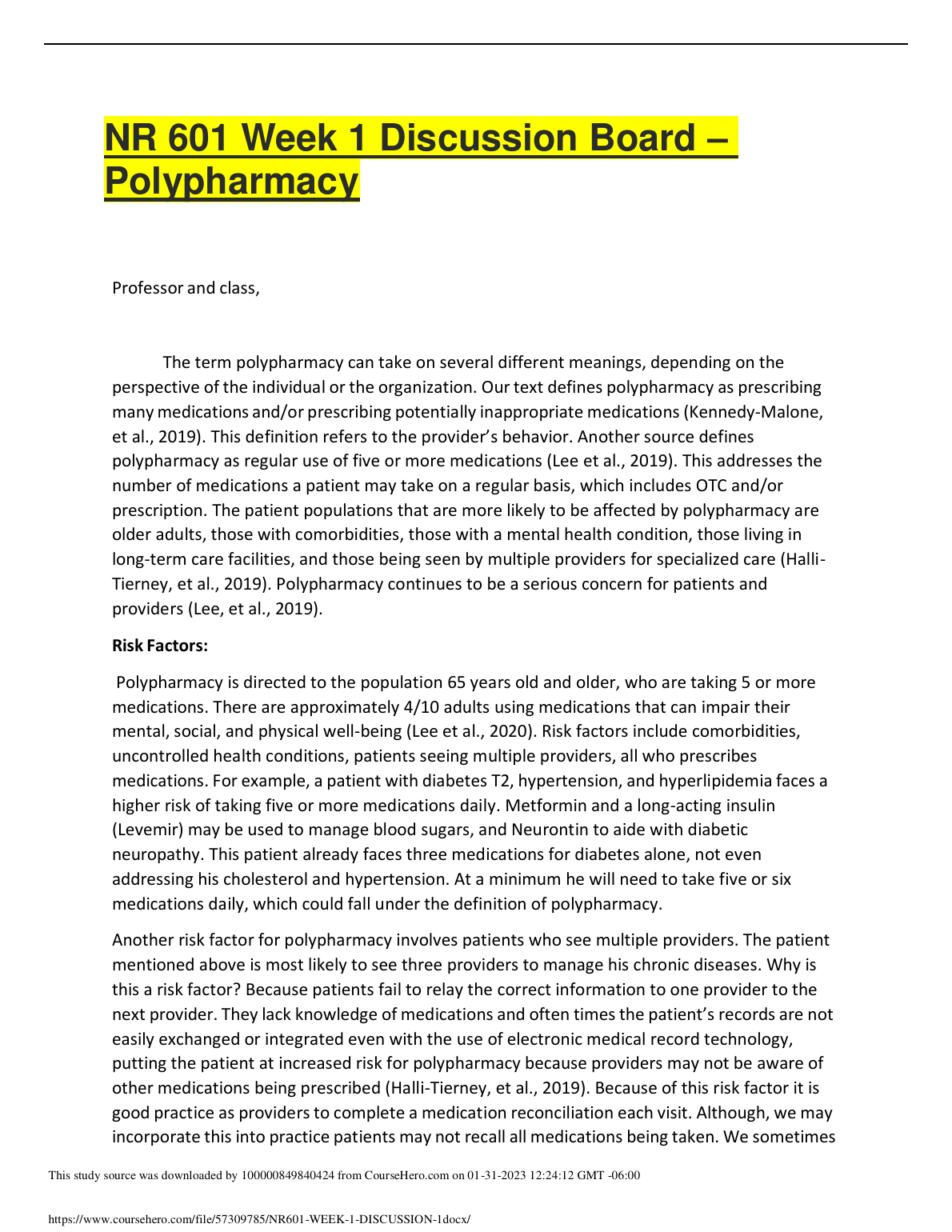
Elevate your clinical understanding of complex medication management by exploring the multifaceted definitions and implications of polypharmacy. This resource provides a structured analysis of risk factors affecting older adults and those with chronic comorbidities, highlighting critical gaps in inter-provider communication. By examining real-world scenarios involving diabetes, hypertension, and hyperlipidaemia, learners gain practical insight into medication reconciliation processes essential for patient safety.
PDF Sample
1 / 1
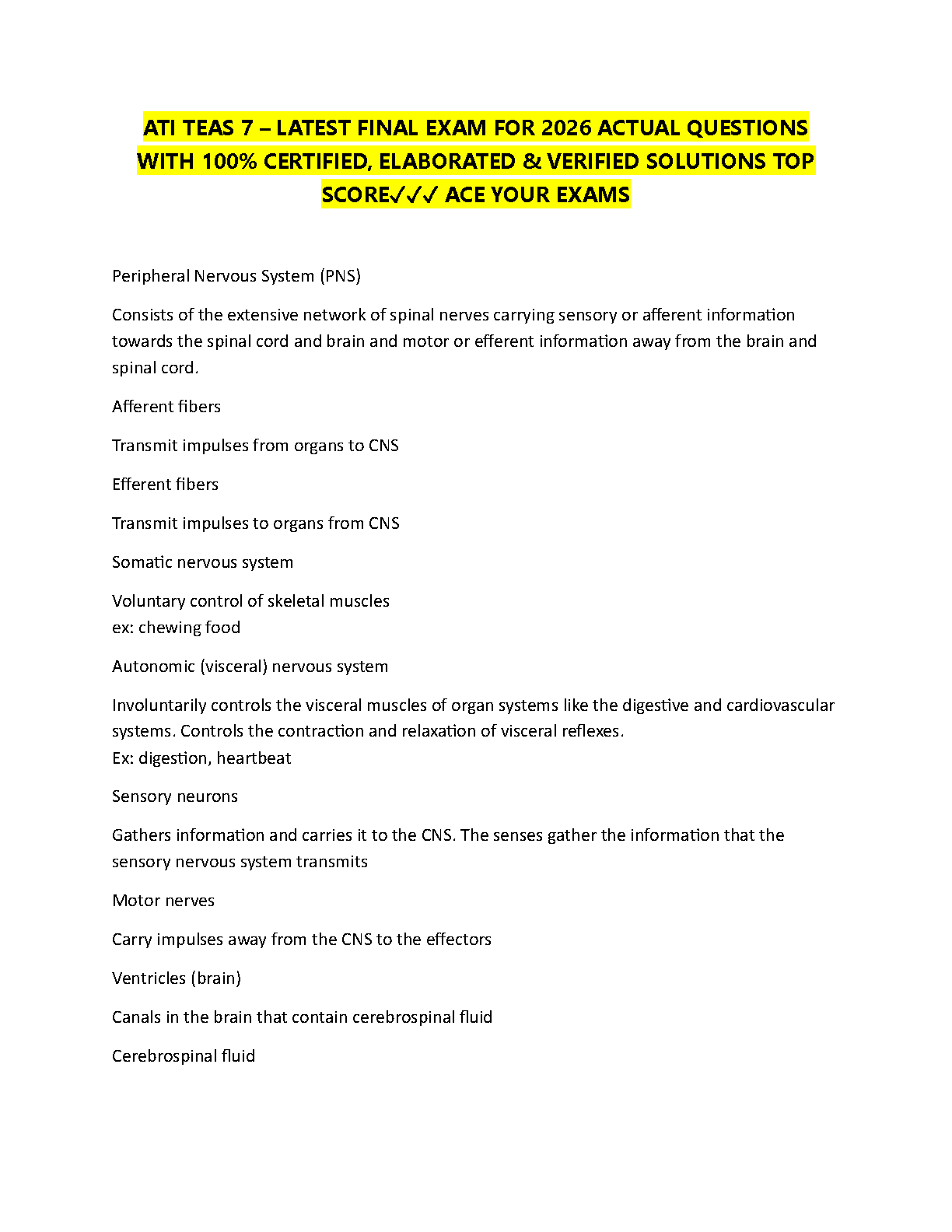
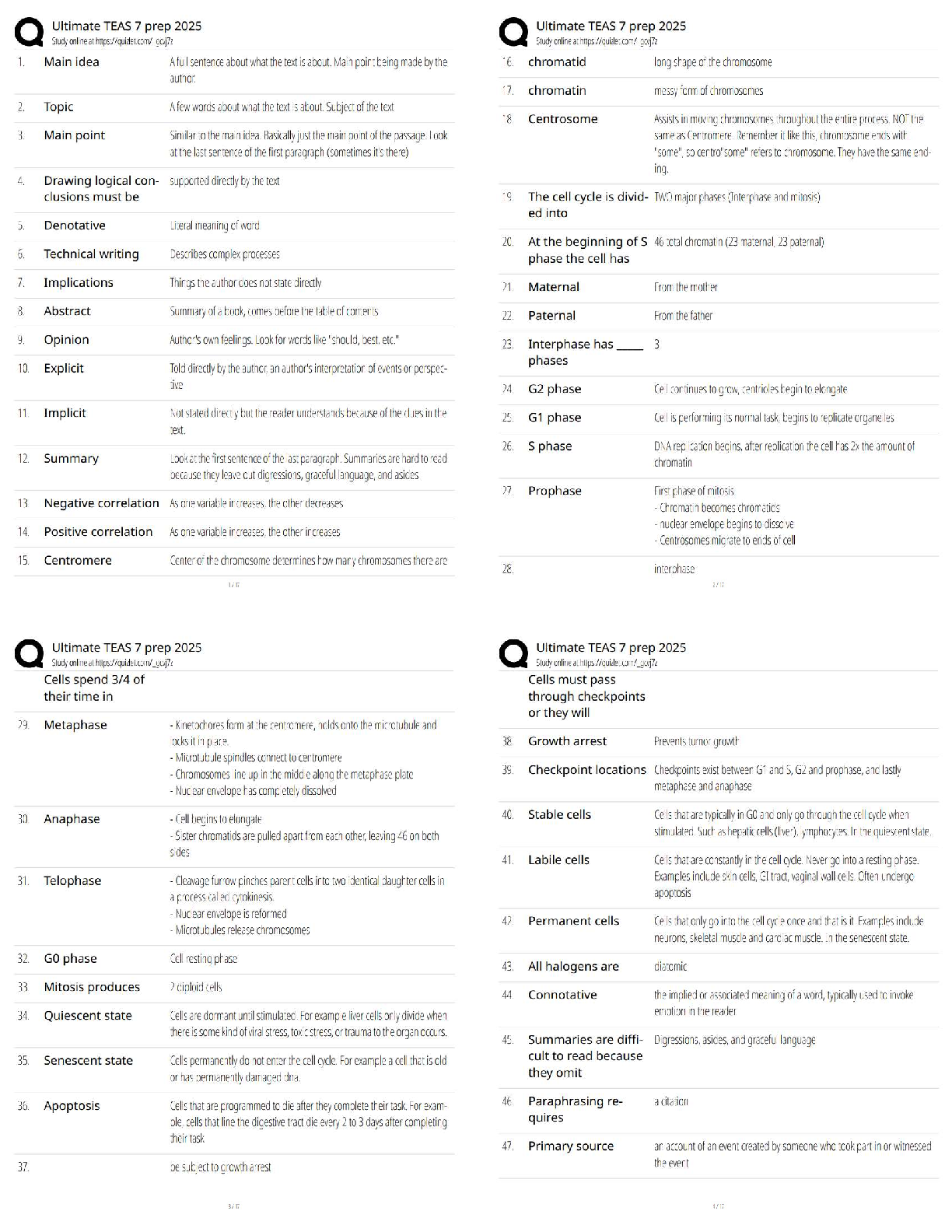
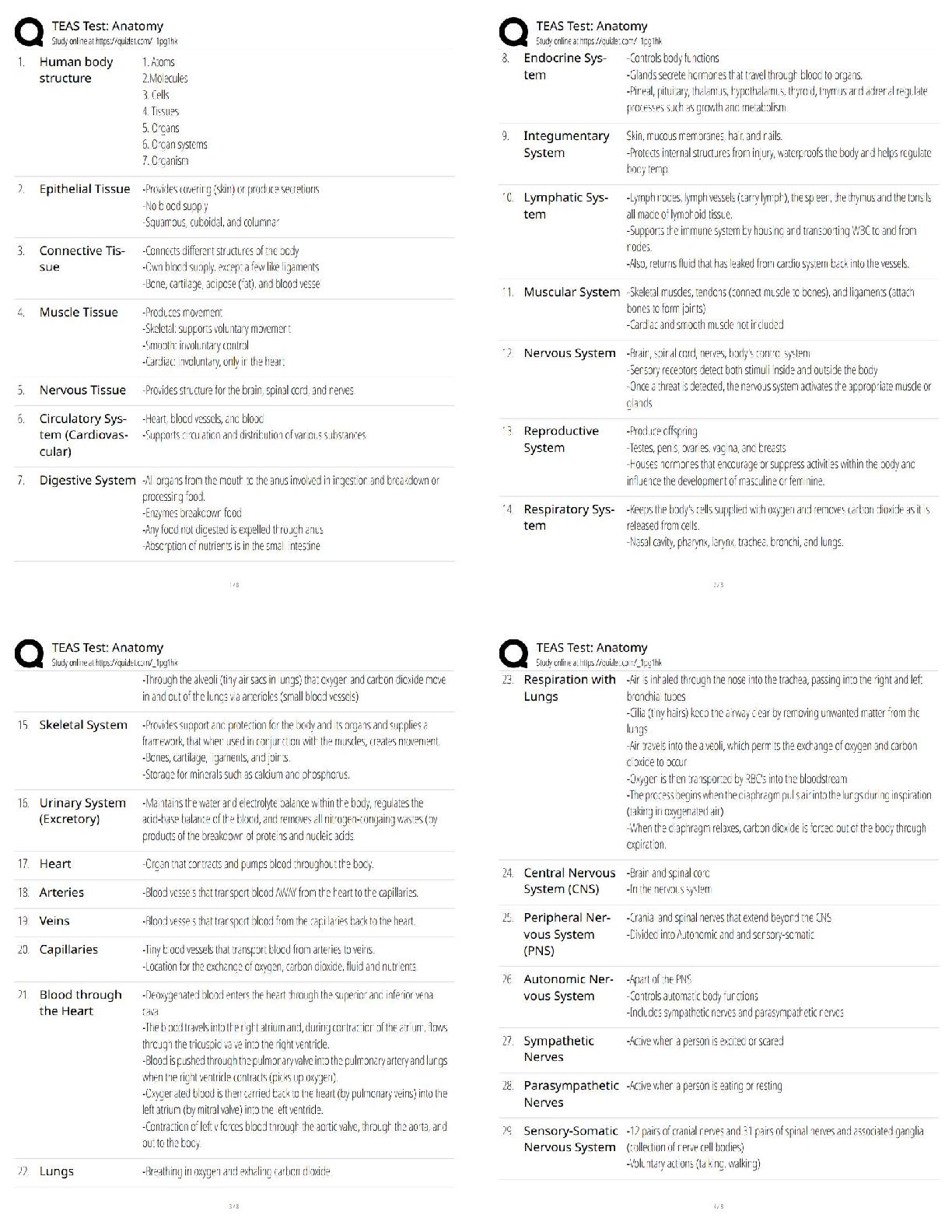
NR 601 Week 1 Polypharmacy Discussion Solutions IMG-1
Who is this Document for ?

This document is designed for nursing students enrolled in NR 601 who are preparing for Week 1 discussions on pharmacological management. It serves as a model response for students seeking to understand the clinical significance of polypharmacy and its impact on patient well-being. Additionally, it benefits educators looking for concise summaries of key risk factors and medication reconciliation best practices.
What you will learn ?
Define polypharmacy from both provider behaviour perspectives and patient usage thresholds, specifically distinguishing between prescribing inappropriate medications and the regular use of five or more agents.
Identify high-risk populations susceptible to polypharmacy, including older adults aged 65 and above, individuals with mental health conditions, and patients residing in long-term care facilities.
Analyse how comorbidities such as Type 2 diabetes, hypertension, and hyperlipidaemia contribute to the accumulation of daily medications exceeding safety thresholds.
Evaluate the role of multiple provider interactions as a critical risk factor, understanding how fragmented medical records lead to unmonitored medication overlaps.
Apply practical strategies for completing comprehensive medication reconciliation visits to mitigate risks associated with poor information exchange between specialists.
Recognise specific therapeutic agents like Metformin, Levemir, and Neurontin in the context of managing complex chronic disease regimens.
You may also be interested in :
Recommendations for you
WGU D226 NQM1 Task 2 and C802 TXM2 Task 2 E-Portfolio Solutions for the 2026 Academic Year Nursing Capstone
WGU D226 Nqm1 Task 2 And C802 Txm2 Task 2 E-portfolio Soluti...

Complete WGU D226 Nqm1 And C802 Txm2 Task 2 E-portfolio Solutions Aligned With Qsen C...

$16
NR 601 Week 6 Quiz Review: Diabetes Screening, ADA Recommendations & Diagnostic Tests Study Guide
NR 601 Week 6 Quiz Review: Diabetes Screening, Ada Recommend...

Master NR 601 Diabetes Quiz Content With Detailed Coverage Of Ada Screening Recommend...

$16
NR 601 Comprehensive Final Exam Study Guide and Practice Questions with Solutions A+ Rated
NR 601 Comprehensive Final Exam Study Guide And Practice Que...

Master NR 601 Nursing Concepts Including Mini-cog, Delirium Causes, DM Criteria, And...

$16
NR 601 Comprehensive Final Exam Study Guide: Geriatric Nursing Practice and Clinical Assessments
NR 601 Comprehensive Final Exam Study Guide: Geriatric Nursi...

Master NR 601 Final Exam Concepts With Verified Study Guides Covering Mini-cog, Delir...

$16