
WGU D236 Pathophysiology Study Guide 2026/27 Verified Q&A WGU D236 Pathophysiology Study Guide 2026/27 Verified Q&A

Study Guide

WGU D236 Pathophysiology Study Guide Verified Questions Answers Fluid Electrolyte Acid Base Balance Exam Prep Resource


Master WGU D236 Pathophysiology With Verified Questions On Fluid Balance, Acid-base Disorders And Lab Values For Exam Success.
Description

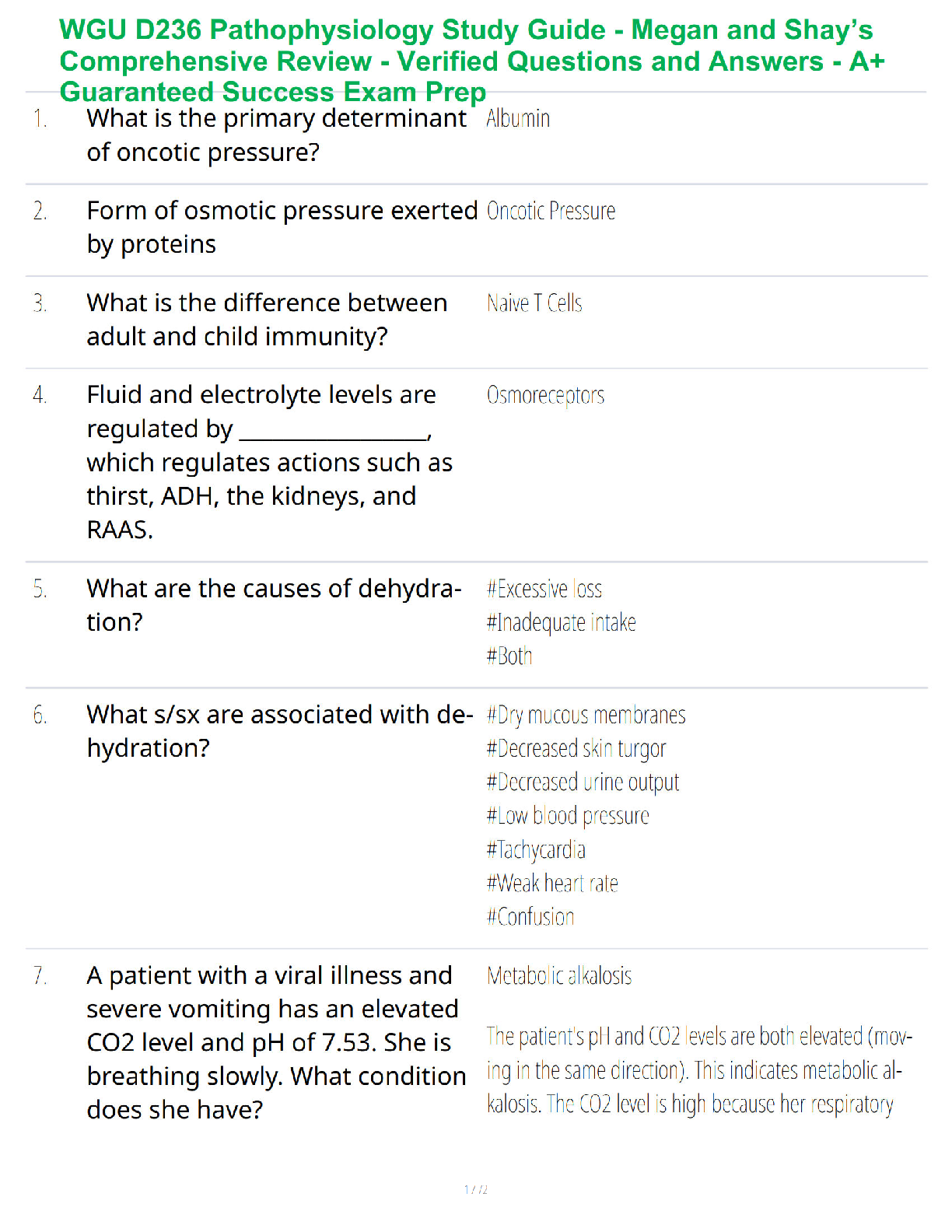
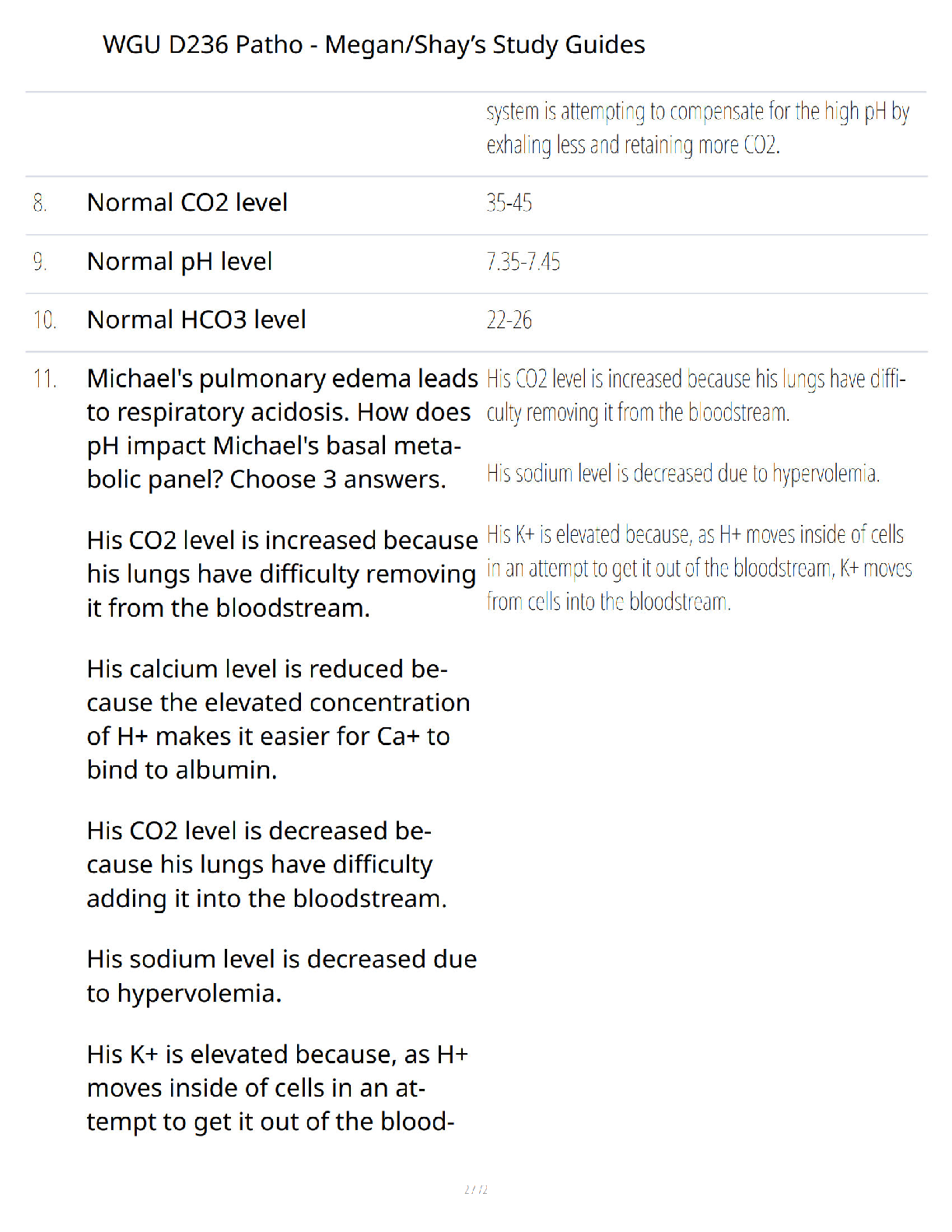
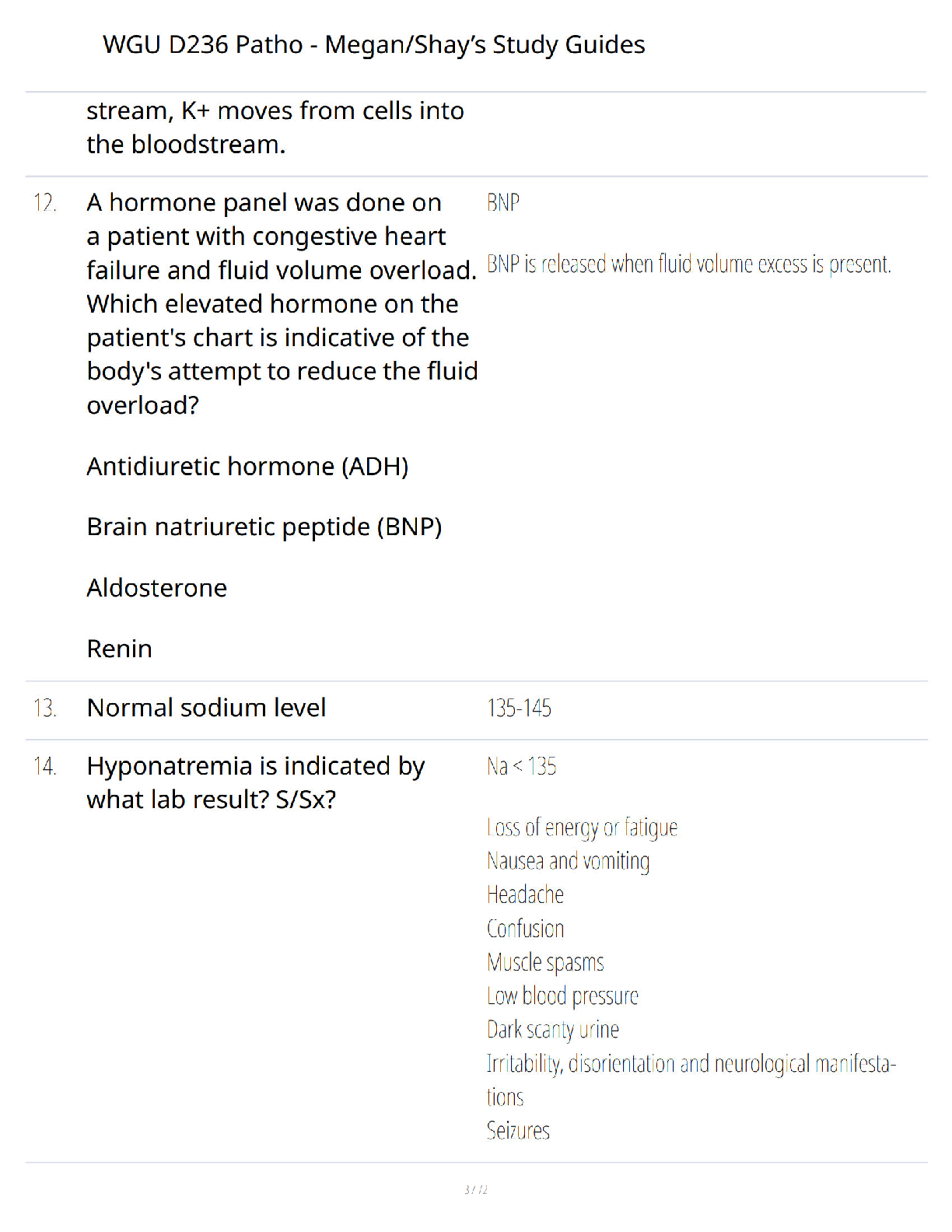
Secure top marks in the WGU D236 Pathophysiology course through a comprehensive collection of verified examination questions and detailed answers. This resource targets high-yield topics such as oncotic pressure, the renin-angiotensin-aldosterone system (RAAS), and fluid electrolyte regulation to build robust clinical reasoning skills. By focusing on precise lab value interpretation for pH, CO2, HCO3, sodium, and potassium levels, candidates can confidently navigate complex acid-base balance scenarios including metabolic alkalosis and respiratory acidosis. The guide ensures thorough preparation by covering hormone responses in heart failure and dehydration signs, transforming theoretical knowledge into practical exam readiness.
PDF Sample
1 / 3
WGU D236 Pathophysiology Study Guide 2026/27 Verified Q&A IMG-1
WGU D236 Pathophysiology Study Guide 2026/27 Verified Q&A IMG-2
WGU D236 Pathophysiology Study Guide 2026/27 Verified Q&A IMG-3
Who is this Document for ?

This material is specifically designed for WGU D236 Pathophysiology students preparing for their comprehensive exams. It suits learners who require verified question practice to solidify understanding of physiological mechanisms and lab value analysis. Tutors and academic advisors may also utilise this resource to identify common knowledge gaps regarding fluid regulation and acid-base balance.
What you will learn ?
⬤Interpret oncotic pressure dynamics within the context of fluid and electrolyte regulation, ensuring accurate responses to questions involving capillary exchange mechanisms.
⬤Apply knowledge of osmoreceptors, RAAS activation, and BNP hormone release to explain physiological compensation in heart failure scenarios.
⬤Differentiate between metabolic alkalosis and respiratory acidosis by analysing specific arterial blood gas values including pH, CO2, and HCO3 levels.
⬤Identify clinical signs of dehydration and hyponatremia symptoms to support diagnostic reasoning in pathophysiology case studies.
⬤Recall normal laboratory reference ranges for sodium and potassium to accurately assess electrolyte imbalances in exam questions.
You may also be interested in :
Recommendations for you
ATI TEAS 7 Final Exam Study Guide 2025/2026 Verified Questions and Elaborated Solutions for Nursing School Success
ATI TEAS 7 Final Exam Study Guide 2025/2026 Verified Questio...

Master ATI TEAS 7 Concepts With Verified Questions And Detailed Solutions. Pass On Fi...

$16
ATI TEAS 7 Science Exam Prep Guide for 2025/2026 Candidates: Comprehensive Q&A and Study Materials
ATI TEAS 7 Science Exam Prep Guide For 2025/2026 Candidates:...

Master The ATI TEAS 7 Science Section With Our Updated 2025/2026 Q&A Guide. Boost You...

$16
ATI TEAS 7 Exam Prep 2025-2026 Complete Study Guide Bundle with Practice Questions and Rationales for Nursing Entrance
ATI TEAS 7 Exam Prep 2025-2026 Complete Study Guide Bundle W...

Master The ATI TEAS 7 Exam. Access Full-length Practice Tests, Detailed Rationales, A...

$16
ATI TEAS 7 Exam Prep Bundle 2025/26: Reading, Math, Science & English Guide with 3 Versions for ADN Success
ATI TEAS 7 Exam Prep Bundle 2025/26: Reading, Math, Science...

Master ATI TEAS 7 Sections With This 2025/26 Bundle. Includes 3 Exam Versions, Math,...

$16