
Question Bank
WGU Pathophysiology D236 Verified Questions And Answers A+ Guaranteed Success Guide For The 2026/2027 Academic Year Comprehensive Study Resource
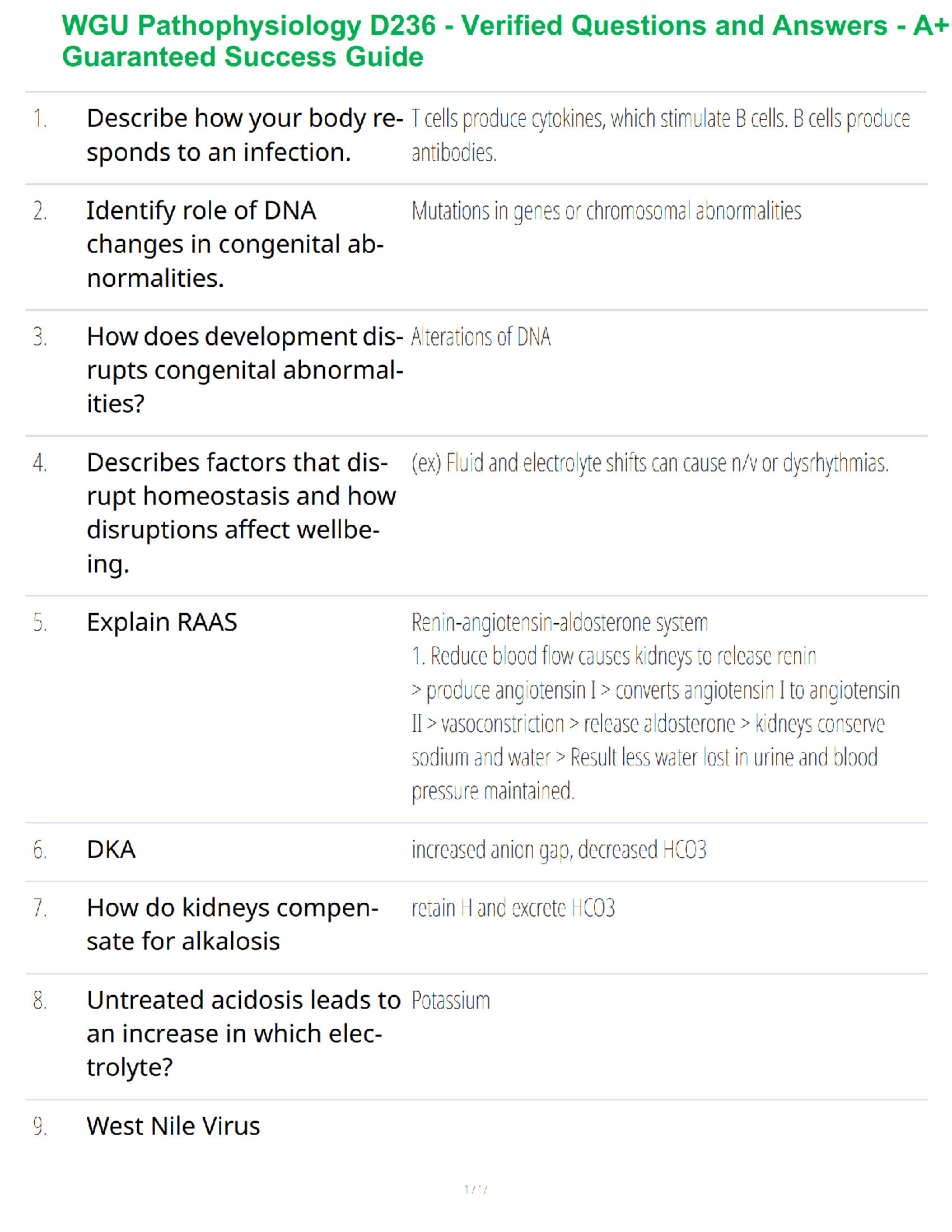
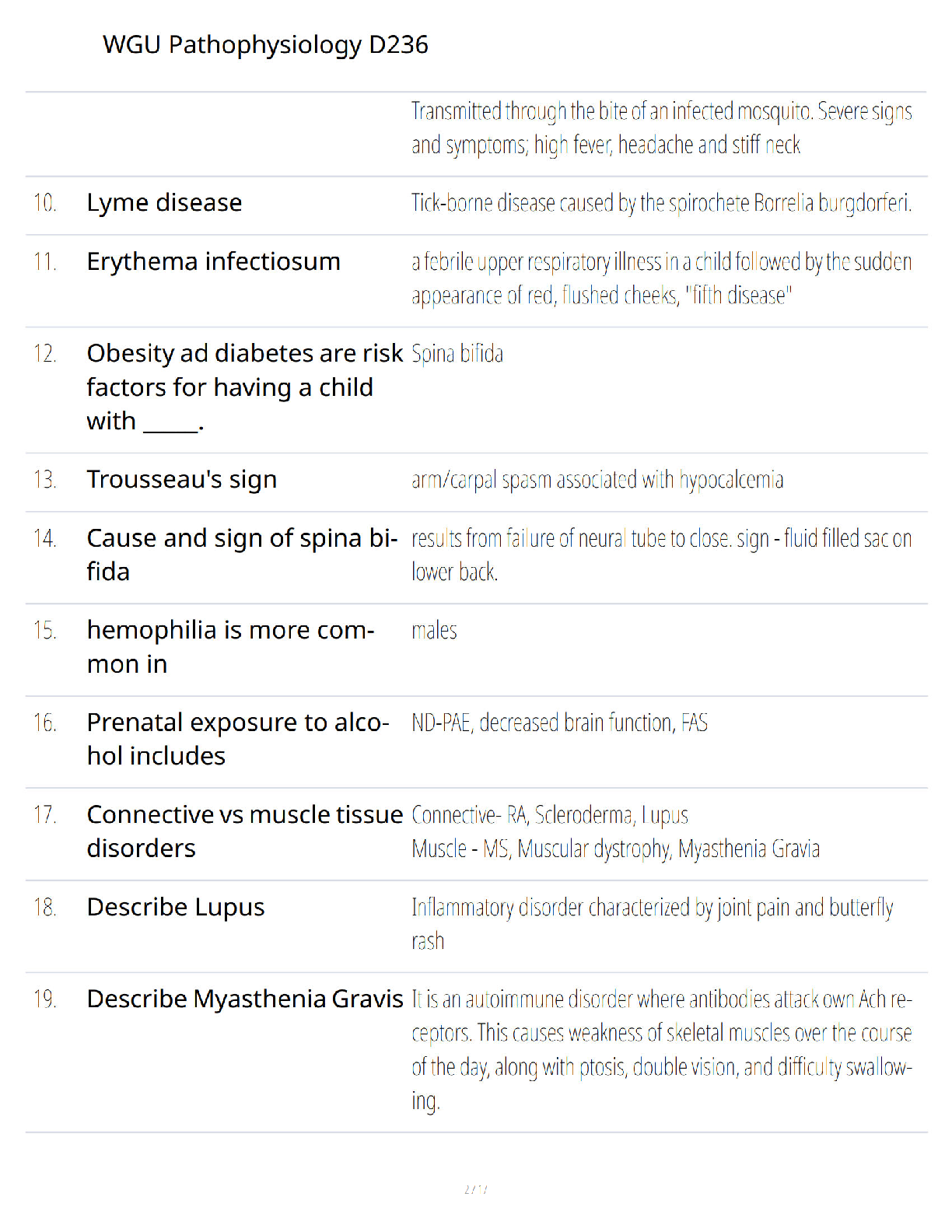
Secure top grades in your Western Governors University Pathophysiology course by utilising this comprehensive repository of verified examination items. The resource provides direct access to essential clinical concepts, including renal mechanisms, acid-base homeostasis and complex immune responses, ensuring thorough preparation for high-stakes assessments. By focusing on specific pathological conditions such as congenital abnormalities, infectious diseases and musculoskeletal disorders, learners can refine their diagnostic reasoning and memorisation strategies effectively. This guide serves as a critical tool for achieving academic excellence within the 2026/2027 academic cycle.
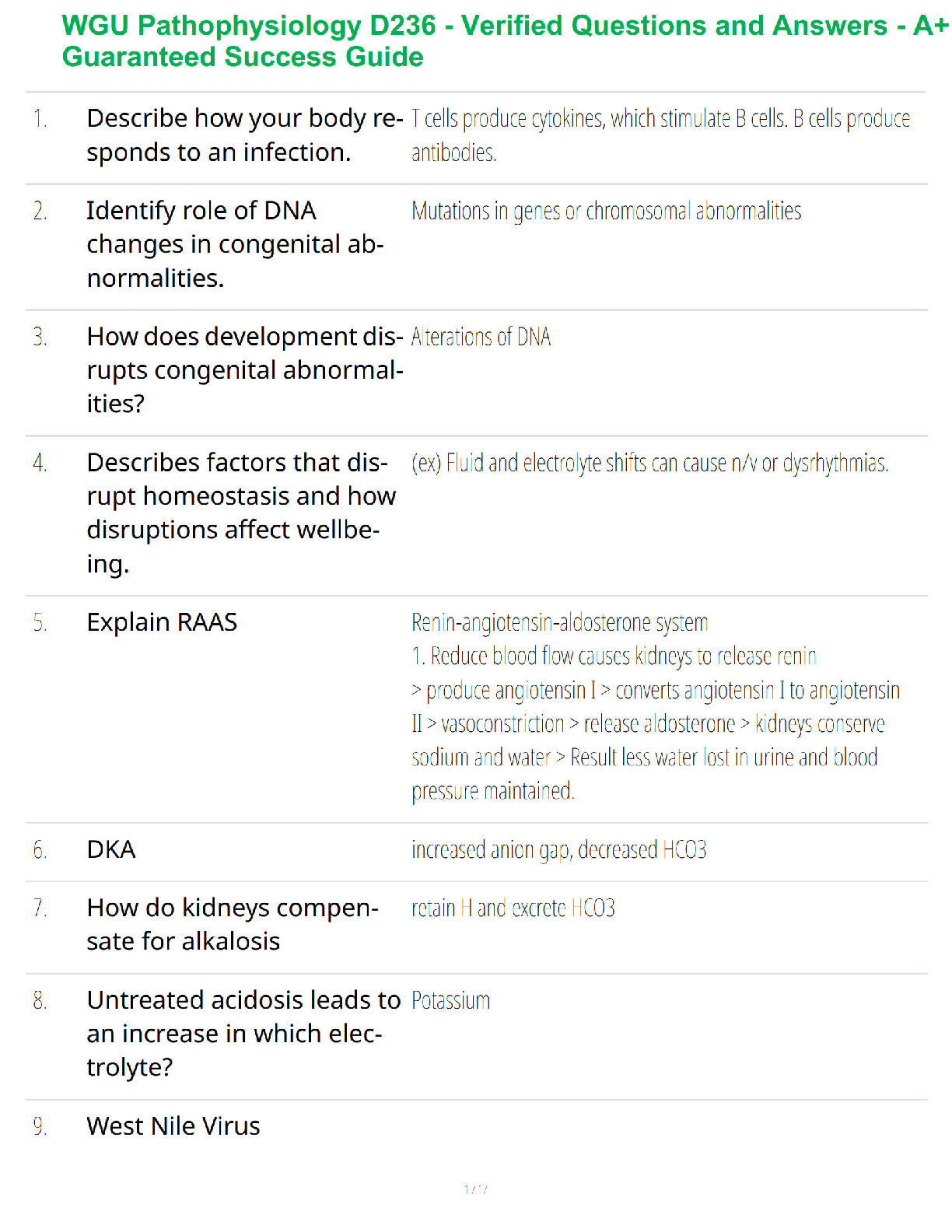
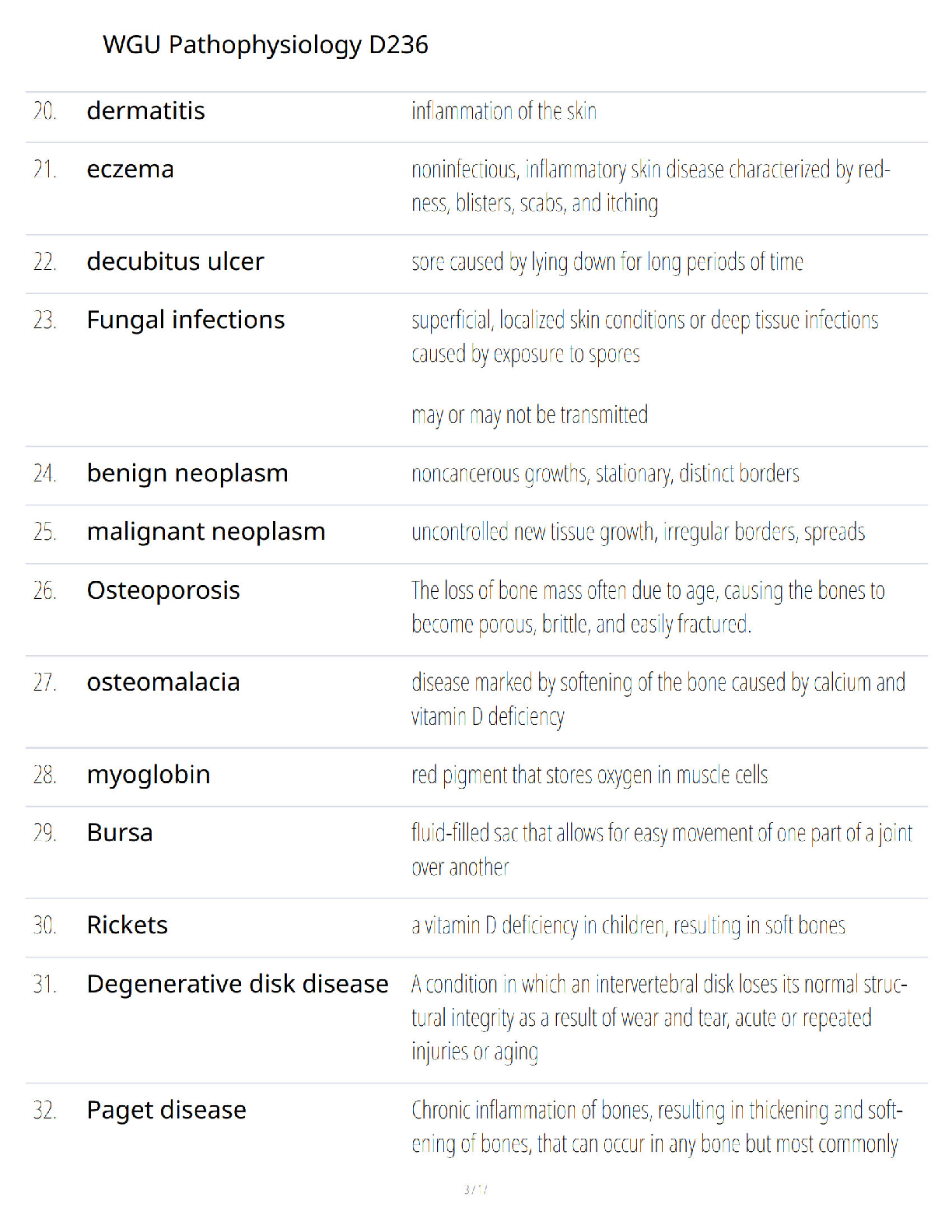
This material is specifically designed for students enrolled in Western Governors University (WGU) Pathophysiology D236 courses during the 2026/2027 academic year. It benefits learners who require a focused, verified source of practice questions to consolidate their understanding of complex physiological and pathological mechanisms. Ideal for independent study or as a supplementary resource alongside primary textbook material.
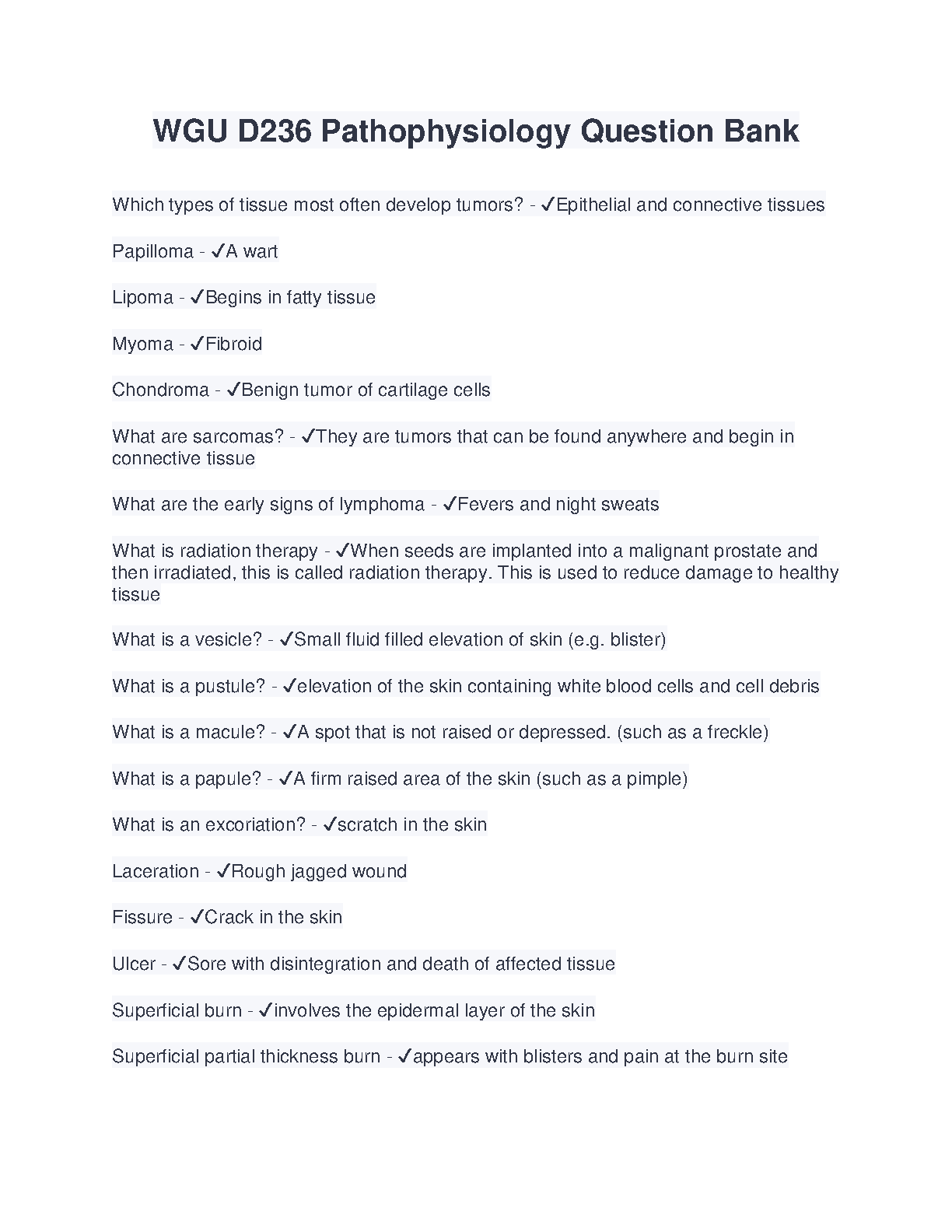
Master WGU D236 With This 2024/2025 Pathophysiology Question Bank. Practice Exam-styl...
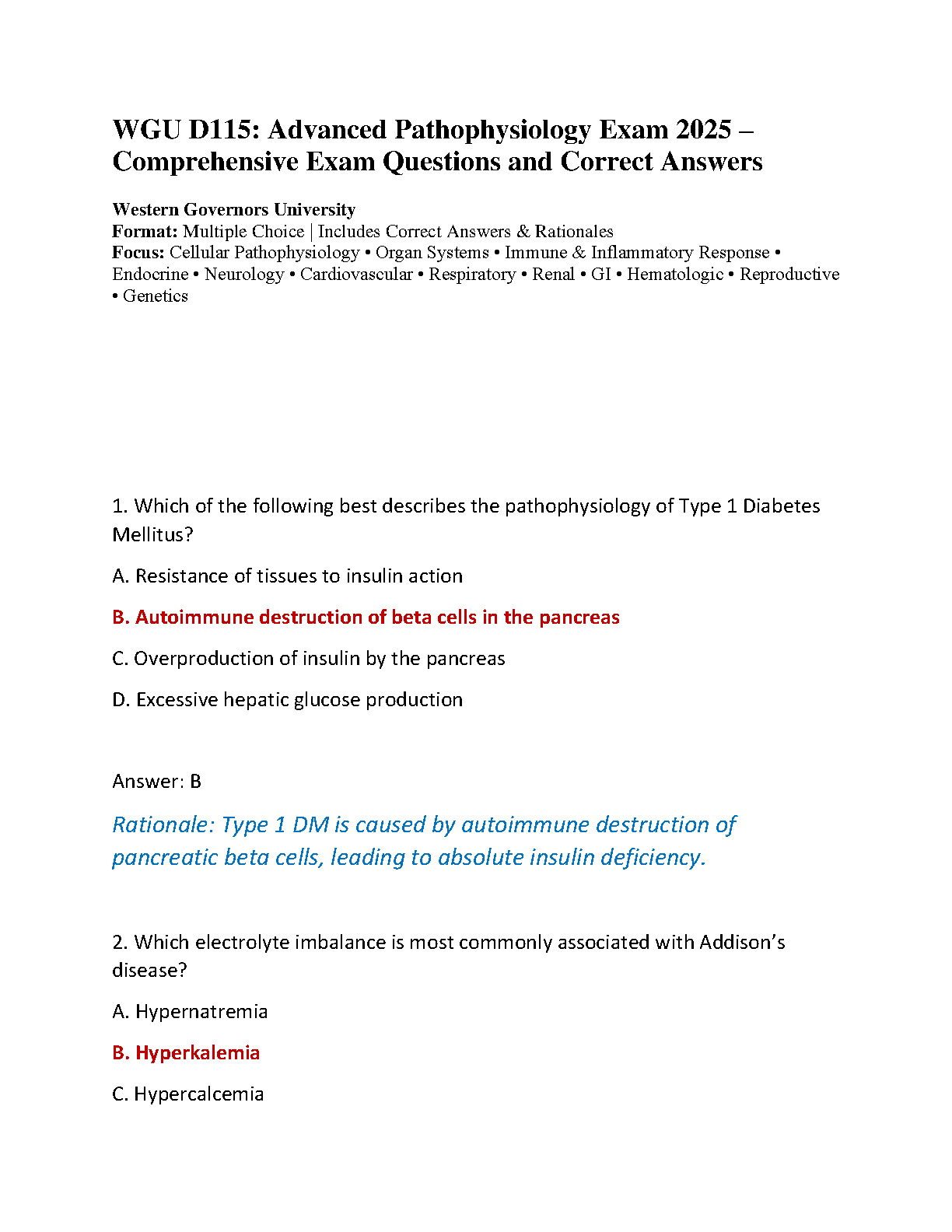
Ace WGU D115 Advanced Pathophysiology With This 2025 Exam Guide. Master Cellular, Org...

Master WGU D236 Pathophysiology. Access 300+ Exam Questions, Verified Answers, And De...

Master WGU Pathophysiology D236 With This Updated 2024/2025 Question And Answer Guide...