
Test bank
Applied Calculus 7th Edition Solution Manual
Solution Manual for Applied Calculus (7th Edition) by Deborah Hughes-Hallett and collaborators is a comprehensive academic support resource designed to help students and instructors deepen their understanding of applied calculus concepts through step-by-step problem-solving explanations. The manual complements the textbook’s emphasis on conceptual reasoning, graphical interpretation, numerical methods, and real-world applications of calculus.
Unlike traditional calculus resources that focus primarily on symbolic computation, Applied Calculus emphasizes understanding how calculus describes change, accumulation, and relationships in practical contexts. The solution manual provides detailed guidance for solving exercises, interpreting mathematical models, and connecting calculus techniques to applications in business, economics, life sciences, social sciences, and other disciplines.
Major topics covered include:
* Functions and mathematical modeling
* Graphical interpretation of functions
* Rates of change and average versus instantaneous change
* Limits and continuity concepts
* Derivatives and their applications
* Differentiation techniques
* Interpretation of derivatives in real-world settings
* Marginal analysis in business and economics
* Optimization problems
* Related rates and changing quantities
* Exponential and logarithmic functions
* Growth and decay models
* Integration concepts
* Antiderivatives and accumulation
* Definite integrals and area interpretation
* Applications of integration
* The Fundamental Theorem of Calculus
* Mathematical modeling using calculus
* Data analysis and interpretation
* Applications in economics, finance, biology, and social sciences
The solution manual supports learners by providing:
* Step-by-step solutions to calculus exercises
* Explanations of problem-solving strategies
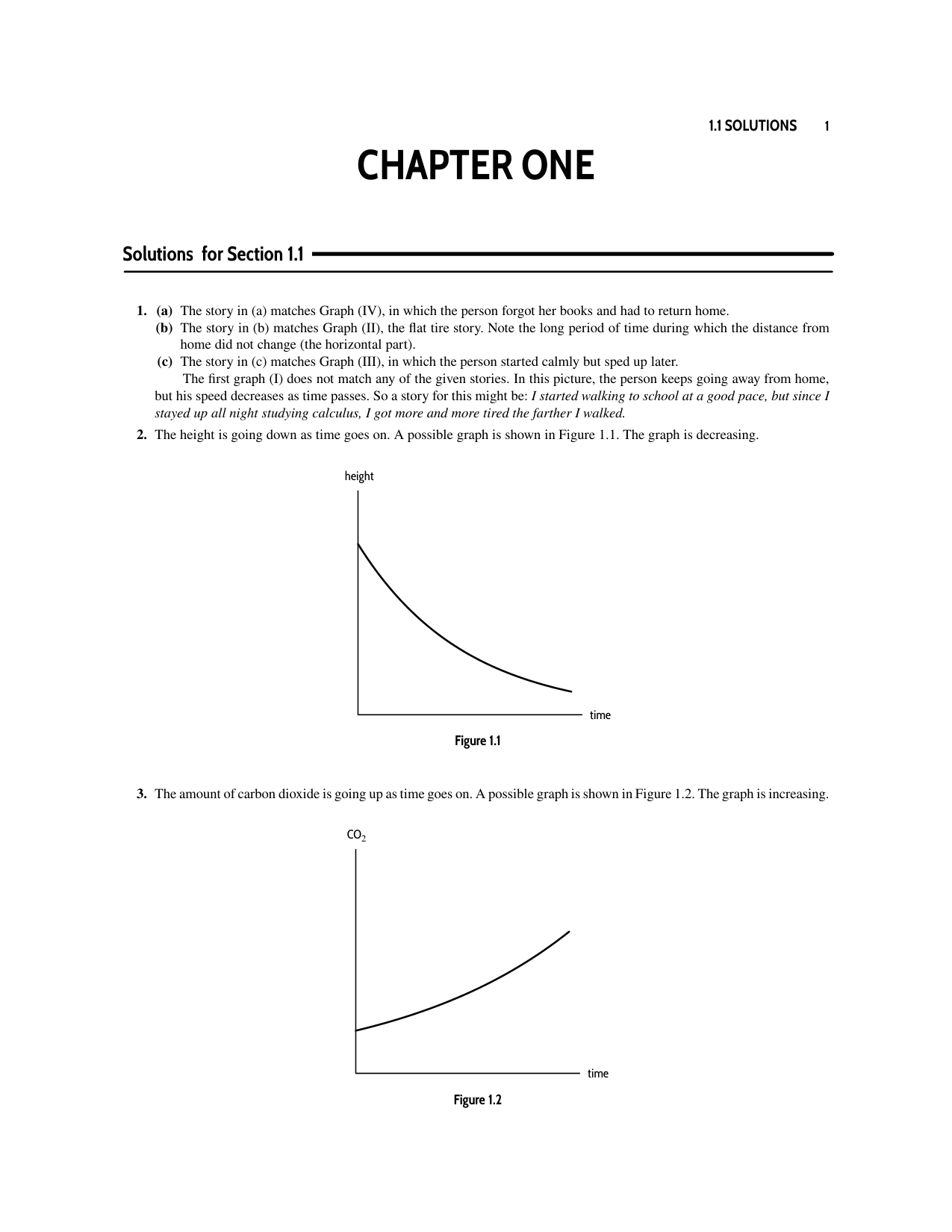
* Interpretation of graphs, tables, and mathematical models
* Guidance for setting up applied calculus problems
* Connections between equations and real-world meaning
* Support for reviewing challenging concepts and preparing for examinations
Students using this resource develop the ability to:
* Interpret functions and mathematical relationships
* Analyze rates of change and accumulation
* Apply derivatives to solve practical problems
* Use integrals to model accumulated quantities
* Translate real-world situations into mathematical models
* Evaluate optimization problems using calculus techniques
* Interpret calculus results within practical contexts
* Develop conceptual understanding rather than relying only on memorized procedures
* Improve mathematical reasoning and problem-solving skills
The manual is particularly useful for courses that emphasize **applied rather than purely theoretical calculus**, including applications in:
* Business and economics
* Finance and management
* Biology and health sciences
* Social sciences
* Environmental studies
* Statistics-related fields
* General quantitative reasoning courses
undergraduate students, instructors, tutors, and educators
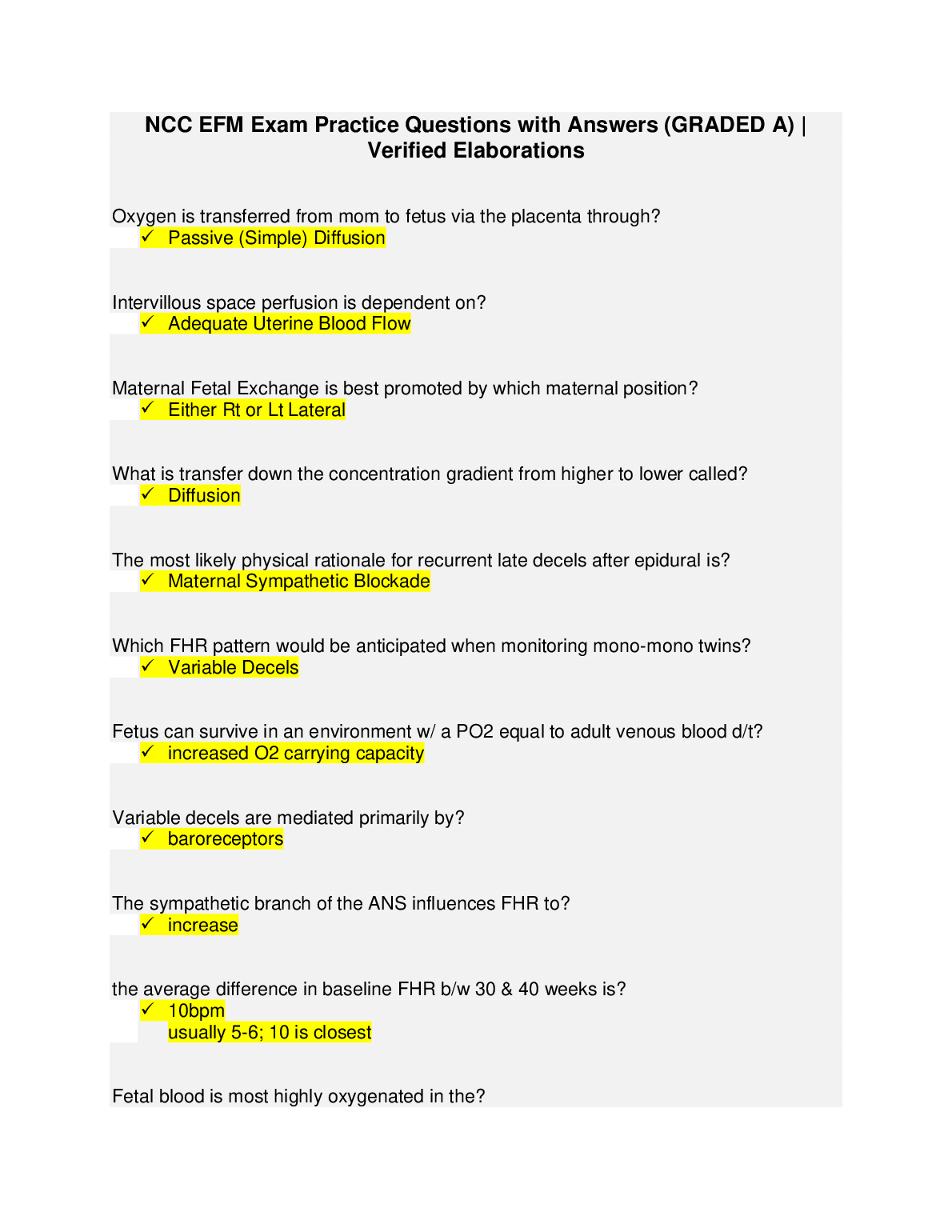
Master Ncc Efm Exams With Graded Practice Questions On Fetal Heart Rate Monitoring, V...
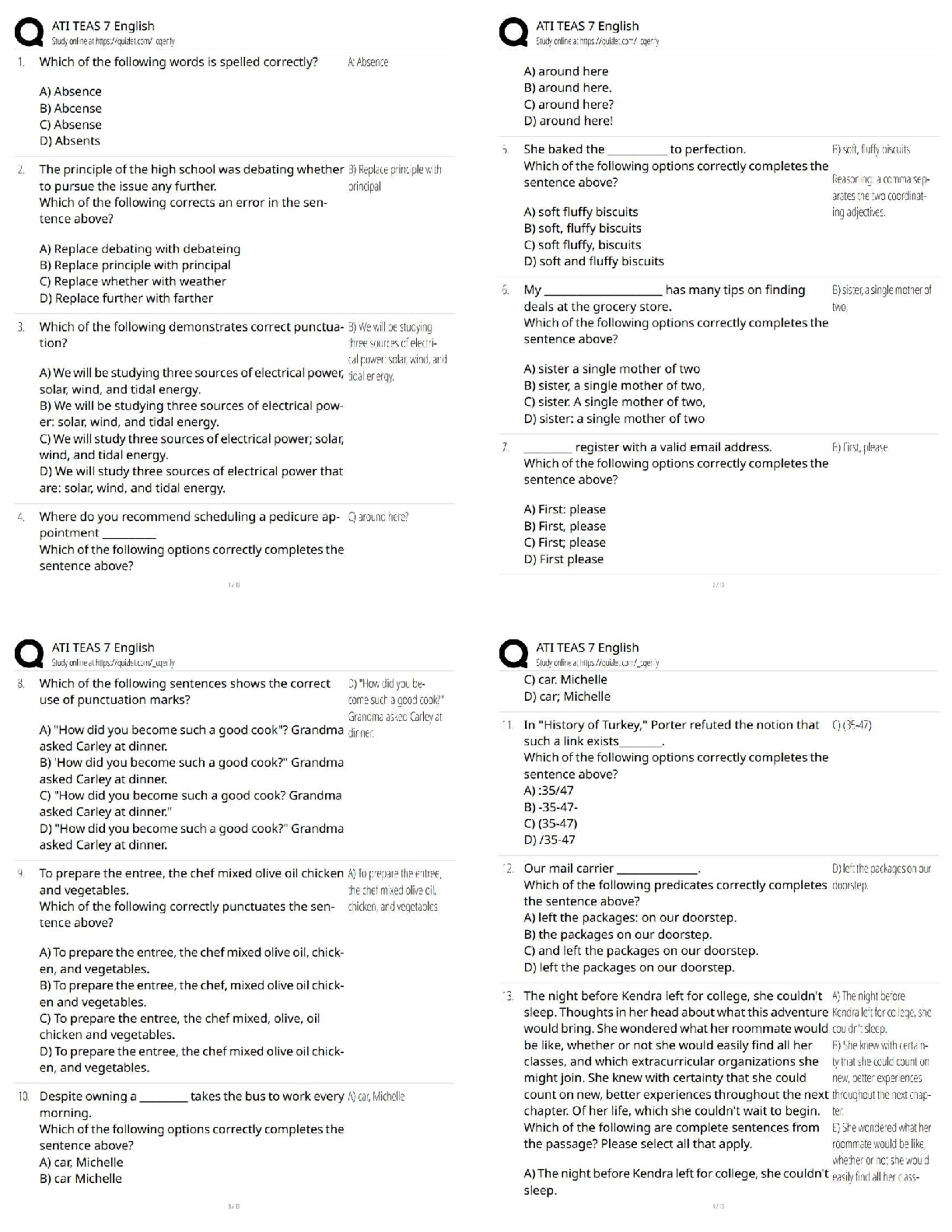
Master The ATI TEAS 7 English Section With This Verified Test Bank. Improve Grammar,...
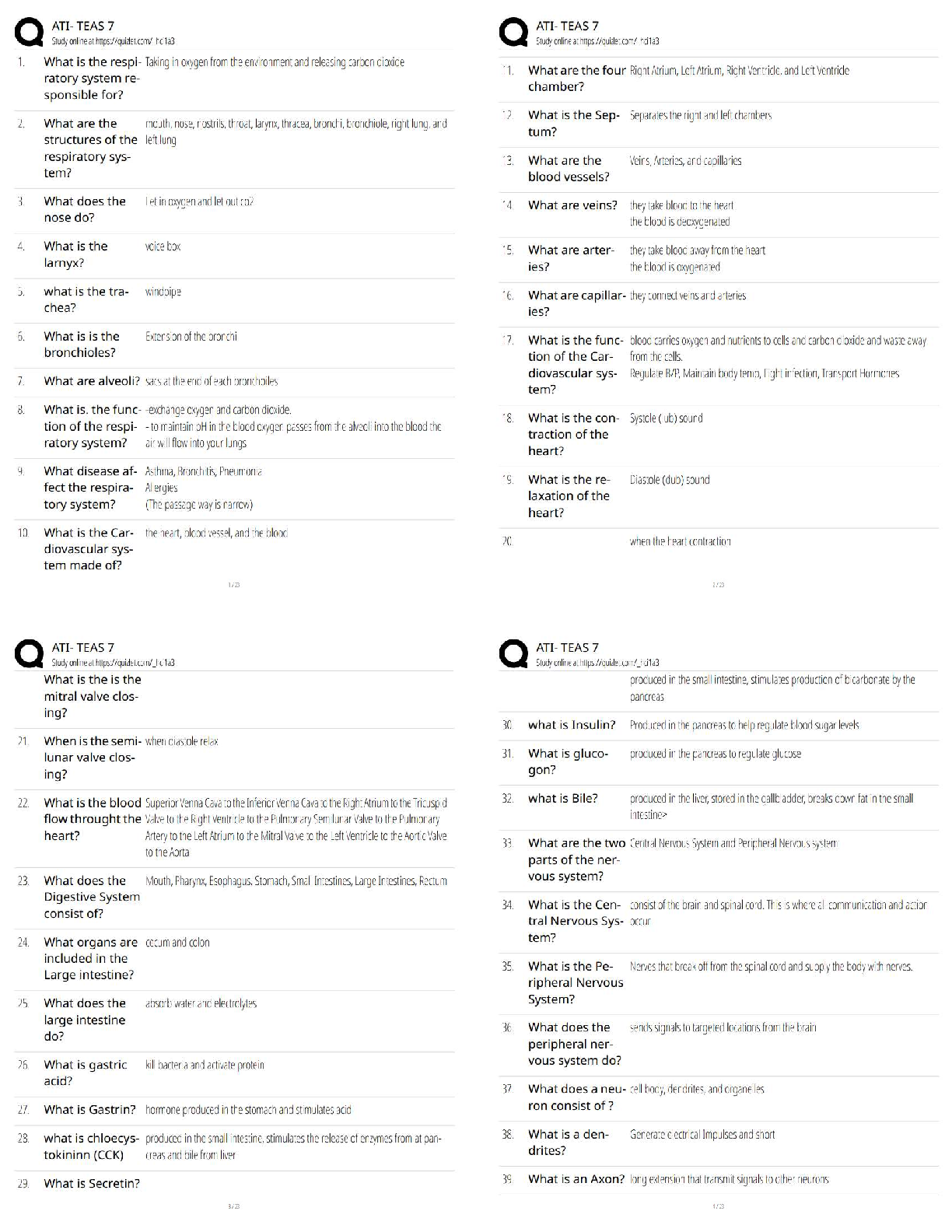
Master ATI TEAS 7 With Our Verified 2026 Test Bank. Covers Respiratory, Cardiovascula...
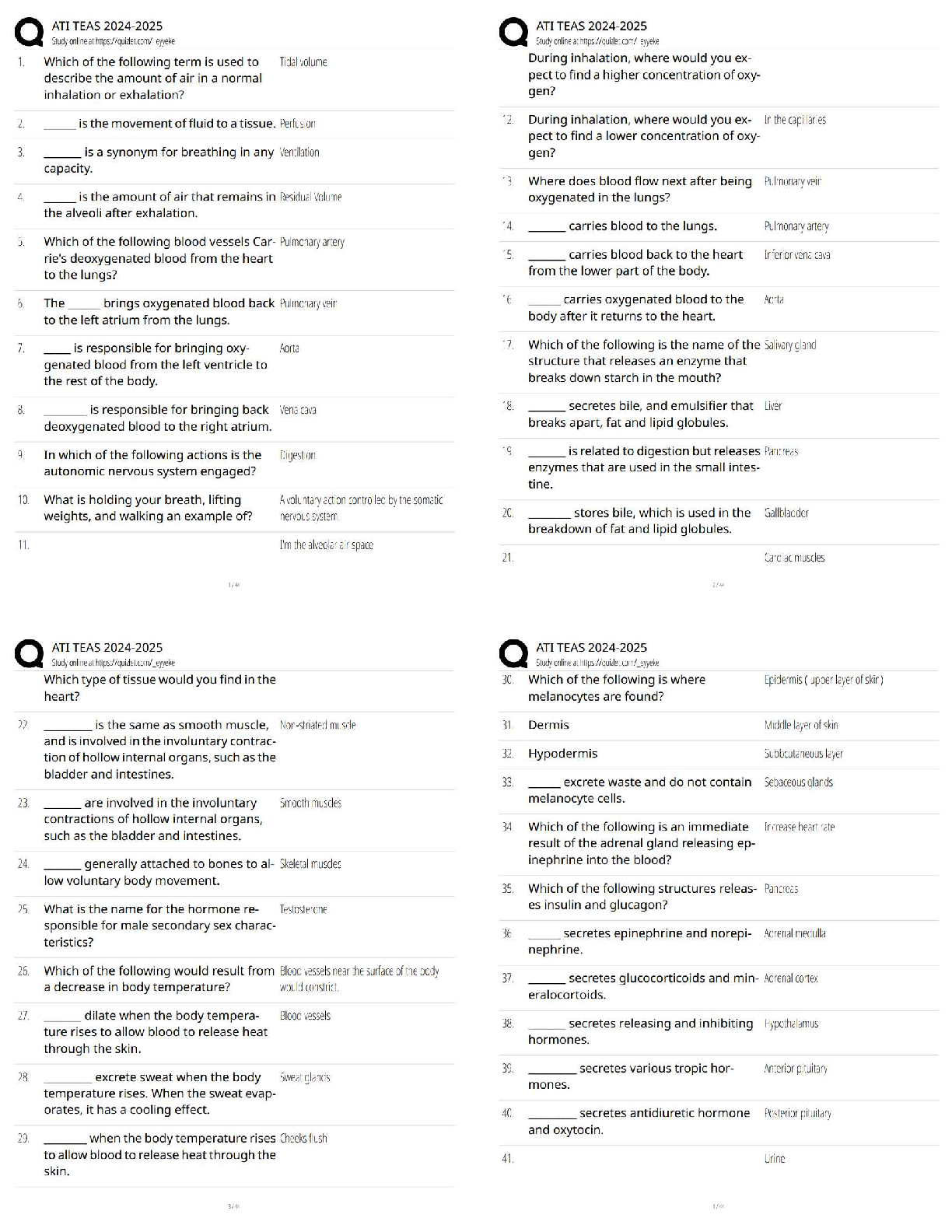
Ace The ATI TEAS 7 Exam On Your First Try. Access Hundreds Of Practice Questions, Det...