
Test bank
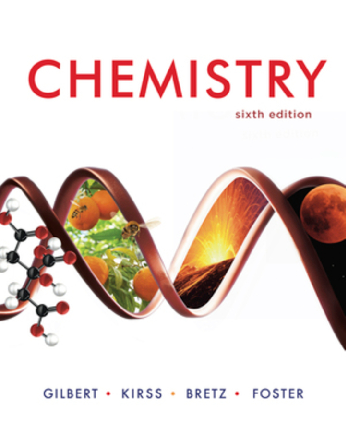
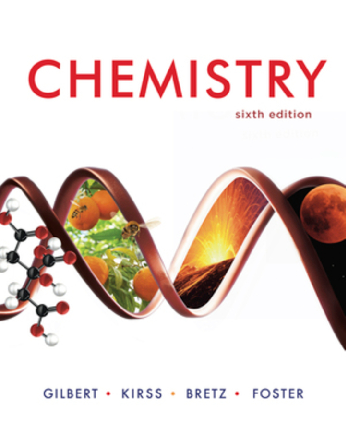
Chemistry: The Science In Context 6th Edition Test Bank
Test Bank for Chemistry: The Science in Context (6th Edition) is a comprehensive assessment resource designed to accompany the textbook by providing chapter-based questions that evaluate students’ understanding of chemistry through meaningful real-world applications. The test bank emphasizes conceptual learning, scientific reasoning, quantitative problem-solving, and the ability to connect chemical principles with everyday life, environmental issues, health, industry, and technology.
Rather than focusing solely on mathematical calculations, the resource integrates chemical theory with practical examples, encouraging students to understand how chemistry explains natural phenomena and supports advances in medicine, engineering, agriculture, and environmental science. Questions progress from foundational knowledge to higher-order analytical and application-based learning.
Major topics covered include:
* Introduction to chemistry
* Scientific method
* Measurement and units
* Matter and energy
* Atomic theory
* Atomic structure
* Elements and the periodic table
* Chemical bonding
* Molecular structure
* Chemical nomenclature
* Chemical reactions
* Stoichiometry
* Gases and gas laws
* Liquids and solids
* Solutions and concentration
* Acids and bases
* Chemical equilibrium
* Thermochemistry
* Thermodynamics
* Chemical kinetics
* Oxidation-reduction reactions
* Electrochemistry
* Nuclear chemistry
* Organic chemistry
* Hydrocarbons
* Functional groups
* Polymers
* Biochemistry
* Carbohydrates
* Lipids
* Proteins
* Nucleic acids
* Nutrition and metabolism
* Environmental chemistry
* Water chemistry
* Air pollution
* Climate and energy
* Materials chemistry
* Chemistry in medicine
* Household chemistry
* Industrial chemistry
The test bank helps students develop the ability to:
* Explain fundamental chemical principles and scientific concepts.
* Apply chemistry to everyday situations and real-world problems.
* Analyze atomic and molecular structures.
* Predict chemical behavior using periodic trends and bonding theories.
* Write and interpret chemical equations.
* Perform stoichiometric and solution calculations.
* Apply gas laws and thermodynamic concepts.
* Analyze chemical equilibrium and acid-base systems.
* Interpret laboratory observations and experimental data.
* Explain oxidation-reduction reactions and electrochemical processes.
* Relate chemistry to biological systems, environmental science, healthcare, and technology.
* Develop critical-thinking, analytical reasoning, and scientific problem-solving skills.
Assessment formats commonly include:
* Multiple-choice questions
* Conceptual application questions
* Quantitative problem-solving exercises
* Data interpretation questions
* Laboratory-based assessments
* Real-world scenario questions
* Critical-thinking and analytical reasoning exercises
Key instructional features include:
* Chapter-by-chapter organization aligned with *Chemistry: The Science in Context* (6th Edition)
* Questions ranging from basic understanding to advanced application
* Answer keys for efficient grading and review
* Emphasis on scientific literacy and chemistry in everyday life
* Support for classroom examinations, quizzes, laboratory assessments, homework review, and comprehensive exam preparation
Undergraduate Biochemistry Students
Biology Students
Molecular Biology Students
Biotechnology Students
Pre-Medical Students
Medical Students
Pharmacy Students
Nursing Students
Nutrition and Dietetics Students
Dentistry Students
Allied Health Students
Chemistry Students
Graduate Students
Biochemistry Instructors and Educators
Tutors and Academic Support Professionals
Independent Learners
Students Preparing for Examinations
Study Material Covering Equations, Matrices, Vector Spaces, Transformations, Eigenval...
Study Resource Covering Accounting Principles, Financial Statements, Transactions, Th...
Study Resource Covering Financial Reporting, Statement Analysis, Forecasting, Valuati...
Resource Supporting Review Of Financial Performance, Accounting Information, Forecast...