
Organic Chemistry Third Edition SOLUTION MANUAL GUIDE Organic Chemistry Third Edition SOLUTION MANUAL GUIDE

Chemistry

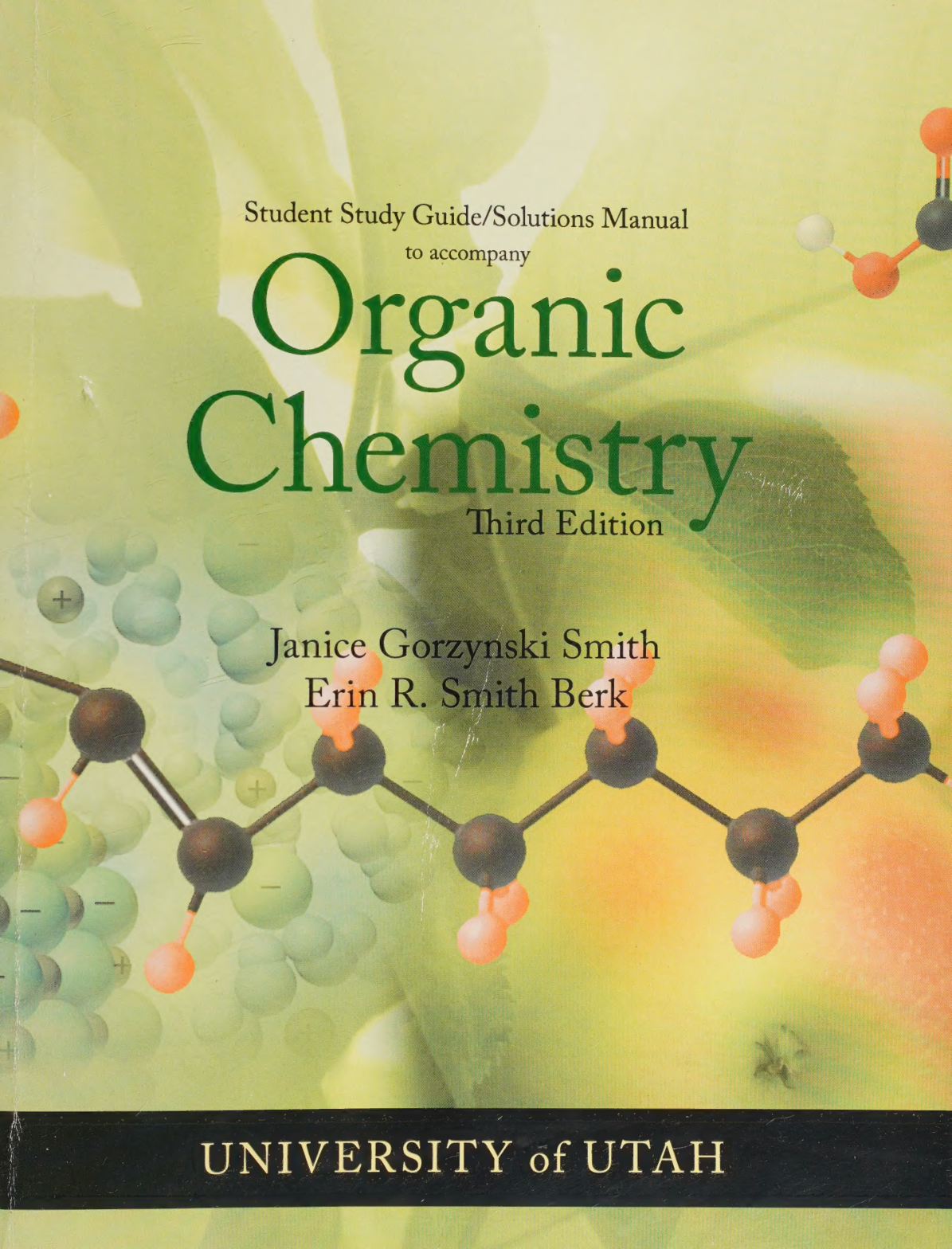
Organic Chemistry Third Edition Solution Manual Guide


Designed To Improve Conceptual Understanding And Analytical Skills, This Resource Is Ideal For Undergraduate Students.
Description

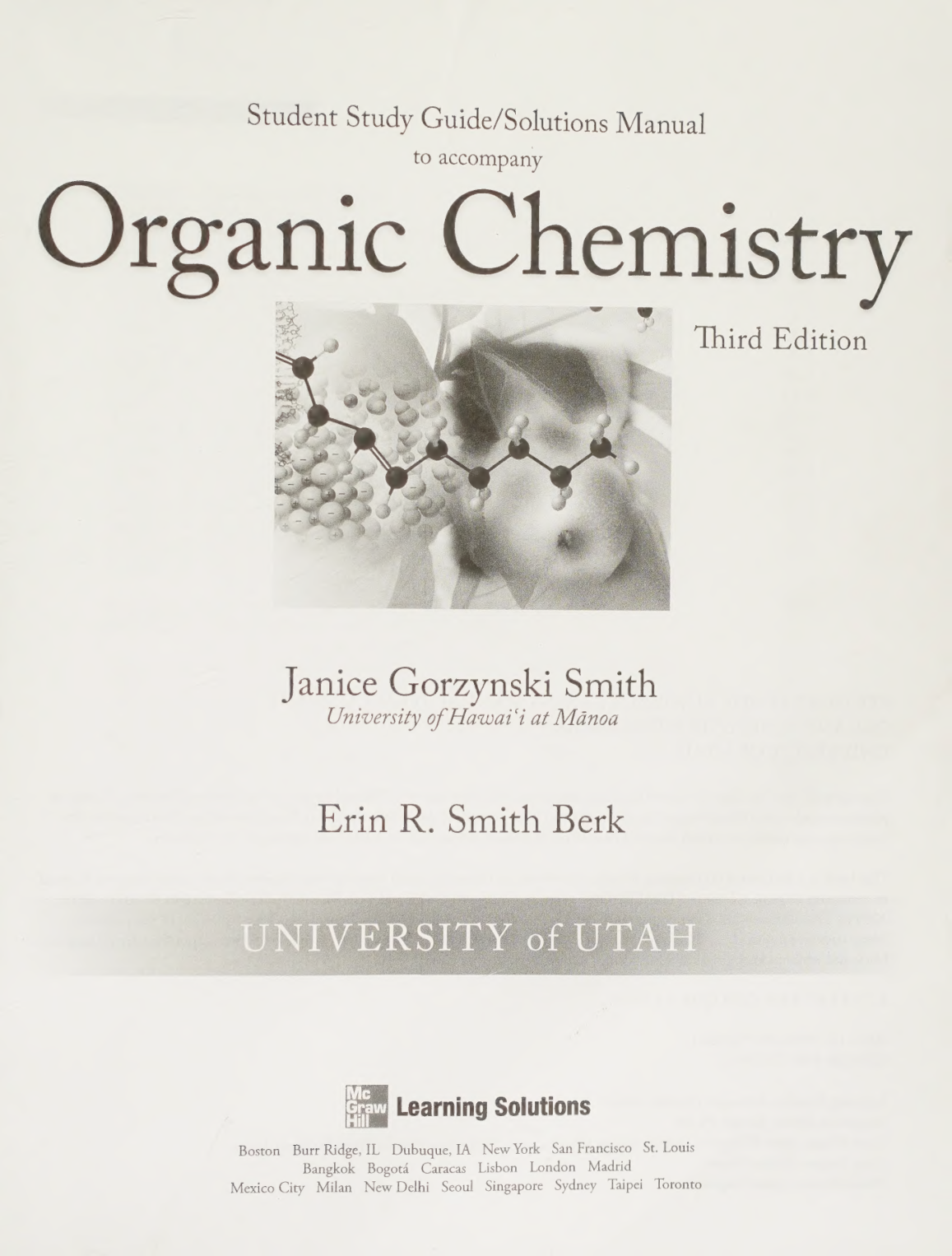
Student Study Guide/Solutions Manual to Accompany Organic Chemistry (3rd Edition) by Janice Gorzynski Smith is a comprehensive learning resource designed to help students successfully master the principles of organic chemistry through guided study, chapter reviews, practice exercises, and detailed, step-by-step solutions to textbook problems. Serving as both a study guide and a solutions manual, it reinforces classroom instruction by explaining key concepts, reaction mechanisms, and problem-solving methods in a clear and systematic manner.

The resource is designed to strengthen conceptual understanding while helping students develop the analytical reasoning and critical-thinking skills required to solve organic chemistry problems. Each chapter supports active learning by reviewing important concepts, highlighting common mistakes, and demonstrating logical approaches to solving reaction, synthesis, stereochemistry, and spectroscopy problems.

Major topics covered include:

* Introduction to organic chemistry
* Atomic structure and chemical bonding
* Molecular structure and hybridization
* Functional groups
* Organic nomenclature
* Structural isomerism
* Stereochemistry
* Conformations and configurations
* Acids and bases in organic chemistry
* Organic reaction mechanisms
* Alkanes
* Cycloalkanes
* Alkenes
* Alkynes
* Aromatic compounds
* Electrophilic aromatic substitution
* Alkyl halides
* Alcohols
* Ethers
* Epoxides
* Aldehydes
* Ketones
* Carboxylic acids
* Carboxylic acid derivatives
* Amines
* Phenols
* Carbonyl chemistry
* Enols and enolates
* Nucleophilic substitution reactions
* Elimination reactions
* Addition reactions
* Oxidation and reduction reactions
* Radical reactions
* Organometallic chemistry
* Organic synthesis
* Multistep synthesis
* Spectroscopy
* Infrared (IR) spectroscopy
* Nuclear Magnetic Resonance (NMR) spectroscopy
* Mass spectrometry
* Ultraviolet-visible (UV-Vis) spectroscopy
* Biomolecules
* Carbohydrates
* Lipids
* Amino acids
* Proteins
* Nucleic acids

The study guide and solutions manual helps students:

* Review important concepts before class and examinations.
* Reinforce lecture material through guided practice.
* Understand reaction mechanisms using step-by-step explanations.
* Develop systematic approaches to solving synthesis problems.
* Interpret spectroscopic data for structural determination.
* Analyze stereochemical relationships and molecular configurations.
* Strengthen understanding of functional group chemistry.
* Improve laboratory preparation through conceptual review.
* Build confidence in solving textbook exercises independently.

Students using this resource develop the ability to:

* Apply IUPAC nomenclature correctly.
* Analyze molecular structure and chemical reactivity.
* Predict products of organic reactions.
* Draw and explain reaction mechanisms.
* Solve stereochemistry and conformational analysis problems.
* Design multistep organic syntheses.
* Interpret IR, NMR, MS, and UV-Vis spectra.
* Identify unknown organic compounds using spectroscopic evidence.
* Apply acid-base concepts to organic reactions.
* Explain the chemistry of biologically important molecules.
* Develop critical-thinking, analytical reasoning, and mechanism-based problem-solving skills.

Key instructional features include:

* Chapter-by-chapter organization corresponding to the textbook
* Comprehensive concept reviews and study summaries
* Step-by-step solutions to textbook exercises
* Practice questions for self-assessment
* Mechanism-focused explanations
* Spectroscopy interpretation guidance
* Integration of conceptual learning with practical problem solving
* Support for homework, laboratory preparation, independent study, and examination review

PDF Sample
1 / 3
Organic Chemistry Third Edition SOLUTION MANUAL GUIDE IMG-1
Organic Chemistry Third Edition SOLUTION MANUAL GUIDE IMG-2
Organic Chemistry Third Edition SOLUTION MANUAL GUIDE IMG-3
Who is this Document for ?

Undergraduate Biochemistry Students
Biology Students
Molecular Biology Students
Biotechnology Students
Pre-Medical Students
Medical Students
Pharmacy Students
Nursing Students
Nutrition and Dietetics Students
Dentistry Students
Allied Health Students
Chemistry Students
Graduate Students
Biochemistry Instructors and Educators
Tutors and Academic Support Professionals
Independent Learners
Students Preparing for Examinations
What you will learn ?
Explain the fundamental principles and theories of organic chemistry.
Apply IUPAC nomenclature rules to accurately name and identify organic compounds.
Identify and classify major functional groups and predict their chemical properties.
Explain atomic hybridization, molecular geometry, resonance, and chemical bonding.
Differentiate among structural isomers, stereoisomers, conformers, enantiomers, and diastereomers.
Analyze stereochemistry, chirality, and molecular configurations.
Apply acid-base concepts to organic molecules and reaction mechanisms.
Predict the products of common organic reactions based on molecular structure and reactivity.
Explain nucleophilic substitution (SN1 and SN2) and elimination (E1 and E2) reaction mechanisms.
Analyze electrophilic, nucleophilic, and radical reaction pathways.
Describe the chemistry and reactions of alkanes, cycloalkanes, alkenes, alkynes, aromatic compounds, alkyl halides, alcohols, ethers, aldehydes, ketones, carboxylic acids, esters, amides, and amines.
Explain carbonyl chemistry, oxidation-reduction reactions, and organometallic reactions.
Develop logical multistep organic synthesis strategies.
Interpret spectroscopic data from infrared (IR), nuclear magnetic resonance (NMR), mass spectrometry (MS), and ultraviolet-visible (UV-Vis) spectroscopy.
Identify unknown organic compounds using combined spectroscopic evidence.
Relate molecular structure to physical properties and chemical reactivity.
Explain the structure and chemistry of biologically important molecules, including carbohydrates, lipids, amino acids, proteins, and nucleic acids.
Apply organic chemistry principles to pharmaceutical, biological, environmental, and industrial applications.
Use systematic problem-solving techniques to solve conceptual and quantitative organic chemistry problems.
Strengthen critical-thinking, analytical reasoning, and mechanism-based problem-solving skills.
Integrate concepts from organic chemistry, biochemistry, molecular biology, and medicinal chemistry to explain complex chemical and biological systems.
Build confidence in completing textbook exercises through detailed, step-by-step worked solutions.
Prepare effectively for laboratory activities, quizzes, examinations, and advanced coursework in chemistry and related life science disciplines.
What do you get with this PDF ?
Instant access after purchase
Download in PDF format
DRM free, read anywhere
Document details
Last update :
Jul 21, 2026
Length :
836 pages
Edition :
2026
Language :
English
Category :
Keywords
Organic Chemistry Organic Chemistry 3rd Edition Student Study Guide Solutions Manual Organic Chemistry Study Guide Organic Chemistry Solutions Manual Organic Chemistry Problem Solving Organic Chemistry Homework Solutions Organic Chemistry Review Organic Chemistry Practice Problems Reaction Mechanisms Functional Groups Iupac Nomenclature Molecular Structure Chemical Bonding Hybridization Resonance Structural Isomerism Stereochemistry Chirality Enantiomers Diastereomers Conformational Analysis Acid-base Chemistry Organic Reactions Sn1 Reactions Sn2 Reactions E1 Reactions E2 Reactions Nucleophilic Substitution Elimination Reactions Addition Reactions Oxidation Reactions Reduction Reactions Radical Reactions Alkanes Cycloalkanes Alkenes Alkynes Aromatic Compounds Electrophilic Aromatic Substitution Alkyl Halides Alcohols Ethers Epoxides Aldehydes Ketones Carboxylic Acids Esters Amides Amines Carbonyl Chemistry Organometallic Chemistry Organic Synthesis Multistep Synthesis Spectroscopy Infrared Spectroscopy Ir Spectroscopy Nuclear Magnetic Resonance Nmr Spectroscopy Mass Spectrometry Ms Spectroscopy Uv-visible Spectroscopy Structural Determination Biomolecules Carbohydrates Lipids Amino Acids Proteins Nucleic Acids Medicinal Chemistry Biochemistry Molecular Biology Laboratory Chemistry Chemistry Education Undergraduate Organic Chemistry Biology Students Biochemistry Students Pharmacy Students Medical Students Dentistry Students Nursing Students Biotechnology Chemical Engineering Stem Education Scientific Reasoning Critical Thinking Organic Chemistry Exam Preparation Study Guide Self-assessment Laboratory Preparation.
Recommendations for you
Organic Chemistry 2nd Edition TEST BANK
Organic Chemistry 2nd Edition Test Bank

Is A Comprehensive Assessment Resource Designed To Evaluate Students’ Understanding O...

$16
Clinical Laboratory Chemistry 2nd Edition TEST BANK
Clinical Laboratory Chemistry 2nd Edition Test Bank

Is A Comprehensive Assessment Resource Designed To Evaluate Students' Knowledge Of Cl...

$16
Biochemistry, 2nd edition by Raymond S. Ochs TEST BANK
Biochemistry, 2nd Edition By Raymond S. Ochs Test Bank

It Covers Essential Topics Including Biomolecules, Enzyme Function, Metabolism, Molec...

$16
Chemistry: The Science in Context 6th Edition TEST BANK
Chemistry: The Science In Context 6th Edition Test Bank

Is A Comprehensive Assessment Resource Designed To Evaluate Students' Understanding O...

$16