
Test bank
Fundamentals Of Human Neuropsychology 8th Edition Test Bank
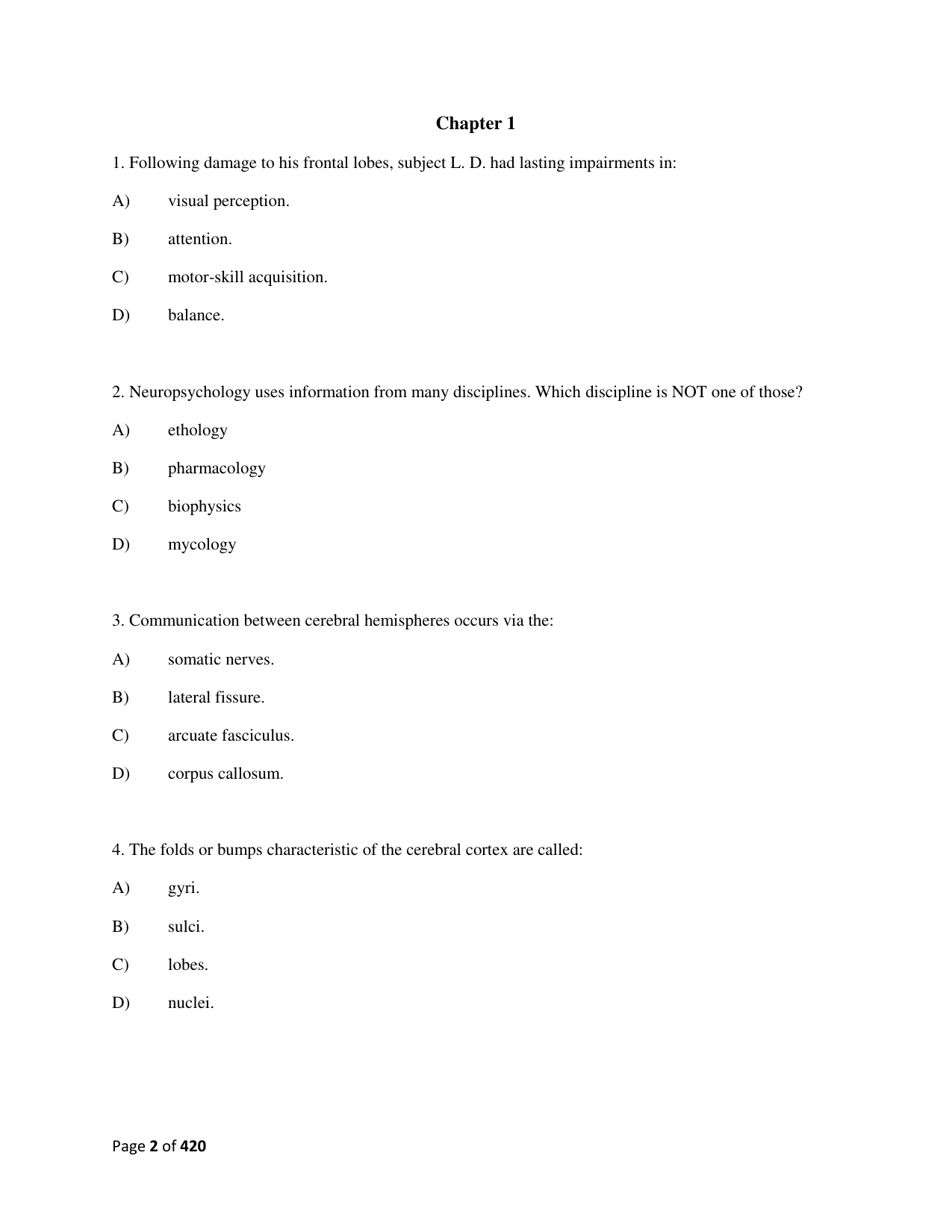
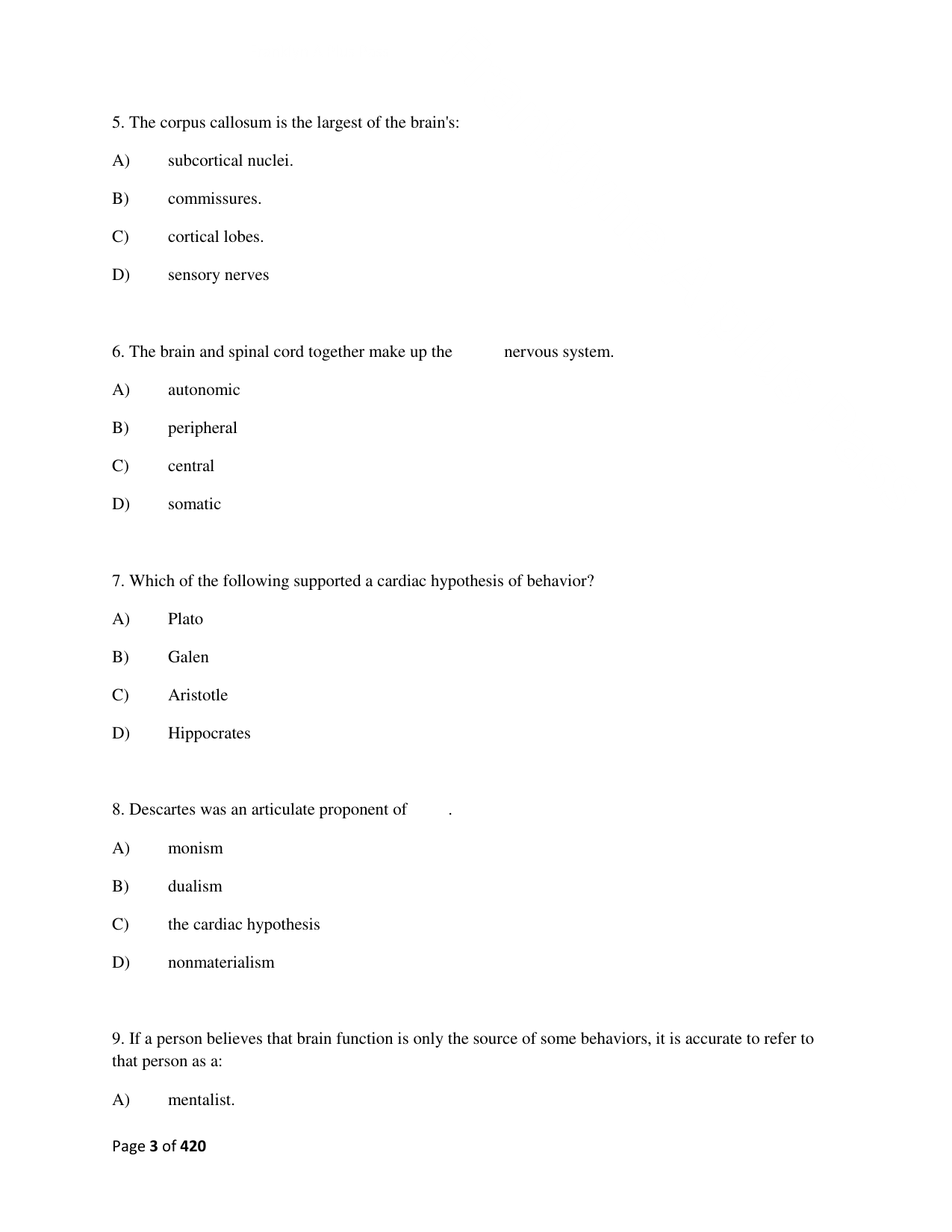
Test Bank for Fundamentals of Human Neuropsychology (8th Edition) by Bryan Kolb and Ian Whishaw is a comprehensive assessment resource designed to support the evaluation of students’ knowledge and understanding of human neuropsychology, brain-behavior relationships, cognitive processes, and the biological foundations of behavior. It provides chapter-based questions that assess learners’ ability to apply neuropsychological concepts, interpret research findings, and understand how brain structures and neural systems influence human cognition, emotion, and behavior.
This test bank complements the textbook by integrating neuroscience, psychology, and behavioral science concepts. It emphasizes critical thinking, clinical reasoning, and the application of neuropsychological principles to normal brain function, brain injury, neurological disorders, and cognitive changes across the lifespan.
The resource assists instructors in developing quizzes, examinations, assignments, and review activities while helping students reinforce key concepts in neuroscience and prepare for academic assessments.
Major Topics Covered Include:
Introduction to human neuropsychology
History and foundations of neuropsychology
Brain structure and organization
Nervous system anatomy and function
Neurons and neural communication
Synaptic transmission and neurotransmitters
Brain imaging and research methods
Neuroanatomical approaches to behavior
Functional organization of the cerebral cortex
Hemispheric specialization and lateralization
Brain development and maturation
Neural plasticity and recovery after brain injury
Genetics and brain development
Evolution of the human brain
Sensory systems and perception
Motor systems and movement control
Attention and cognitive processing
Learning and memory systems
Language and communication
Emotion and motivation
Executive functions and decision-making
Intelligence and cognitive abilities
Consciousness and awareness
Sleep and biological rhythms
Neuropsychological assessment methods
Cognitive testing and evaluation
Brain injury and neurological disorders
Stroke and cerebrovascular disorders
Traumatic brain injury
Epilepsy
Neurodegenerative diseases
Dementia and Alzheimer’s disease
Parkinson’s disease
Mental disorders and brain function
Aging and cognitive changes
Rehabilitation and recovery following brain damage
The Test Bank Helps Students Develop the Ability To:
Explain the relationship between brain structures and human behavior.
Describe the organization and function of the nervous system.
Understand how neurons communicate and support brain activity.
Apply concepts of neuroplasticity to learning, development, and recovery.
Identify relationships between specific brain regions and cognitive functions.
Analyze the effects of brain damage on behavior, emotion, and cognition.
Explain methods used in neuropsychological research and assessment.
Interpret findings from brain imaging and behavioral studies.
Apply theories of perception, memory, language, and cognition.
Understand biological influences on psychological processes.
Evaluate the impact of neurological disorders on human functioning.
Integrate neuroscience concepts with psychological and behavioral theories.
Develop critical-thinking and problem-solving skills related to brain-behavior relationships.
Assessment Formats Commonly Include:
Multiple-choice questions
Conceptual understanding questions
Application-based neuropsychology scenarios
Brain-behavior case studies
Research interpretation questions
Critical-thinking exercises
Clinical neuropsychological application questions
Key Features:
Chapter-by-chapter organization aligned with Fundamentals of Human Neuropsychology (8th Edition)
Questions designed to assess foundational knowledge and advanced application
Emphasis on neuroscience principles, cognition, behavior, and clinical applications
Support for classroom examinations, quizzes, and independent review
Reinforcement of important concepts in biological psychology and neuropsychology
students studying psychology, neuroscience, cognitive science, behavioral science, biology, health sciences, rehabilitation sciences, and related disciplines.
College instructors, teaching assistants, psychology educators, neuroscience researchers, and independent learners

Study Material Covering Equations, Matrices, Vector Spaces, Transformations, Eigenval...
Study Resource Covering Accounting Principles, Financial Statements, Transactions, Th...

Study Resource Covering Financial Reporting, Statement Analysis, Forecasting, Valuati...

Resource Supporting Review Of Financial Performance, Accounting Information, Forecast...