
Test bank
LPN To RN Transitions, 4th Edition Test Bank
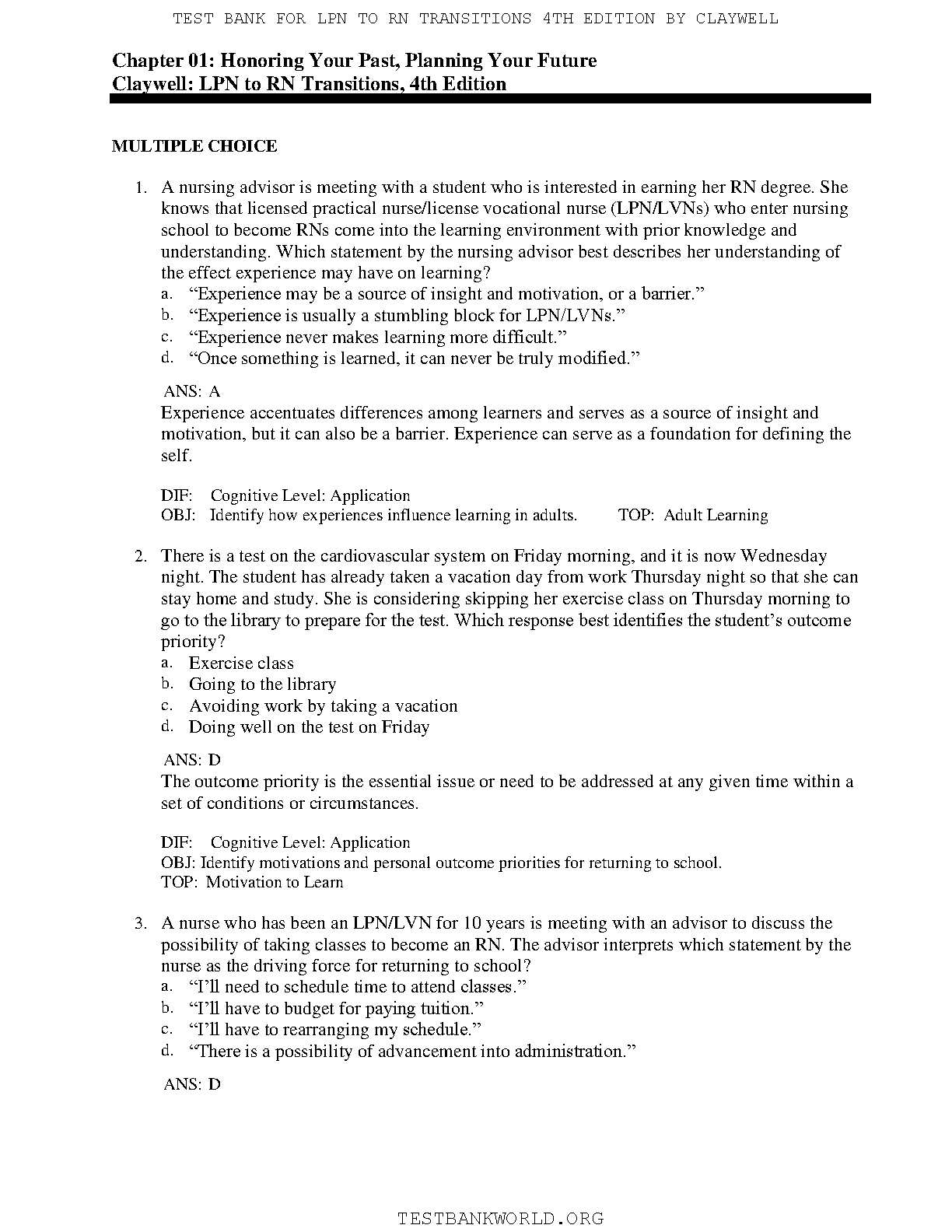
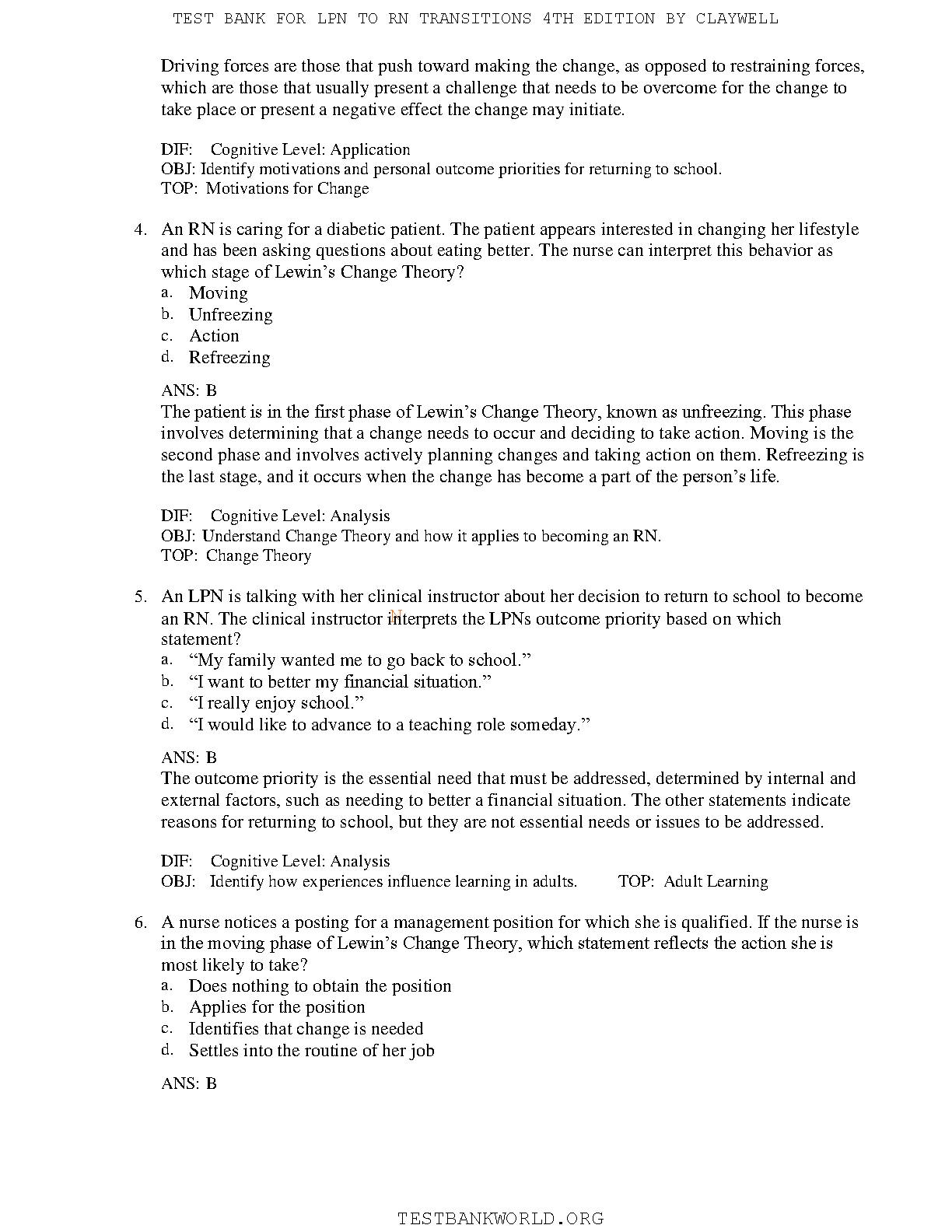
Test Bank for LPN to RN Transitions (4th Edition) is a comprehensive assessment resource designed to help Licensed Practical/Vocational Nurses (LPN/LVNs) successfully transition into the expanded role of the Registered Nurse (RN). Organized according to the textbook chapters, this test bank provides a broad collection of assessment questions that evaluate students' understanding of professional nursing concepts, clinical reasoning, evidence-based practice, leadership, communication, patient safety, and comprehensive nursing care across the lifespan.
Designed to accompany LPN to RN Transitions (4th Edition), this resource bridges the gap between practical nursing and professional registered nursing practice by emphasizing critical thinking, independent clinical judgment, care coordination, leadership, delegation, legal and ethical responsibilities, and professional accountability. Through realistic patient-care scenarios and application-focused questions, learners develop the confidence and competencies expected of entry-level registered nurses.
The test bank serves as an excellent resource for nursing educators developing examinations and competency assessments while helping students prepare for NCLEX-RN®, transition-to-practice programs, and professional nursing coursework.
Major Topics Covered Include
Transition to Professional Nursing
Role transition from LPN/LVN to RN
Professional nursing responsibilities
Scope of practice
Professional accountability
Professional standards
Lifelong learning
Professional identity
Foundations of Nursing Practice
Nursing process
Critical thinking
Clinical reasoning
Clinical judgment
Evidence-based practice
Patient-centered care
Quality improvement
Patient safety
Leadership and Management
Leadership principles
Nursing management
Delegation
Supervision
Prioritization
Time management
Care coordination
Interprofessional collaboration
Communication
Therapeutic communication
Professional communication
Documentation
Patient education
Team communication
Cultural competence
Family-centered care
Legal and Ethical Issues
Nursing ethics
Legal responsibilities
Patient rights
Confidentiality
Informed consent
Professional liability
Regulatory standards
Healthcare Systems
Healthcare delivery systems
Community health
Population health
Health promotion
Disease prevention
Case management
Continuity of care
Nursing Informatics
Electronic health records
Healthcare technology
Clinical information systems
Documentation standards
Data management
Pharmacology and Medication Safety
Medication administration
Medication calculations
Medication safety
Pharmacology principles
Drug interactions
High-alert medications
Medical-Surgical Nursing
Cardiovascular disorders
Respiratory disorders
Neurological disorders
Gastrointestinal disorders
Endocrine disorders
Renal disorders
Musculoskeletal disorders
Oncology
Fluid and electrolyte balance
Pain management
Mental Health Nursing
Therapeutic communication
Psychiatric disorders
Crisis intervention
Behavioral health
Mental health assessment
Maternal-Newborn Nursing
Pregnancy
Labor and delivery
Postpartum care
Newborn assessment
Family-centered maternity care
Pediatric Nursing
Growth and development
Pediatric assessment
Childhood disorders
Pediatric medication administration
Family education
Geriatric Nursing
Aging process
Chronic illness
Functional assessment
Long-term care
Healthy aging
The Test Bank Helps Students Develop the Ability To
Transition successfully from practical nursing to professional registered nursing practice.
Apply the nursing process to complex patient-care situations.
Demonstrate critical-thinking and clinical reasoning skills.
Prioritize nursing care for patients with multiple health problems.
Perform comprehensive patient assessments.
Develop, implement, and evaluate individualized nursing care plans.
Apply evidence-based practice to improve patient outcomes.
Safely administer medications and perform dosage calculations.
Promote patient safety through quality improvement initiatives.
Delegate nursing responsibilities appropriately while maintaining accountability.
Demonstrate effective leadership and management skills.
Communicate professionally with patients, families, and interdisciplinary healthcare teams.
Apply legal and ethical principles to nursing practice.
Utilize healthcare informatics and electronic documentation systems effectively.
Promote health, wellness, disease prevention, and patient education across the lifespan.
Provide culturally competent, patient-centered nursing care.
Integrate leadership, communication, and clinical judgment into professional nursing practice.
Prepare for successful performance on the NCLEX-RN® examination.
Assessment Formats Commonly Include
Multiple-choice questions
NCLEX-RN®-style questions
Clinical application questions
Case studies
Prioritization questions
Delegation exercises
Medication calculation questions
Clinical reasoning scenarios
Critical-thinking exercises
Key Features
Chapter-by-chapter organization aligned with LPN to RN Transitions (4th Edition)
Strong emphasis on transition from practical nursing to professional RN practice
Integration of leadership, patient safety, evidence-based practice, and professional accountability
Application-focused questions that strengthen clinical reasoning and decision-making
Reinforcement of communication, delegation, prioritization, and comprehensive nursing care
Suitable for classroom assessment, examination preparation, and independent review
Licensed Practical Nursing (LPN/LVN) students transitioning to Registered Nursing (RN), Associate Degree Nursing (ADN) students, Bachelor of Science in Nursing (BSN) students, nurse educators, clinical instructors, and healthcare professionals.
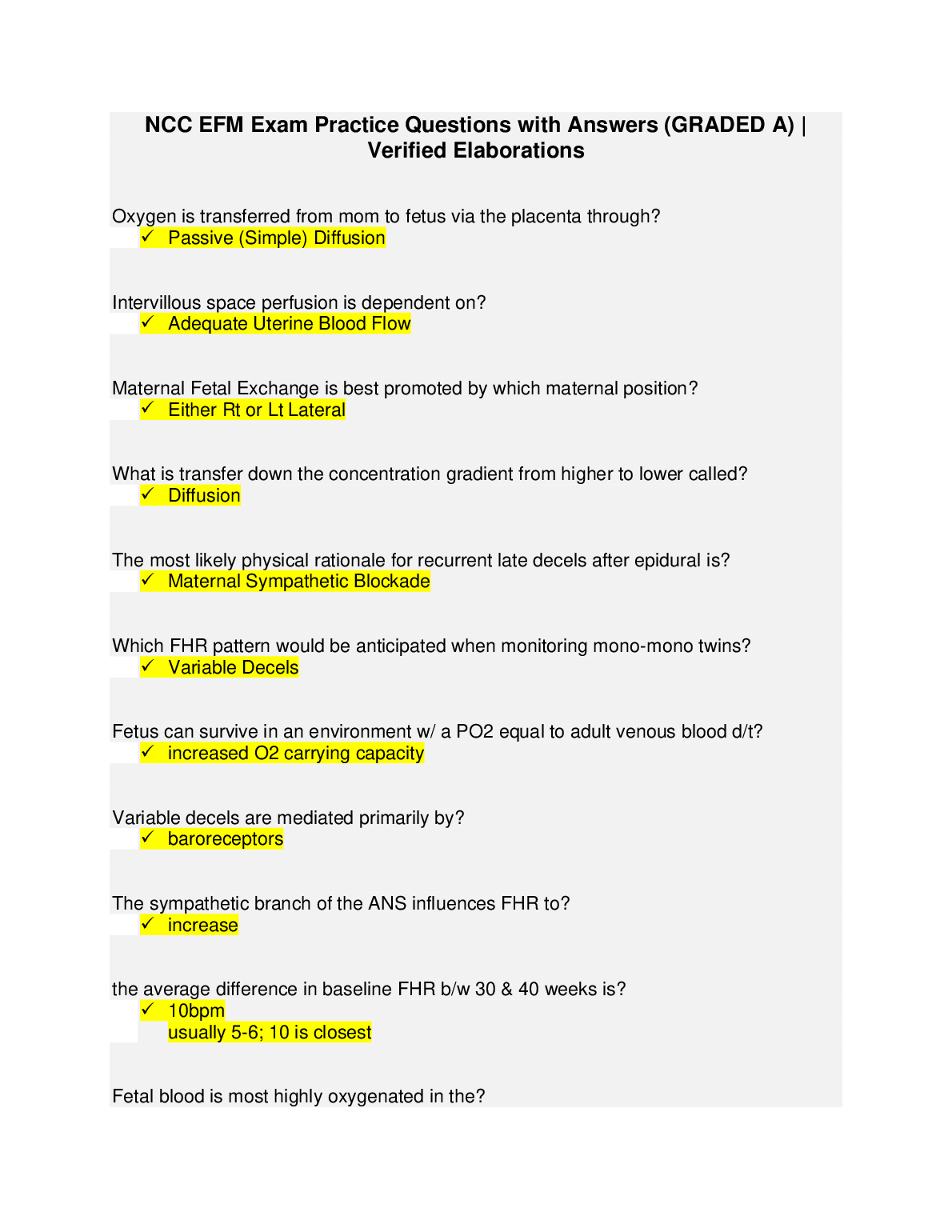
Master Ncc Efm Exams With Graded Practice Questions On Fetal Heart Rate Monitoring, V...
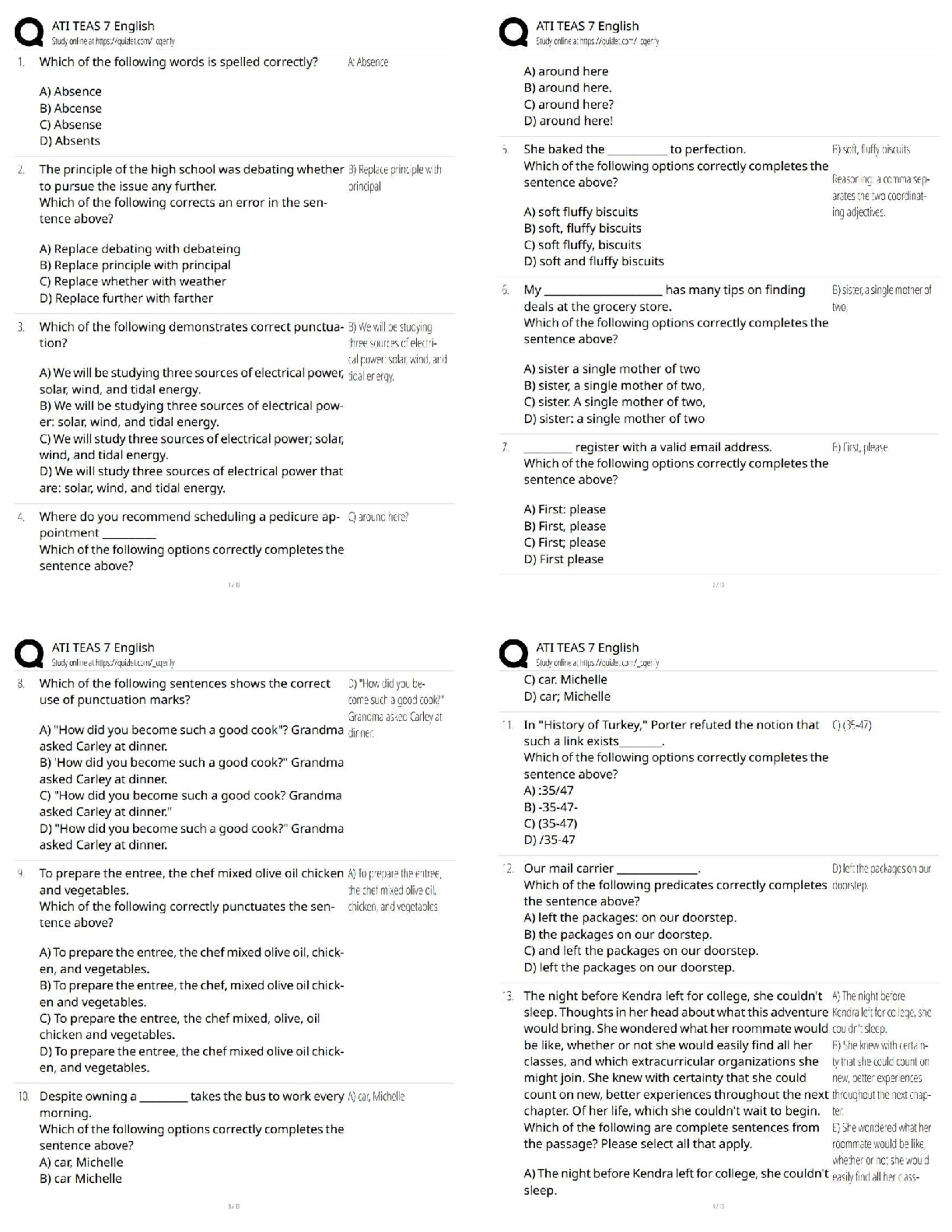
Master The ATI TEAS 7 English Section With This Verified Test Bank. Improve Grammar,...
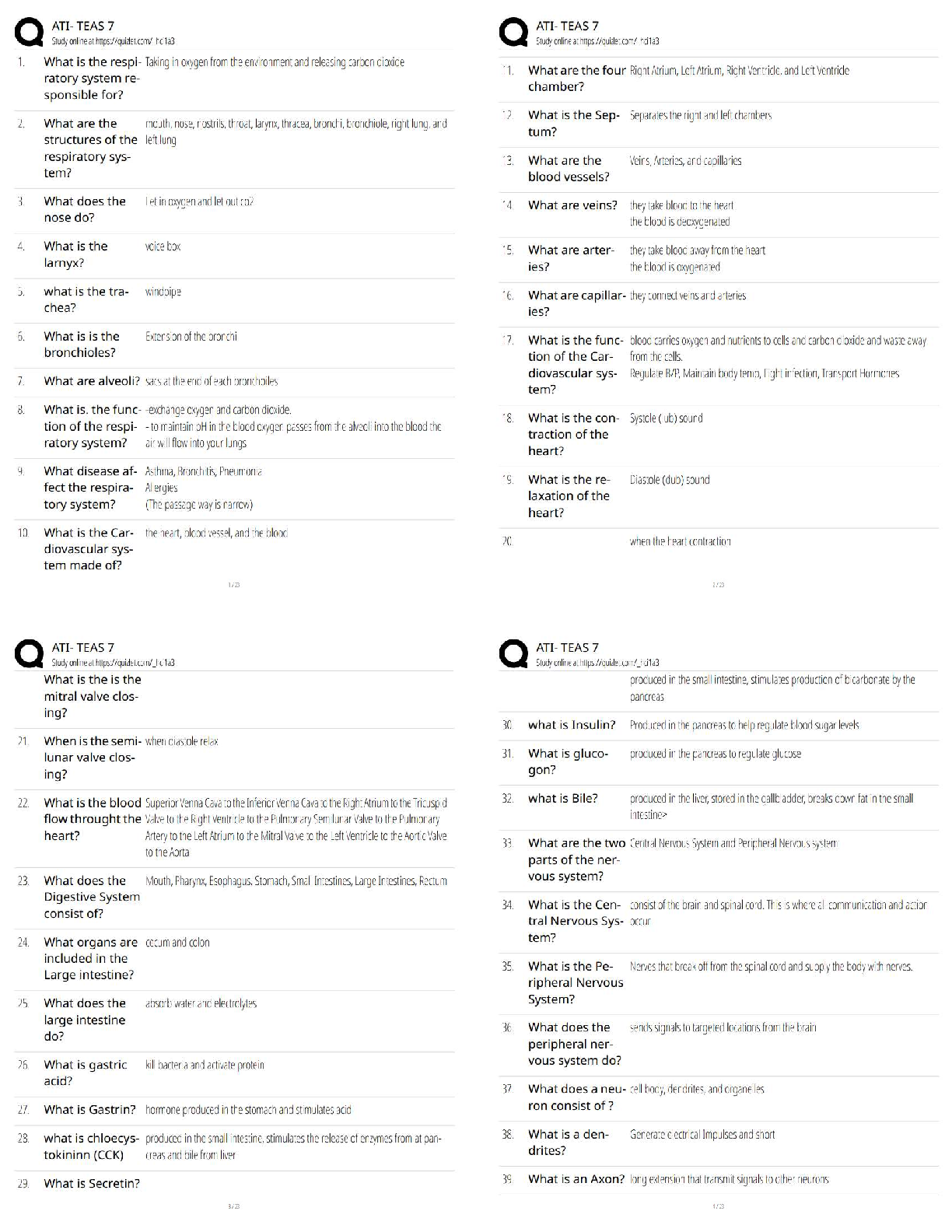
Master ATI TEAS 7 With Our Verified 2026 Test Bank. Covers Respiratory, Cardiovascula...
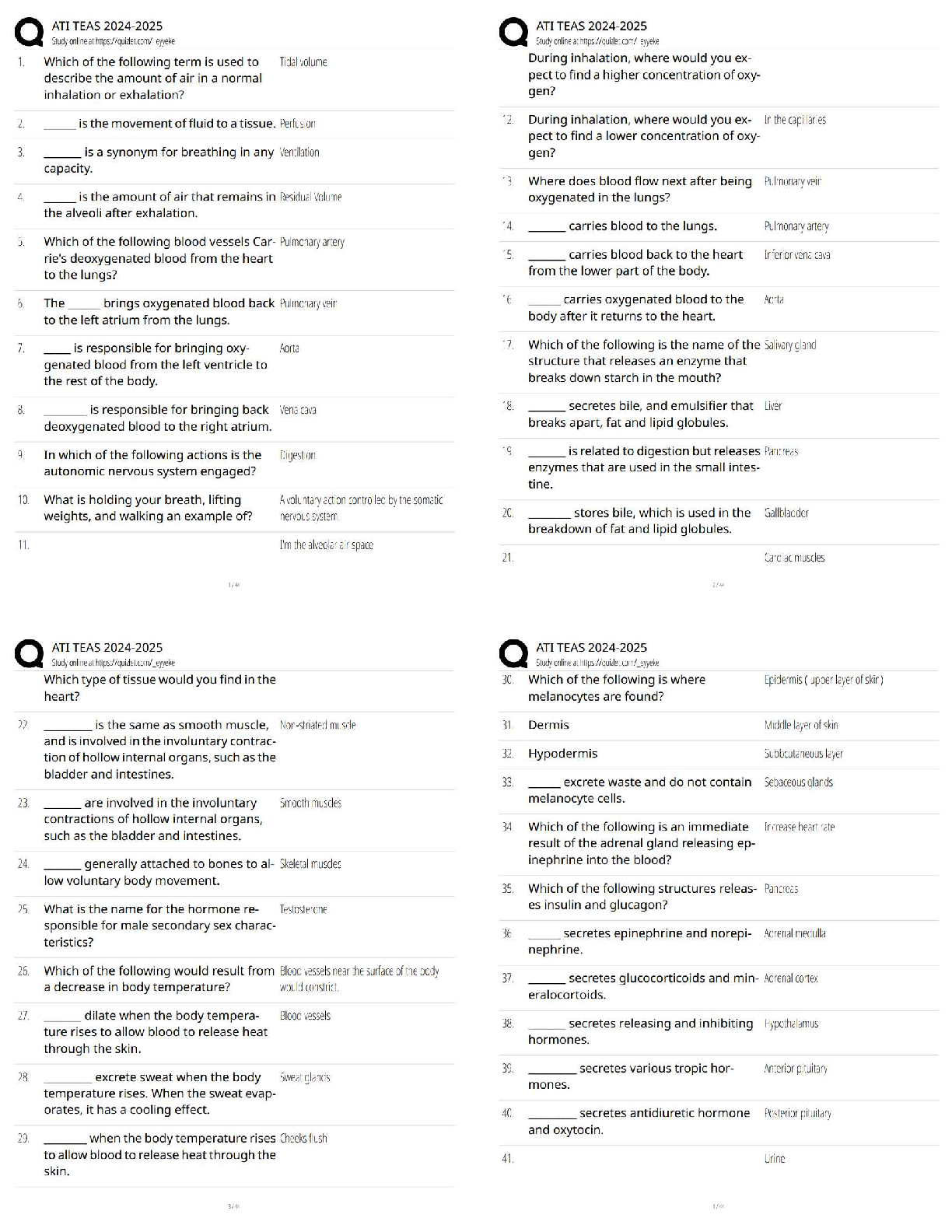
Ace The ATI TEAS 7 Exam On Your First Try. Access Hundreds Of Practice Questions, Det...