
Principles of Biology, 3rd Edition TEST BANK Principles of Biology, 3rd Edition TEST BANK

Biology

Principles Of Biology, 3rd Edition Test Bank


Is A Comprehensive Assessment Resource Designed To Help Students Master Core Biological Concepts.
Description

Test Bank for Principles of Biology (3rd Edition) by Robert J. Brooker, Eric P. Widmaier, Linda E. Graham, and Peter D. Stiling is a comprehensive assessment resource designed to support students and instructors in understanding and evaluating fundamental biological concepts. Developed to accompany the textbook, this test bank provides chapter-aligned questions that assess knowledge, comprehension, application, and critical-thinking skills across major areas of biology.

The resource follows a modern, concept-driven approach to biology by integrating molecular, cellular, organismal, evolutionary, and ecological perspectives. It helps students understand how biological systems function, how organisms evolve, and how living systems interact with their environments. Questions are designed to encourage scientific reasoning, interpretation of experimental results, and application of biological principles to real-world problems.

The Principles of Biology (3rd Edition) Test Bank is useful for instructors creating quizzes, examinations, and classroom assessments, as well as for students preparing for introductory biology exams in biology, pre-health, environmental science, biotechnology, and related disciplines.

Major Topics Covered Include
Introduction to Biology and Scientific Thinking
Characteristics of life
Biology as a scientific discipline
Levels of biological organization
Scientific methods and experimental design
Hypothesis development and testing
Interpretation of scientific data
Evolution as the foundation of modern biology
Chemistry of Life
Atoms and elements
Chemical bonds
Molecular interactions
Properties of water
Acids, bases, and pH
Organic molecules
Biological macromolecules:
Carbohydrates
Lipids
Proteins
Nucleic acids
Cell Biology
Cell theory
Prokaryotic and eukaryotic cells
Cell structures and organelles
Plasma membrane structure and function
Transport across membranes
Diffusion and osmosis
Active transport
Cell signaling and communication
Energy, Metabolism, and Cellular Processes
Energy transformations in cells
ATP and energy transfer
Enzyme structure and function
Metabolic pathways
Cellular respiration
Photosynthesis
Regulation of cellular metabolism
Molecular Biology and Genetics
DNA structure and organization
DNA replication
Chromosomes and genomes
Genes and genetic information
Transcription and translation
Regulation of gene expression
Mutations and genetic variation
Molecular biotechnology
Cell Division and Reproduction
Cell cycle regulation
Mitosis
Meiosis
Sexual reproduction
Genetic diversity
Chromosomal inheritance
Genetics and Inheritance
Mendelian genetics
Patterns of inheritance
Alleles and genotypes
Phenotypes
Genetic probability
Complex inheritance patterns
Human genetics
Evolutionary Biology
Darwin’s theory of evolution
Natural selection
Adaptation
Population evolution
Genetic drift
Gene flow
Mutation and evolutionary change
Speciation
Phylogenetic relationships
Biological Diversity
Classification systems
Taxonomy
Domains and kingdoms of life
Evolutionary relationships among organisms
Microorganisms
Plants
Animals
Biodiversity
Plant Biology
Plant structure and organization
Plant tissues
Transport systems
Photosynthesis
Plant growth and development
Plant reproduction
Plant adaptations
Animal Biology and Physiology
Animal organization
Tissues and organs
Homeostasis
Nervous system
Endocrine system
Circulatory system
Respiratory system
Digestive system
Immune system
Reproductive system
Ecology and Environmental Biology
Ecological principles
Populations and communities
Species interactions
Ecosystem structure
Energy flow
Food webs
Nutrient cycles
Biodiversity conservation
Human impacts on ecosystems
Environmental sustainability
The Test Bank Helps Students Develop the Ability To
Explain major biological principles and their connections.
Apply biological concepts at molecular, cellular, organismal, and ecosystem levels.
Understand relationships between biological structure and function.
Analyze biological experiments, graphs, models, and scientific data.
Describe how cells maintain organization and carry out essential life processes.
Explain how genetic information is stored, transmitted, and expressed.
Apply concepts of heredity and genetic variation.
Understand evolutionary mechanisms and patterns of biological diversity.
Explain how organisms interact with their environments.
Describe physiological processes that maintain homeostasis.
Evaluate ecological relationships and environmental challenges.
Apply scientific reasoning to biological questions.
Develop problem-solving and analytical skills.
Connect biological concepts to medicine, biotechnology, and everyday life.
Assessment Formats Commonly Include
Multiple-choice questions
Conceptual questions
Application-based questions
Critical-thinking questions
Experimental analysis questions
Figure and graph interpretation questions
Scenario-based biology problems
Data interpretation exercises
Key Features
Chapter-by-chapter organization aligned with Principles of Biology (3rd Edition)
Comprehensive coverage of introductory biology concepts
Integration of molecular, cellular, evolutionary, and ecological biology
Emphasis on scientific reasoning and application
Reinforcement of key biological terminology and processes
Supports classroom testing, review, and exam preparation
PDF Sample
1 / 3
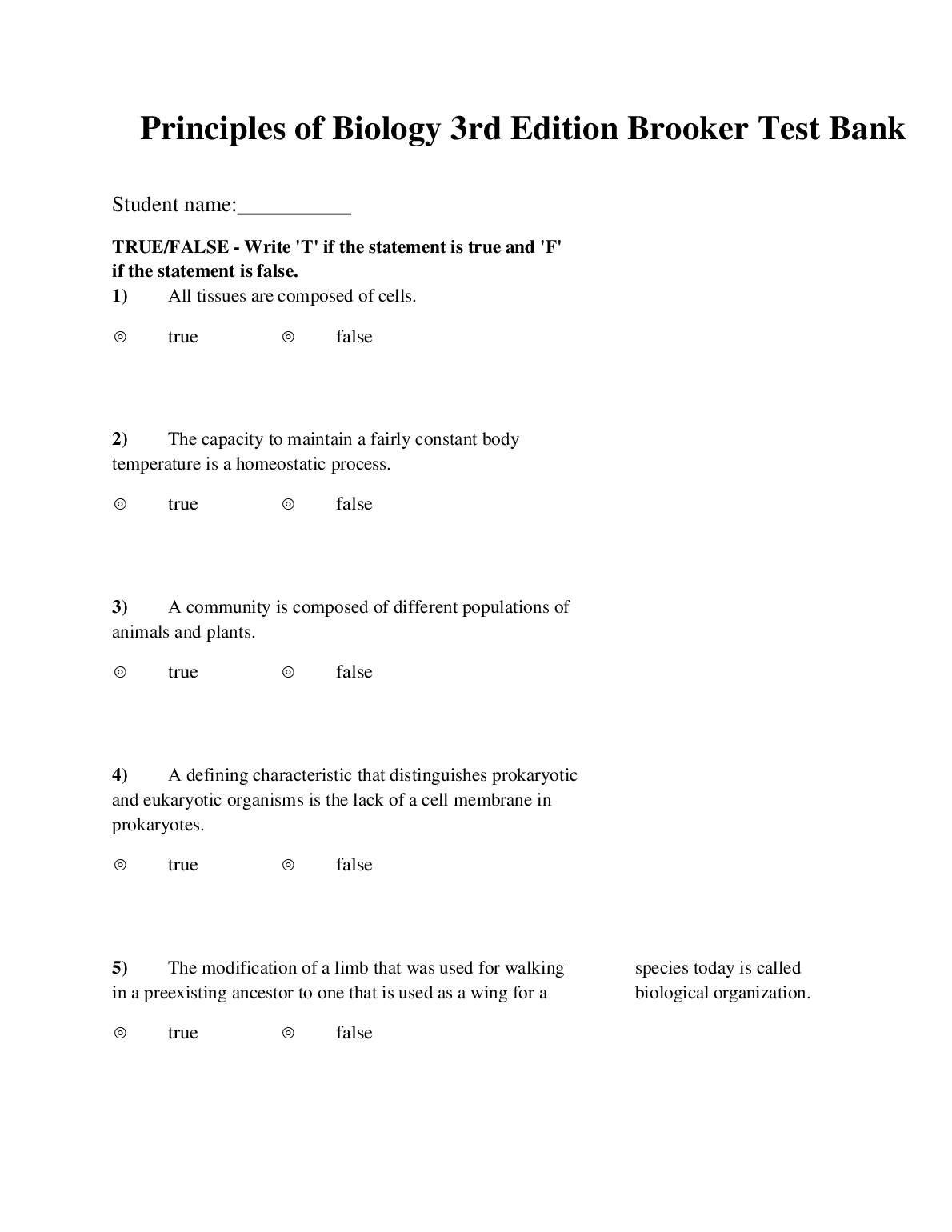
Principles of Biology, 3rd Edition TEST BANK IMG-1
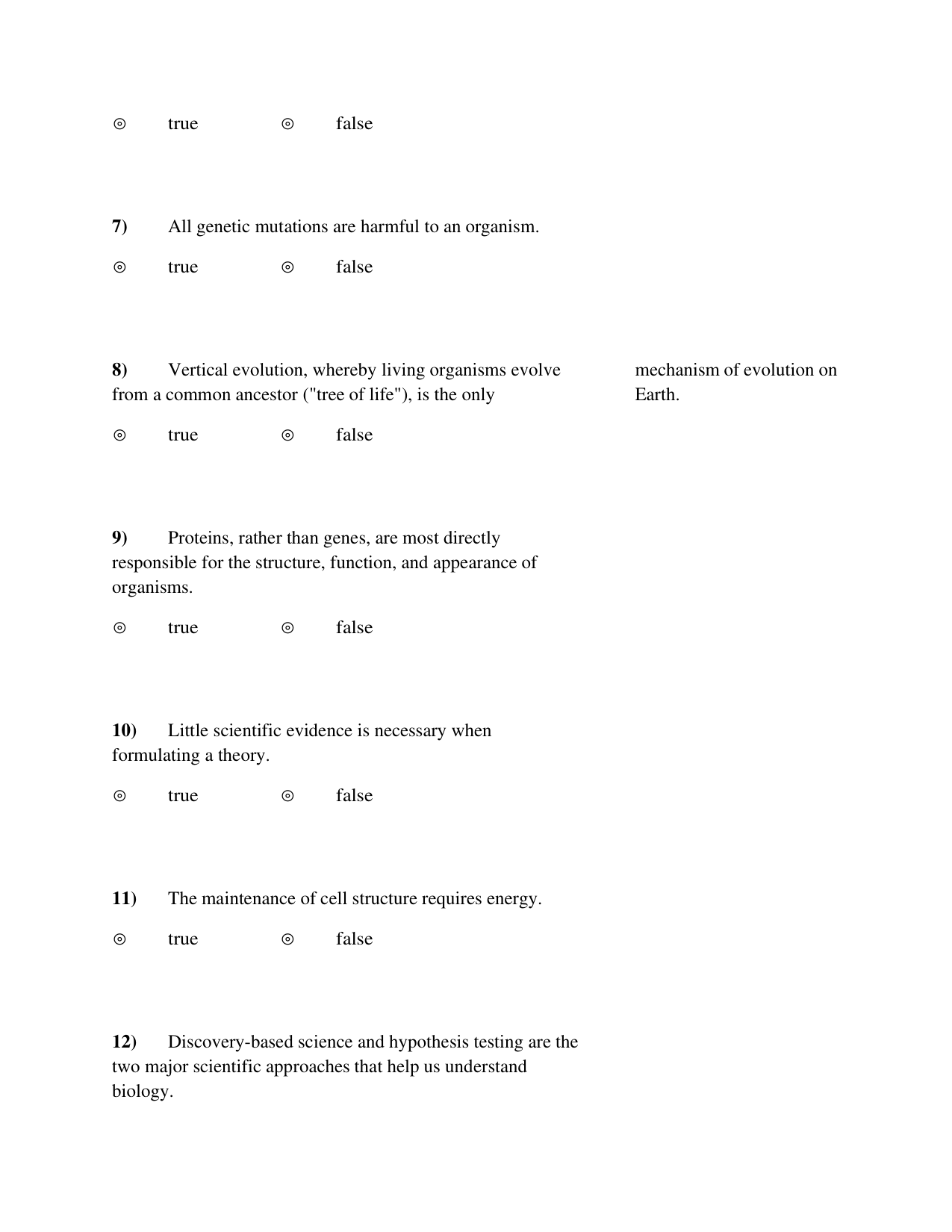
Principles of Biology, 3rd Edition TEST BANK IMG-2
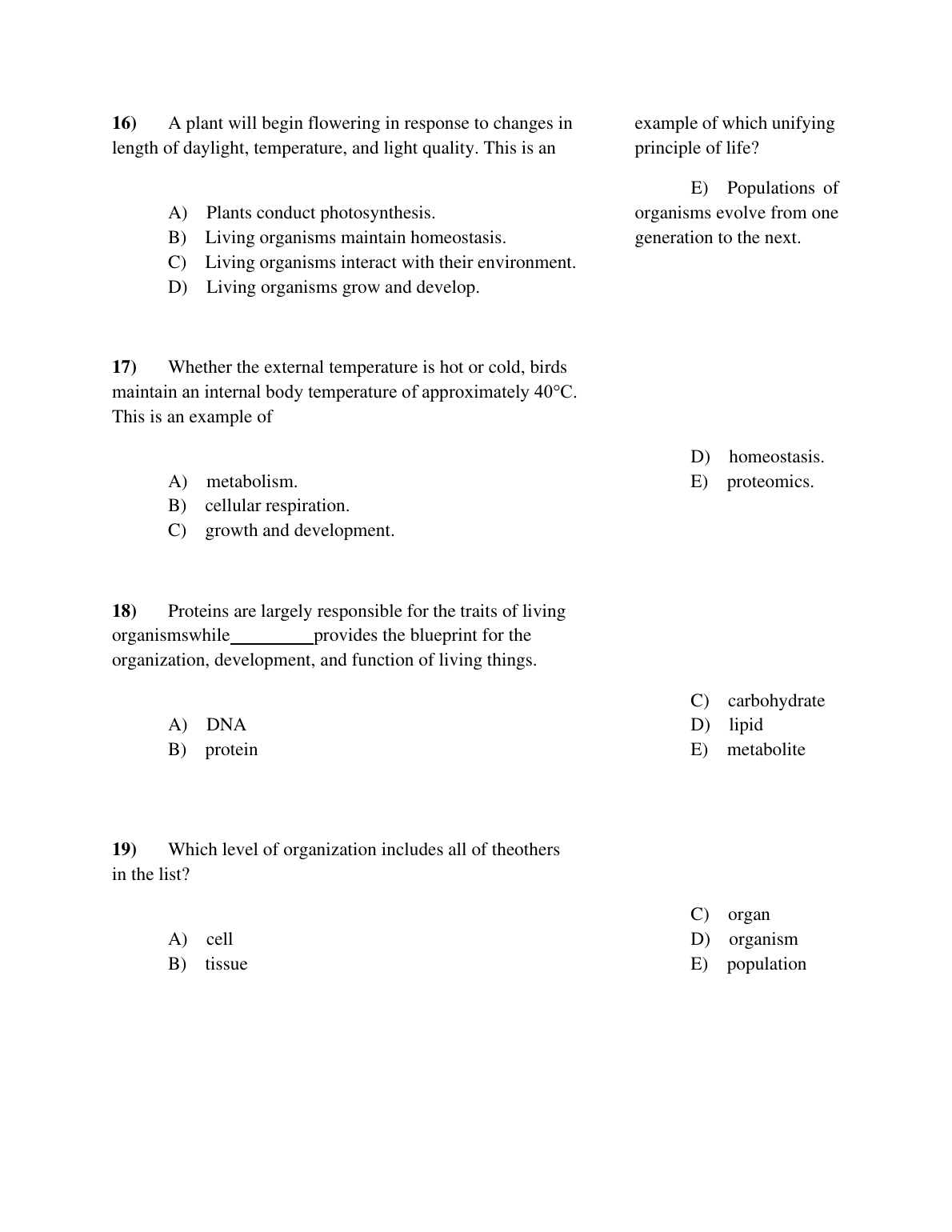
Principles of Biology, 3rd Edition TEST BANK IMG-3
Who is this Document for ?

College and university students enrolled in introductory biology courses biology, pre-medical programs, nursing, allied health sciences, environmental science, biotechnology, and other life science disciplines, instructors, professors, and teaching assistants.
What you will learn ?
Explain the fundamental characteristics of life and the major principles that unify the biological sciences.
Describe the levels of biological organization from molecules and cells to organisms and ecosystems.
Apply the scientific method to biological investigations, including hypothesis formation, experimentation, and data analysis.
Interpret scientific evidence, graphs, models, and experimental results to draw biological conclusions.
Explain the importance of evolution as a central concept connecting all areas of biology.
Describe the chemical foundations of life, including atoms, molecules, and chemical interactions.
Explain the properties of water and their importance to living systems.
Identify the structures and functions of biological macromolecules, including carbohydrates, lipids, proteins, and nucleic acids.
Describe the structure, organization, and functions of prokaryotic and eukaryotic cells.
Identify major cellular organelles and explain their roles in cellular processes.
Explain the structure and function of cell membranes and mechanisms of membrane transport.
Describe diffusion, osmosis, active transport, and other mechanisms of movement across membranes.
Explain cellular communication pathways and signal transduction mechanisms.
Describe how cells obtain, transform, and use energy.
Explain the roles of ATP, enzymes, and metabolic pathways in cellular function.
Describe the processes and importance of cellular respiration and photosynthesis.
Explain how metabolic pathways are regulated and coordinated within cells.
Describe the structure and function of DNA, chromosomes, and genomes.
Explain the processes of DNA replication, transcription, and translation.
Describe mechanisms that regulate gene expression.
Explain how mutations contribute to genetic variation and biological diversity.
Apply principles of Mendelian genetics and inheritance patterns.
Analyze genetic information using concepts of alleles, genotypes, phenotypes, and probability.
Describe the processes of mitosis and meiosis and their roles in growth, development, and reproduction.
Explain the mechanisms that generate genetic diversity.
Describe molecular biology techniques and biotechnology applications.
Explain evolutionary mechanisms, including mutation, natural selection, genetic drift, and gene flow.
Describe how populations evolve and how adaptations develop over generations.
Explain the processes of speciation and the formation of biodiversity.
Interpret phylogenetic trees and evolutionary relationships among organisms.
Describe classification systems and the evolutionary relationships among major groups of organisms.
Identify characteristics of bacteria, archaea, protists, fungi, plants, and animals.
Explain plant structures, functions, adaptations, and reproductive processes.
Describe how plants obtain resources, transport materials, and perform photosynthesis.
Explain animal organization, including tissues, organs, and organ systems.
Describe the principles of homeostasis and regulation in living organisms.
Explain the functions and interactions of major animal physiological systems.
Describe the roles of the nervous, endocrine, circulatory, respiratory, digestive, immune, and reproductive systems.
Explain how organisms interact with one another and with their environments.
Describe ecological relationships among populations, communities, and ecosystems.
Explain energy transfer, food webs, and nutrient cycling in ecosystems.
Analyze factors influencing biodiversity, ecosystem stability, and conservation.
Evaluate the effects of human activities on ecosystems and environmental health.
Apply biological concepts to healthcare, biotechnology, environmental issues, and everyday life.
Develop critical-thinking and problem-solving skills for analyzing biological questions.
Demonstrate scientific literacy and the ability to communicate biological concepts effectively.
Integrate knowledge across molecular, cellular, organismal, evolutionary, and ecological levels of biology.
What do you get with this PDF ?
Instant access after purchase
Download in PDF format
DRM free, read anywhere
Document details
Last update :
Jul 23, 2026
Length :
935 pages
Edition :
2026
Language :
English
Category :
Keywords
Principles Of Biology Principles Of Biology 3rd Edition Robert J. Brooker Eric P. Widmaier Linda E. Graham Peter D. Stiling Biology Test Bank Introductory Biology General Biology Life Sciences Biological Sciences Scientific Inquiry Scientific Method Experimental Design Scientific Reasoning Biological Organization Evolution Evolutionary Biology Natural Selection Adaptation Population Genetics Genetic Drift Gene Flow Mutation Speciation Phylogenetics Biodiversity Classification Taxonomy Domains Of Life Bacteria Archaea Protists Fungi Plants Animals Chemistry Of Life Atoms Elements Chemical Bonds Water Properties Acids And Bases Ph Biological Macromolecules Carbohydrates Lipids Proteins Nucleic Acids Dna Rna Cell Biology Cell Theory Prokaryotic Cells Eukaryotic Cells Organelles Cell Structure Plasma Membrane Membrane Transport Diffusion Osmosis Active Transport Cell Communication Signal Transduction Cellular Energy Atp Metabolism Enzymes Metabolic Pathways Cellular Respiration Photosynthesis Molecular Biology Genetics Heredity Chromosomes Genes Alleles Genomes Dna Replication Transcription Translation Gene Expression Mutations Genetic Variation Biotechnology Cell Cycle Mitosis Meiosis Sexual Reproduction Inheritance Patterns Mendelian Genetics Plant Biology Plant Structure Plant Physiology Plant Growth Plant Reproduction Animal Biology Animal Physiology Tissues Organs Organ Systems Homeostasis Nervous System Endocrine System Circulatory System Respiratory System Digestive System Immune System Reproductive System Ecology Population Ecology Community Ecology Ecosystems Energy Flow Food Webs Nutrient Cycling Environmental Biology Conservation Biology Sustainability Human Impact On Environment Biological Data Analysis Laboratory Skills Critical Thinking Problem Solving Scientific Literacy Biology Education College Biology University Biology Pre-med Biology Nursing Biology Allied Health Biology Biotechnology Education Biology Assessment Biology Exam Preparation Biology Instructors Student Learning.
You may also be interested in :
Recommendations for you
Understanding Biology 4th Edition Test Bank

Is A Comprehensive Assessment Resource Designed To Support Students In Mastering Esse...

$18
Biological Science with MasteringBiology, 4th Edition
Biological Science With Masteringbiology, 4th Edition

It Is An Effective Resource For Instructors Creating Quizzes And Exams And For Studen...

$17
Biology: A Guide to the Natural World, 4th Edition TEST BANK
Biology: A Guide To The Natural World, 4th Edition Test Bank

Is A Comprehensive Assessment Resource Designed To Help Students Understand And Evalu...

$16
Introduction to Marine Biology, 4th Edition TEST BANK
Introduction To Marine Biology, 4th Edition Test Bank

It Is An Effective Study And Teaching Resource For Introductory Marine Biology Course...

$17