
Test bank
Living In The Environment 11th Edition Test Bank
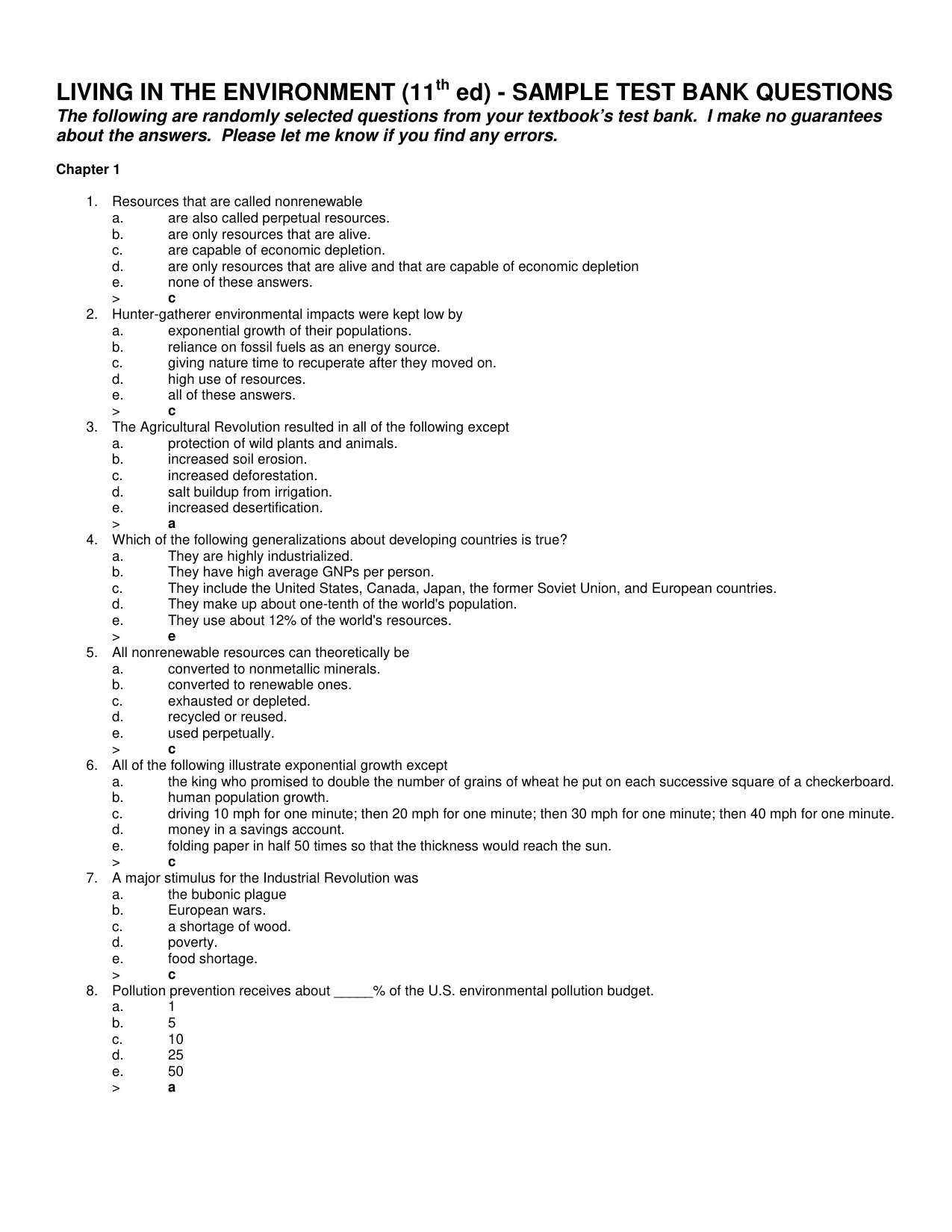
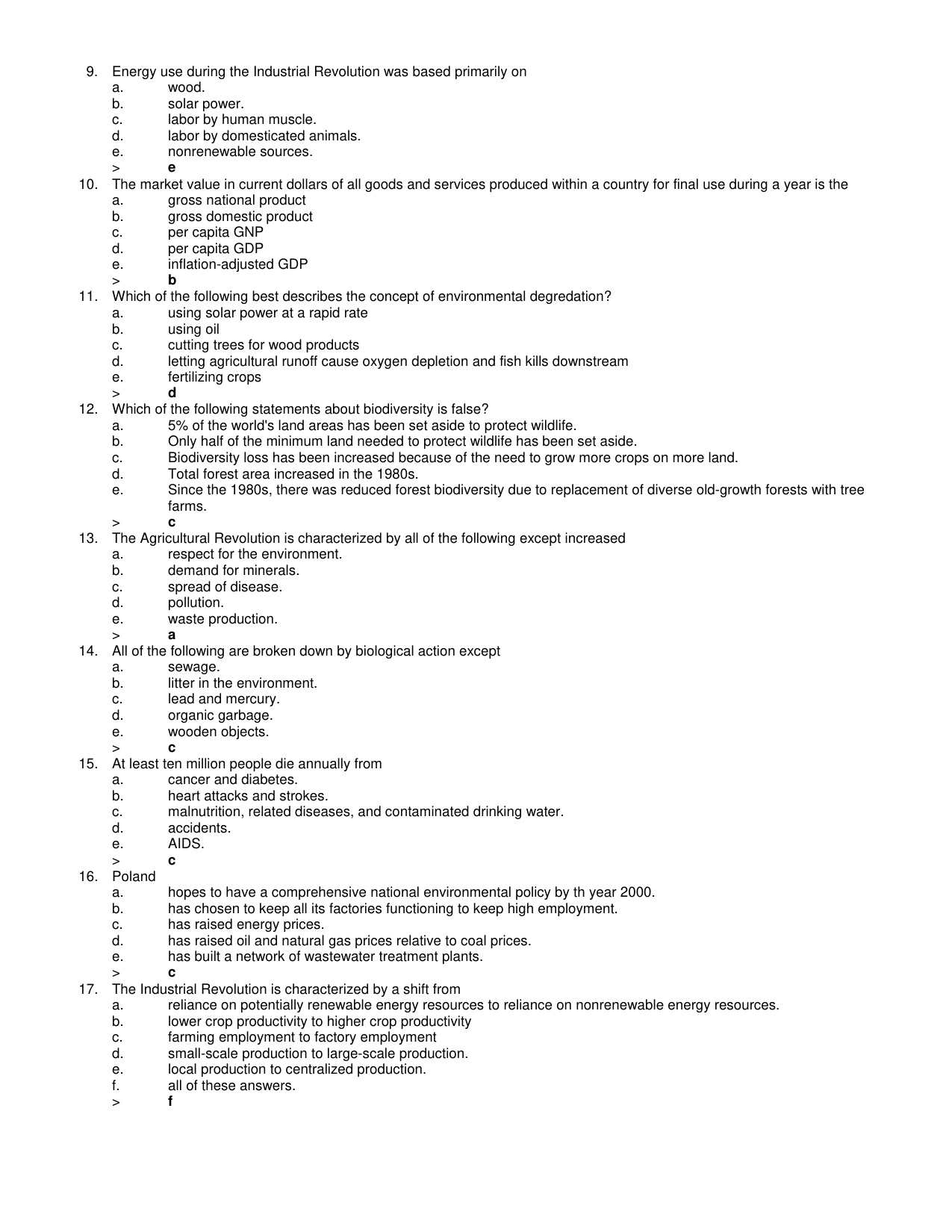
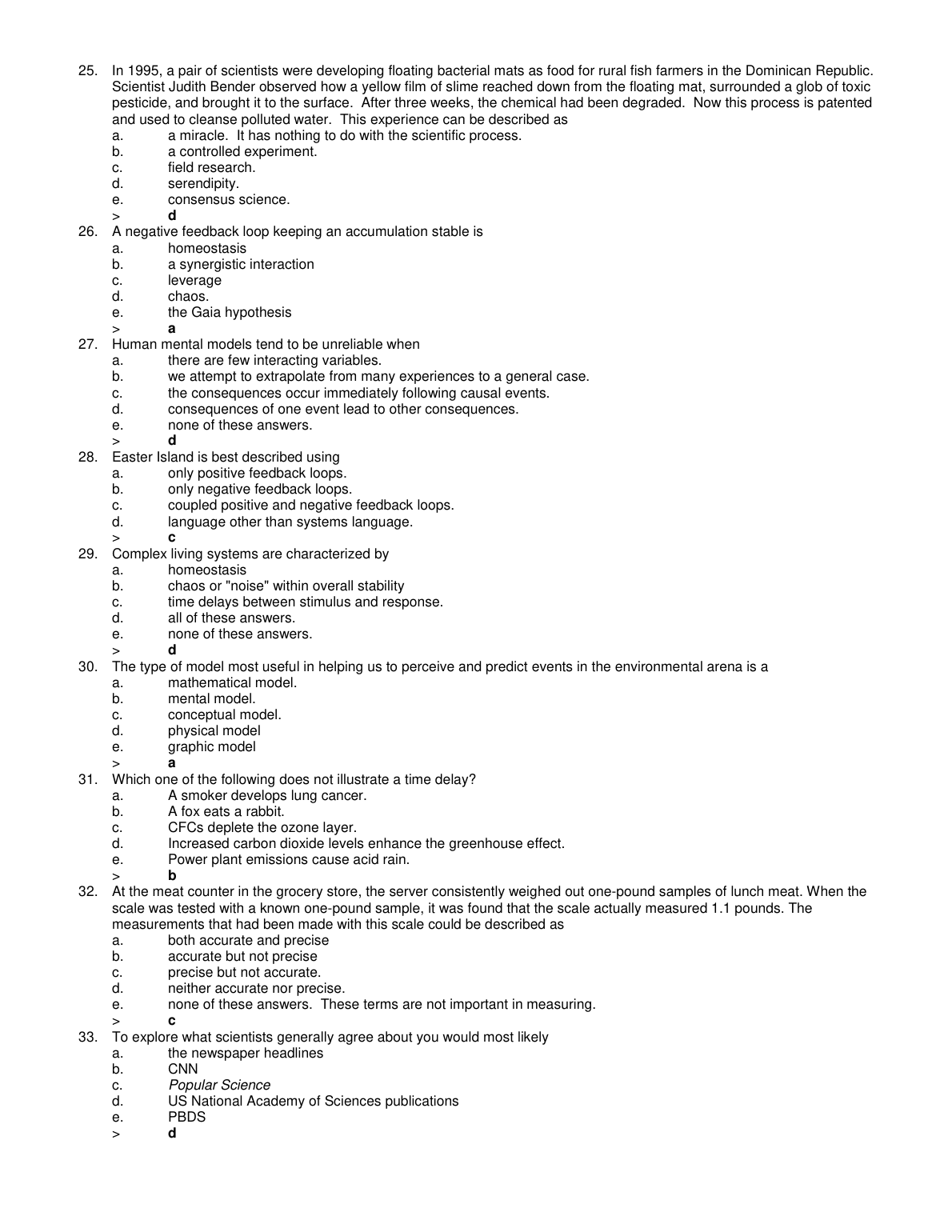
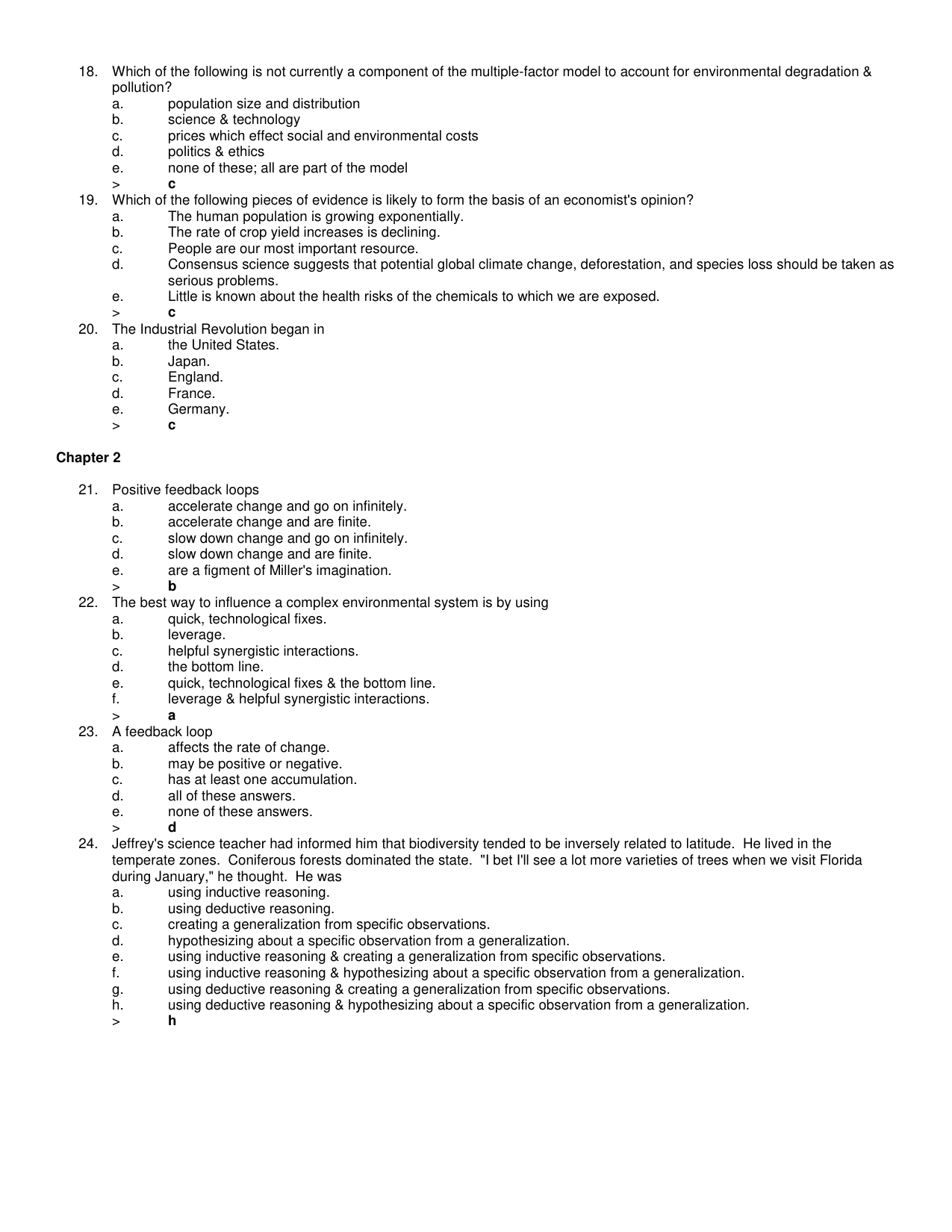
Test Bank for Living in the Environment (11th Edition) is an instructor resource designed to support environmental science education by providing comprehensive assessment materials aligned with the textbook. It helps educators evaluate students' understanding of ecological principles, environmental issues, sustainability concepts, and the scientific processes that influence interactions between humans and the natural world.
Organized by textbook chapter, the test bank covers a broad range of environmental science topics, including ecological principles, ecosystems, biodiversity, population dynamics, natural resources, environmental health, pollution, climate change, energy resources, water resources, agriculture, land use, conservation, waste management, environmental economics, and sustainable development.
The resource emphasizes scientific inquiry, environmental problem-solving, and critical thinking through questions that require learners to analyze environmental challenges, interpret scientific data, evaluate human impacts on ecosystems, and propose sustainable solutions. It encourages students to connect scientific concepts with real-world environmental issues affecting local and global communities.
The test bank typically includes a variety of assessment formats, such as:
* Multiple-choice questions
* True/False questions
* Matching questions
* Completion questions
* Case-based environmental scenarios
* Application and critical-thinking questions
* Data interpretation and analysis questions
Additional instructional features commonly include:
* Chapter-by-chapter organization aligned with the textbook
* Answer keys
* Questions ranging from foundational environmental science concepts to advanced analytical applications
* Coverage of current environmental challenges and sustainability practices
* Support for quizzes, examinations, assignments, and classroom assessments
This resource is intended for instructors teaching environmental science, ecology, sustainability, conservation, and natural resource management courses while also supporting students in strengthening scientific knowledge, improving analytical skills, and preparing for coursework and examinations in environmental studies, biology, geography, and related disciplines. It is suitable for college, university, and environmental education programs that use *Living in the Environment (11th Edition)* as a primary learning resource.
Geography students, instructors, and exam preparation users.
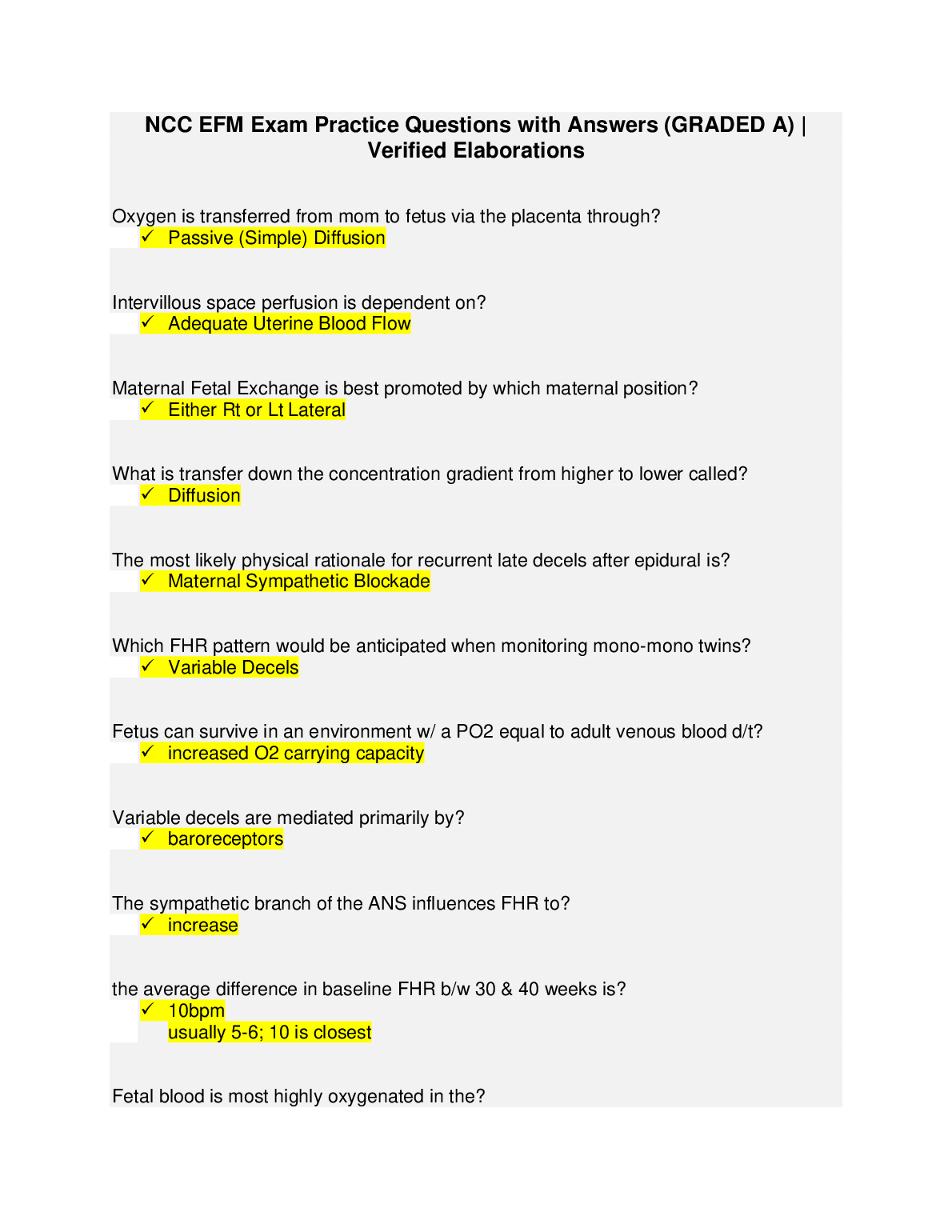
Master Ncc Efm Exams With Graded Practice Questions On Fetal Heart Rate Monitoring, V...
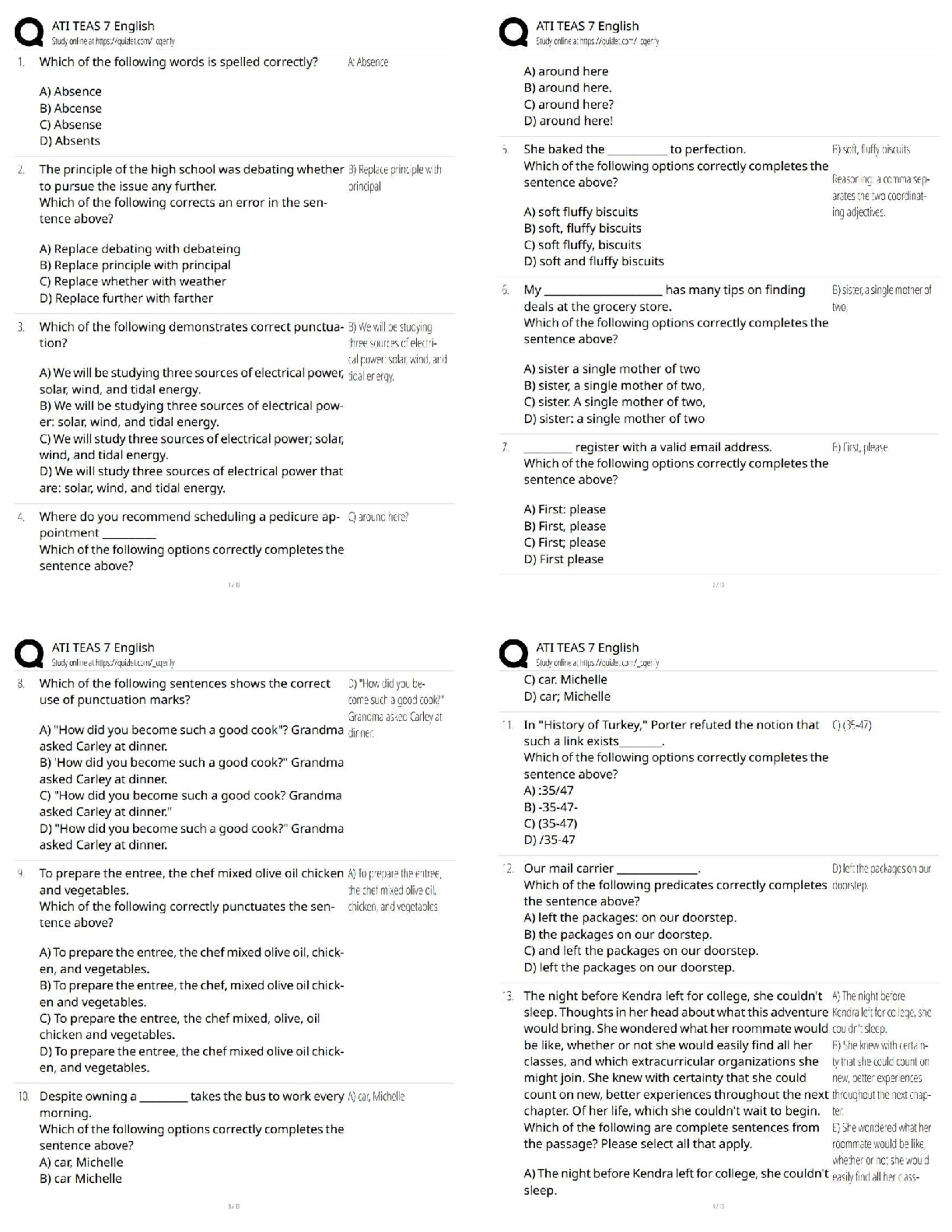
Master The ATI TEAS 7 English Section With This Verified Test Bank. Improve Grammar,...
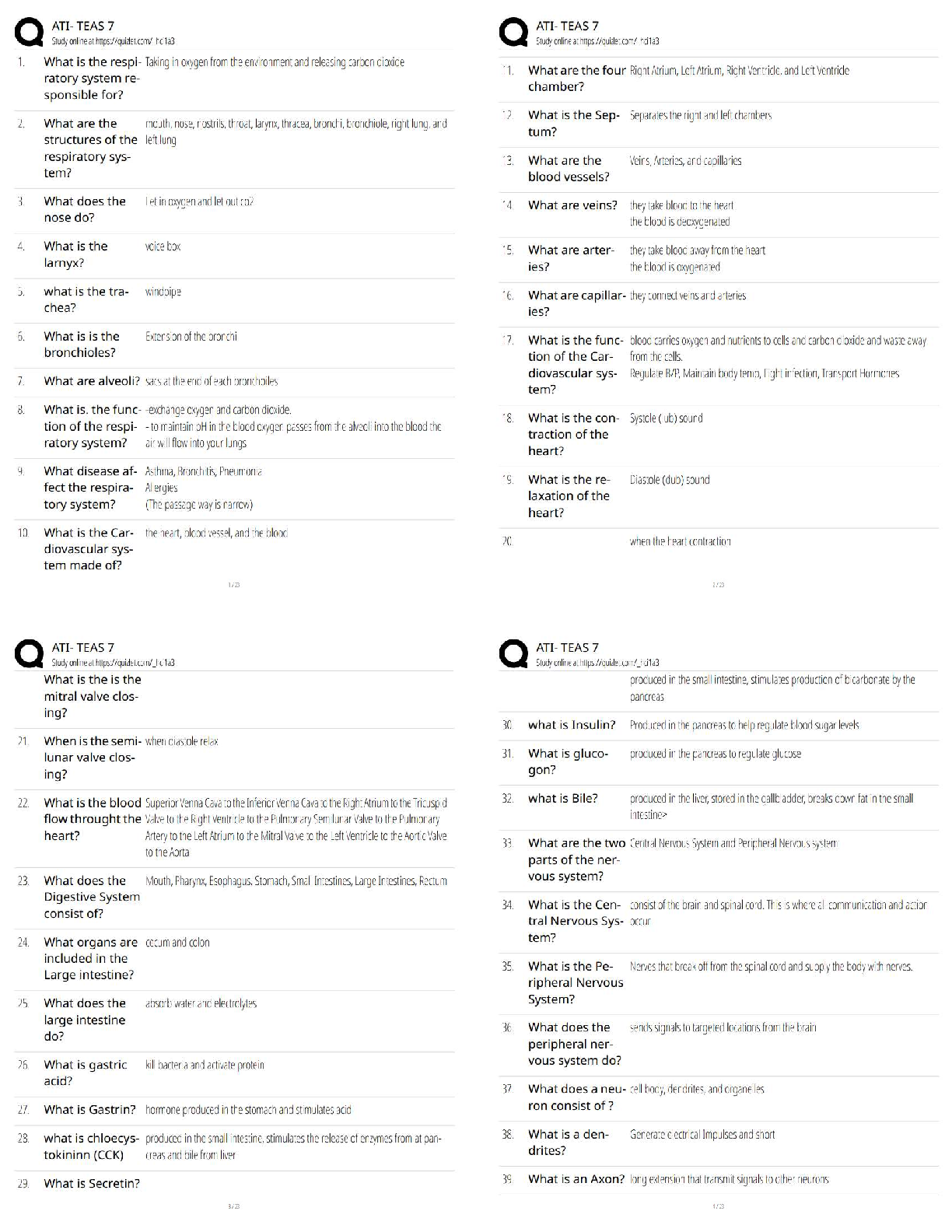
Master ATI TEAS 7 With Our Verified 2026 Test Bank. Covers Respiratory, Cardiovascula...
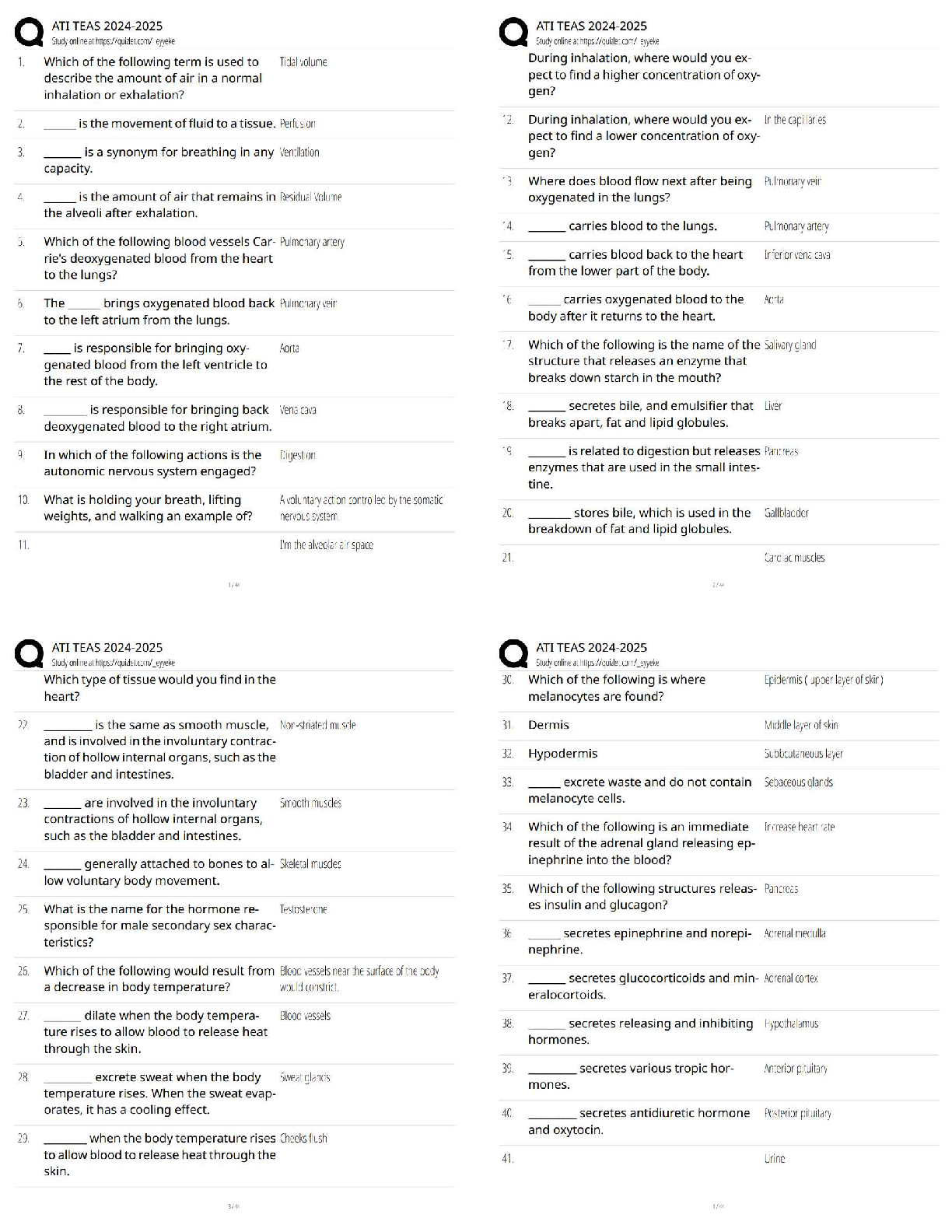
Ace The ATI TEAS 7 Exam On Your First Try. Access Hundreds Of Practice Questions, Det...