
Test bank
Introduction To Marine Biology, 4th Edition Test Bank
Test Bank for Introduction to Marine Biology (4th Edition) by George Karleskint is a comprehensive assessment resource designed to help students and instructors evaluate and strengthen understanding of fundamental marine biology concepts. Aligned with the textbook, this resource provides chapter-based questions that assess knowledge of ocean systems, marine organisms, ecological relationships, evolutionary processes, and the interactions between humans and marine environments.
The test bank supports a science-based approach to marine biology by integrating concepts from oceanography, ecology, evolution, physiology, biodiversity, and conservation. Questions are designed to promote understanding of how marine organisms function, how ocean ecosystems are organized, and how environmental factors influence life in aquatic systems.
This resource emphasizes conceptual understanding, application of biological principles, interpretation of scientific information, and critical thinking. It is useful for instructors creating quizzes and examinations, as well as students preparing for assessments in marine biology, environmental science, biology, and ocean science programs.
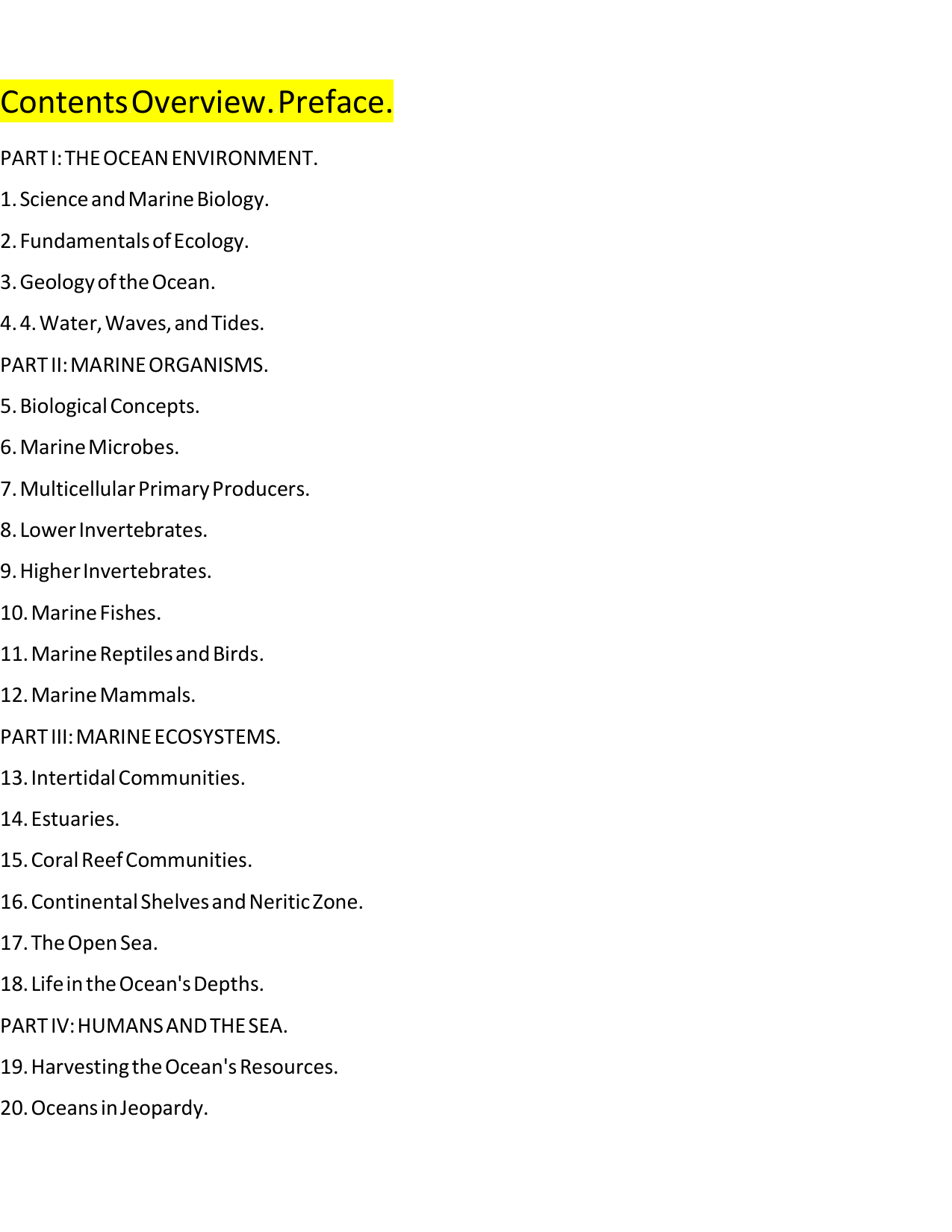
Major Topics Covered Include
Foundations of Marine Biology
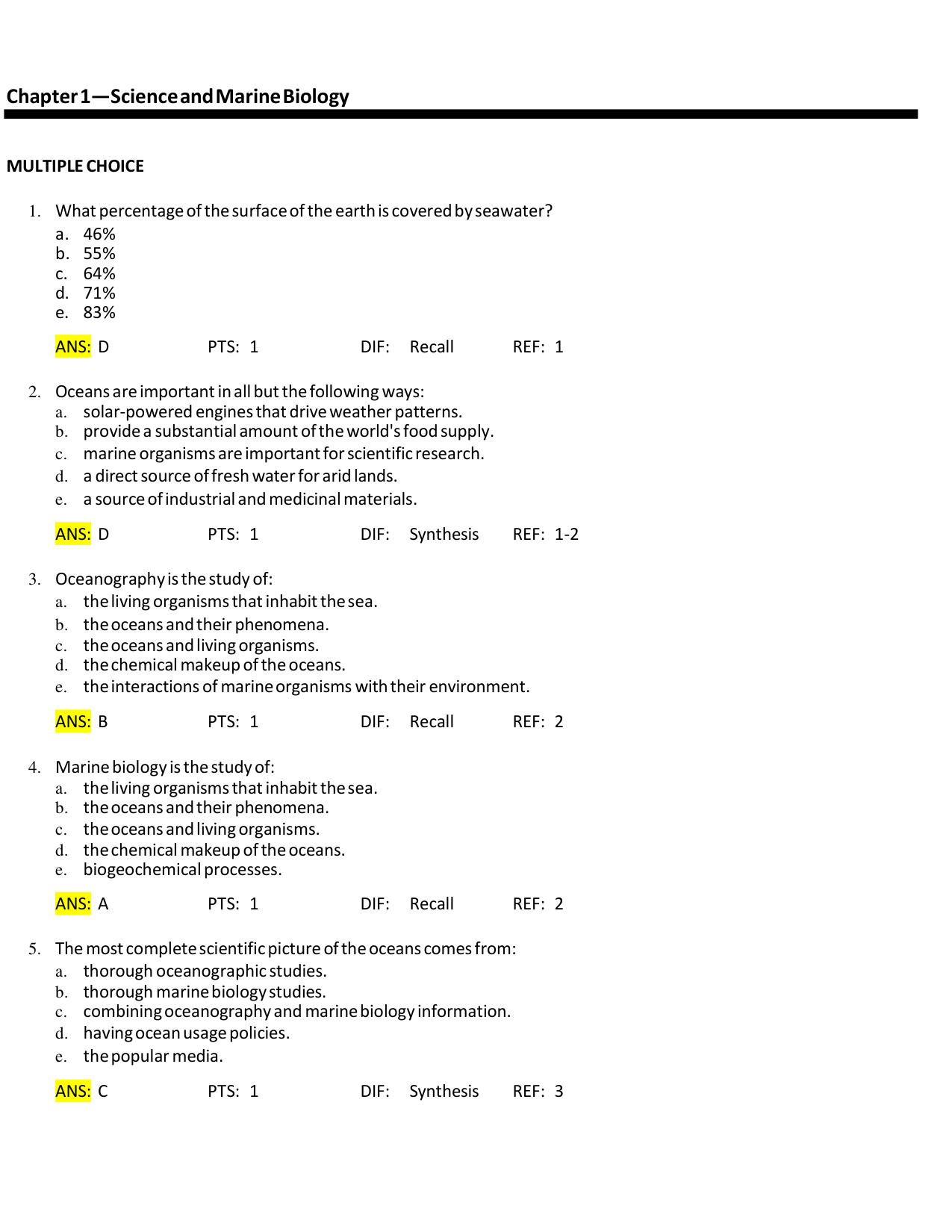
Introduction to marine science
Importance of oceans and marine environments
Characteristics of marine ecosystems
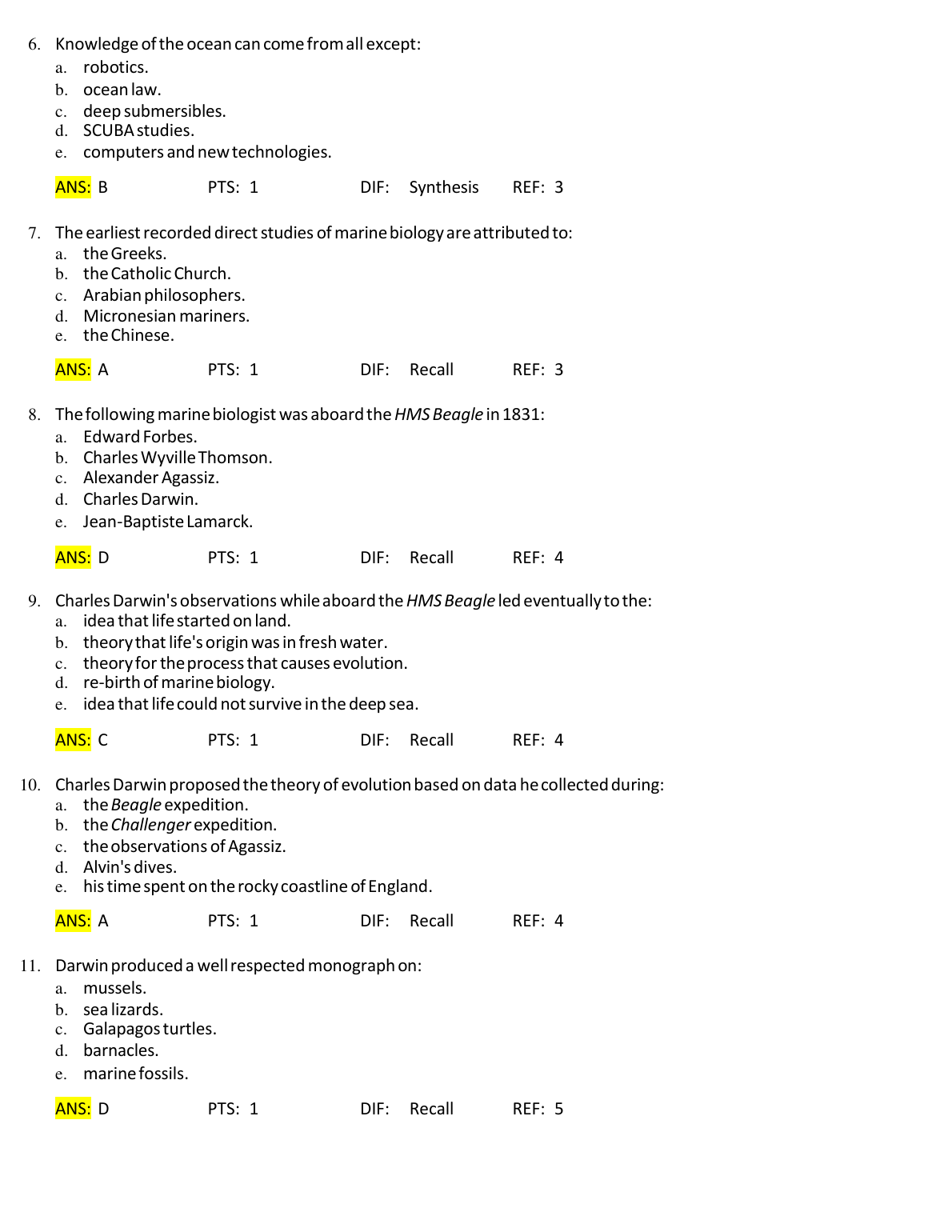
History of marine biology exploration
Scientific methods in marine research
Marine biology as an interdisciplinary science
Oceanography and Marine Environment
Physical and chemical properties of seawater
Ocean zones and habitats
Ocean circulation patterns
Waves, tides, and currents
Temperature, salinity, and pressure effects
Light availability and productivity in marine environments
Coastal and open-ocean ecosystems
Marine Chemistry and Geology
Chemical composition of seawater
Nutrient cycles in marine systems
Marine sediments
Ocean floor features
Continental margins
Mid-ocean ridges and geological processes
Plate tectonics and ocean formation
Marine Ecology
Ecological principles in marine environments
Populations and communities
Species interactions
Food chains and food webs
Energy flow through marine ecosystems
Nutrient cycling
Ecological relationships and adaptations
Evolution and Adaptation of Marine Life
Evolutionary history of marine organisms
Natural selection in marine environments
Adaptations to aquatic conditions
Physiological and behavioral adaptations
Speciation and biodiversity patterns
Evolutionary relationships among marine organisms
Marine Microorganisms and Primary Producers
Marine bacteria and archaea
Phytoplankton
Marine algae
Cyanobacteria
Primary productivity
Photosynthesis in marine environments
Role of microorganisms in ocean ecosystems
Marine Plants and Algae
Seaweeds and macroalgae
Marine flowering plants
Seagrass ecosystems
Adaptations of marine plants
Ecological importance of marine vegetation
Marine Invertebrates
Diversity of marine invertebrates
Sponges
Cnidarians
Worms
Mollusks
Arthropods
Echinoderms
Invertebrate adaptations and life cycles
Marine Vertebrates
Fish diversity and evolution
Cartilaginous and bony fishes
Fish anatomy and physiology
Marine reptiles
Marine birds
Marine mammals
Adaptations for life in the ocean
Marine Animal Physiology
Osmoregulation
Respiration in aquatic environments
Feeding strategies
Reproduction and development
Sensory systems
Movement and locomotion
Behavioral adaptations
Coastal and Specialized Marine Ecosystems
Estuaries
Mangrove forests
Salt marshes
Coral reefs
Rocky shores
Sandy beaches
Deep-sea ecosystems
Hydrothermal vents
Marine Conservation and Human Impacts
Human impacts on marine ecosystems
Pollution and marine debris
Climate change effects
Ocean acidification
Overfishing
Habitat destruction
Invasive species
Marine conservation strategies
Sustainable resource management
Marine Resources and Applications
Fisheries and aquaculture
Marine biotechnology
Renewable ocean resources
Economic importance of marine environments
Marine policy and management
The Test Bank Helps Students Develop the Ability To
Explain the major principles of marine biology and ocean science.
Describe the physical, chemical, and biological characteristics of oceans.
Understand how marine environments influence organism survival and distribution.
Identify major groups of marine organisms and their ecological roles.
Explain adaptations that allow organisms to live in marine habitats.
Describe evolutionary relationships among marine organisms.
Analyze marine food webs, energy flow, and ecosystem interactions.
Explain the importance of marine microorganisms and primary producers.
Understand marine animal physiology and survival strategies.
Describe the structure and function of major marine ecosystems.
Interpret scientific data related to marine environments.
Evaluate the effects of human activities on ocean ecosystems.
Apply conservation principles to marine resource management.
Develop critical-thinking skills for analyzing marine biology problems.
Connect marine biology concepts to environmental sustainability and human society.
Assessment Formats Commonly Include
Multiple-choice questions
Concept-based questions
Application questions
Marine ecosystem analysis questions
Scientific data interpretation
Diagram and organism identification questions
Environmental scenario questions
Critical-thinking assessments
Key Features
Chapter-by-chapter organization aligned with Introduction to Marine Biology (4th Edition)
Comprehensive coverage of marine science and biological concepts
Integration of oceanography, ecology, evolution, and conservation
Focus on marine organism diversity and adaptations
Emphasis on environmental applications and sustainability
Supports classroom testing, review, and exam preparation
college and university students enrolled in introductory marine biology courses, marine science, biology, environmental science, oceanography, ecology, fisheries science, and related life science programs, marine biology instructors, professors, and teaching assistants.
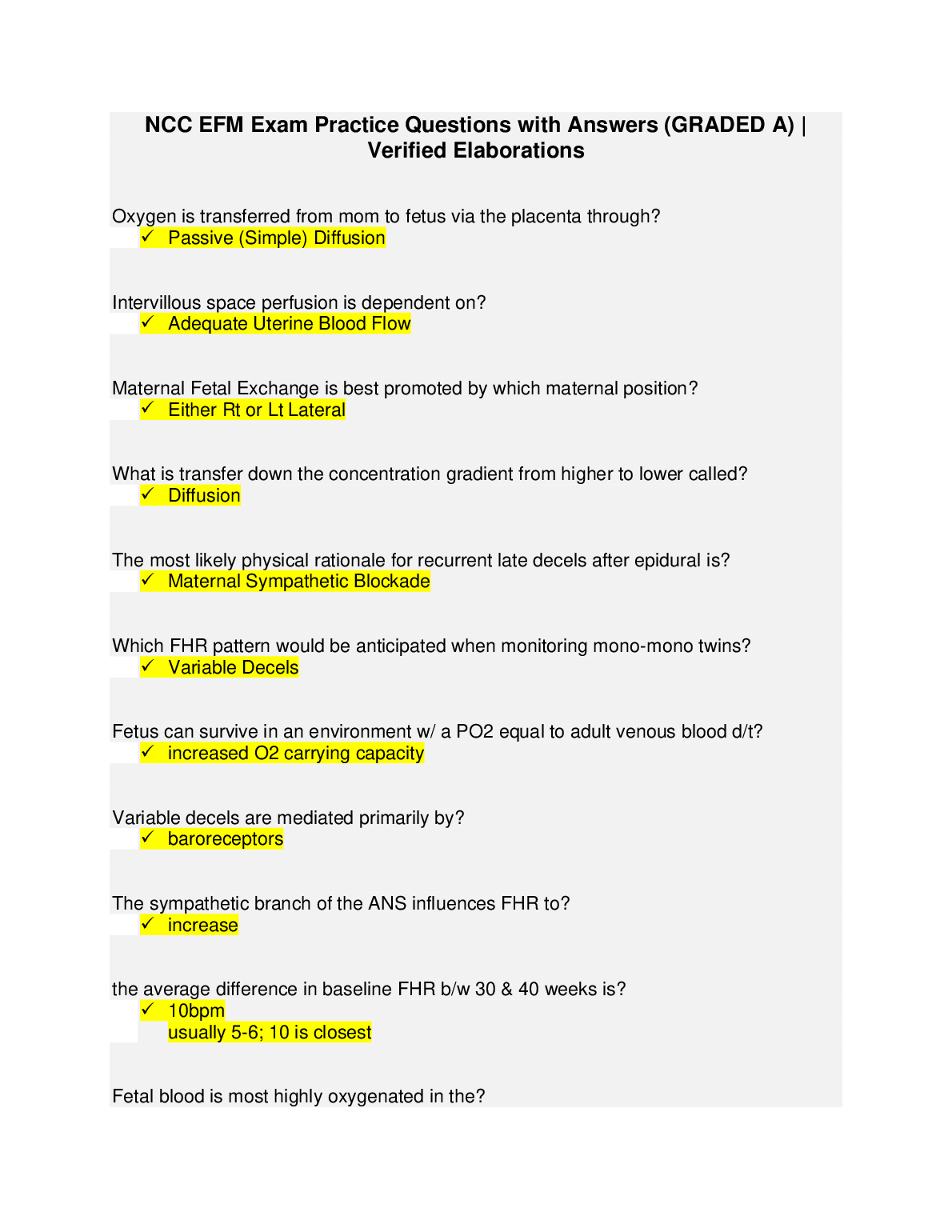
Master Ncc Efm Exams With Graded Practice Questions On Fetal Heart Rate Monitoring, V...
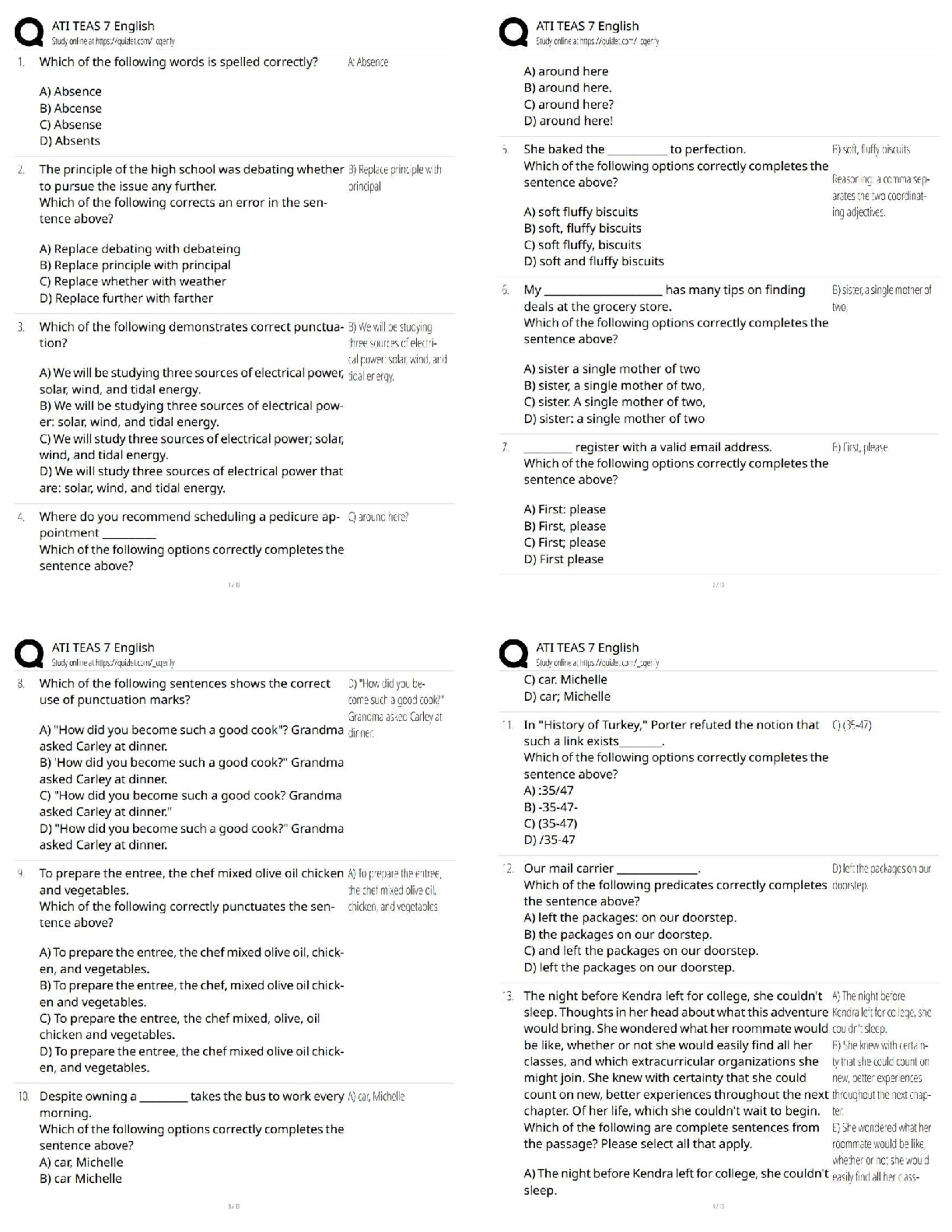
Master The ATI TEAS 7 English Section With This Verified Test Bank. Improve Grammar,...
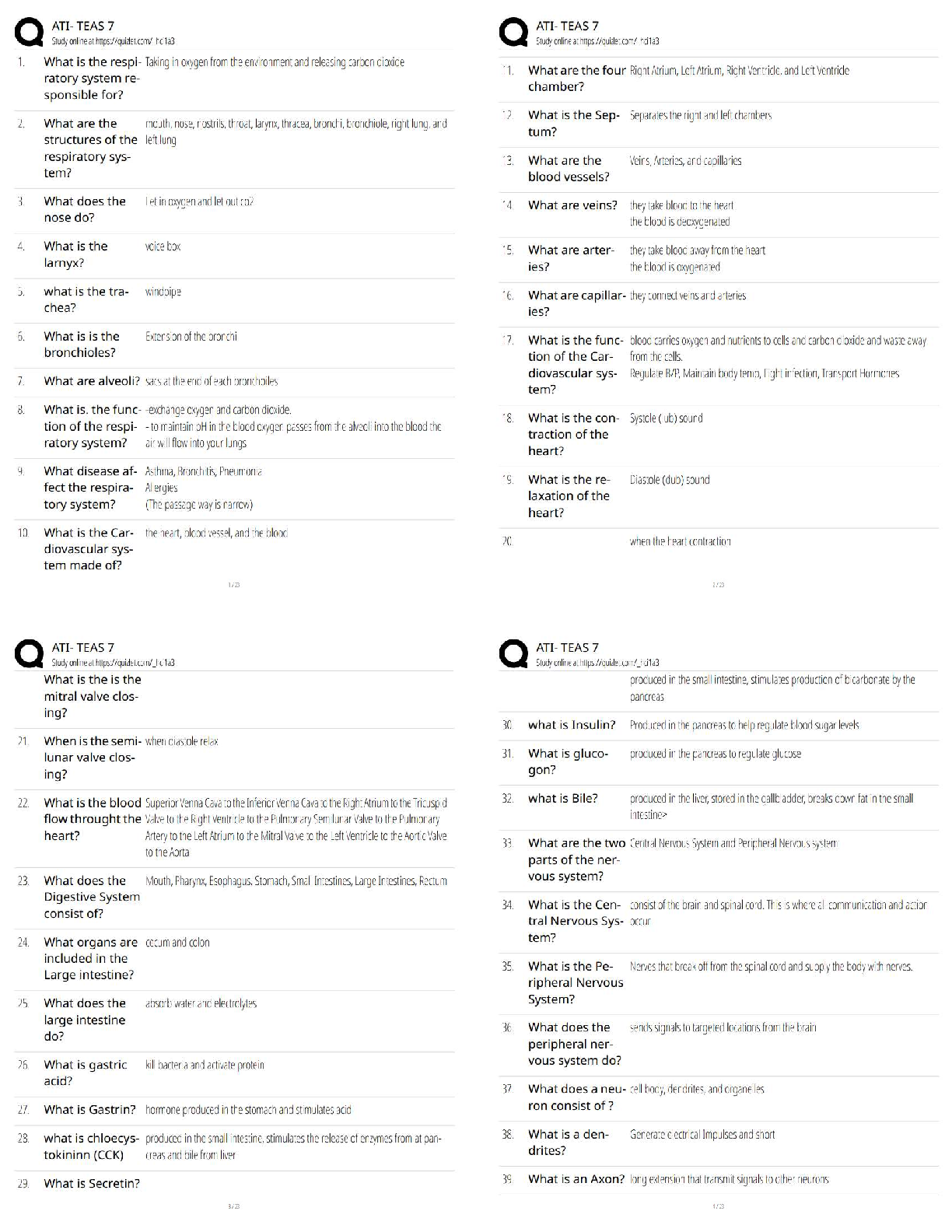
Master ATI TEAS 7 With Our Verified 2026 Test Bank. Covers Respiratory, Cardiovascula...
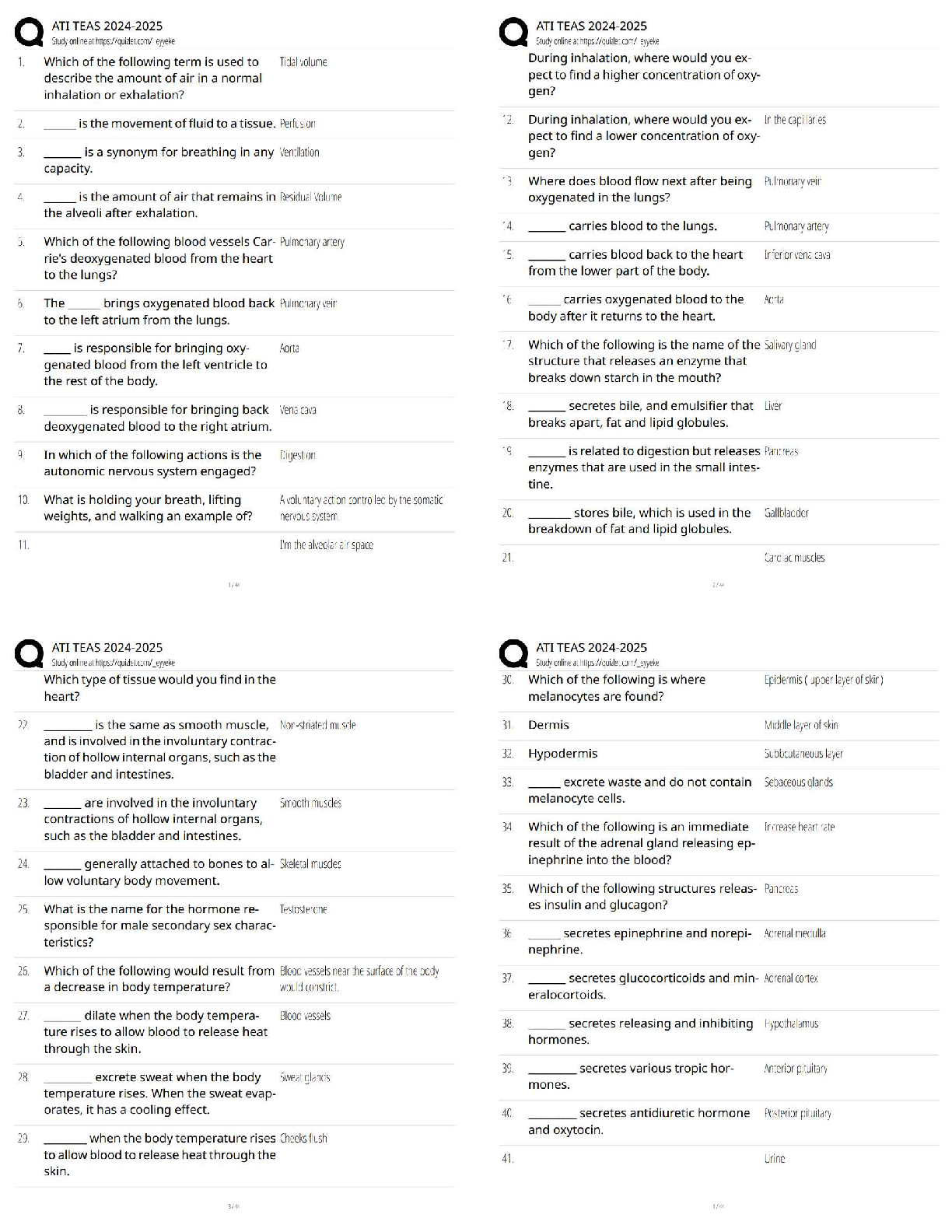
Ace The ATI TEAS 7 Exam On Your First Try. Access Hundreds Of Practice Questions, Det...