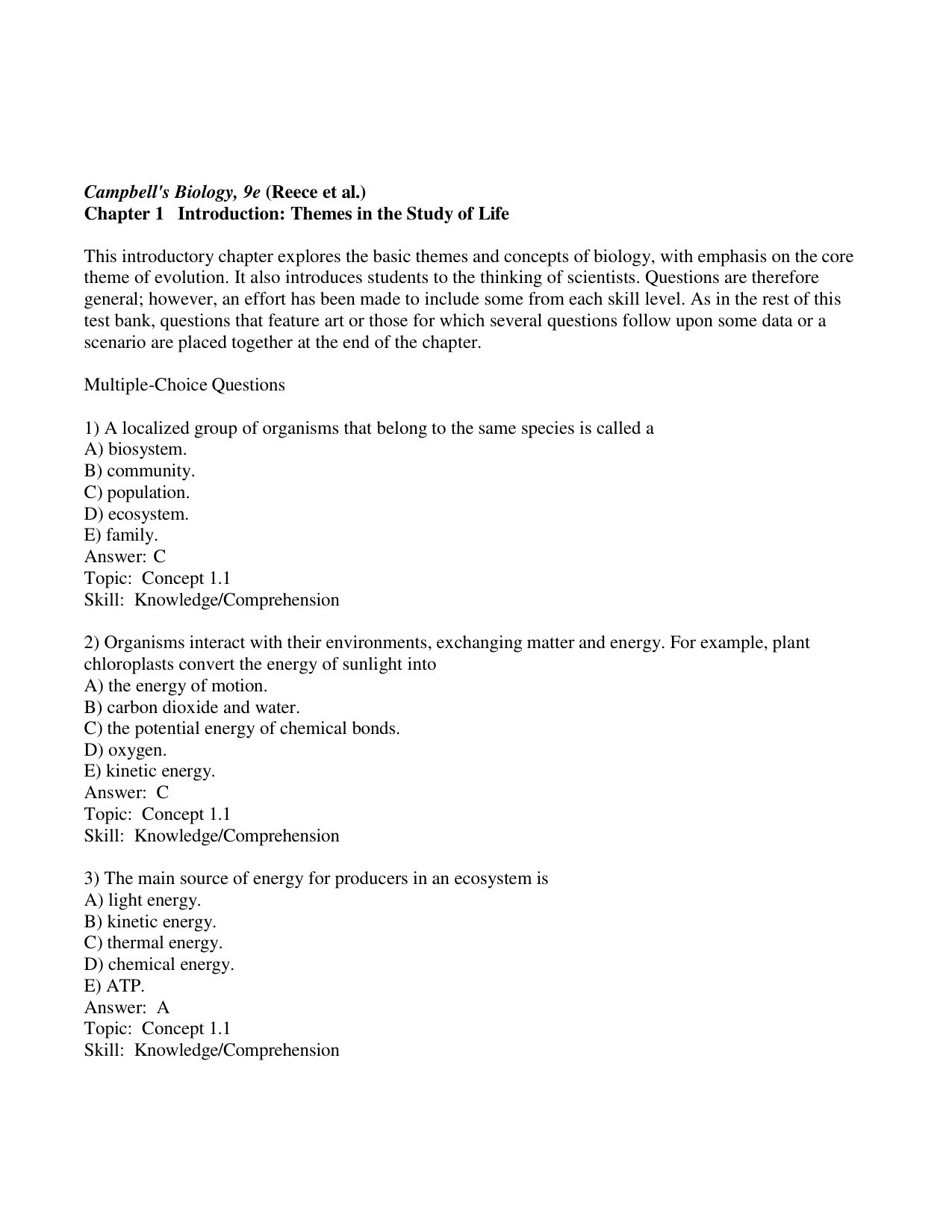
Campbell Biology 9th Edition TEST BANK Campbell Biology 9th Edition TEST BANK

Biology

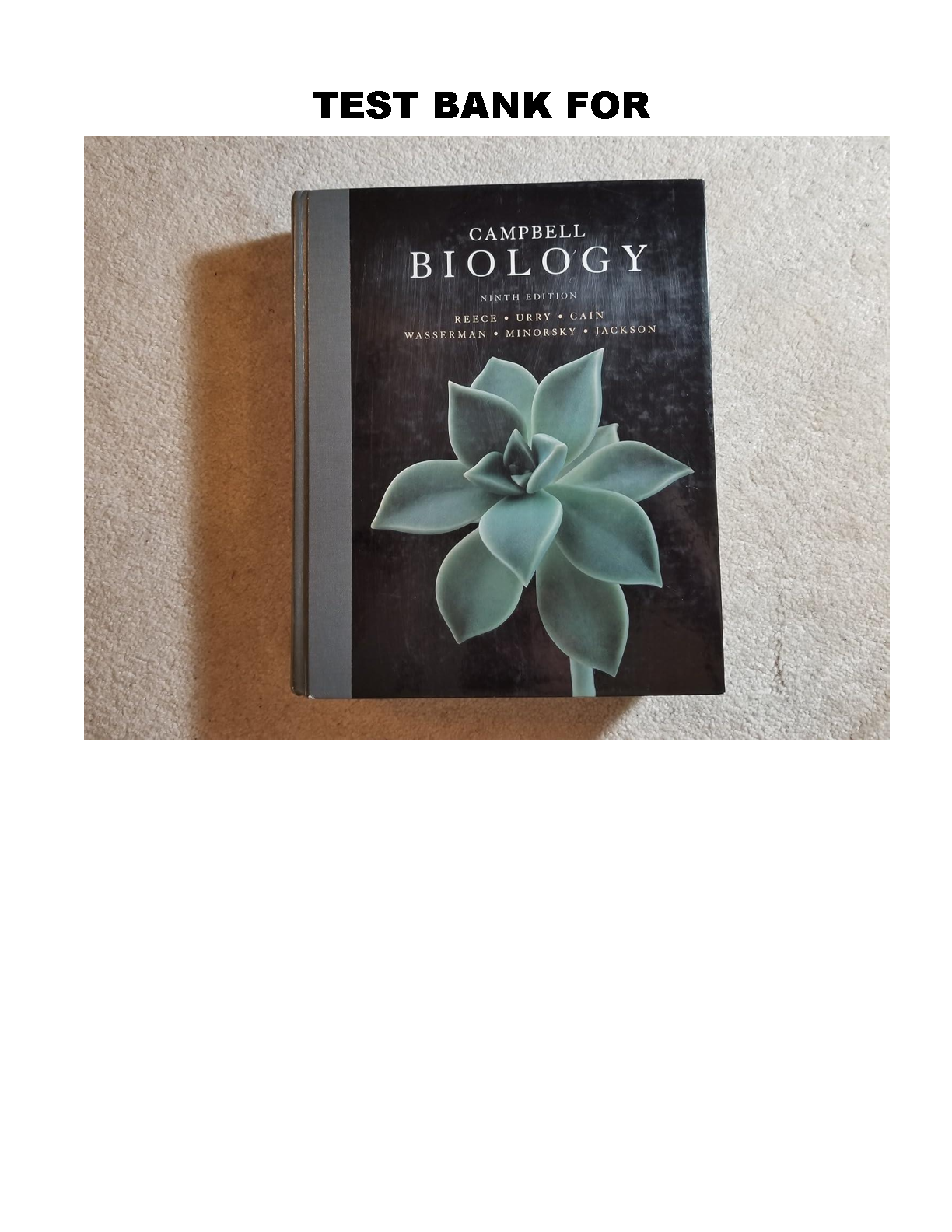
Campbell Biology 9th Edition Test Bank


Is A Comprehensive Assessment Resource Designed To Reinforce The Major Concepts Of Introductory Biology.
Description

Test Bank for Campbell Biology (9th Edition) by Jane B. Reece, Lisa A. Urry, Michael L. Cain, Steven A. Wasserman, Peter V. Minorsky, and Robert B. Jackson is a comprehensive assessment resource designed to support teaching, learning, and evaluation in introductory college biology courses. Organized to align with the textbook, it provides chapter-based questions that assess students’ understanding of fundamental biological principles, scientific inquiry, and the interconnected nature of living systems.

Built around the central themes of evolution, information flow, energy transformation, structure and function, and interactions within biological systems, the test bank helps students develop a deep conceptual understanding of biology rather than relying solely on memorization. Questions encourage learners to interpret experimental evidence, analyze biological data, evaluate scientific claims, and apply biological knowledge to real-world situations.

The resource integrates molecular biology, genetics, ecology, physiology, evolution, and biodiversity while highlighting the importance of scientific reasoning and evidence-based thinking. It is valuable for instructors developing quizzes, examinations, classroom assessments, and homework assignments, as well as for students preparing for introductory biology examinations.

Major Topics Covered Include
Biology and Scientific Inquiry
Nature of science
Scientific method
Experimental design
Hypothesis testing
Data analysis
Scientific reasoning
Biological research
Applications of biology
Chemistry of Life
Atoms and molecules
Chemical bonding
Water and life
Acids and bases
pH
Carbon chemistry
Biological macromolecules
Carbohydrates
Lipids
Proteins
Nucleic acids
Cell Biology
Cell theory
Prokaryotic cells
Eukaryotic cells
Cell structure
Organelles
Plasma membrane
Membrane transport
Cell communication
Cellular organization
Cellular Energy
ATP
Metabolism
Enzymes
Cellular respiration
Photosynthesis
Energy conversion
Metabolic regulation
Molecular Biology
DNA structure
DNA replication
Chromosomes
Genomes
Gene expression
Transcription
RNA processing
Translation
Protein synthesis
Gene regulation
Biotechnology
Cell Division
Cell cycle
Mitosis
Cytokinesis
Meiosis
Sexual reproduction
Genetic variation
Chromosome behavior
Genetics
Mendelian inheritance
Alleles
Genotypes
Phenotypes
Chromosomal inheritance
Human genetics
Genetic disorders
Population genetics
Evolution
Darwinian evolution
Natural selection
Adaptation
Evolutionary mechanisms
Population evolution
Speciation
Phylogeny
Evidence for evolution
Diversity of Life
Classification
Taxonomy
Domains of life
Bacteria
Archaea
Protists
Fungi
Plants
Animals
Evolutionary diversity
Plant Biology
Plant structure
Plant physiology
Photosynthesis
Plant transport
Plant hormones
Plant growth
Plant reproduction
Plant adaptations
Animal Biology
Animal organization
Tissues
Organs
Organ systems
Homeostasis
Animal diversity
Human Physiology
Nervous system
Endocrine system
Circulatory system
Respiratory system
Digestive system
Urinary system
Immune system
Muscular system
Skeletal system
Reproductive system
Ecology
Population ecology
Community ecology
Ecosystems
Energy flow
Food webs
Nutrient cycling
Species interactions
Biodiversity
Conservation biology
Environmental Biology
Climate change
Sustainability
Human population growth
Conservation
Pollution
Habitat loss
Global environmental challenges
The Test Bank Helps Students Develop the Ability To
Explain the major principles and themes of biology.
Apply the scientific method to biological investigations.
Interpret scientific data and experimental evidence.
Understand evolution as the framework for modern biology.
Explain relationships between biological structures and functions.
Describe cellular organization and biological processes.
Explain molecular mechanisms involving DNA, RNA, and proteins.
Apply genetics concepts to inheritance and variation.
Describe mechanisms of energy production and metabolism.
Understand organismal diversity and evolutionary relationships.
Explain plant and animal physiology.
Describe mechanisms maintaining homeostasis.
Analyze ecological interactions and ecosystem dynamics.
Evaluate environmental issues and conservation strategies.
Apply biology concepts to medicine, biotechnology, agriculture, and environmental science.
Develop critical-thinking, analytical, and scientific reasoning skills.
Assessment Formats Commonly Include
Multiple-choice questions
Conceptual understanding questions
Application-based questions
Experimental interpretation questions
Scientific reasoning exercises
Data analysis questions
Diagram and figure analysis
Problem-solving scenarios
Key Features
Chapter-by-chapter organization aligned with Campbell Biology (9th Edition)
Comprehensive coverage of introductory biology
Strong emphasis on conceptual understanding
Integration of molecular, cellular, organismal, and ecological biology
Focus on inquiry-based learning and scientific reasoning
Supports quizzes, examinations, homework, and review
Encourages analytical thinking and scientific literacy
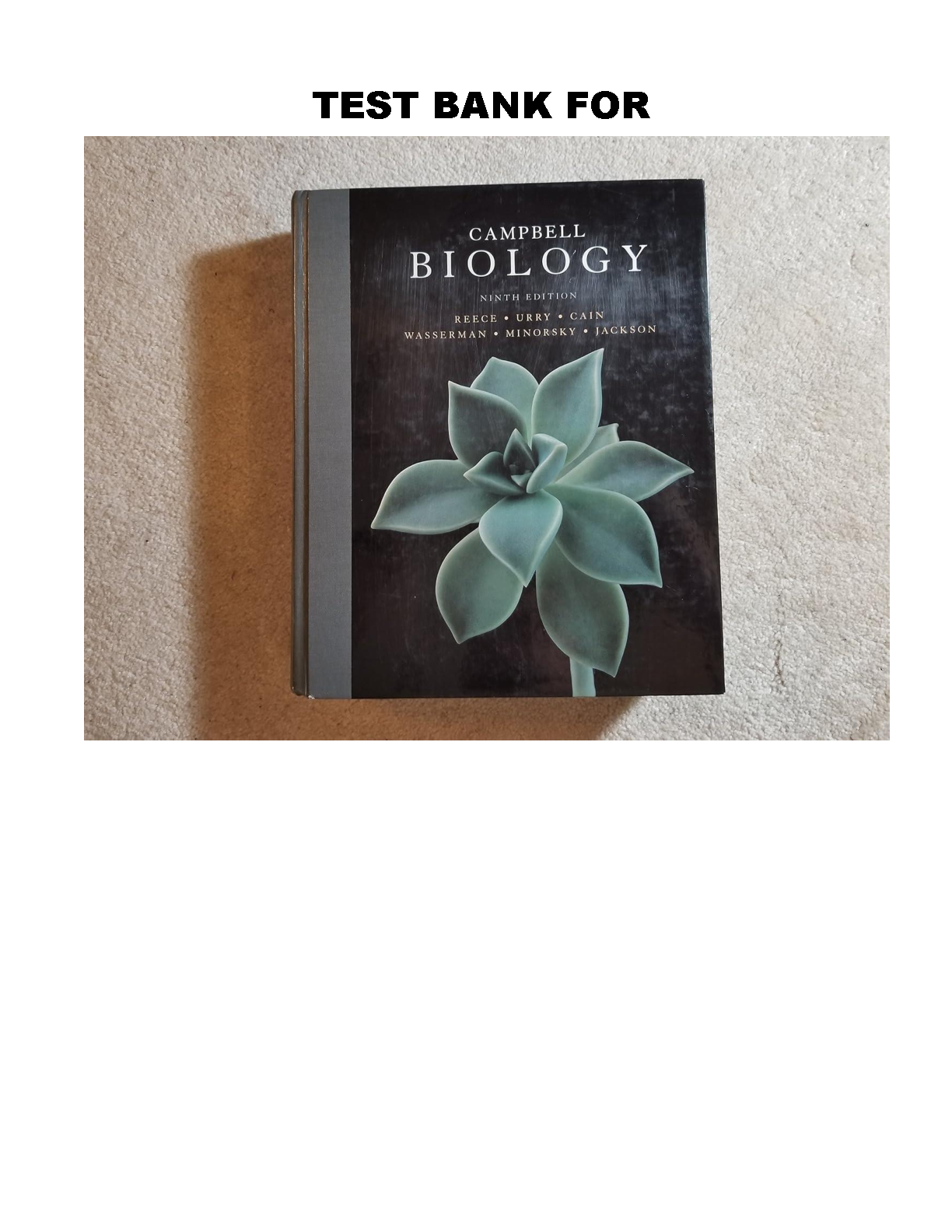
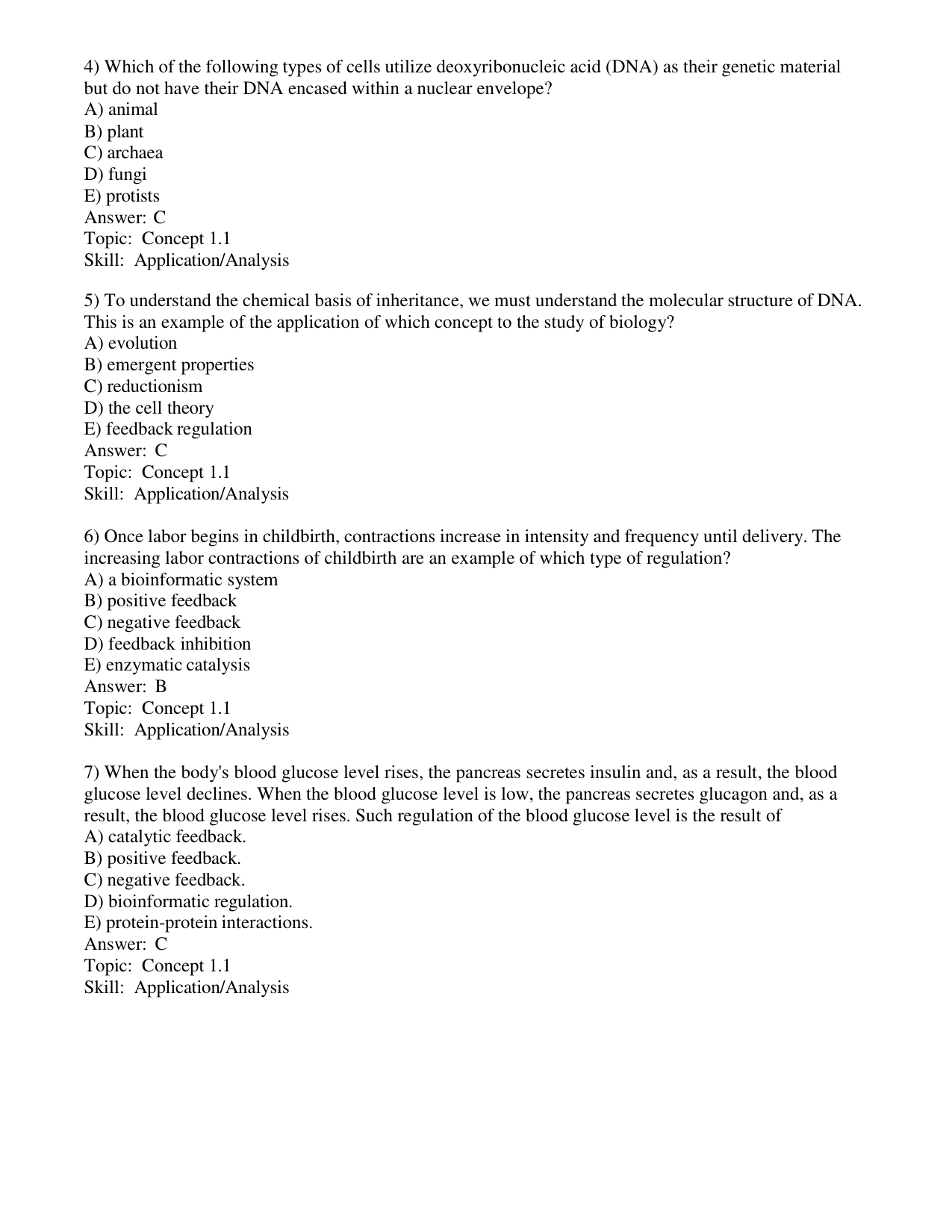
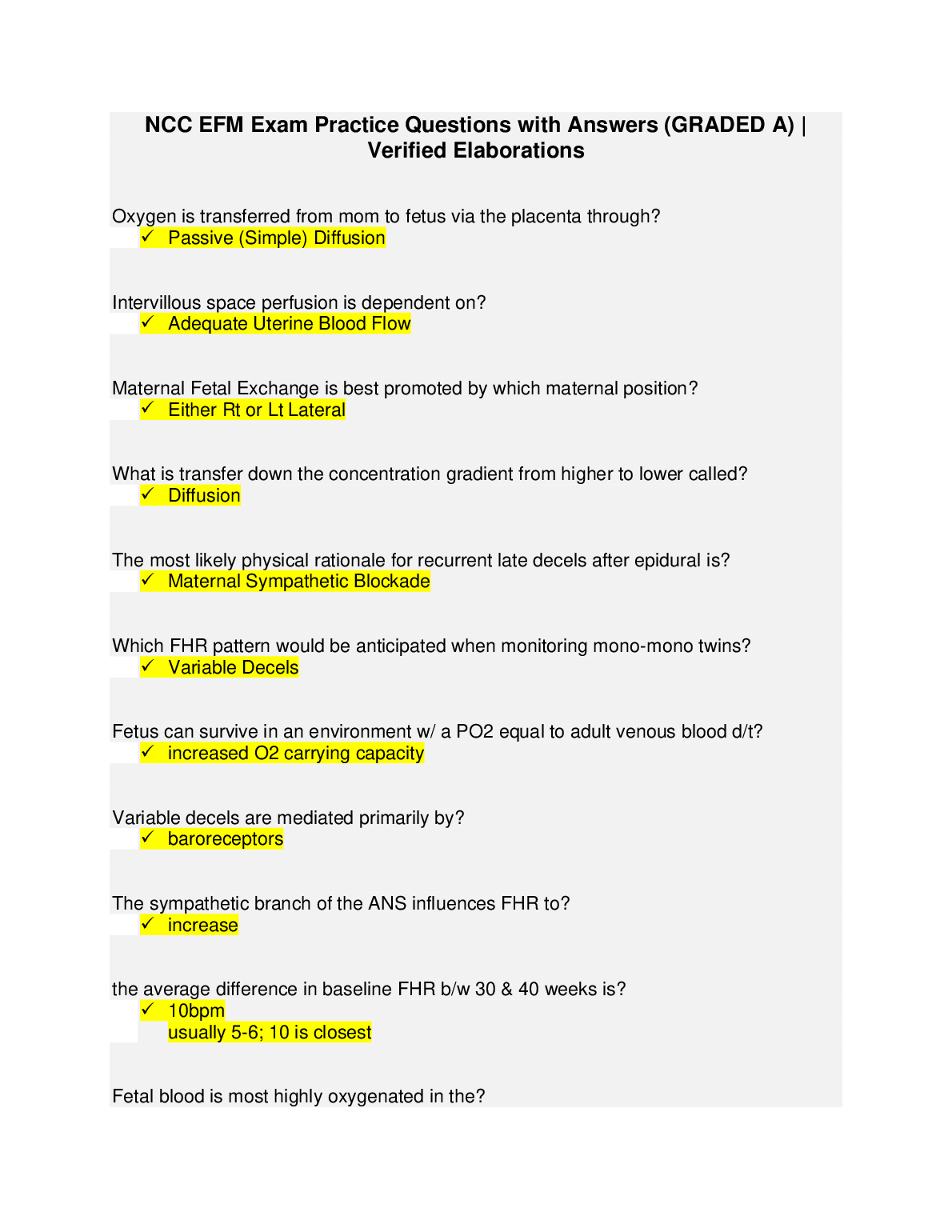
PDF Sample
1 / 3
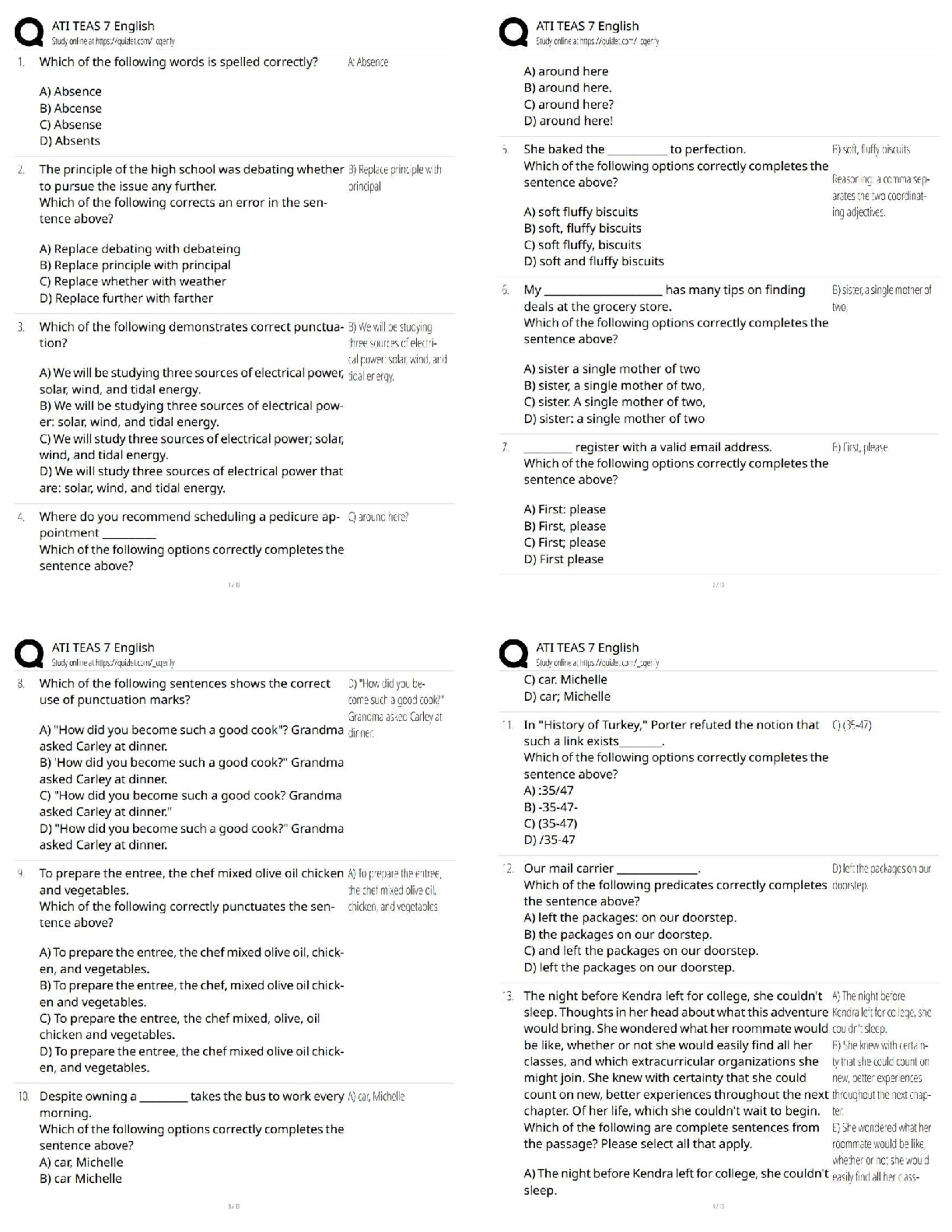
Campbell Biology 9th Edition TEST BANK IMG-1
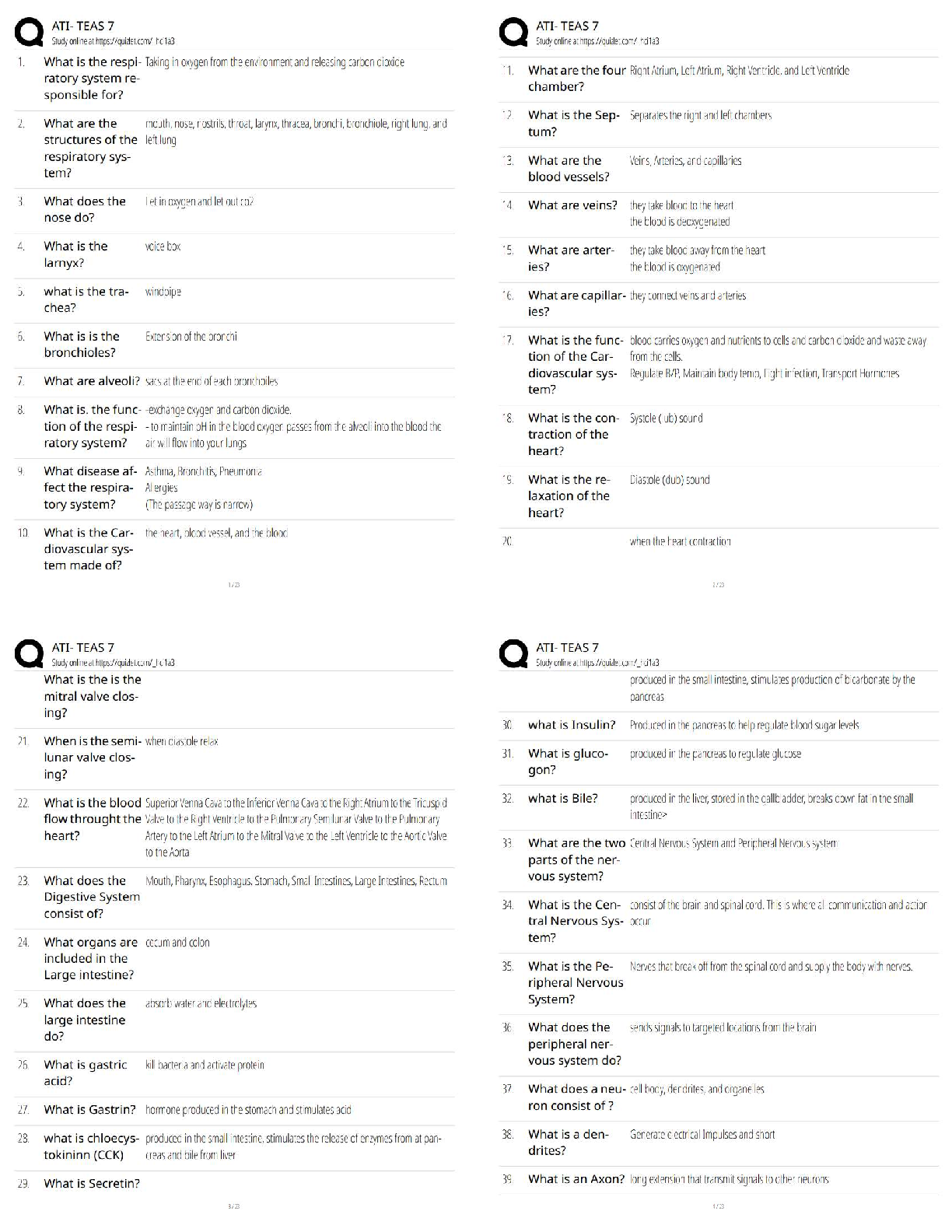
Campbell Biology 9th Edition TEST BANK IMG-2
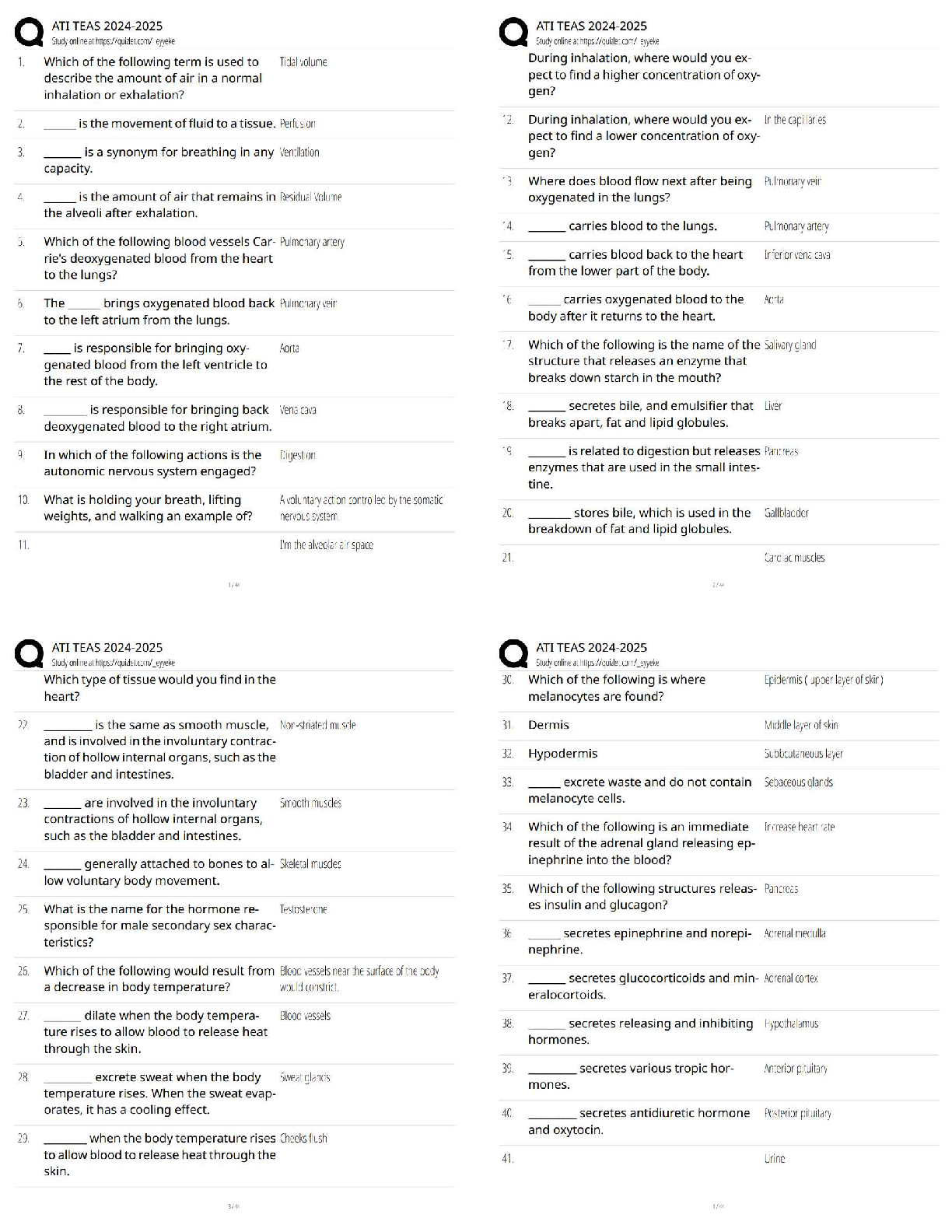
Campbell Biology 9th Edition TEST BANK IMG-3
Who is this Document for ?

biology, pre-medical programs, nursing, allied health sciences, environmental science, biotechnology, and other life science disciplines, instructors, professors, and teaching assistants.
What you will learn ?
Explain the major themes and unifying principles of biology.
Describe biology as an evidence-based scientific discipline.
Apply the scientific method to biological investigations.
Design, analyze, and interpret biological experiments.
Evaluate scientific evidence using data, graphs, tables, and models.
Explain evolution as the central organizing principle of biology.
Describe Darwin’s theory of natural selection and adaptation.
Explain mechanisms of evolution, including mutation, genetic drift, gene flow, and natural selection.
Describe how populations evolve over time.
Explain speciation and evolutionary relationships among organisms.
Interpret phylogenetic trees and evolutionary history.
Describe the diversity and classification of life.
Explain the chemical foundations of living systems.
Describe atomic structure, chemical bonding, and molecular interactions.
Explain the biological importance of water.
Describe acids, bases, and pH in living organisms.
Identify the structures and functions of carbohydrates, lipids, proteins, and nucleic acids.
Explain how biological macromolecules support cellular processes.
Describe the organization and function of cells.
Compare prokaryotic and eukaryotic cells.
Identify major organelles and explain their functions.
Explain membrane structure and membrane transport.
Describe diffusion, osmosis, facilitated diffusion, and active transport.
Explain mechanisms of cell communication and signaling.
Describe how cells obtain, transform, and use energy.
Explain ATP production and energy transfer.
Describe enzyme function and metabolic regulation.
Explain cellular respiration and photosynthesis.
Describe DNA structure, chromosomes, genes, and genomes.
Explain DNA replication, transcription, RNA processing, and translation.
Describe mechanisms regulating gene expression.
Explain how mutations contribute to genetic diversity and disease.
Apply Mendelian genetics and inheritance principles.
Analyze relationships among alleles, genotypes, and phenotypes.
Explain chromosome behavior during mitosis and meiosis.
Describe how cell division contributes to growth, repair, and reproduction.
Explain how meiosis promotes genetic variation.
Describe applications of biotechnology and genetic engineering.
Explain the characteristics of bacteria, archaea, protists, fungi, plants, and animals.
Describe plant structure, growth, transport, and reproduction.
Explain plant adaptations and photosynthetic processes.
Describe animal organization, tissues, organs, and organ systems.
Explain physiological mechanisms that maintain homeostasis.
Describe the functions of the nervous, endocrine, circulatory, respiratory, digestive, immune, urinary, muscular, skeletal, and reproductive systems.
Explain ecological principles involving populations, communities, ecosystems, and biodiversity.
Describe species interactions, food webs, energy flow, and nutrient cycling.
Analyze factors affecting ecosystem stability and biodiversity.
Explain human impacts on ecosystems and global environmental challenges.
Evaluate conservation strategies and sustainability practices.
Apply biological knowledge to medicine, biotechnology, agriculture, conservation, and environmental science.
Integrate concepts from chemistry, molecular biology, genetics, evolution, physiology, ecology, and environmental biology to explain living systems.
Develop critical-thinking, analytical, scientific reasoning, and problem-solving skills for biological inquiry.
What do you get with this PDF ?
Instant access after purchase
Download in PDF format
DRM free, read anywhere
Document details
Last update :
Jul 24, 2026
Length :
1235 pages
Edition :
2026
Language :
English
Category :
Keywords
Campbell Biology Campbell Biology 9th Edition Jane B. Reece Lisa A. Urry Michael L. Cain Steven A. Wasserman Peter V. Minorsky Robert B. Jackson Biology Test Bank Introductory Biology General Biology Life Science Biological Sciences Scientific Method Scientific Inquiry Experimental Design Scientific Reasoning Biology Education Evidence-based Science Characteristics Of Life Evolution Darwinian Evolution Natural Selection Adaptation Population Genetics Mutation Genetic Variation Genetic Drift Gene Flow Speciation Phylogenetics Biodiversity Taxonomy Classification Domains Of Life Bacteria Archaea Protists Fungi Plants Animals Chemistry Of Life Atoms Molecules Chemical Bonds Water Properties Acids Bases Ph Organic Molecules Biological Macromolecules Carbohydrates Lipids Proteins Enzymes Nucleic Acids Dna Rna Chromosomes Genes Genomes Molecular Biology Cell Biology Cell Theory Prokaryotic Cells Eukaryotic Cells Organelles Plasma Membrane Cell Membrane Membrane Transport Diffusion Osmosis Facilitated Diffusion Active Transport Cell Communication Cell Signaling Atp Cellular Energy Metabolism Cellular Respiration Photosynthesis Cell Cycle Dna Replication Mitosis Meiosis Cytokinesis Genetics Heredity Mendelian Genetics Alleles Genotypes Phenotypes Gene Expression Transcription Translation Gene Regulation Mutations Biotechnology Genetic Engineering Human Genetics Plant Biology Plant Structure Plant Physiology Plant Reproduction Animal Biology Human Biology Anatomy And Physiology Homeostasis Nervous System Endocrine System Circulatory System Respiratory System Digestive System Immune System Urinary System Muscular System Skeletal System Reproductive System Ecology Population Ecology Community Ecology Ecosystems Energy Flow Food Chains Food Webs Nutrient Cycling Conservation Biology Environmental Biology Climate Change Sustainability Human Impact On Environment Biological Data Analysis Laboratory Skills Critical Thinking Problem Solving College Biology Pre-med Biology Nursing Biology Allied Health Biotechnology Education Agriculture Biology Exam Preparation.
You may also be interested in :
Recommendations for you
Campbell Biology 13th Edition TEST BANK
Campbell Biology 13th Edition Test Bank

Is A Comprehensive Assessment Resource Designed To Reinforce The Major Concepts Of Bi...

$18
Campbell Biology 12th Edition TEST BANK
Campbell Biology 12th Edition Test Bank

These Resources Are Generally Intended For Instructors To Create Quizzes And Exams, R...

$17
Campbell Biology 11th Edition TEST BANK
Campbell Biology 11th Edition Test Bank

Is The Unsurpassed Leader In Introductory Biology.

$16
Biology, 8th Edition TEST BANK
Biology, 8th Edition Test Bank

Is A Comprehensive Assessment Resource Designed To Reinforce The Foundational Concept...

$18