
Test bank
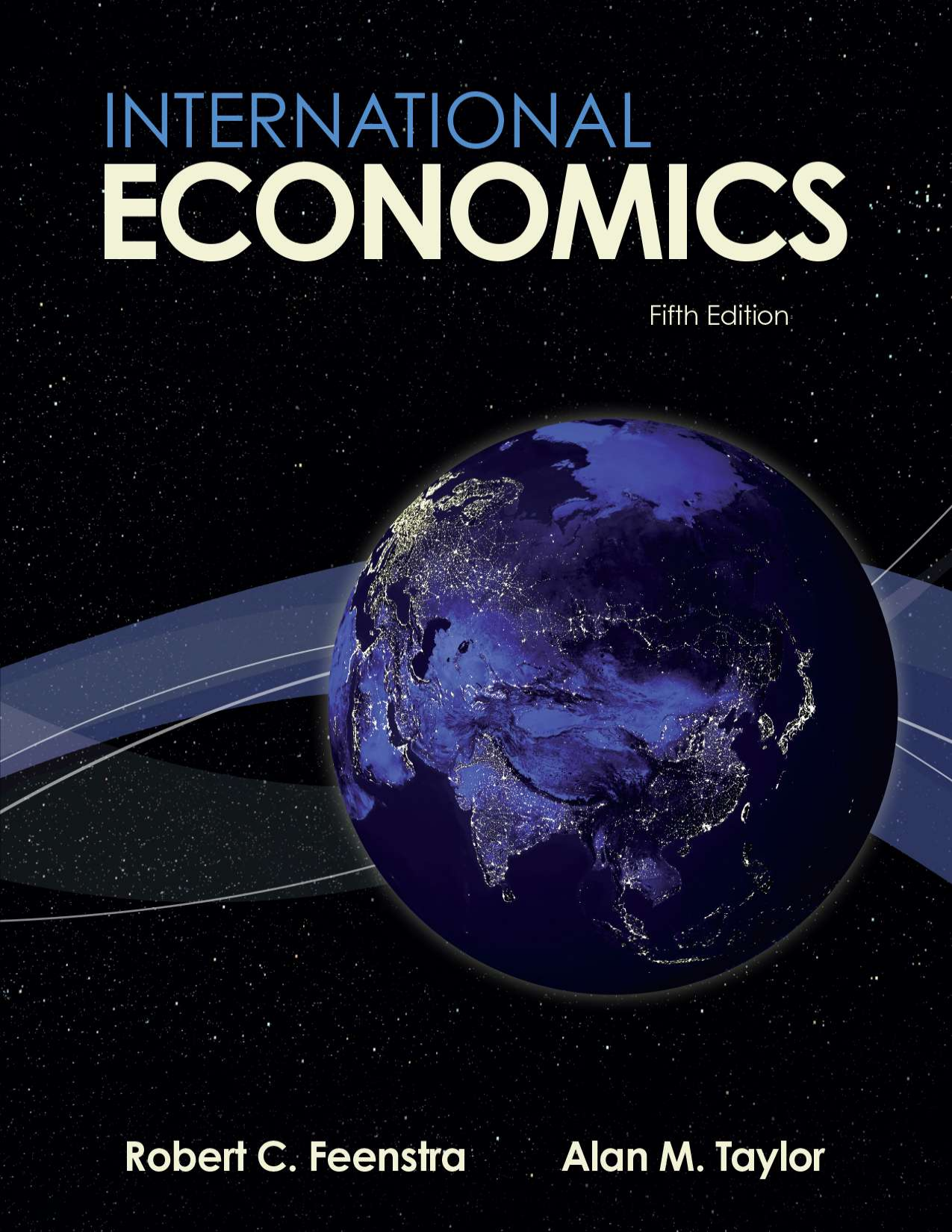
International Economics 5th Edition Test Bank
Test Bank for International Economics, 5th Edition by Robert C. Feenstra and Alan M. Taylor is a comprehensive instructor assessment resource developed to accompany the textbook and support teaching, learning, and evaluation in international economics. Designed for undergraduate and graduate courses in economics, international business, finance, and public policy, the test bank provides a broad range of assessment materials that measure students' understanding of international trade, global financial markets, macroeconomic policy, and the economic relationships among nations.
The resource includes a variety of assessment formats, including multiple-choice, true/false, matching, fill-in-the-blank, short-answer, quantitative, and case-based application questions. Organized according to the textbook chapters, the assessment items enable instructors to create chapter quizzes, unit tests, midterm examinations, and comprehensive final assessments. Many questions are based on realistic economic scenarios that require students to interpret data, apply economic models, evaluate policy alternatives, and analyze contemporary international economic issues using sound theoretical reasoning.
Content begins with the foundational principles of international economics, introducing comparative advantage, opportunity cost, specialization, gains from trade, production possibilities, and the determinants of international trade. Students are assessed on their understanding of classical and modern trade theories, including the Ricardian model, Heckscher-Ohlin model, specific factors model, increasing returns to scale, monopolistic competition, and strategic trade theory. Assessment items encourage learners to analyze how comparative advantage, resource endowments, productivity differences, and economies of scale influence global trade patterns.
Comprehensive coverage of international trade policy examines tariffs, quotas, export subsidies, import restrictions, non-tariff barriers, trade agreements, customs unions, regional economic integration, and the role of international organizations such as the World Trade Organization (WTO). Students evaluate the economic consequences of protectionism, free trade policies, and government intervention while considering their effects on consumers, producers, employment, and national welfare.
The international finance section explores foreign exchange markets, exchange rate determination, purchasing power parity, interest rate parity, international capital mobility, balance of payments accounting, foreign direct investment, international portfolio investment, and the operation of global financial markets. Assessment materials emphasize quantitative analysis, interpretation of macroeconomic indicators, exchange rate movements, capital flows, and financial risk management in an increasingly interconnected global economy.
Additional topics include open-economy macroeconomics, fiscal and monetary policy, inflation, unemployment, business cycles, financial crises, sovereign debt, international banking, economic growth, globalization, multinational corporations, global value chains, economic development, environmental sustainability, migration, technological innovation, and international policy coordination. The resource also addresses the roles of institutions such as the International Monetary Fund (IMF), World Bank, and central banks in promoting financial stability and international economic cooperation.
Designed to assess multiple levels of learning, the test bank evaluates factual knowledge, conceptual understanding, mathematical reasoning, quantitative analysis, policy evaluation, problem-solving, and critical thinking. Students are encouraged to integrate economic theory with empirical evidence while applying analytical models to current international economic events and business decisions.
Learning activities emphasize data interpretation, graphical analysis, economic modeling, comparative evaluation, and case-based problem solving. Scenario-based questions strengthen students' ability to interpret international economic indicators, analyze policy decisions, evaluate trade-offs, assess financial market developments, and make evidence-based recommendations using established economic principles.

Economics students, instructors, and exam preparation users.
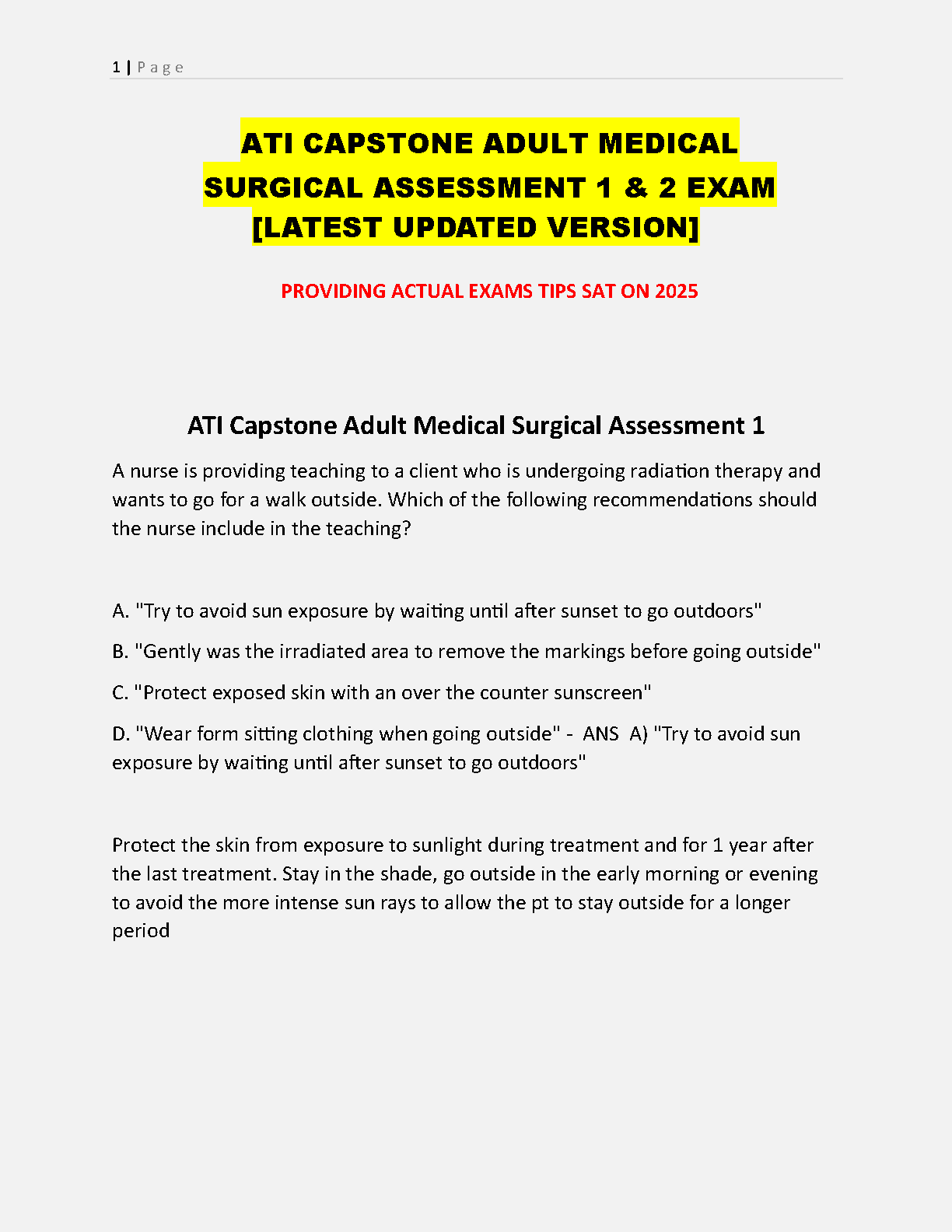
Master ATI Capstone Adult Medical-surgical Assessments With Verified Tips, Practice Q...
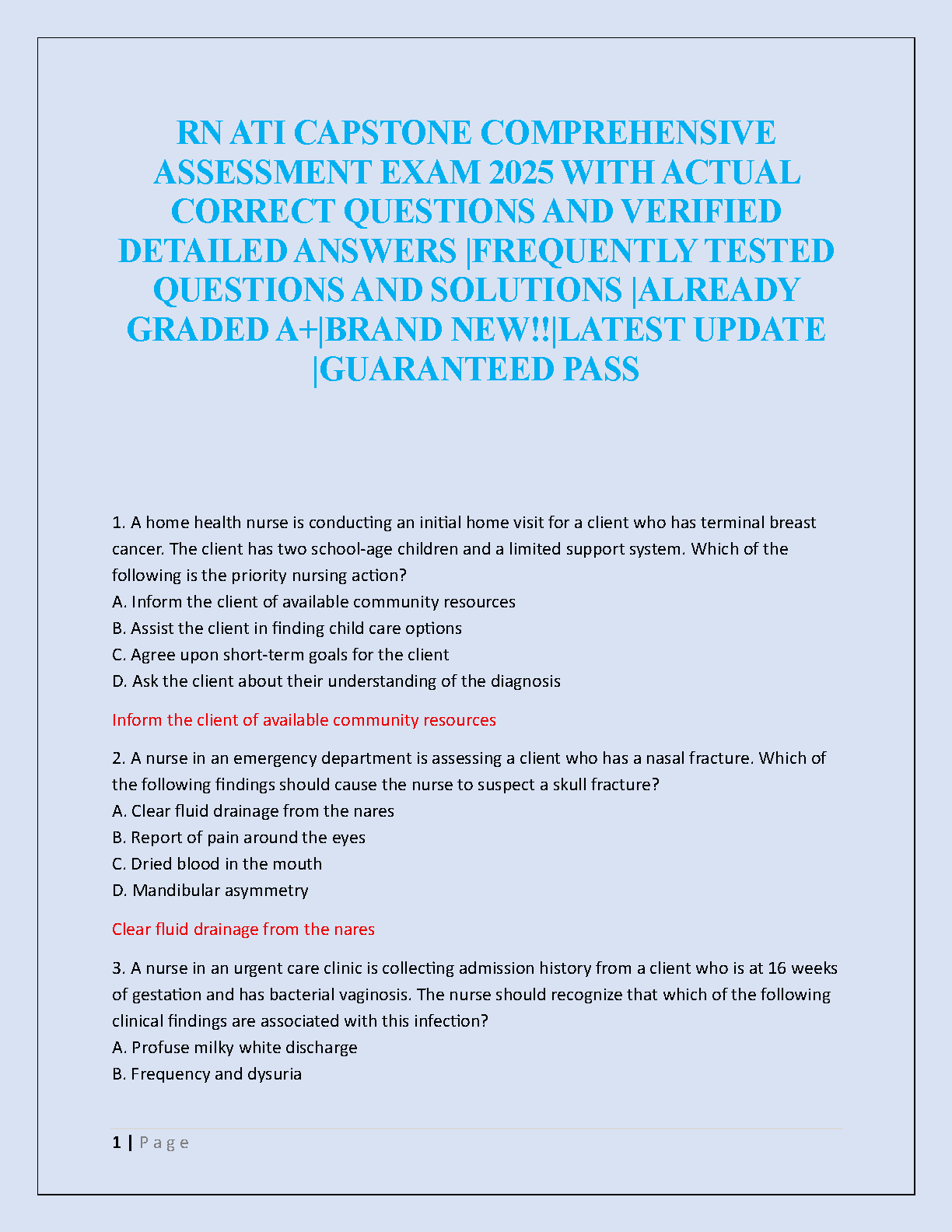
Master The RN ATI Capstone With Verified Questions, Detailed Solutions, And High-yiel...

Master The ATI Capstone Nursing Exam. Complete 2025 Test Bank With Verified Answers A...
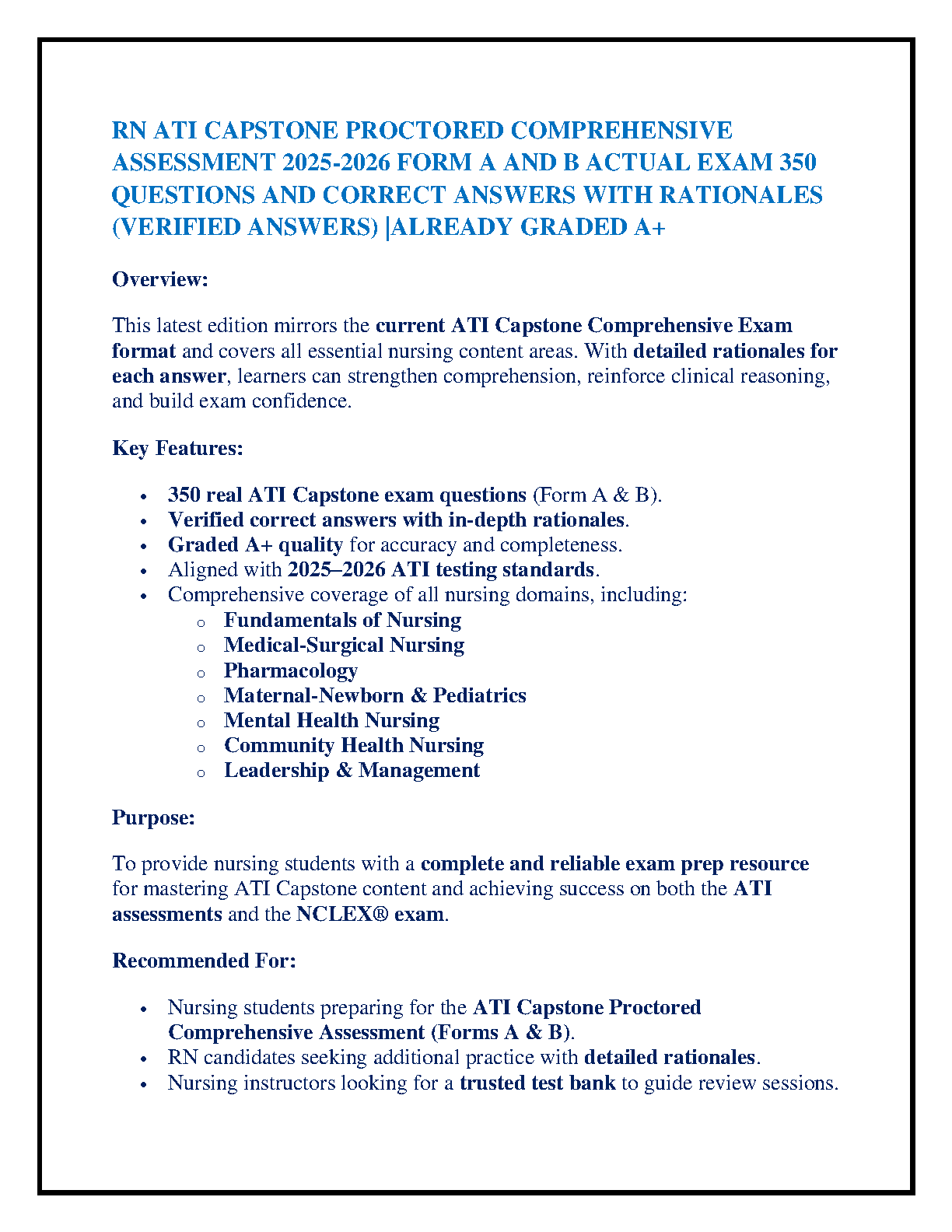
Master The ATI RN Capstone With 350 Verified Questions And Rationales. Ideal For NCLE...