
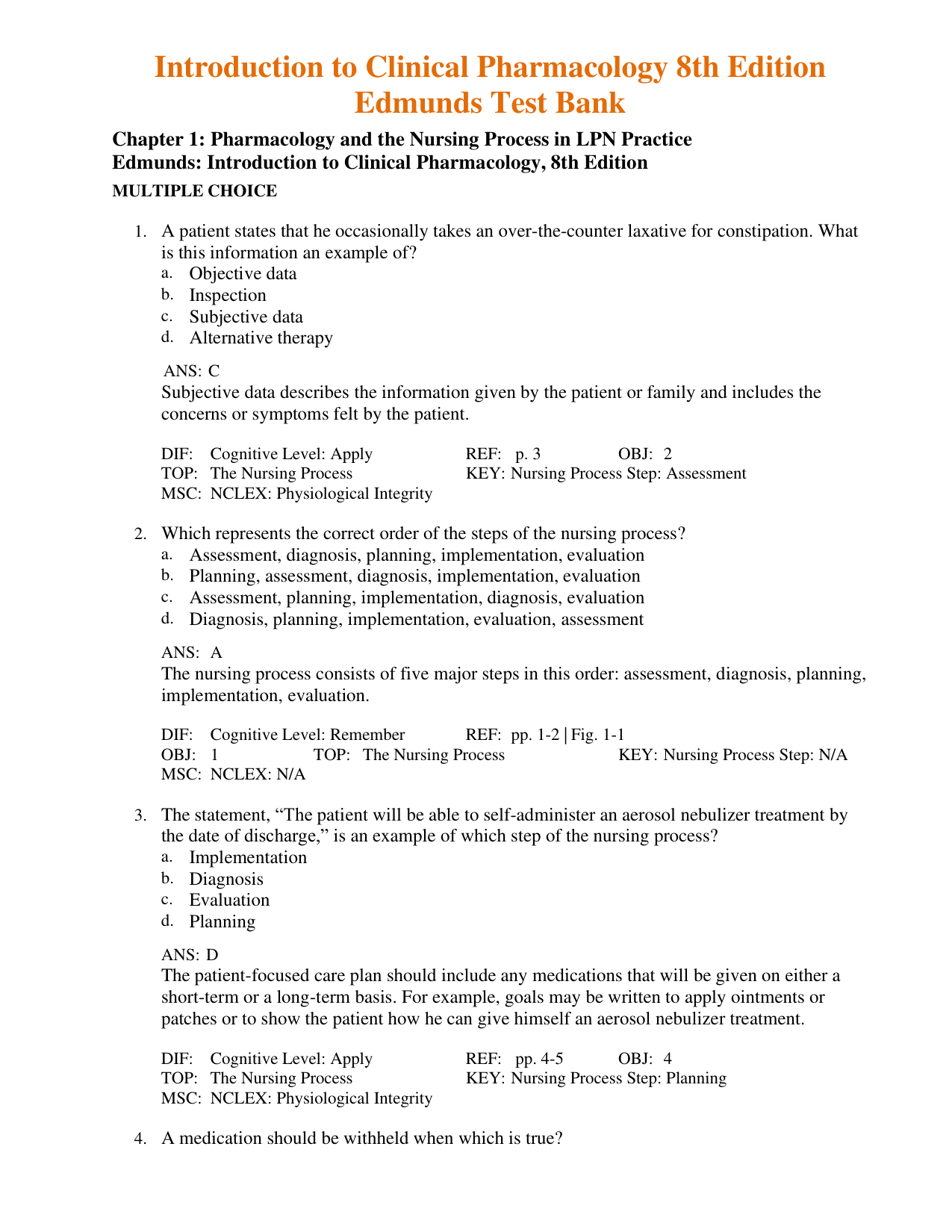
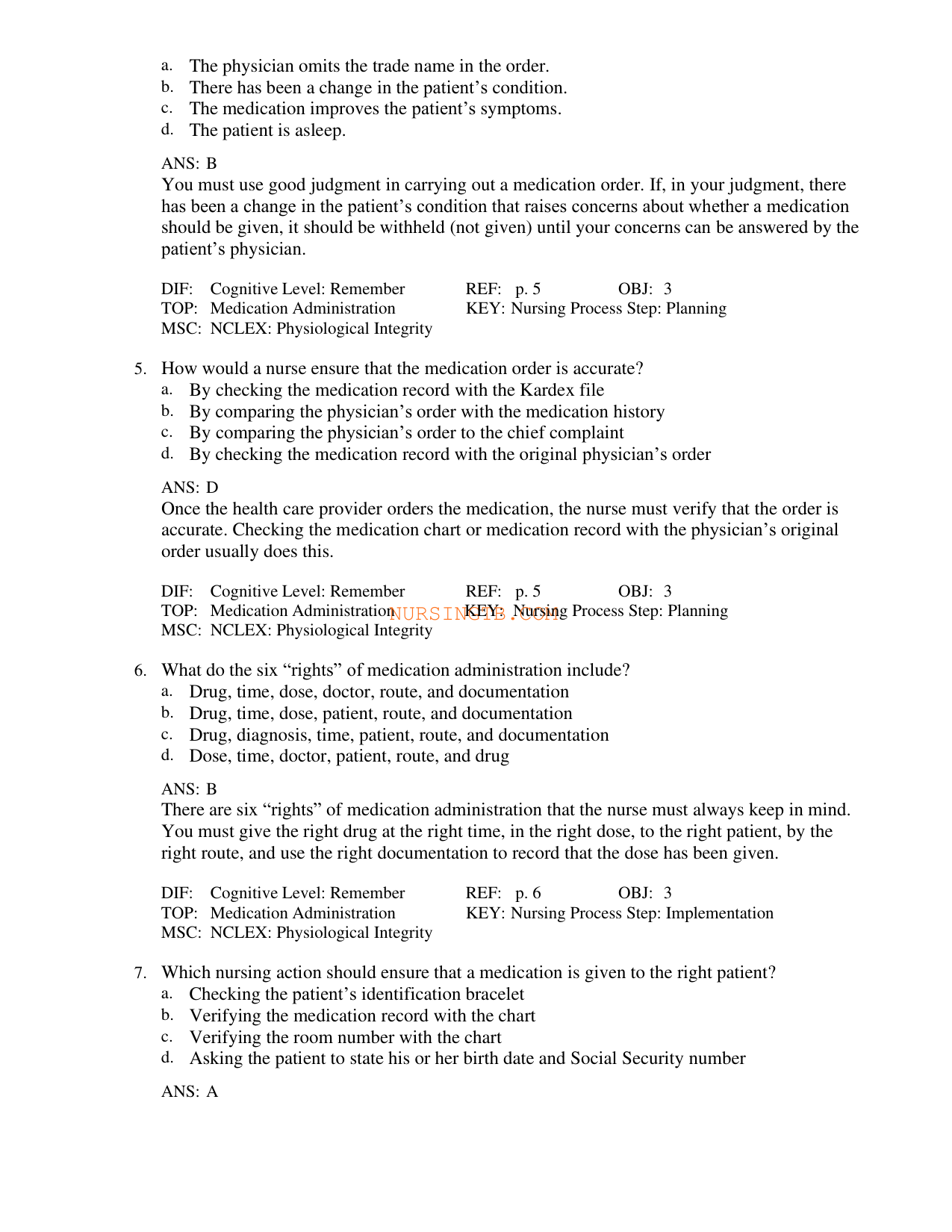
Introduction to Clinical Pharmacology, 8th Edition TEST BANK Introduction to Clinical Pharmacology, 8th Edition TEST BANK

Nursing

Introduction To Clinical Pharmacology, 8th Edition Test Bank


Is A Comprehensive Instructor Assessment Resource Designed To Evaluate Students' Understanding Of Clinical Pharmacology
Description

Test Bank for Introduction to Clinical Pharmacology, 8th Edition by Marilyn Winterton Edmunds is a comprehensive instructor assessment resource developed to accompany the textbook and support teaching, learning, and evaluation in clinical pharmacology. Designed for nursing, practical nursing, allied health, and other healthcare education programs, the test bank provides a broad collection of assessment materials that evaluate students' understanding of pharmacologic principles, medication administration, therapeutic interventions, and evidence-based patient care across a variety of clinical settings.

The resource includes a variety of assessment formats, including multiple-choice, true/false, matching, fill-in-the-blank, short-answer, dosage calculation, and case-based application questions. Organized according to the textbook chapters, the assessment items enable instructors to create chapter quizzes, laboratory assessments, unit examinations, midterm tests, and comprehensive final examinations. Many questions incorporate realistic patient scenarios that require students to apply pharmacologic knowledge, interpret clinical findings, calculate medication dosages, recognize adverse reactions, and implement safe medication practices using sound clinical judgment.

Content begins with the foundational principles of pharmacology, introducing drug classifications, pharmacokinetics, pharmacodynamics, routes of administration, dosage forms, medication absorption, distribution, metabolism, excretion, receptor interactions, therapeutic effects, and factors that influence drug responses. Students are assessed on their understanding of how medications produce desired therapeutic outcomes while minimizing adverse effects and promoting patient safety.

Comprehensive coverage of medication administration emphasizes dosage calculations, medication preparation, safe administration techniques, documentation, medication reconciliation, patient identification, error prevention, high-alert medications, legal and ethical responsibilities, and quality assurance. Assessment materials reinforce adherence to established medication safety standards and evidence-based nursing practice.

The test bank provides extensive coverage of pharmacologic agents affecting major body systems, including medications for cardiovascular, respiratory, endocrine, gastrointestinal, renal, neurologic, musculoskeletal, hematologic, immune, and reproductive disorders. Students evaluate drug indications, mechanisms of action, therapeutic uses, contraindications, precautions, adverse effects, drug interactions, monitoring parameters, and patient education for commonly prescribed medications.

Additional content addresses antimicrobial agents, analgesics, anesthetics, anti-inflammatory medications, psychotherapeutic drugs, oncology therapies, vaccines, biologics, emergency medications, complementary therapies, geriatric pharmacology, pediatric pharmacology, pharmacogenomics, cultural considerations, and individualized medication management. The resource also explores evidence-based prescribing practices, interdisciplinary collaboration, and the role of healthcare professionals in optimizing medication outcomes.

Designed to assess multiple cognitive levels, the test bank evaluates knowledge recall, comprehension, application, analysis, dosage calculation, clinical reasoning, prioritization, and problem-solving. Students are encouraged to integrate anatomy, physiology, pathophysiology, pharmacology, and nursing interventions while applying the nursing process to medication administration and patient care.

Learning activities emphasize patient assessment, medication safety, therapeutic communication, dosage accuracy, adverse drug reaction recognition, clinical decision-making, and patient education. Scenario-based questions strengthen learners' ability to prioritize nursing interventions, evaluate medication effectiveness, identify potential complications, and promote safe, evidence-based pharmacologic care across diverse patient populations.

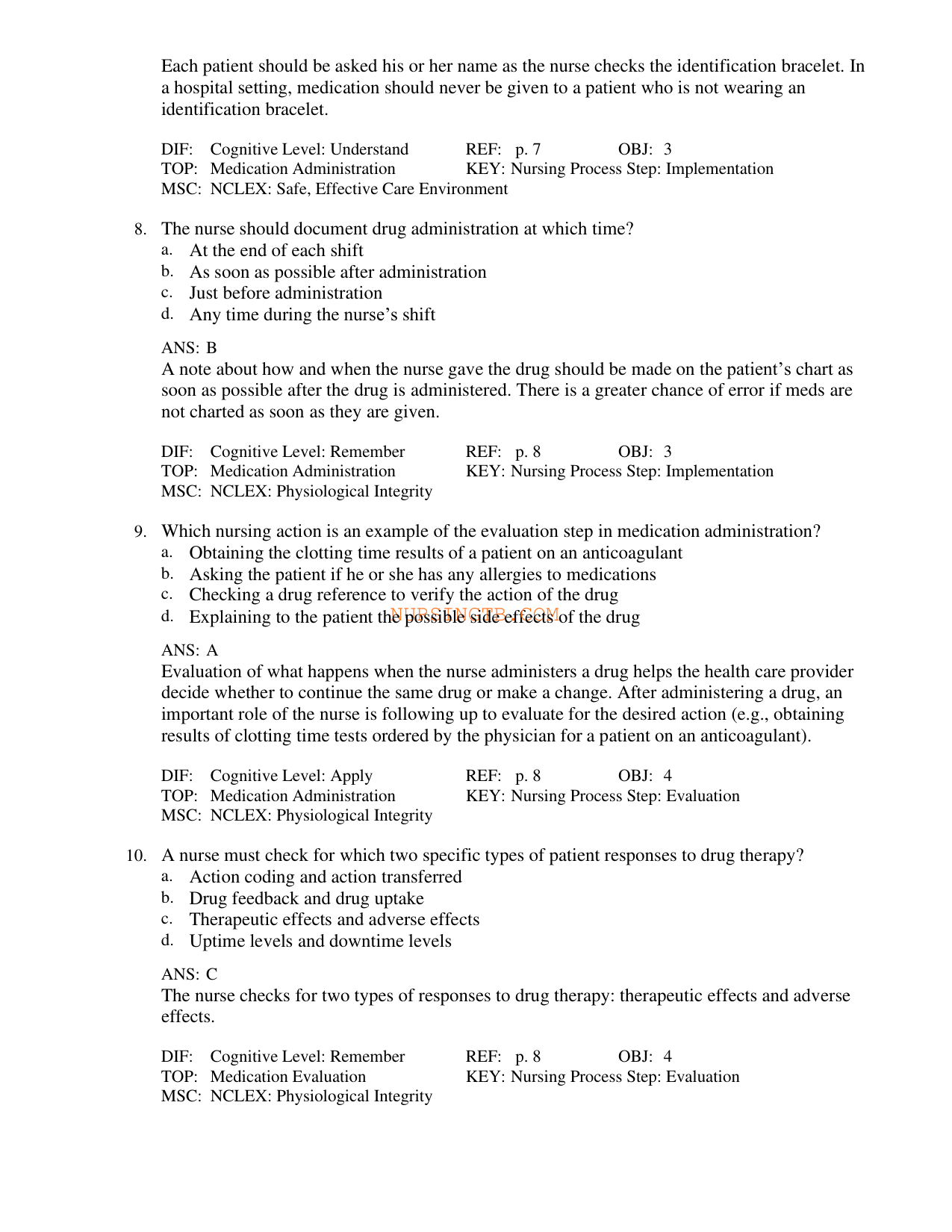
PDF Sample
1 / 3
Introduction to Clinical Pharmacology, 8th Edition TEST BANK IMG-1
Introduction to Clinical Pharmacology, 8th Edition TEST BANK IMG-2
Introduction to Clinical Pharmacology, 8th Edition TEST BANK IMG-3
Who is this Document for ?

Nursing students, Pharmacology Students, instructors, and exam preparation users.

What you will learn ?
Explain the basic principles of pharmacology and their application to clinical practice.
Describe the relationship between drugs, body systems, and therapeutic outcomes.
Explain pharmacokinetics, including absorption, distribution, metabolism, and excretion of medications.
Describe pharmacodynamics and how drugs interact with receptors to produce effects.
Identify factors that influence individual responses to medications.
Explain drug classifications, naming systems, indications, and therapeutic uses.
Apply principles of safe medication administration in healthcare settings.
Perform accurate medication dosage calculations using appropriate formulas and measurement systems.
Describe different routes of medication administration and factors affecting each route.
Recognize common medication errors and apply strategies to improve medication safety.
Explain the legal, ethical, and professional responsibilities related to medication administration.
Identify adverse drug reactions, side effects, contraindications, and drug interactions.
Describe methods for monitoring medication effectiveness and patient responses.
Apply clinical judgment when evaluating medication therapy and patient outcomes.
Explain the principles of patient education related to medication use, adherence, and safety.
Describe nursing responsibilities associated with commonly used medication classes.
Explain the pharmacologic management of cardiovascular disorders and related conditions.
Describe medications used to treat respiratory, endocrine, gastrointestinal, renal, and neurologic disorders.
Explain the uses, precautions, and monitoring requirements of antimicrobial medications.
Describe medications used for pain management, inflammation, and musculoskeletal conditions.
Explain the principles of psychopharmacology and medications affecting mental health.
Describe pharmacologic considerations for pediatric, geriatric, and special patient populations.
Recognize the effects of genetics, culture, lifestyle, and health status on medication responses.
Apply evidence-based practice when evaluating medication therapies and patient care decisions.
Integrate pharmacologic knowledge, patient assessment findings, and nursing interventions to promote safe and effective medication management.
What do you get with this PDF ?
Instant access after purchase
Download in PDF format
DRM free, read anywhere
Document details
Last update :
Jul 27, 2026
Length :
180 pages
Edition :
2026
Language :
English
Category :
Keywords
Clinical Pharmacology Pharmacology Medication Administration Drug Therapy Nursing Pharmacology Pharmacokinetics Pharmacodynamics Absorption Distribution Metabolism Excretion Adme Drug Receptors Therapeutic Effects Drug Actions Drug Classifications Medication Safety Safe Medication Administration Medication Errors High-alert Medications Dosage Calculations Medication Dosage Drug Calculations Metric System Medication Preparation Medication Routes Oral Medications Intravenous Medications Intramuscular Injections Subcutaneous Injections Topical Medications Inhalation Medications Transdermal Medications Medication Reconciliation Patient Safety Adverse Drug Reactions Side Effects Contraindications Precautions Drug Interactions Toxicity Therapeutic Index Pharmacologic Response Patient Assessment Clinical Judgment Evidence-based Practice Patient Education Medication Adherence Nursing Responsibilities Legal Responsibilities Ethical Considerations Prescription Medications Generic Drugs Brand-name Drugs Over-the-counter Medications Controlled Substances Drug Development Clinical Trials Drug Regulation Fda Drug Absorption Factors Metabolism Pathways Liver Enzymes Renal Excretion Half-life Steady State Loading Dose Maintenance Dose Dosage Forms Drug Administration Techniques Cardiovascular Medications Antihypertensives Cardiac Drugs Anticoagulants Antiplatelet Drugs Respiratory Medications Bronchodilators Corticosteroids Antibiotics Antimicrobials Antiviral Medications Antifungal Medications Endocrine Medications Insulin Diabetes Medications Thyroid Medications Gastrointestinal Medications Neurologic Medications Analgesics Opioids Nonopioid Pain Medications Anti-inflammatory Drugs Psychiatric Medications Antidepressants Antipsychotics Anxiolytics Sedatives Anticonvulsants Oncology Medications Immunologic Medications Vaccines Pediatric Pharmacology Geriatric Pharmacology Pharmacogenomics Personalized Medicine Complementary Therapies Herbal Medications Medication Monitoring Laboratory Values Patient Outcomes Nursing Process Nursing Assessment Nursing Interventions Therapeutic Communication Clinical Decision-making Healthcare Professionals Interdisciplinary Care Medication Management.
You may also be interested in :
Recommendations for you
College Physics, 5th Edition TEST BANK
College Physics, 5th Edition Test Bank

Is A Comprehensive Instructor Assessment Resource Designed For College Physics Instru...
$17
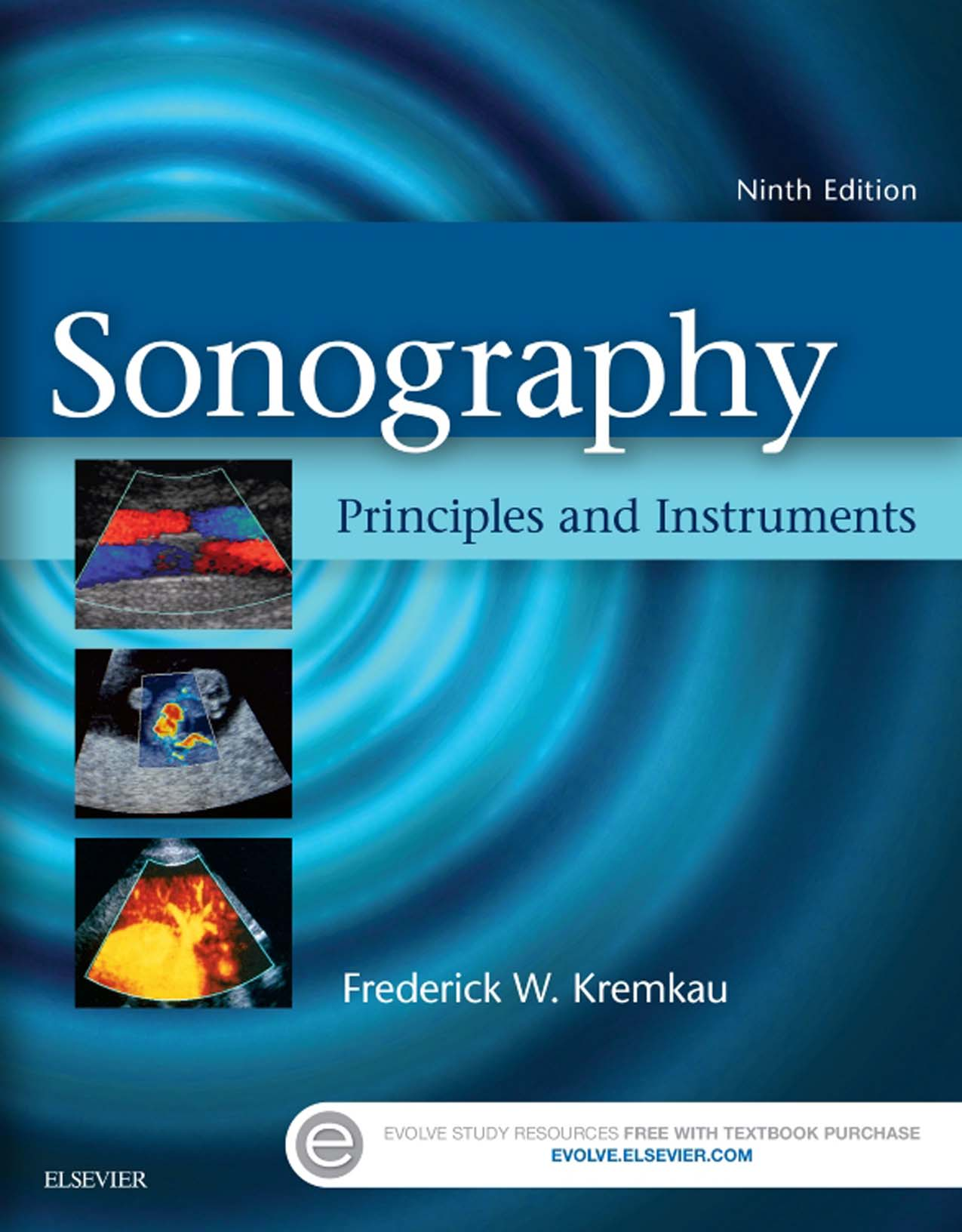
Sonography Principles and Instruments 9th Edition TEST BANK
Sonography Principles And Instruments 9th Edition Test Bank

Is A Comprehensive Instructor Assessment Resource Designed To Evaluate Students’ Unde...
$17
Sonography Principles and Instruments 10th Edition TEST BANK
Sonography Principles And Instruments 10th Edition Test Bank

Is A Comprehensive Instructor Assessment Resource Designed To Evaluate Students’ Unde...
$16
Food and the Nutrition Care Process 15th Edition TEST BANK
Food And The Nutrition Care Process 15th Edition Test Bank

Is A Comprehensive Instructor Assessment Resource Designed To Evaluate Students’ Unde...

$16