
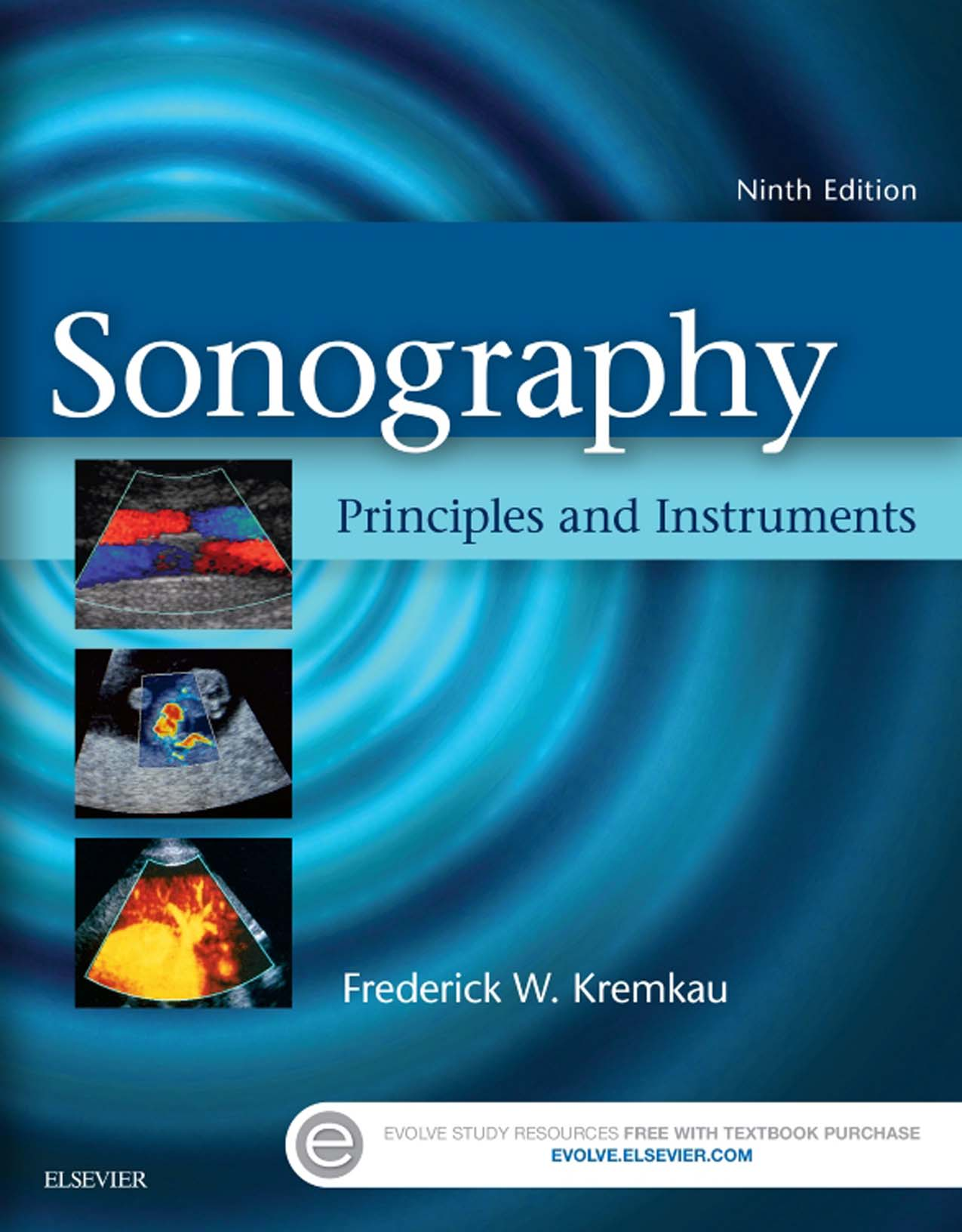

Test bank
Sonography Principles And Instruments 9th Edition Test Bank
Test Bank for Sonography Principles and Instruments, 9th Edition by Frederick W. Kremkau is a comprehensive instructor assessment resource designed to support education and evaluation in diagnostic medical sonography, ultrasound physics, and imaging instrumentation. Developed for sonography programs, medical imaging courses, and allied health education, the test bank provides a wide range of assessment materials that measure students’ understanding of ultrasound principles, equipment operation, image production, and clinical applications.
The resource includes diverse assessment formats such as multiple-choice questions, true/false questions, matching exercises, terminology reviews, calculation-based problems, and case-based application scenarios. Organized by textbook chapters, these assessment materials allow instructors to develop quizzes, unit examinations, laboratory assessments, registry review activities, and comprehensive final examinations. Many questions require students to apply ultrasound physics concepts to clinical situations, analyze imaging challenges, and select appropriate techniques for producing high-quality diagnostic images.
The test bank begins with fundamental concepts of sonography, including the nature of sound, acoustic wave properties, ultrasound terminology, and the principles that govern image creation. Students are assessed on their understanding of frequency, wavelength, amplitude, intensity, propagation speed, acoustic impedance, reflection, refraction, scattering, absorption, and attenuation, as well as how these principles influence ultrasound image quality.
Comprehensive coverage of ultrasound transducers examines piezoelectric materials, transducer construction, probe design, beam characteristics, focusing methods, and the relationship between transducer selection and clinical imaging applications. Students learn how different transducer types and operating frequencies affect penetration, resolution, and diagnostic effectiveness.
The resource addresses pulse-echo imaging principles, including pulse generation, echo detection, signal processing, image formation, and display methods. Assessment questions reinforce concepts related to spatial resolution, contrast resolution, temporal resolution, frame rate, and the technical factors that influence image optimization.
Instrumentation and system controls are extensively covered, including gain adjustments, time gain compensation (TGC), depth settings, dynamic range, frequency selection, focusing controls, image processing, and digital imaging technology. Students are challenged to understand how equipment adjustments influence image appearance and diagnostic interpretation.
Doppler ultrasound principles are a major focus, including the Doppler effect, Doppler equation, continuous-wave Doppler, pulsed-wave Doppler, color Doppler, power Doppler, spectral analysis, and blood flow evaluation. Students apply Doppler concepts to understand velocity measurements, flow direction, hemodynamics, and clinical vascular and cardiac applications.
The test bank also covers ultrasound artifacts, including their causes, recognition, and clinical significance. Students evaluate common artifacts such as reverberation, shadowing, enhancement, mirror image artifacts, refraction artifacts, and aliasing, while learning methods to minimize unwanted artifacts and use imaging findings appropriately.
Additional topics include ultrasound equipment quality assurance, safety principles, bioeffects, regulatory guidelines, acoustic output, scanning techniques, image documentation, and professional responsibilities. Students develop an understanding of safe ultrasound practices, equipment maintenance, and quality improvement processes essential for clinical environments.
Designed to assess multiple levels of learning, the test bank evaluates knowledge recall, conceptual understanding, mathematical application, technical reasoning, problem-solving, and clinical decision-making. Questions encourage students to integrate ultrasound physics concepts with practical scanning skills and diagnostic imaging procedures.
Case-based assessment items strengthen learners’ ability to troubleshoot equipment issues, optimize image quality, identify technical limitations, select appropriate imaging parameters, and apply ultrasound principles to real-world patient examinations.

Nursing students, instructors, and exam preparation users.
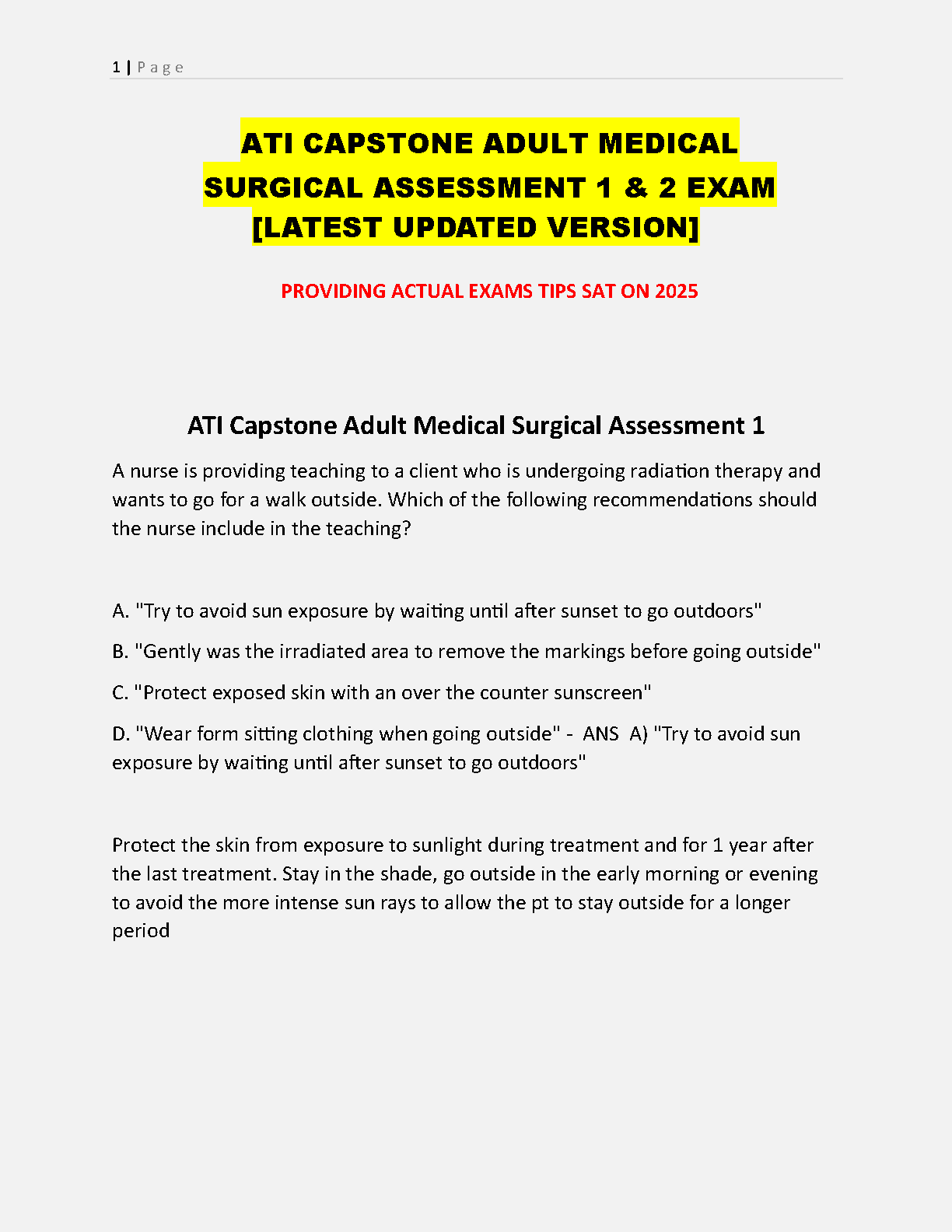
Master ATI Capstone Adult Medical-surgical Assessments With Verified Tips, Practice Q...
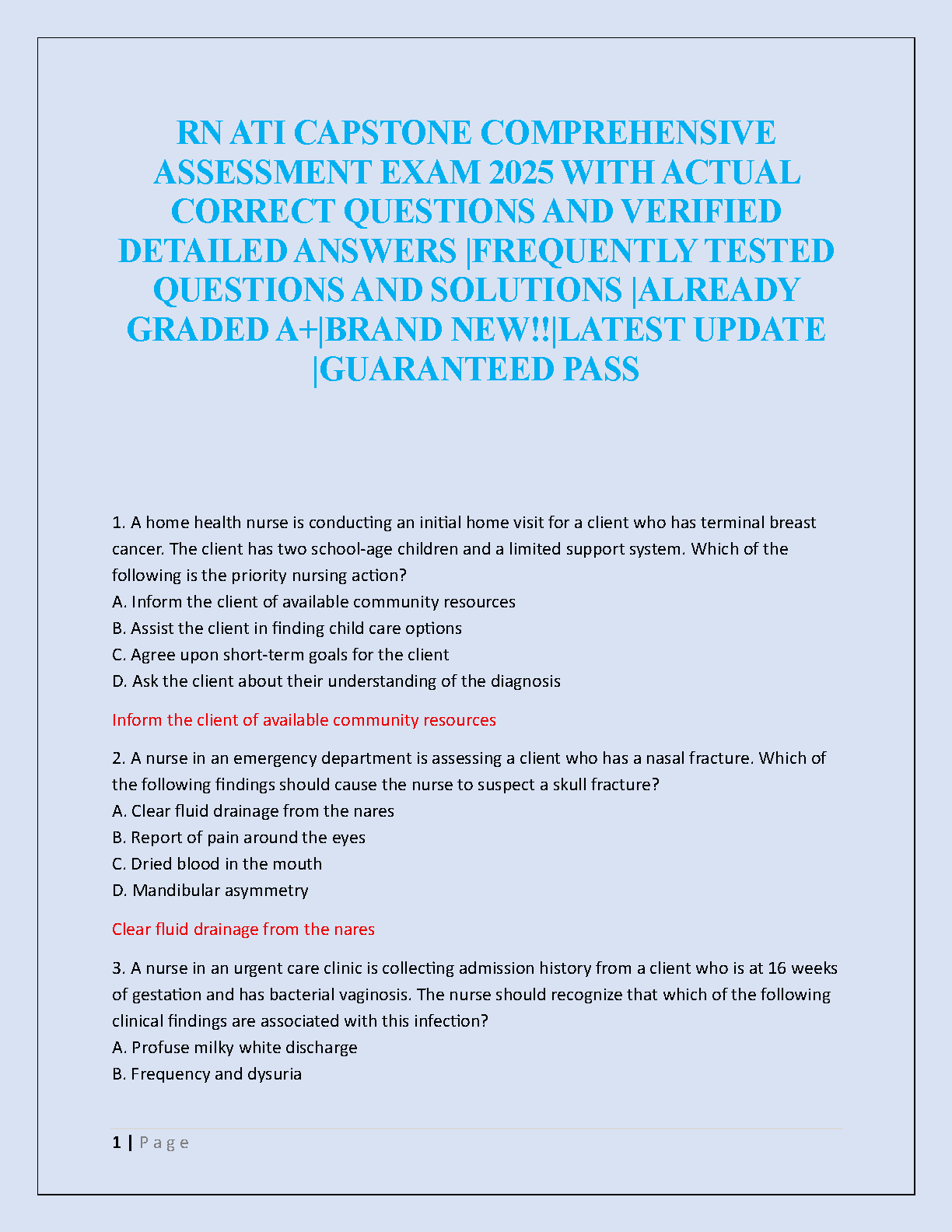
Master The RN ATI Capstone With Verified Questions, Detailed Solutions, And High-yiel...

Master The ATI Capstone Nursing Exam. Complete 2025 Test Bank With Verified Answers A...
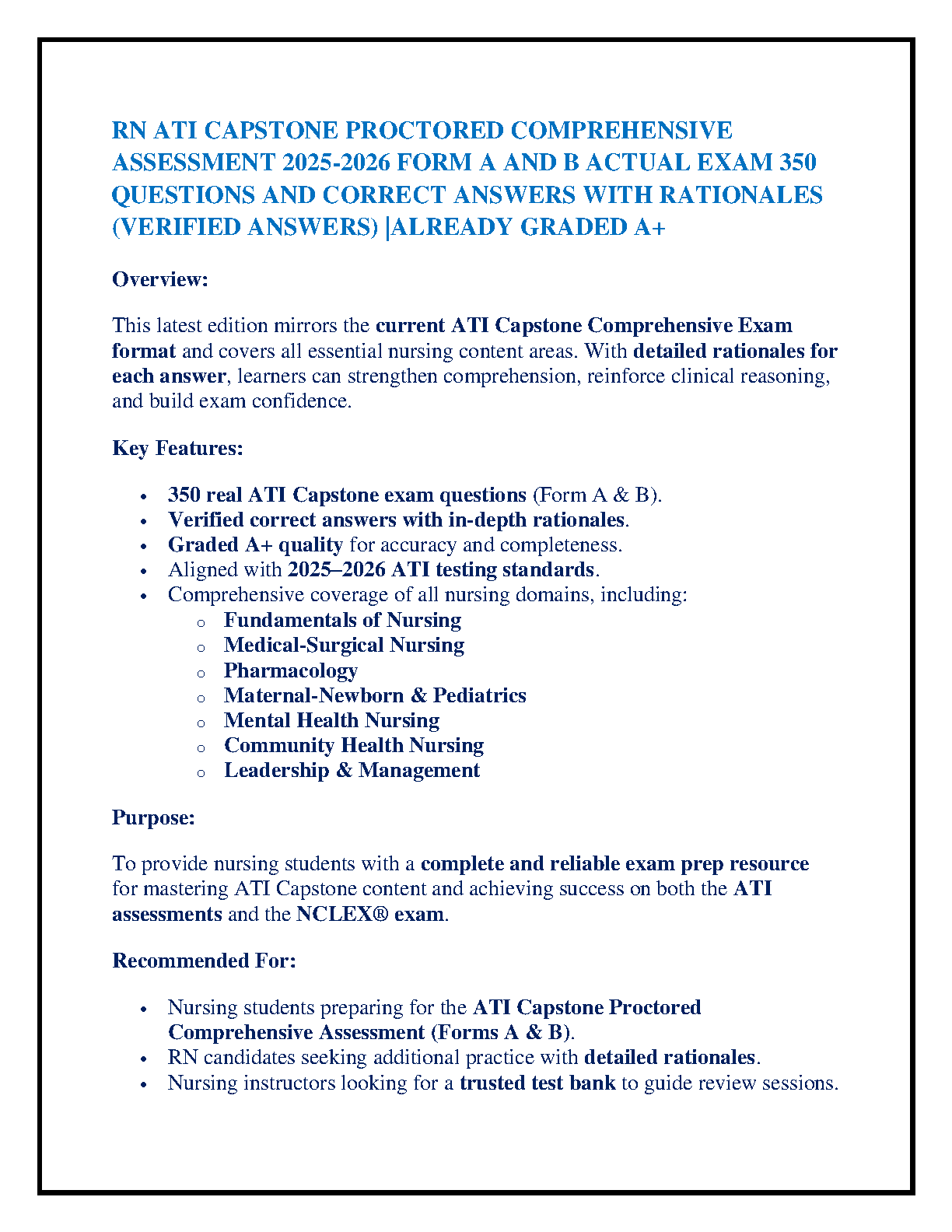
Master The ATI RN Capstone With 350 Verified Questions And Rationales. Ideal For NCLE...