
Nursing
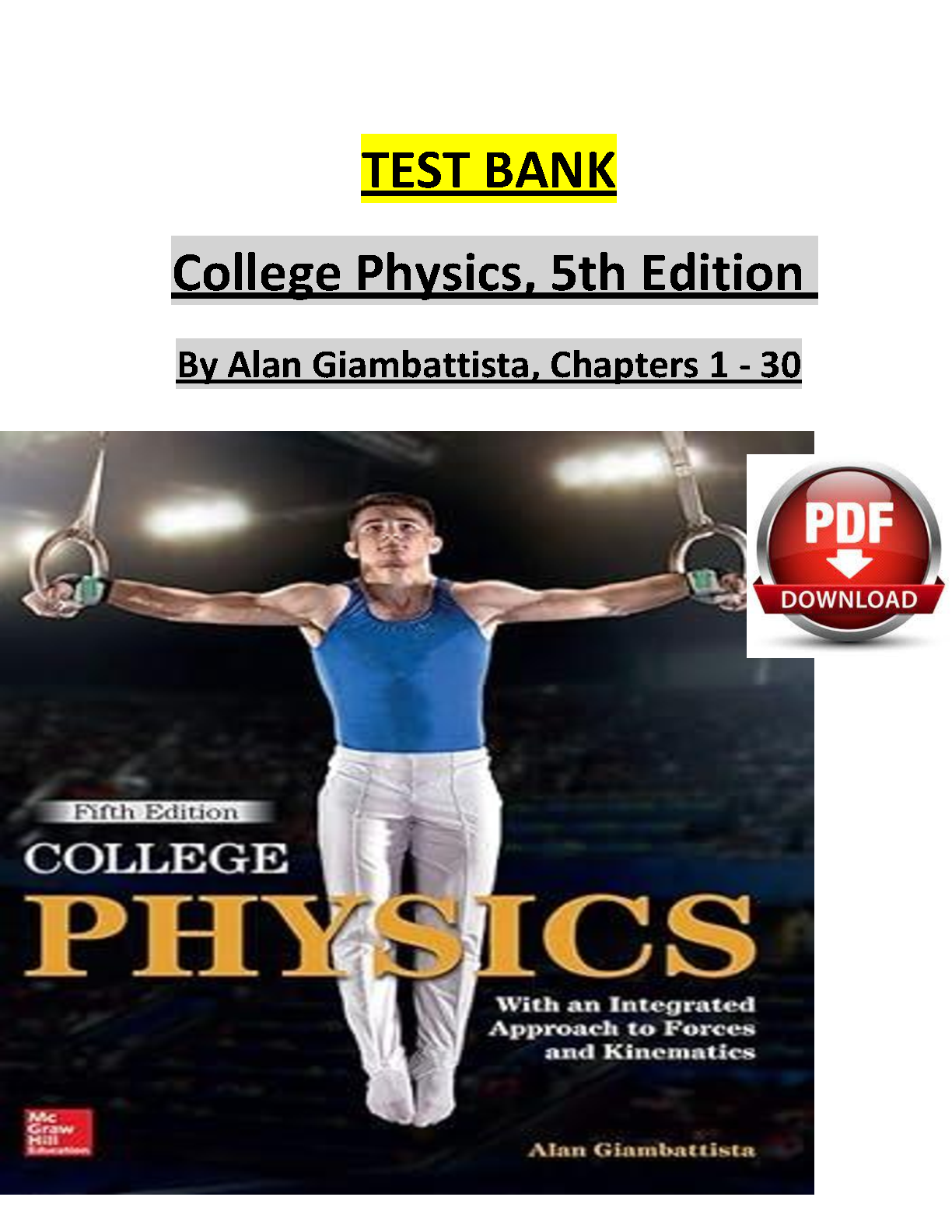
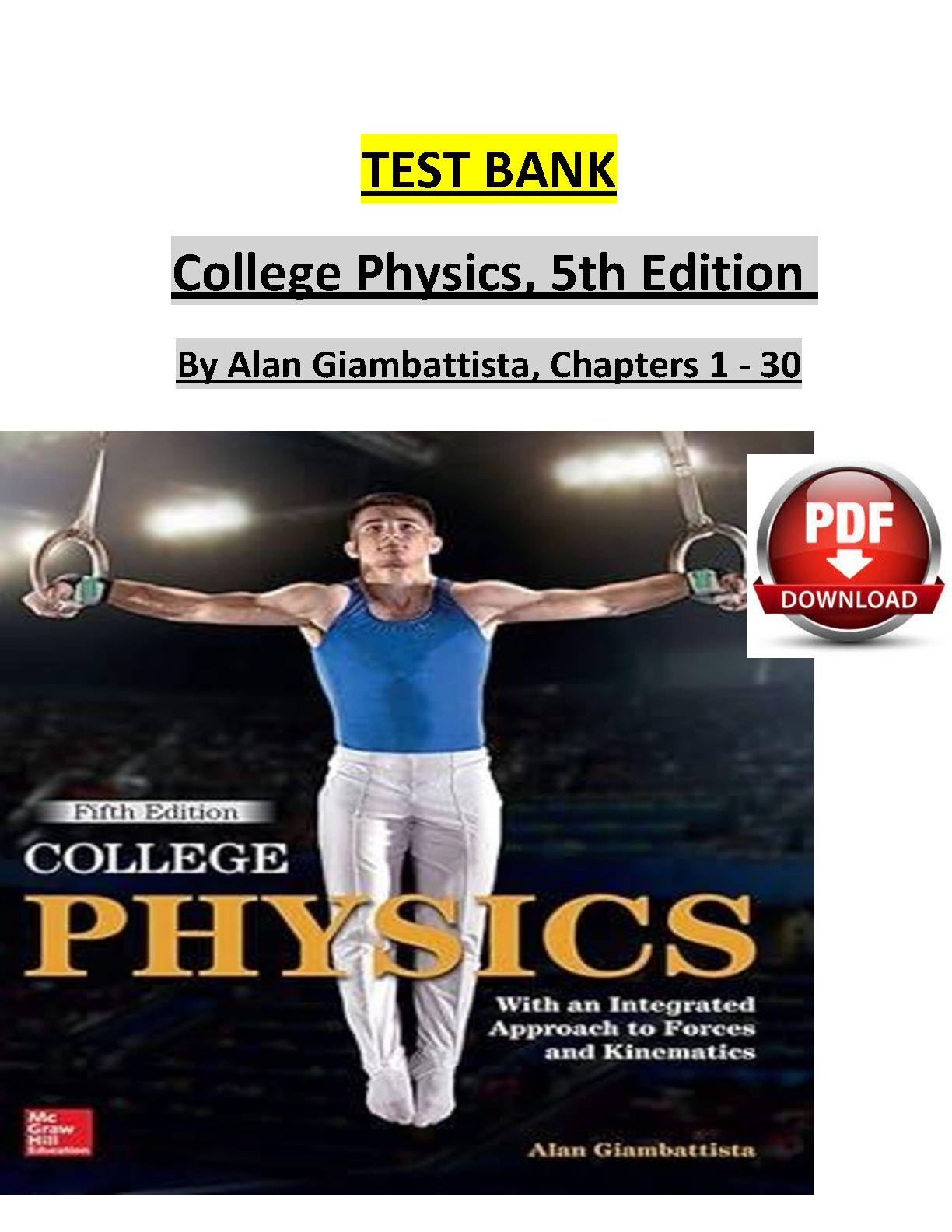
College Physics, 5th Edition Test Bank
Test Bank for College Physics, 5th Edition by Alan Giambattista is a comprehensive instructor assessment resource designed to support teaching, learning, and evaluation in introductory college-level physics courses. Developed for students in science, engineering, health sciences, technology, and other disciplines requiring a foundation in physics, the test bank provides a broad collection of assessment materials that measure students’ understanding of physical principles, mathematical applications, and problem-solving strategies.
The resource includes a variety of assessment formats, including multiple-choice questions, conceptual questions, numerical problem-solving exercises, and application-based scenarios. Organized according to textbook chapters, these assessment items allow instructors to create quizzes, homework assignments, unit examinations, review activities, and comprehensive final assessments. Questions are designed to evaluate both conceptual understanding and the ability to apply physics principles to practical situations.
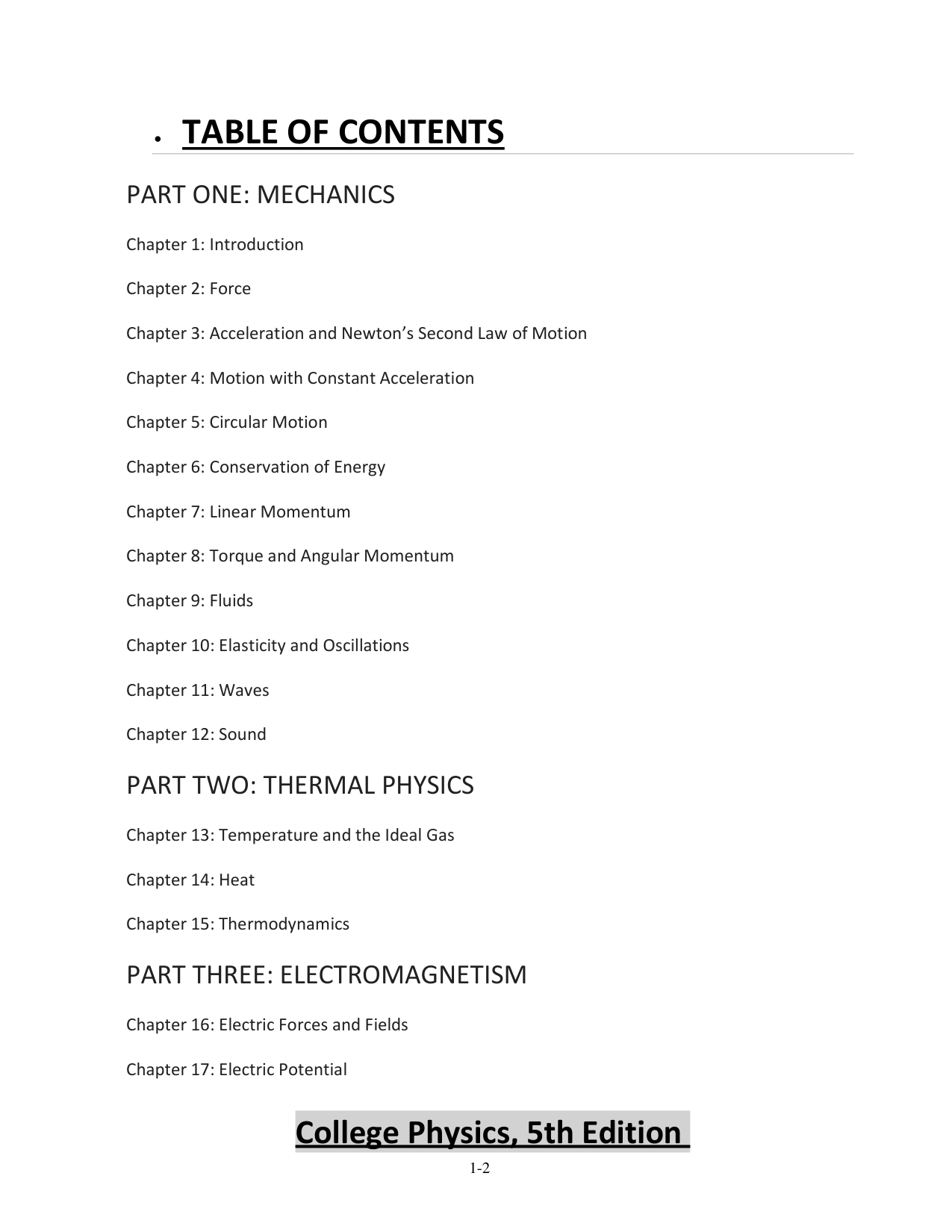
The test bank covers fundamental topics in mechanics, beginning with measurement, units, vectors, motion, and kinematics. Students are assessed on their understanding of position, velocity, acceleration, graphical motion analysis, and mathematical descriptions of objects moving in one and two dimensions.
Comprehensive coverage of forces and Newtonian mechanics examines Newton’s laws of motion, friction, gravity, circular motion, equilibrium, and applications of force concepts. Students develop skills in analyzing physical systems, creating force diagrams, and applying mathematical relationships to solve problems involving motion and interactions.
The resource addresses work, energy, and power concepts, including kinetic energy, potential energy, conservation of energy, and energy transformations. Assessment questions emphasize the connection between physical processes and energy principles used in everyday and scientific applications.
Momentum and collisions are explored through concepts such as impulse, conservation of momentum, elastic and inelastic collisions, and rotational motion. Students practice analyzing interactions between objects and applying conservation laws to physical systems.
Fluid mechanics topics include density, pressure, buoyancy, fluid flow, and applications of fluid principles. Students evaluate how forces and physical properties affect liquids and gases in various environments.
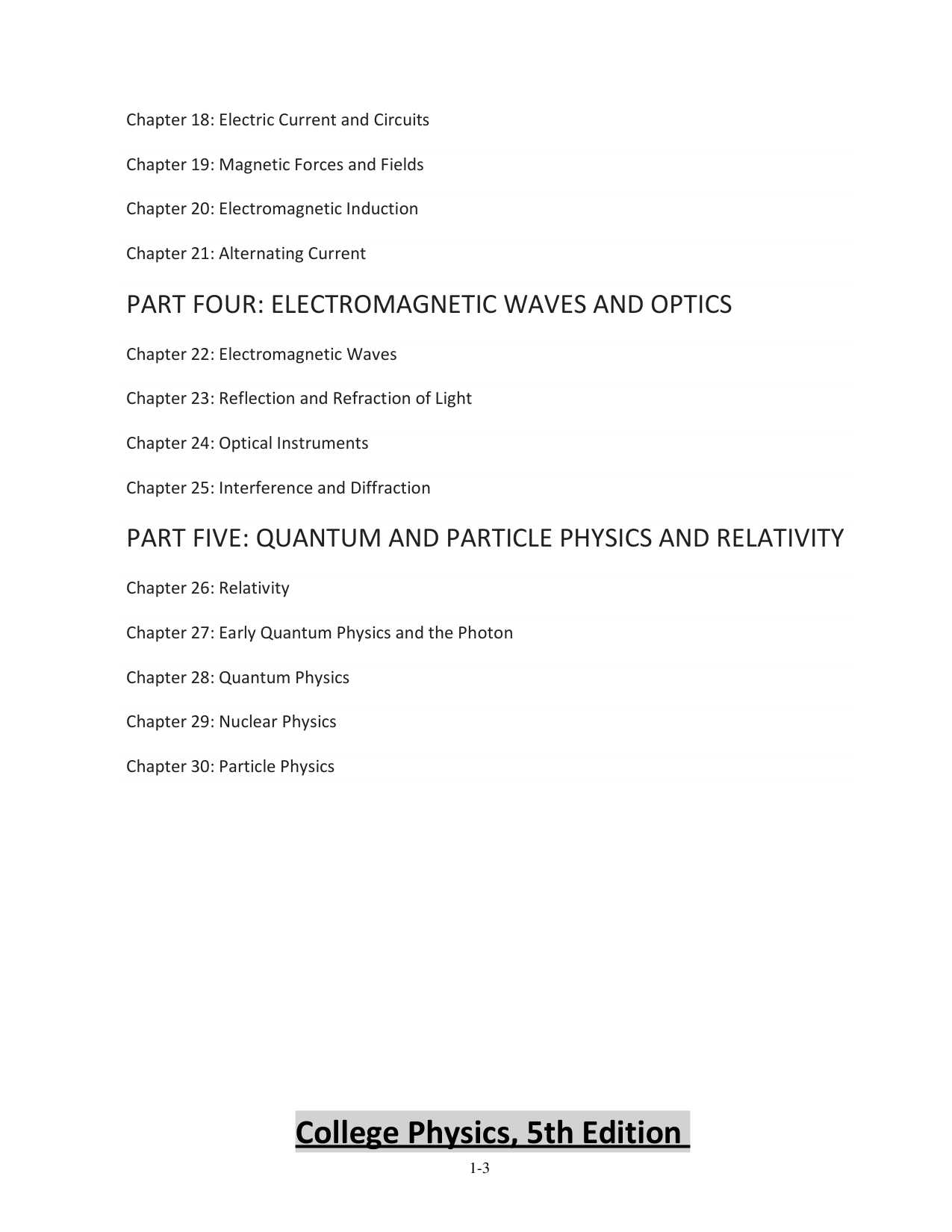
The test bank also covers temperature, heat, thermal expansion, phase changes, kinetic theory, and thermodynamics. Students examine energy transfer, heat engines, efficiency, and the relationship between microscopic particle behavior and macroscopic thermal properties.
Electricity and magnetism concepts include electric charge, electric fields, electric potential, circuits, resistance, current, voltage, magnetic fields, electromagnetic induction, and applications of electrical systems. Students develop problem-solving skills related to electrical devices and physical interactions.
Additional sections address waves, sound, optics, light, reflection, refraction, lenses, mirrors, and image formation. Students apply wave and optical principles to understand technologies and natural phenomena involving light and sound.
Modern physics topics introduce concepts such as relativity, quantum physics, atomic structure, nuclear physics, and applications of physics in contemporary technology. Students explore how modern discoveries have expanded understanding of matter and energy.
Designed to assess multiple levels of learning, the test bank evaluates knowledge recall, conceptual comprehension, mathematical reasoning, analytical thinking, and problem-solving abilities. Many questions encourage students to interpret graphs, analyze experimental situations, select appropriate formulas, and explain physical phenomena.
College and university students
Science and engineering students
Pre-medical, pre-health, nursing, and allied health students
Physics instructors, professors, and lecturers
Teaching assistants and laboratory instructors
Is A Comprehensive Instructor Assessment Resource Designed To Evaluate Students’ Unde...
Is A Comprehensive Instructor Assessment Resource Designed To Evaluate Students’ Unde...
Is A Comprehensive Instructor Assessment Resource Designed To Evaluate Students’ Unde...
Is A Comprehensive Instructor Assessment Resource Designed To Evaluate Students’ Unde...