
Test bank
Pharmacology: A Patient Centered Nursing Process Approach
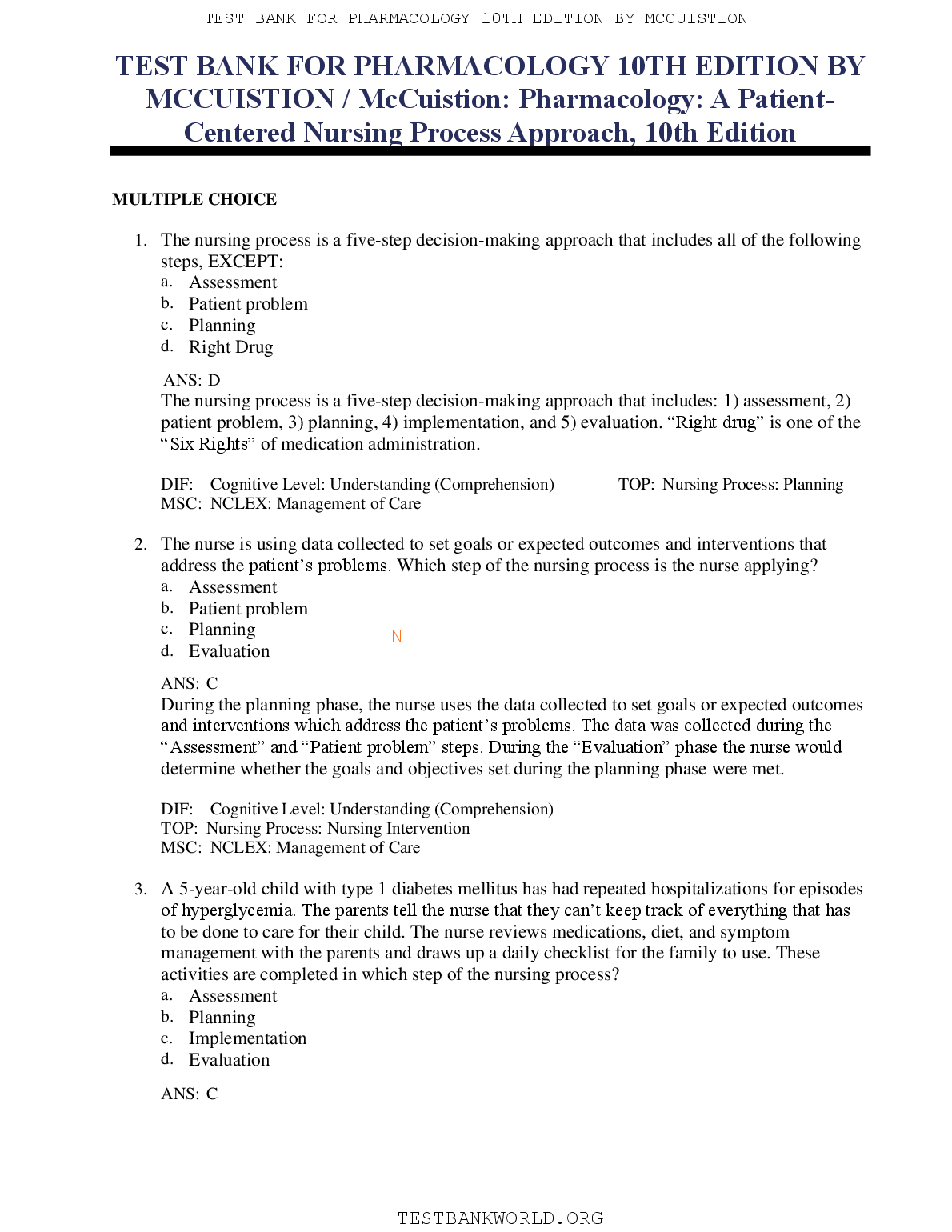
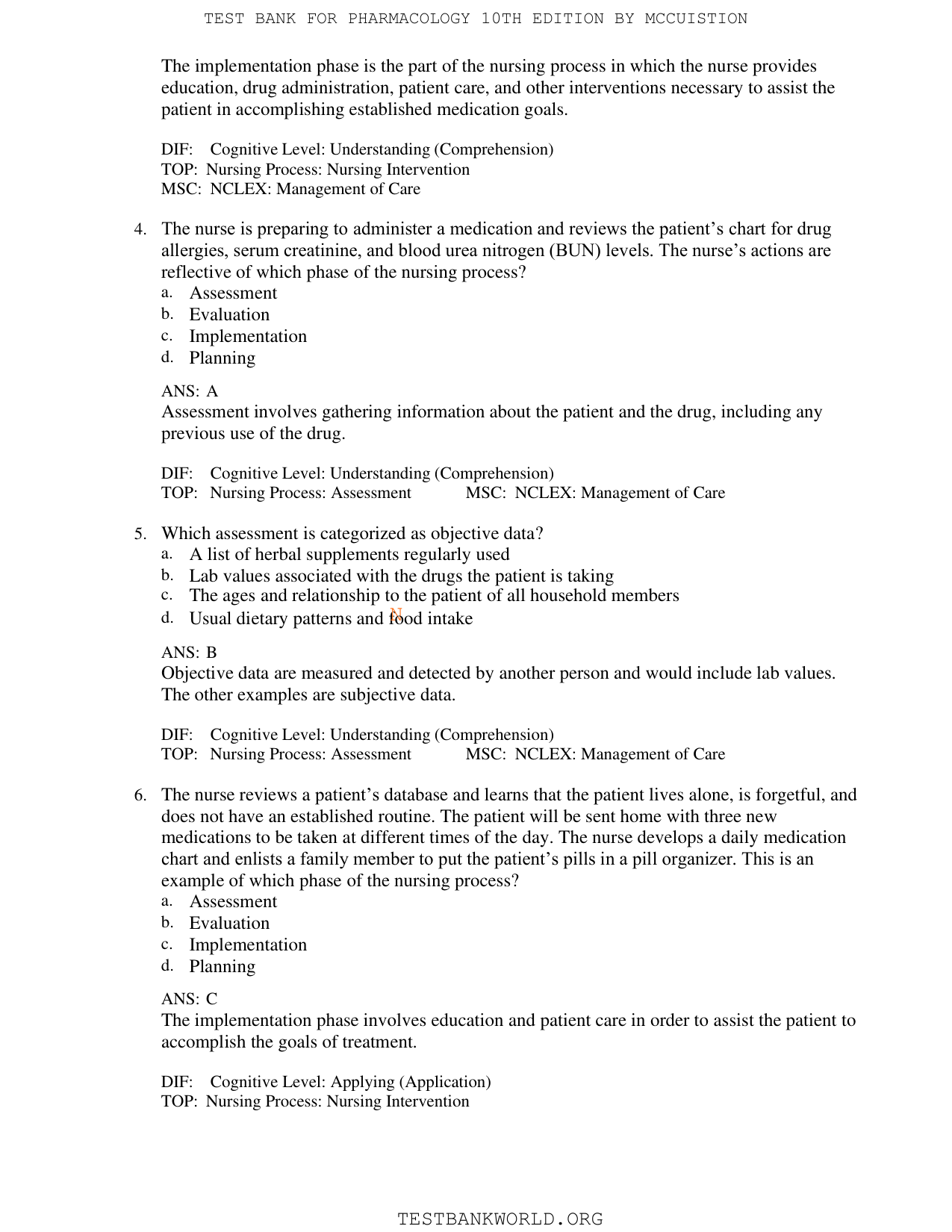
Test Bank for Pharmacology: A Patient-Centered Nursing Process Approach, 10th Edition by Linda E. McCuistion, Kathleen Vuljoin DiMaggio, and Mary B. Winton is a comprehensive instructor assessment resource designed to support nursing education in pharmacology, medication administration, and patient-centered care. Developed for nursing students, educators, and healthcare professionals, the test bank provides a broad collection of assessment materials that evaluate learners' understanding of pharmacologic principles, safe medication practices, and clinical decision-making using the nursing process.
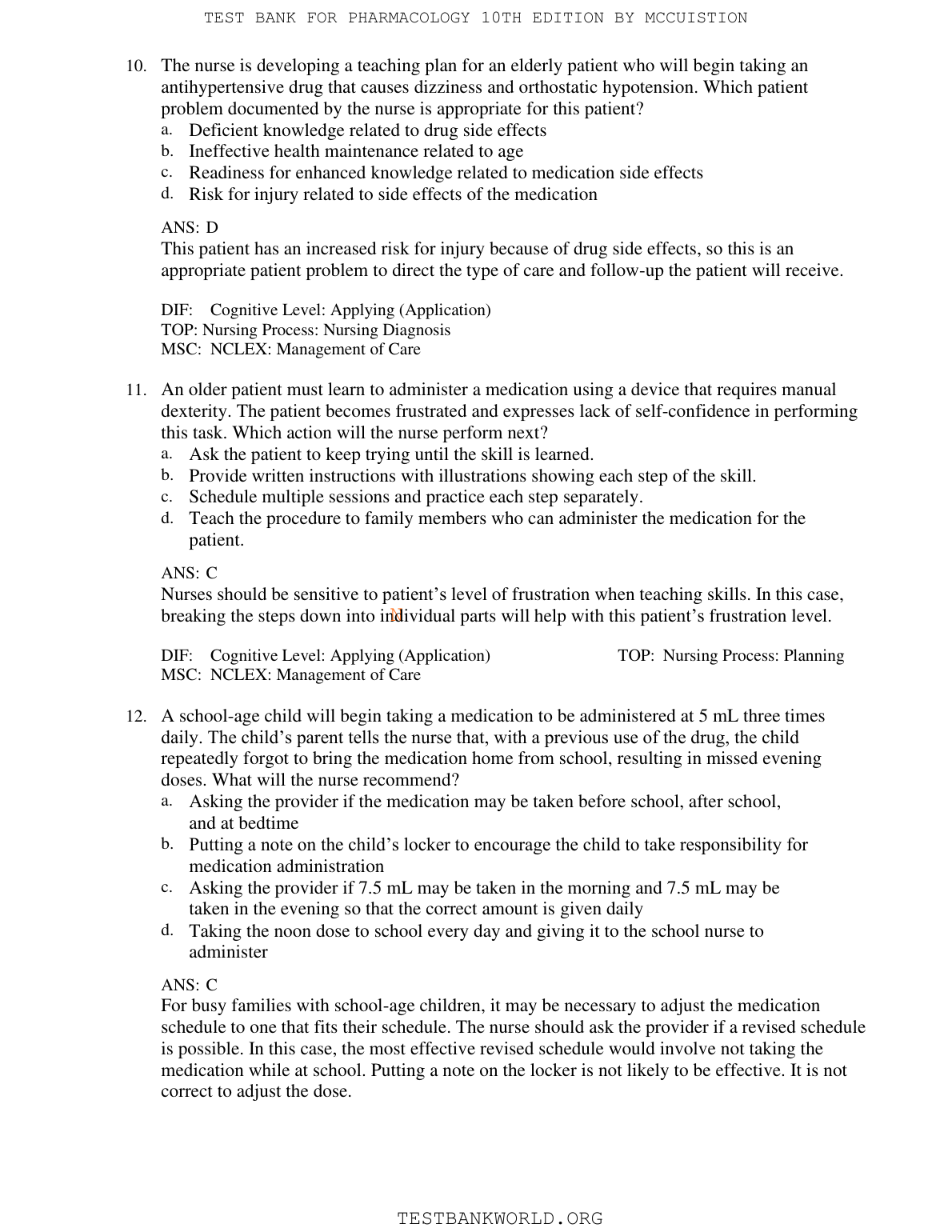
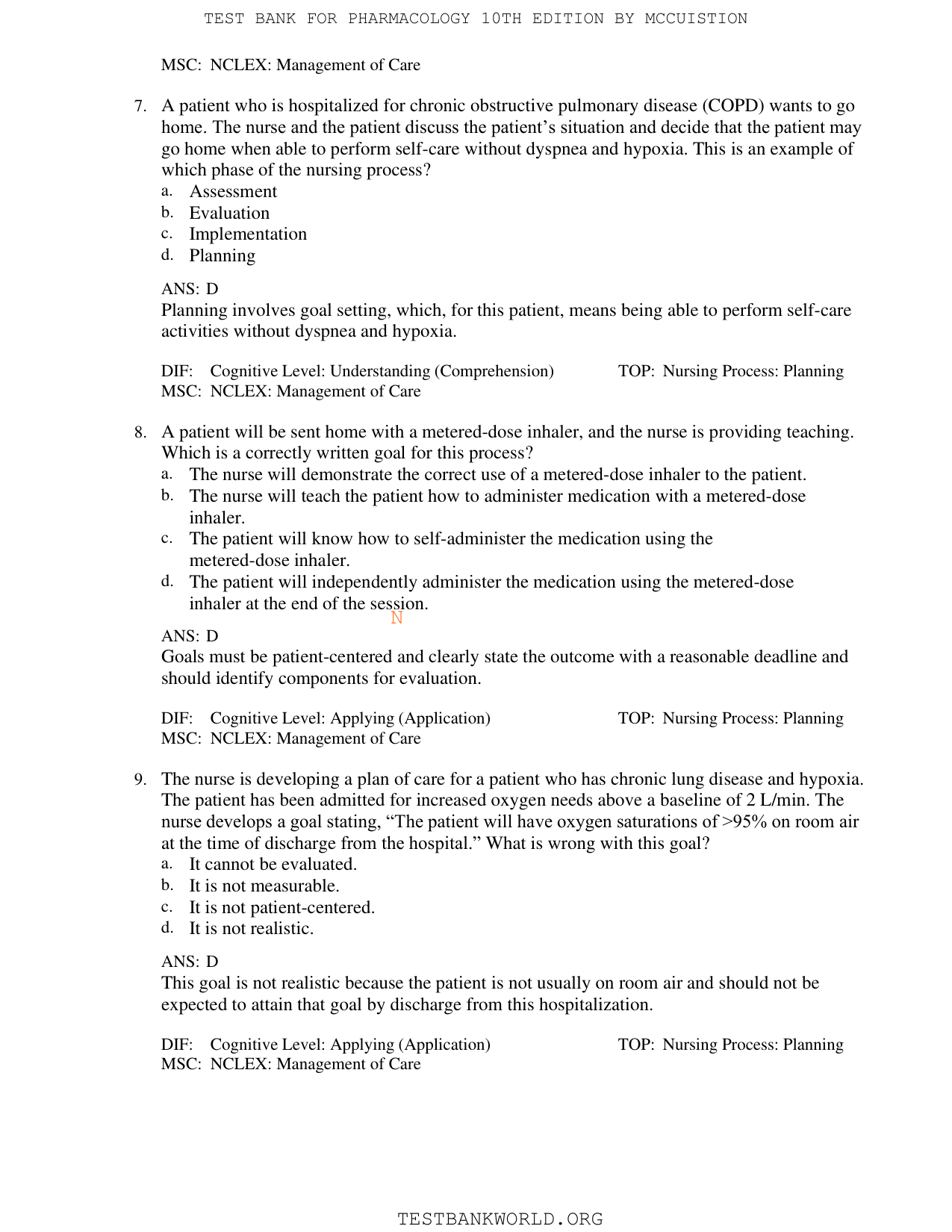
The resource includes a variety of assessment formats, including multiple-choice questions, true/false questions, dosage calculation exercises, matching activities, case-based clinical scenarios, and critical-thinking applications. Organized according to textbook chapters, these assessment items enable instructors to create quizzes, unit examinations, laboratory assessments, review sessions, and comprehensive final exams. Many questions require students to apply pharmacology knowledge to realistic patient situations, strengthening clinical reasoning and evidence-based nursing practice.
The test bank begins with foundational concepts in pharmacology, including drug classifications, drug nomenclature, pharmacologic terminology, medication development, legal and ethical considerations, and principles of safe medication administration. Students are assessed on their understanding of how medications interact with the body and the nurse’s role in promoting safe, effective, and patient-centered medication therapy.
Comprehensive coverage of pharmacokinetics and pharmacodynamics helps students understand how medications are absorbed, distributed, metabolized, and excreted, as well as how drugs produce therapeutic and adverse effects. Assessment questions reinforce concepts related to receptor interactions, therapeutic drug levels, half-life, dose-response relationships, drug interactions, contraindications, and factors that influence medication effectiveness.
A major emphasis of the resource is the application of the nursing process to pharmacologic care. Students practice conducting patient assessments, identifying medication-related nursing diagnoses, planning individualized interventions, safely administering medications, monitoring therapeutic outcomes, and evaluating patient responses. Case-based questions encourage learners to integrate pharmacology knowledge with clinical judgment to provide safe, evidence-based care.
The test bank provides extensive coverage of medications affecting major body systems, including cardiovascular, respiratory, nervous, endocrine, gastrointestinal, musculoskeletal, renal, immune, reproductive, and integumentary systems. Students evaluate drug indications, mechanisms of action, therapeutic uses, adverse reactions, precautions, contraindications, and essential nursing considerations for commonly prescribed medications.
Medication safety is reinforced throughout the resource, with assessment items focusing on dosage calculations, prevention of medication errors, high-alert medications, patient identification, documentation, safe administration techniques, and quality improvement strategies. Students strengthen the skills necessary to ensure accurate medication preparation and administration in diverse healthcare settings.
Special emphasis is placed on patient-centered care, including individualized medication planning, patient education, cultural competence, health literacy, medication adherence, communication strategies, and shared decision-making. Students learn to educate patients about medication regimens, promote adherence, recognize barriers to treatment, and support optimal therapeutic outcomes.
The resource also addresses pharmacologic considerations for special populations, including pediatric, geriatric, pregnant, and breastfeeding patients, as well as individuals with chronic illnesses or multiple comorbidities. Assessment questions help students understand how age, physiology, genetics, and disease states influence medication selection, dosing, and monitoring.
Additional topics include antimicrobial therapy, pain management, oncology medications, psychiatric pharmacology, endocrine therapies, emergency medications, immunizations, complementary and alternative therapies, and current evidence-based medication practices. Students develop an understanding of comprehensive pharmacologic care across a wide range of clinical settings.
Designed to assess multiple levels of learning, the test bank evaluates knowledge recall, comprehension, application, analysis, clinical reasoning, and problem-solving abilities. Case-based assessments encourage students to prioritize nursing interventions, recognize medication-related complications, evaluate laboratory findings, and make safe clinical decisions that improve patient outcomes.
Nursing students, instructors, and exam preparation users.