

Solution manual
Solutions Manual For Engineering Economy 17th Global Edition By William Sullivan, Elin Wicks, Patrick Koelling
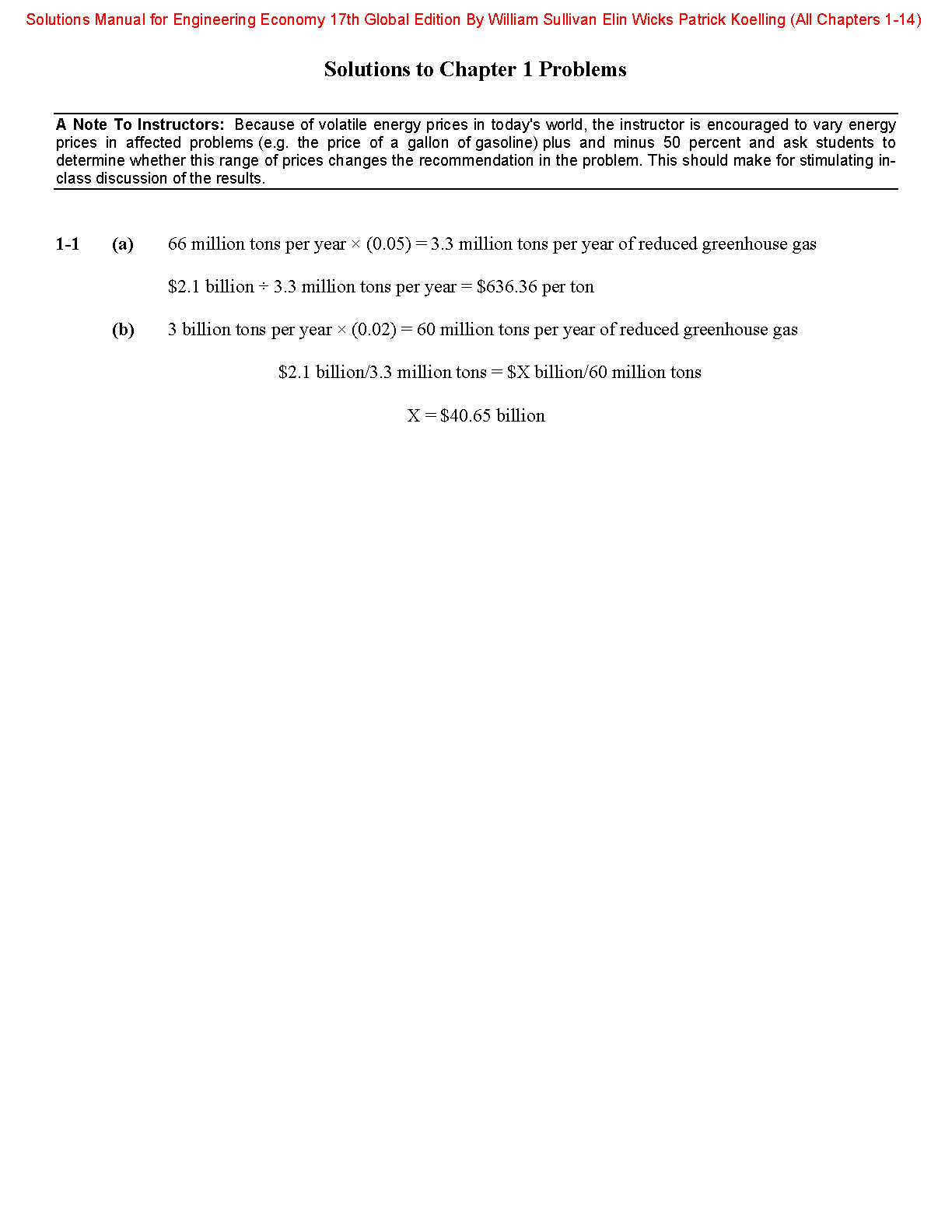
Solutions Manual for Engineering Economy, 17th Global Edition by William G. Sullivan, Elin M. Wicks, and C. Patrick Koelling is a comprehensive instructor support resource designed to assist educators in teaching engineering economics and verifying solutions to quantitative problems. It complements the textbook by providing structured, step-by-step solutions that demonstrate the application of engineering economic principles, financial analysis techniques, and decision-making methods used in engineering, business, and project management.
The resource contains detailed worked solutions for textbook exercises, enabling instructors to efficiently prepare lectures, assignments, tutorials, and examinations while ensuring consistency and accuracy in problem-solving. Each solution illustrates the logical process of analyzing engineering alternatives, selecting appropriate economic models, applying financial formulas, and interpreting results within practical engineering contexts.
Comprehensive coverage begins with the fundamentals of engineering economy, including economic decision-making, cost estimation, cash flow concepts, and the role of financial analysis in engineering projects. Students develop an understanding of how economic principles influence technical and managerial decisions throughout the project life cycle.
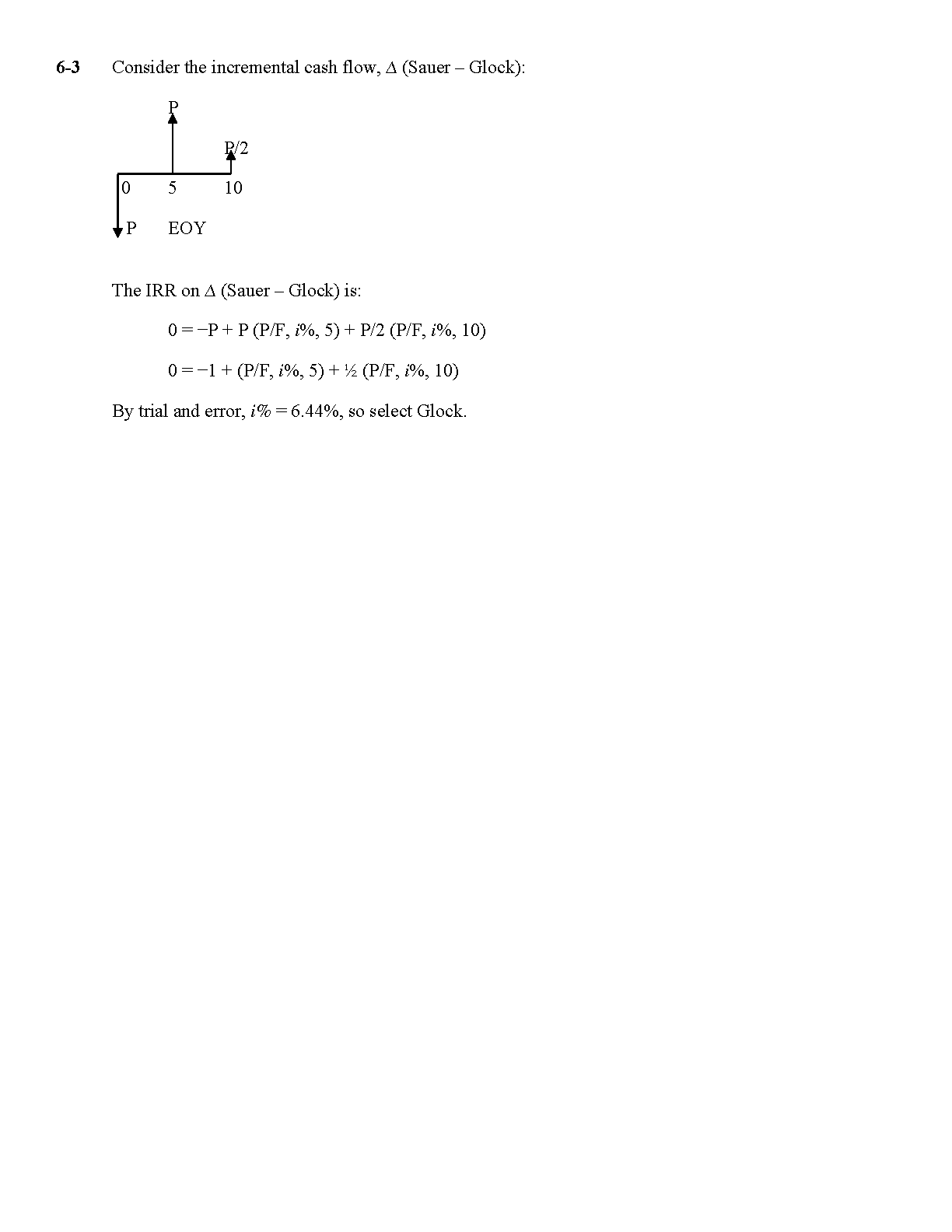
The solutions manual provides extensive guidance on the time value of money, including simple and compound interest, equivalence relationships, cash flow diagrams, present worth, future worth, annual worth, gradient series, and uniform payment calculations. Step-by-step solutions reinforce the proper use of engineering economy formulas and financial factors.
Coverage of economic evaluation methods includes present worth analysis, annual worth analysis, future worth analysis, benefit–cost analysis, rate of return analysis, payback period calculations, and incremental analysis. Solutions demonstrate how these techniques are used to compare investment alternatives and support sound financial decision-making.
The resource also addresses depreciation methods, income tax considerations, inflation, and after-tax economic analysis, helping learners understand how taxation and changing economic conditions influence engineering investments and long-term financial planning.
Detailed solutions are provided for problems involving replacement analysis, equipment selection, asset management, life-cycle costing, and capital budgeting. Students learn to evaluate competing alternatives while considering operating costs, maintenance expenses, salvage values, and expected service life.
Additional topics include risk and uncertainty, probability-based decision analysis, sensitivity analysis, break-even analysis, and economic evaluation under uncertain conditions. The worked examples demonstrate techniques for assessing financial risk and improving the reliability of investment decisions.
The manual also supports learning in public sector economics, benefit–cost evaluation of public projects, and decision-making for infrastructure, manufacturing, transportation, and industrial engineering applications. Realistic engineering scenarios help connect theoretical concepts with practical professional situations.

Engineering, Economy students, instructors, and exam preparation users.

Master The AHIP Final Exam With Verified Questions, Detailed Solutions, And Expert In...
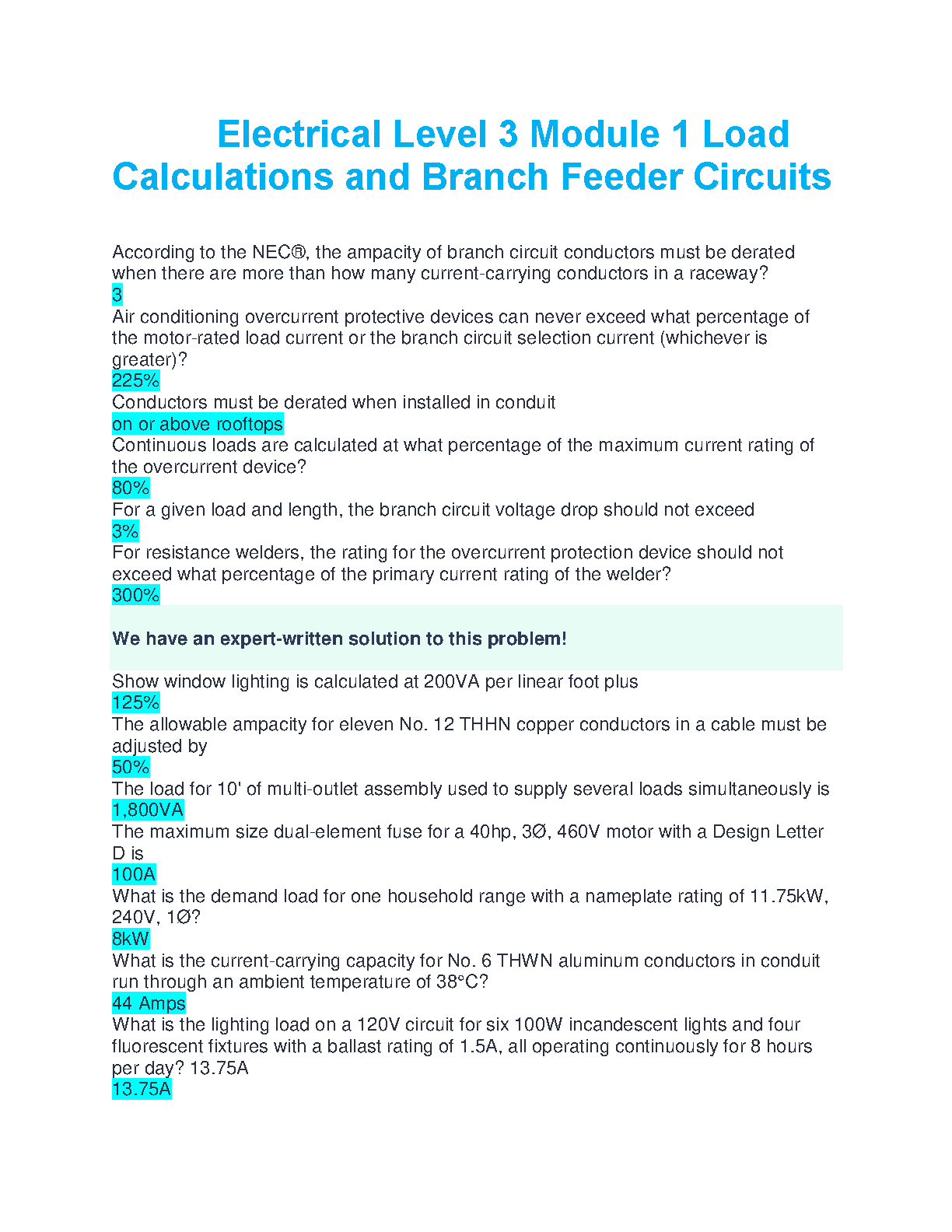
Master Level 3 Electrical Load Calculations And Branch Feeders With Expert Solutions....
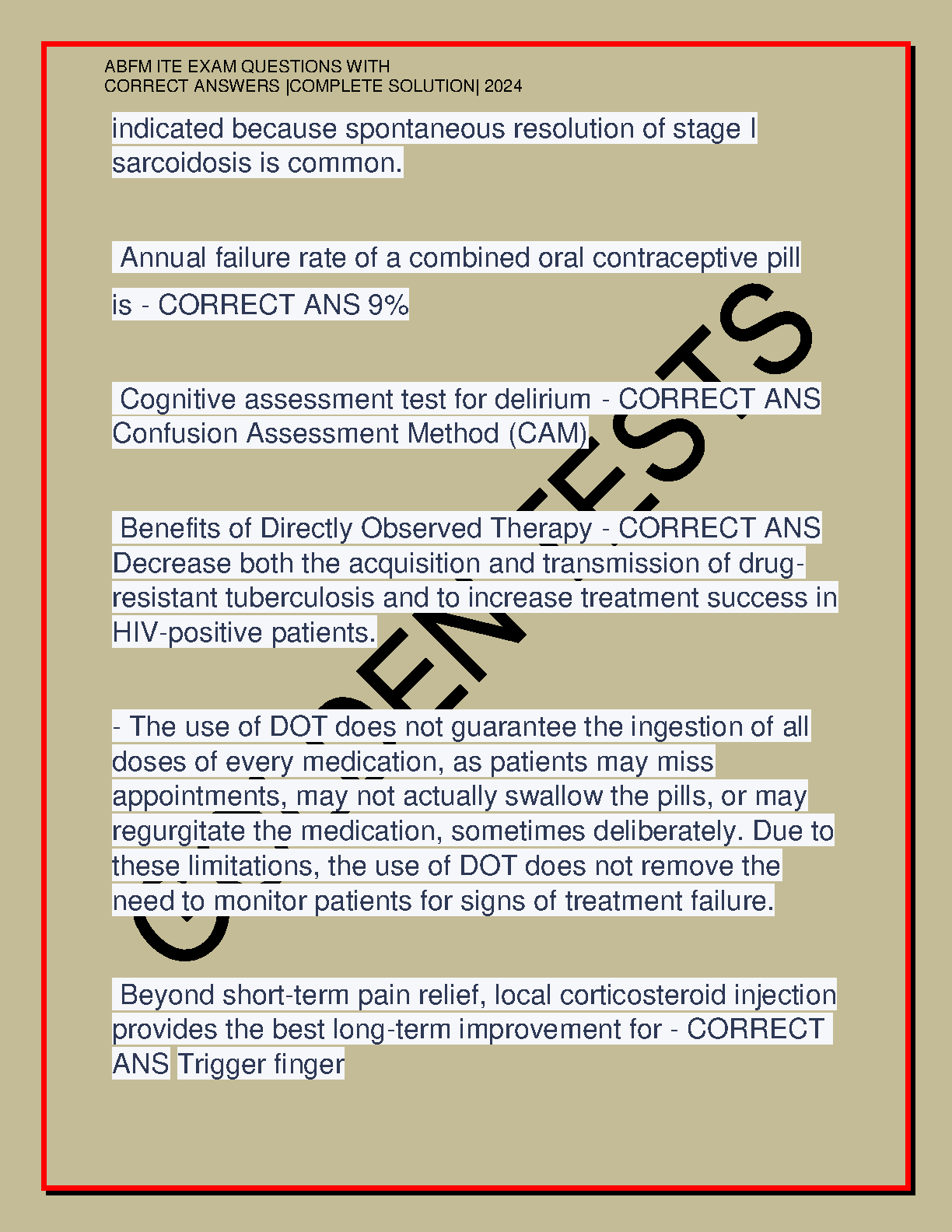
Master The Abfm Ite Exam With Detailed Answers And Explanations. Avoid Resits And Ach...

Master The ANCC Ne-bc Exam With Complete Answers And Detailed Explanations For Confid...