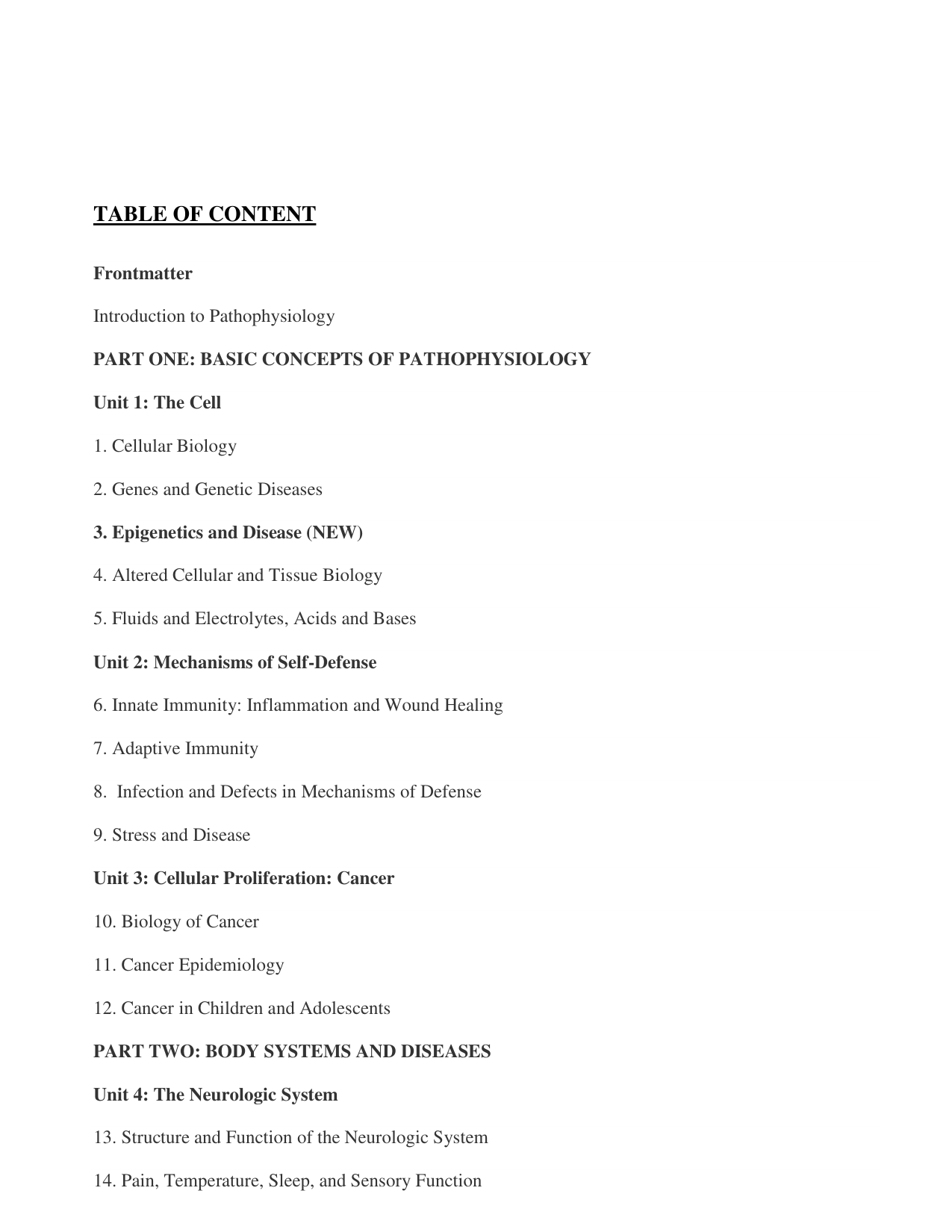
Understanding Pathophysiology, 6th Edition Understanding Pathophysiology, 6th Edition

Test bank

Understanding Pathophysiology, 6th Edition


Chapter-based Test Bank Covering Pathophysiology Principles, Disease Progression, Body System Disorders, And Clinical Assessment.
Description

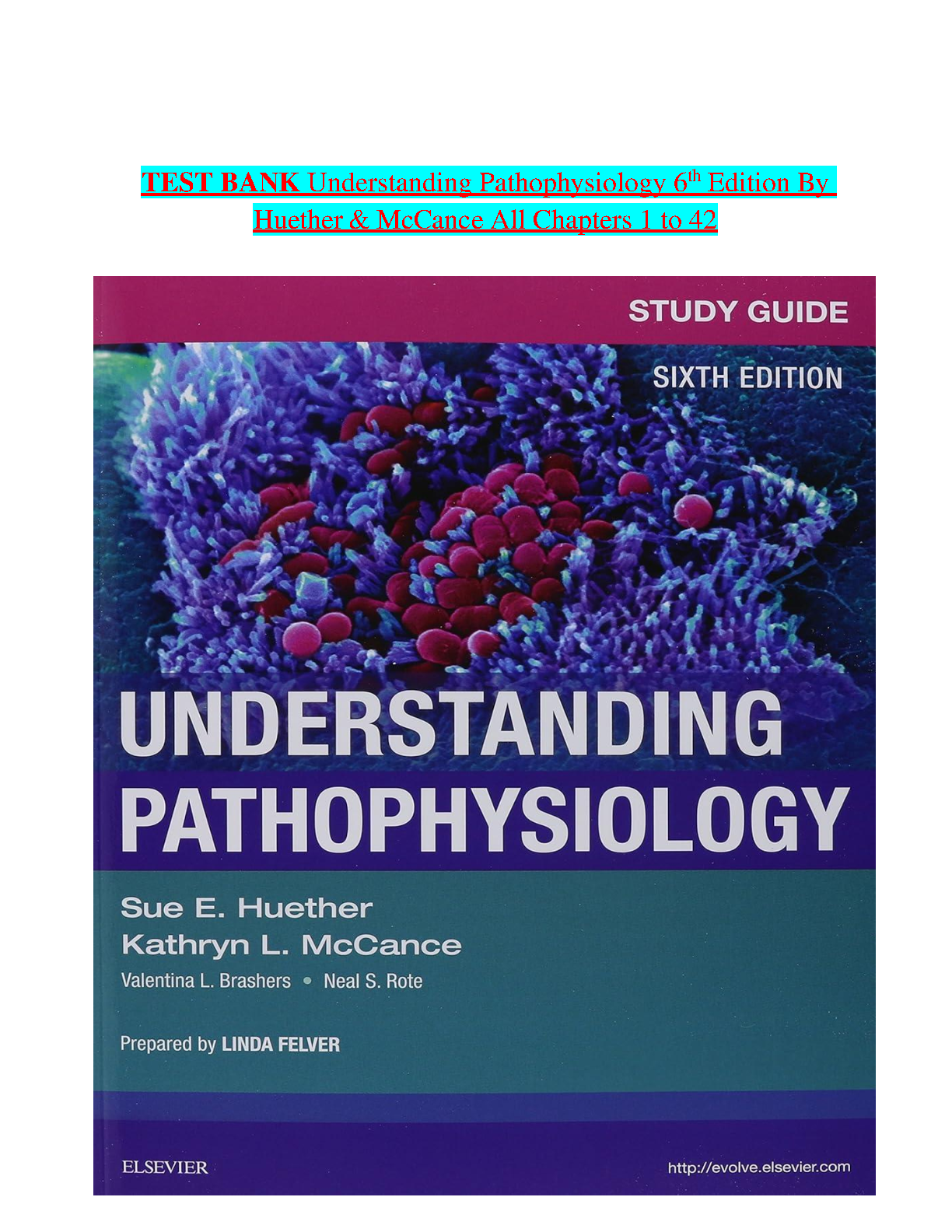
Test Bank for Understanding Pathophysiology, 6th Edition by Sue E. Huether and Kathryn L. McCance is a comprehensive instructor assessment resource designed to support the teaching and evaluation of pathophysiology. Aligned with the textbook's chapter organization, it provides a wide variety of assessment materials that help instructors evaluate students' understanding of disease mechanisms, alterations in normal physiological function, and the relationship between pathophysiology and clinical practice. The resource is ideal for nursing, medicine, allied health, and other healthcare education programs.

The test bank includes multiple-choice questions, true/false items, case-based scenarios, clinical application questions, and critical-thinking exercises. These assessment tools allow instructors to develop quizzes, assignments, midterm examinations, final exams, and classroom review activities that assess both foundational knowledge and clinical reasoning skills.

Coverage begins with the principles of cellular biology, genetics, homeostasis, and adaptive responses to injury. Students are assessed on cellular adaptation, inflammation, immune responses, tissue repair, fluid and electrolyte balance, acid-base regulation, and mechanisms of disease development. Assessment questions reinforce understanding of how normal physiological processes become disrupted in various disease states.

The resource also provides comprehensive coverage of disorders affecting major body systems, including the cardiovascular, respiratory, renal, gastrointestinal, endocrine, nervous, musculoskeletal, reproductive, hematologic, and immune systems. Questions emphasize the underlying pathophysiological processes, clinical manifestations, disease progression, and relationships between organ systems.

Additional content addresses infectious diseases, genetic disorders, neoplasia, metabolic conditions, autoimmune diseases, and age-related physiological changes. Clinical scenarios encourage students to apply scientific knowledge to patient assessment, interpret diagnostic findings, recognize risk factors, and understand the physiological basis of common health conditions.

Throughout the assessment materials, emphasis is placed on integrating anatomy, physiology, pathology, and clinical practice to strengthen critical thinking and evidence-based decision-making. Many questions require learners to analyze patient cases, connect symptoms with disease mechanisms, and apply pathophysiological concepts in realistic healthcare settings.

Suitable for undergraduate and graduate healthcare education programs, the test bank supports nursing, medical, physician assistant, pharmacy, and allied health curricula by reinforcing classroom instruction and promoting meaningful learning outcomes.

Overall, the Test Bank for Understanding Pathophysiology, 6th Edition serves as a valuable instructional resource that helps educators assess student achievement, reinforce core pathophysiology concepts, develop clinical reasoning skills, and prepare future healthcare professionals to understand disease processes and deliver safe, evidence-based patient care.
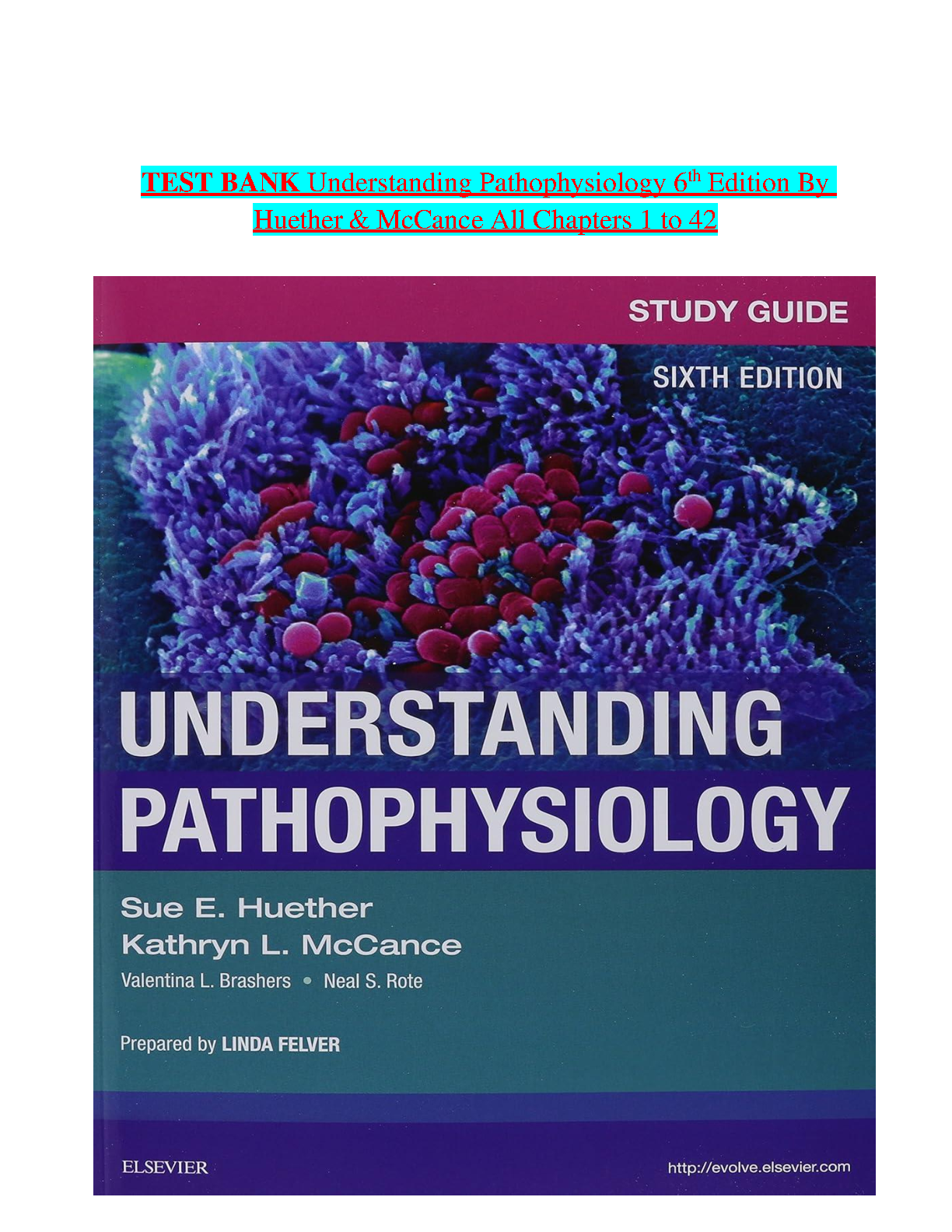
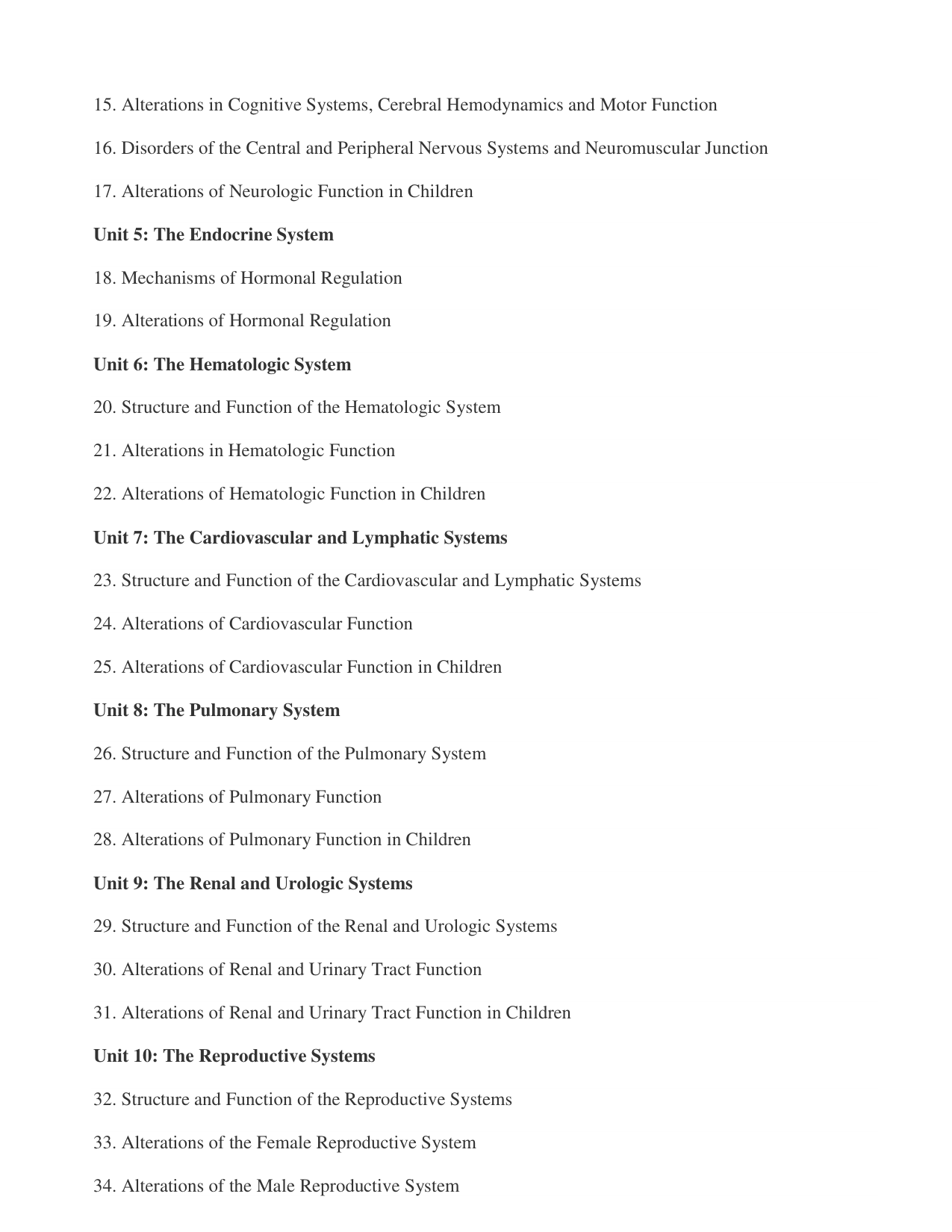
PDF Sample
1 / 3
Understanding Pathophysiology, 6th Edition IMG-1
Understanding Pathophysiology, 6th Edition IMG-2
Understanding Pathophysiology, 6th Edition IMG-3
Who is this Document for ?

Undergraduate nursing students studying pathophysiology and disease processes.
Medical, physician assistant, and allied health students enrolled in pathophysiology courses.
Students in pharmacy, respiratory therapy, radiologic technology, occupational therapy, and physical therapy programs.
Nursing instructors and healthcare educators seeking chapter-based assessment materials for quizzes, assignments, midterm exams, and final examinations.
Clinical instructors and teaching assistants supporting classroom instruction, tutorials, and case-based learning.
Colleges, universities, and healthcare training institutions offering nursing, medicine, and allied health education.
Tutors and academic support professionals helping students strengthen their understanding of disease mechanisms and clinical reasoning.
Students preparing for nursing school examinations, HESI, ATI, NCLEX®, and other healthcare-related assessments.
Healthcare professionals reviewing pathophysiology concepts for continuing education or professional development.
Self-directed learners seeking to improve their understanding of human disease processes, physiological changes, and evidence-based clinical practice.

What you will learn ?
Explain the fundamental concepts of normal physiology and the mechanisms that lead to disease.
Describe cellular structure, function, adaptation, injury, and death in response to pathological processes.
Explain the role of genetics and genomics in health, disease development, and inherited disorders.
Analyze the body's inflammatory, immune, and healing responses to injury and infection.
Evaluate alterations in fluid, electrolyte, and acid-base balance and their effects on body function.
Explain the pathophysiological mechanisms underlying infectious, inflammatory, autoimmune, and neoplastic diseases.
Describe disorders affecting the cardiovascular system and their impact on circulation and tissue perfusion.
Analyze respiratory disorders and explain changes in ventilation, gas exchange, and oxygen transport.
Explain the pathophysiology of endocrine disorders and their effects on metabolism, growth, and homeostasis.
Describe neurological disorders and evaluate their effects on sensory, motor, and cognitive function.
Analyze renal and urinary disorders and their influence on fluid regulation and waste elimination.
Explain gastrointestinal and hepatic disorders affecting digestion, absorption, and metabolism.
Describe musculoskeletal disorders and their impact on mobility, structure, and function.
Analyze hematologic disorders involving red blood cells, white blood cells, platelets, and coagulation.
Explain disorders of the immune and lymphatic systems and their clinical significance.
Describe reproductive and developmental disorders across the lifespan.
Identify the clinical manifestations, risk factors, and progression of common acute and chronic diseases.
Interpret laboratory findings and diagnostic data in relation to underlying pathophysiological processes.
Apply pathophysiological principles to patient assessment, clinical reasoning, and evidence-based decision-making.
Integrate knowledge of anatomy, physiology, and pathology to explain disease progression and patient outcomes.
Analyze patient case studies to identify disease mechanisms and appropriate clinical interventions.
Strengthen critical-thinking and problem-solving skills through the application of pathophysiology concepts.
Recognize the influence of age, genetics, environment, and lifestyle on disease development and progression.
Apply scientific principles to understand prevention, early detection, and management of human diseases.
Build a strong foundation in pathophysiology to support advanced study and professional practice in nursing, medicine, pharmacy, and allied health professions.
What do you get with this PDF ?
Instant access after purchase
Download in PDF format
DRM free, read anywhere
Document details
Last update :
Jul 30, 2026
Length :
620 pages
Edition :
2026
Language :
English
Category :
Keywords
Pathophysiology Understanding Pathophysiology Pathophysiology Test Bank Nursing Education Medical Education Healthcare Assessment Disease Processes Disease Mechanisms Cellular Adaptation Cellular Injury Cell Death Homeostasis Genetics Genomics Inflammation Immune Response Immunity Infection Tissue Repair Wound Healing Fluid Balance Electrolyte Balance Acid-base Balance Stress Response Neoplasia Cancer Oncology Cardiovascular Disorders Heart Disease Hypertension Respiratory Disorders Pulmonary Disease Renal Disorders Kidney Disease Urinary Disorders Gastrointestinal Disorders Liver Disease Endocrine Disorders Diabetes Mellitus Thyroid Disorders Neurological Disorders Nervous System Musculoskeletal Disorders Bone Disorders Joint Disorders Hematologic Disorders Blood Disorders Immune Disorders Autoimmune Diseases Lymphatic System Reproductive Disorders Reproductive Health Developmental Disorders Pediatric Disorders Geriatric Pathophysiology Infectious Diseases Metabolic Disorders Genetic Disorders Clinical Manifestations Disease Progression Risk Factors Diagnostic Testing Laboratory Values Patient Assessment Clinical Reasoning Evidence-based Practice Nursing Concepts Health Assessment Anatomy And Physiology Human Physiology Human Pathology Organ Systems Chronic Disease Acute Disease Patient Care Healthcare Science Allied Health Pharmacy Education Medical-surgical Nursing Nursing Students Medical Students NCLEX Preparation HESI Preparation ATI Preparation Critical Thinking Problem-solving Case Studies Multiple-choice Questions Instructor Resources Chapter Tests Exam Preparation Healthcare Training Clinical Education.
Recommendations for you
Basic Arrhythmias With 12-Lead EKGs, 9th Edition
Basic Arrhythmias With 12-lead Ekgs, 9th Edition

Comprehensive EKG Assessment Tool With Questions On Dysrhythmias, Rhythm Interpretati...

$16
Burns and Grove's The Practice of Nursing Research
Burns And Grove's The Practice Of Nursing Research

Comprehensive Test Bank With Chapter-based Questions Covering Nursing Research, Evide...

$17
Understanding Nursing Research, 7th Edition

Practice Test Bank Covering Nursing Inquiry, Research Processes, Ethical Consideratio...

$17
Human Physiology, 2nd Edition

Practice Test Bank Covering Homeostasis, Body Systems, Physiological Mechanisms, And...

$16