
Study guide
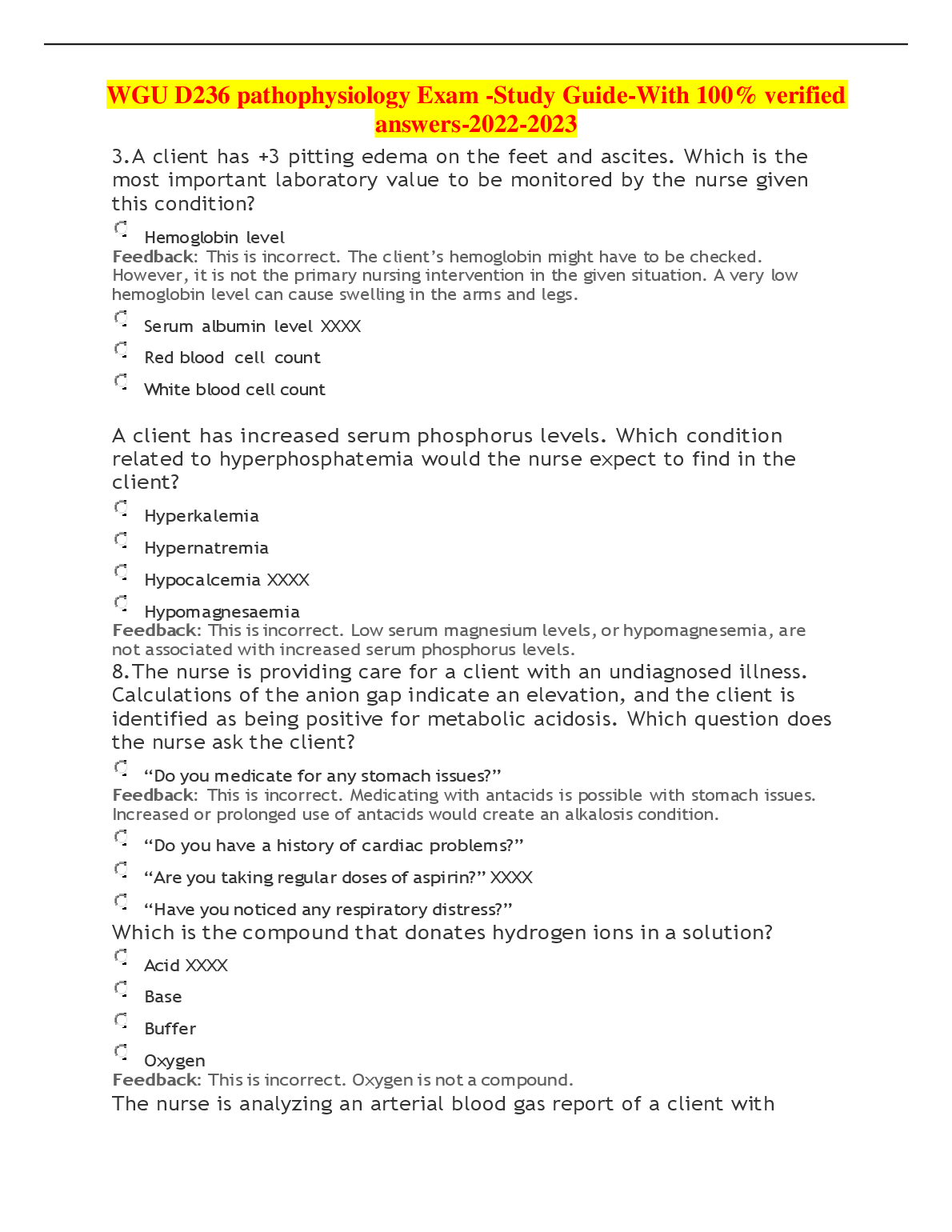
WGU D236 Pathophysiology Exam Study Guide With Verified Answers For Nursing Students And Academic Success
Achieve superior exam performance in WGU D236 by mastering the critical clinical reasoning skills required for pathophysiological assessments. This resource provides verified answers to complex scenarios involving fluid balance, electrolyte imbalances, and metabolic disorders, ensuring you can confidently navigate high-stakes evaluation questions. It clarifies common misconceptions regarding laboratory monitoring priorities, such as distinguishing between haemoglobin and serum albumin in oedema cases, thereby sharpening your diagnostic accuracy. By internalising the precise logic behind acid-base disturbances and anion gap calculations, you will develop a robust framework for clinical decision-making that aligns with academic marking standards.
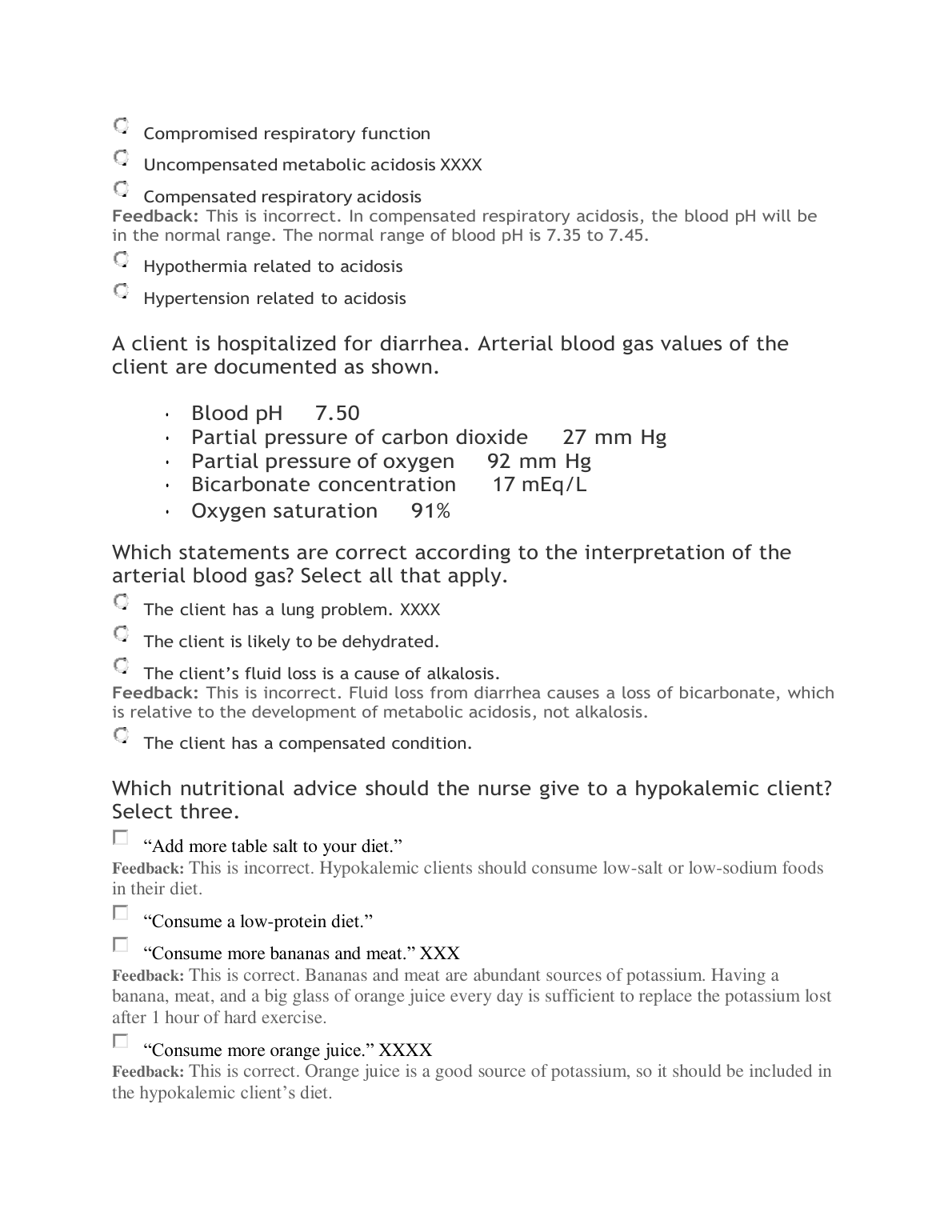
This document is specifically designed for nursing students enrolled in WGU D236 who require targeted revision support. It serves as a valuable tool for candidates aiming to refine their understanding of pathophysiological mechanisms and clinical priority-setting. Tutors and mentors can also utilise this material to identify common student errors in electrolyte analysis and acid-base interpretation, facilitating more effective instructional guidance.

Master WGU D220 Informatics Concepts, Data Management, And Ehr Systems With This Deta...

Master WGU D220 Health Informatics Concepts, Hipaa Guidelines, And Big Data Propertie...
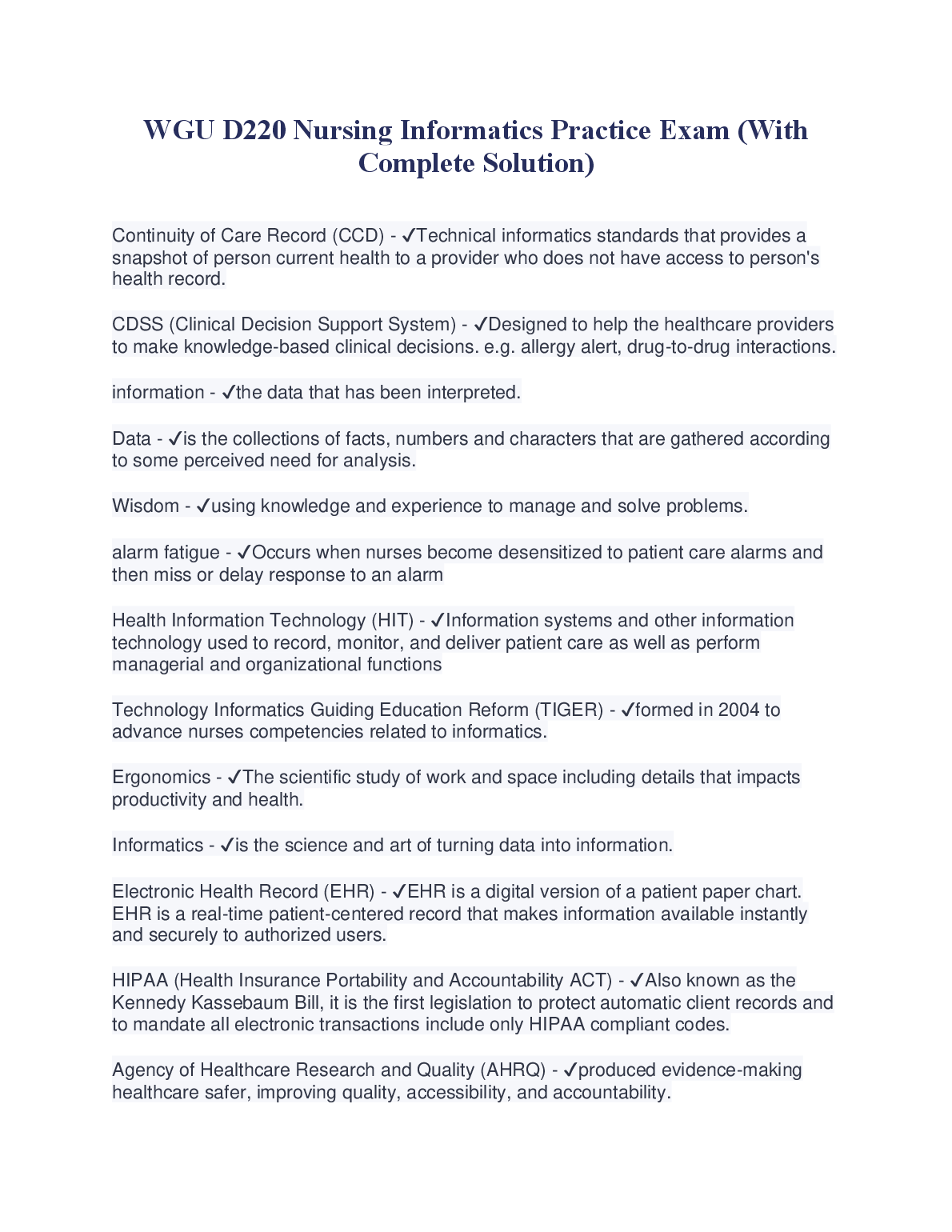
Master WGU D220 Nursing Informatics. Access Detailed Definitions And Concepts Like Cc...
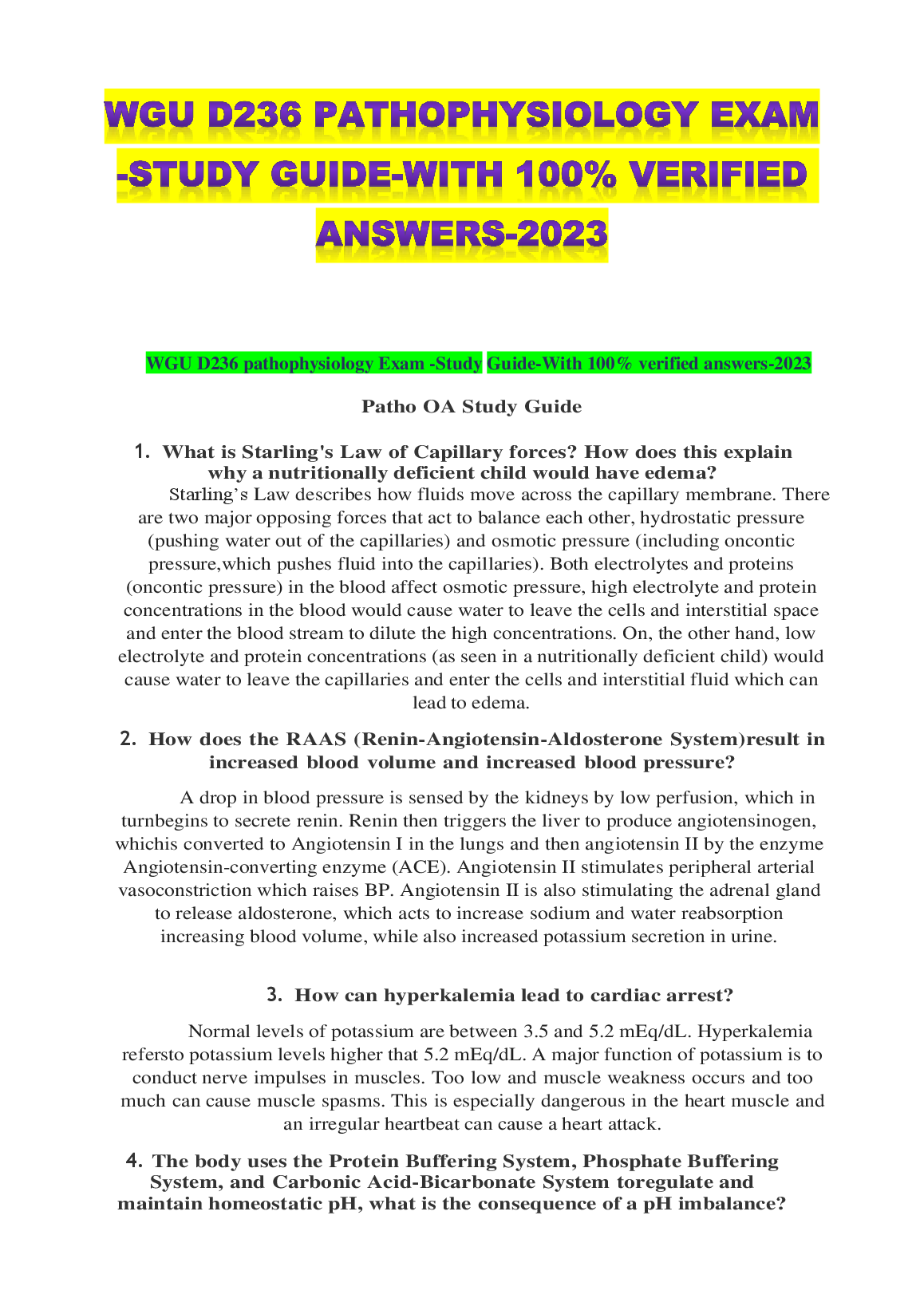
Master WGU D236 Pathophysiology With This Verified Exam Study Guide. Covers Starling'...