
WGU D236 Pathophysiology Study Guide Key Terms Review

Study Guide

WGU D236 Pathophysiology Study Guide: Comprehensive Review Of Tumors, Skin Lesions, And Clinical Terminology For Exam Success


Master WGU D236 Pathophysiology Concepts Including Tumor Types, Skin Lesions, Burns, And Allergic Reactions With This Focused Study Guide.
Description

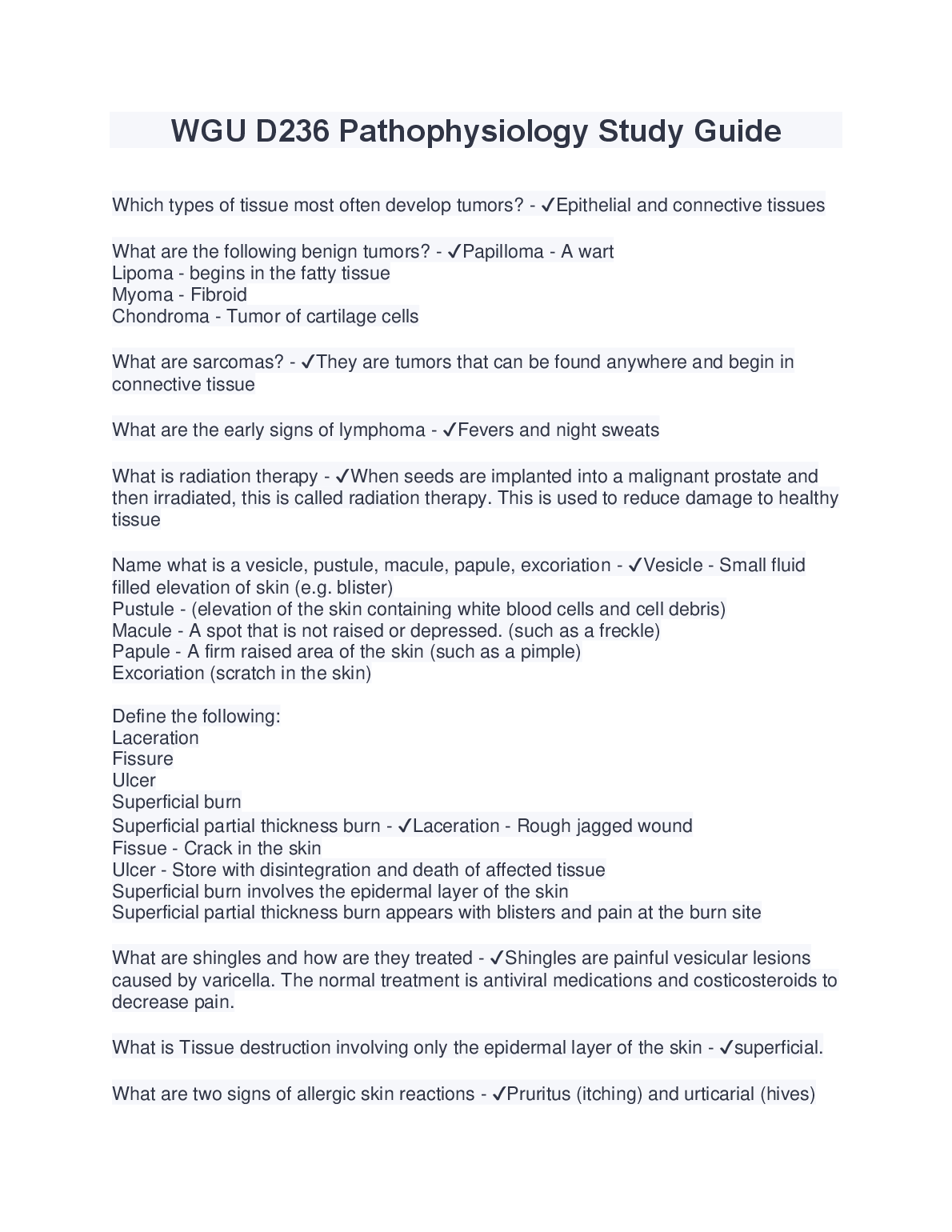
Accelerate exam preparation by mastering critical pathophysiological concepts through targeted revision of high-yield topics. This resource clarifies complex distinctions between benign and malignant tumours, enabling precise identification of conditions such as papillomas, lipomas, and sarcomas. It provides clear definitions for essential dermatological terminology, including vesicles, pustules, macules, and various burn classifications. By focusing on specific clinical signs like shingles treatment and allergic skin reactions, this guide builds the confidence needed to answer technical questions accurately.
PDF Sample
1 / 1
WGU D236 Pathophysiology Study Guide Key Terms Review IMG-1
Who is this Document for ?

This material is designed for students enrolled in WGU course D236 Pathophysiology who require concise revision notes. It suits learners seeking to quickly review key definitions and clinical presentations before examinations. Tutors may also use these summaries to verify core concepts or create supplementary quiz materials.
What you will learn ?
Identify the specific tissue types, such as epithelial and connective tissues, that are most prone to developing tumours, distinguishing between benign growths like papillomas and malignant sarcomas arising from connective tissue.
Differentiate between various skin lesions including vesicles, pustules, macules, and papules by recognising their specific physical characteristics such as fluid content, elevation, or firmness.
Define clinical wound types such as lacerations, fissures, and ulcers, understanding the distinction between a rough jagged wound and tissue disintegration with death of affected cells.
Classify burn injuries accurately by differentiating between superficial burns affecting only the epidermis and partial thickness burns characterised by blisters and pain at the site.
Describe the clinical presentation and standard treatment protocol for shingles, recognising it as painful vesicular lesions caused by varicella treated with antivirals and corticosteroids to manage pain.
Recognise early signs of lymphoma such as fevers and night sweats, alongside specific indicators of allergic skin reactions including pruritus (itching) and urticaria (hives).
Understand the application of radiation therapy in oncology, specifically how implanted seeds are irradiated to reduce damage to healthy tissue in malignant prostate cases.
You may also be interested in :
Recommendations for you
WGU D236 Pathophysiology Exam Study Guide With Verified Answers 2023: Complete Revision Resource
WGU D236 Pathophysiology Exam Study Guide With Verified Answ...

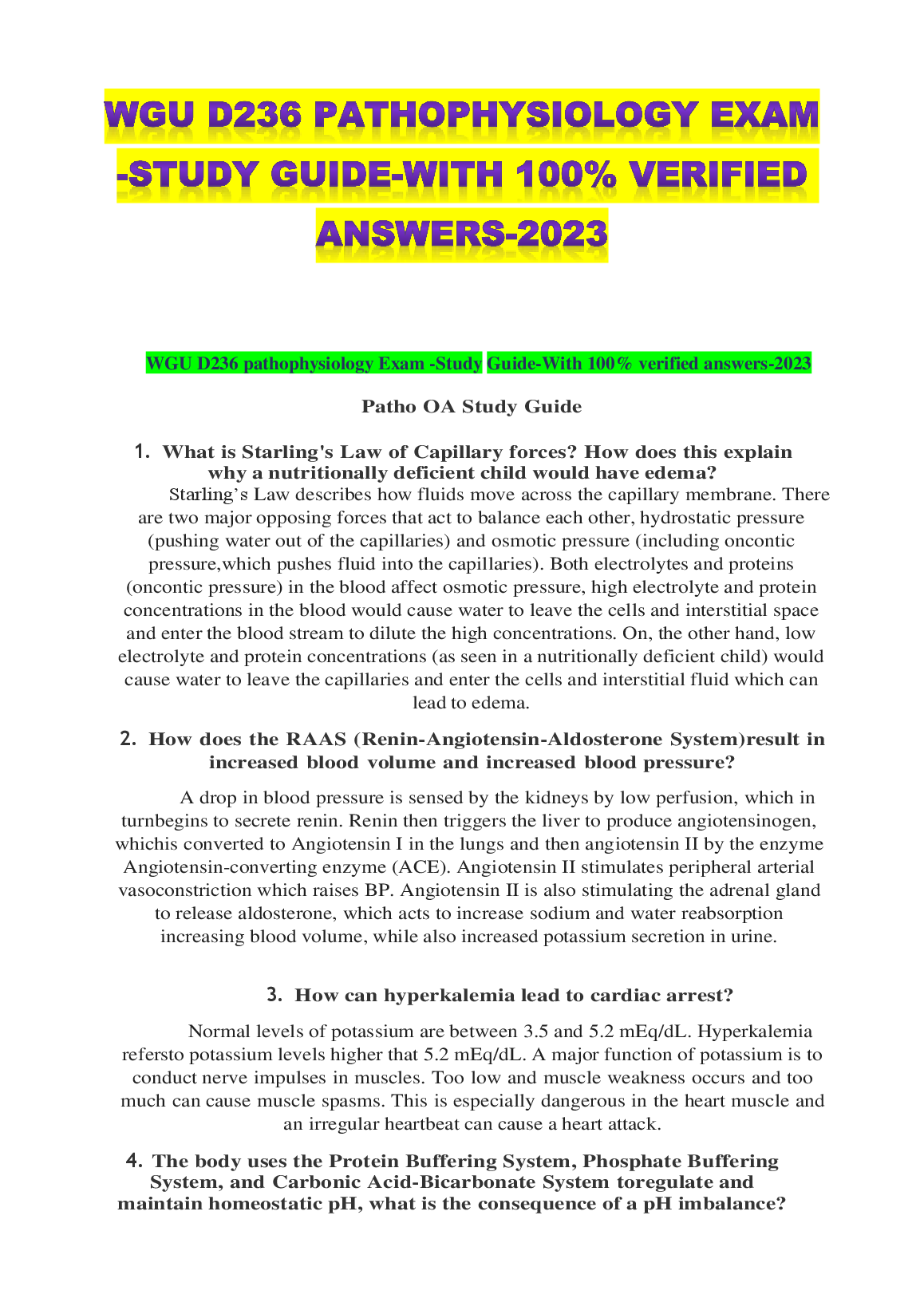
Master WGU D236 Pathophysiology With This Verified Exam Study Guide. Covers Starling'...

$16
WGUD236 Pathophysiology Exam Study Guide with Verified Answers for 2022/2023 Nursing Students
Wgud236 Pathophysiology Exam Study Guide With Verified Answe...

Master Wgud236 Pathophysiology Concepts. Covers Raas, Dka, Congenital Defects And Imm...
$16
WGU Patho D236 Study Guide with Complete Solutions 2023/2024: Turner Syndrome and Down Syndrome Q&A
WGU Patho D236 Study Guide With Complete Solutions 2023/2024...

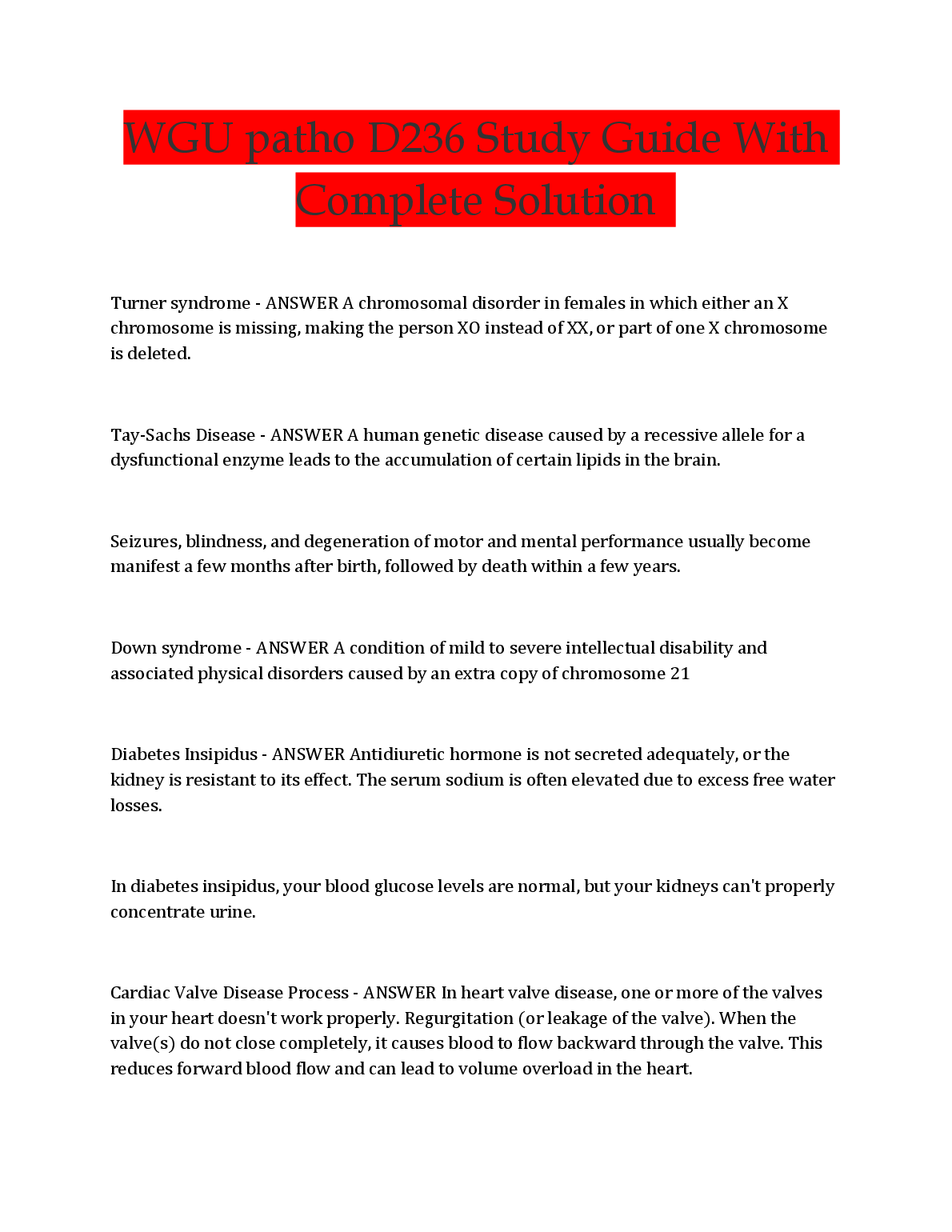
Access WGU Patho D236 Study Guide With Complete Solutions. Covers Genetic Disorders,...

$16
WGU D236 Pathophysiology Study Guide Exam Questions with Correct Answers 2023/2024 Complete Revision Pack
WGU D236 Pathophysiology Study Guide Exam Questions With Cor...

Master WGU D236 Pathophysiology With This Complete Study Guide Featuring Exam Questio...

$16