
WGU D236 Pathophysiology Exam Study Guide 2023

Study guide

WGU D236 Pathophysiology Exam Study Guide With Verified Answers 2023: Complete Revision Resource


Master WGU D236 Pathophysiology With This Verified Exam Study Guide. Covers Starling's Law, Raas, And Electrolyte Balance.
Description

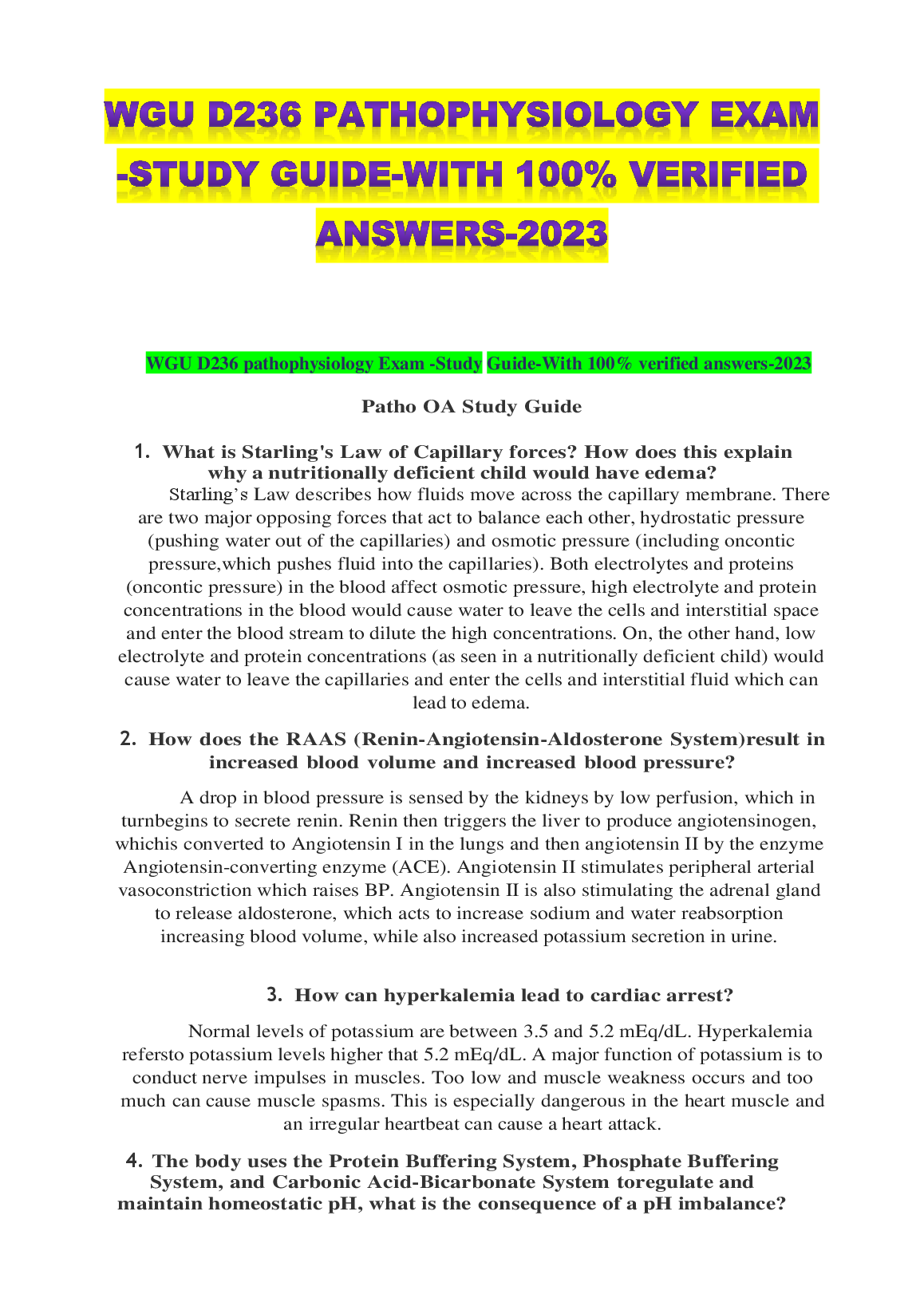
Accelerate your academic progress in the D236 Pathology course by mastering critical physiological mechanisms through a concise, evidence-based revision resource. This material simplifies complex concepts such as capillary fluid dynamics, hormonal regulation of blood pressure, and cardiac electrophysiology to ensure confident exam performance. By focusing on high-yield topics like Starling's Law and the Renin-Angiotensin-Aldosterone System, learners gain a clear understanding of how homeostatic imbalances manifest clinically. Ideal for students seeking efficient preparation that bridges theoretical knowledge with practical clinical applications.

PDF Sample
1 / 1
WGU D236 Pathophysiology Exam Study Guide 2023 IMG-1
Who is this Document for ?

This resource is tailored for undergraduate or graduate nursing and health science students enrolled in Western Governors University’s D236 course. It suits candidates preparing for comprehensive assessments who require a focused review of pathophysiological processes. Tutors and educators may also utilise this material to supplement instruction on fluid dynamics and hormonal systems.

What you will learn ?
Explain Starling's Law of Capillary forces and apply it to deduce why nutritional deficiency leads to oedema by analysing hydrostatic and osmotic pressure imbalances.
Trace the complete sequence of the Renin-Angiotensin-Aldosterone System (RAAS) from renal renin secretion to angiotensin II production and aldosterone release, understanding its dual role in vasoconstriction and blood volume expansion.
Define hyperkalaemia as potassium levels exceeding 5.2 mEq/dL and articulate the specific physiological mechanisms by which elevated potassium disrupts cardiac nerve impulse conduction leading to arrest risk.
Identify the three primary buffering systems—Protein, Phosphate, and Carbonic Acid-Bicarbonate—and describe their collective role in maintaining homeostatic pH balance within the body.
Differentiate between hydrostatic pressure driving fluid out of capillaries and oncotic pressure pulling it back, clarifying how electrolyte and protein concentrations dictate interstitial fluid accumulation.
Analyse the impact of low electrolyte and protein concentrations on cellular hydration, recognising the clinical signs associated with intracellular water shifts in deficient states.
You may also be interested in :
Recommendations for you
WGUD236 Pathophysiology Exam Study Guide with Verified Answers for 2022/2023 Nursing Students
Wgud236 Pathophysiology Exam Study Guide With Verified Answe...

Master Wgud236 Pathophysiology Concepts. Covers Raas, Dka, Congenital Defects And Imm...
$16
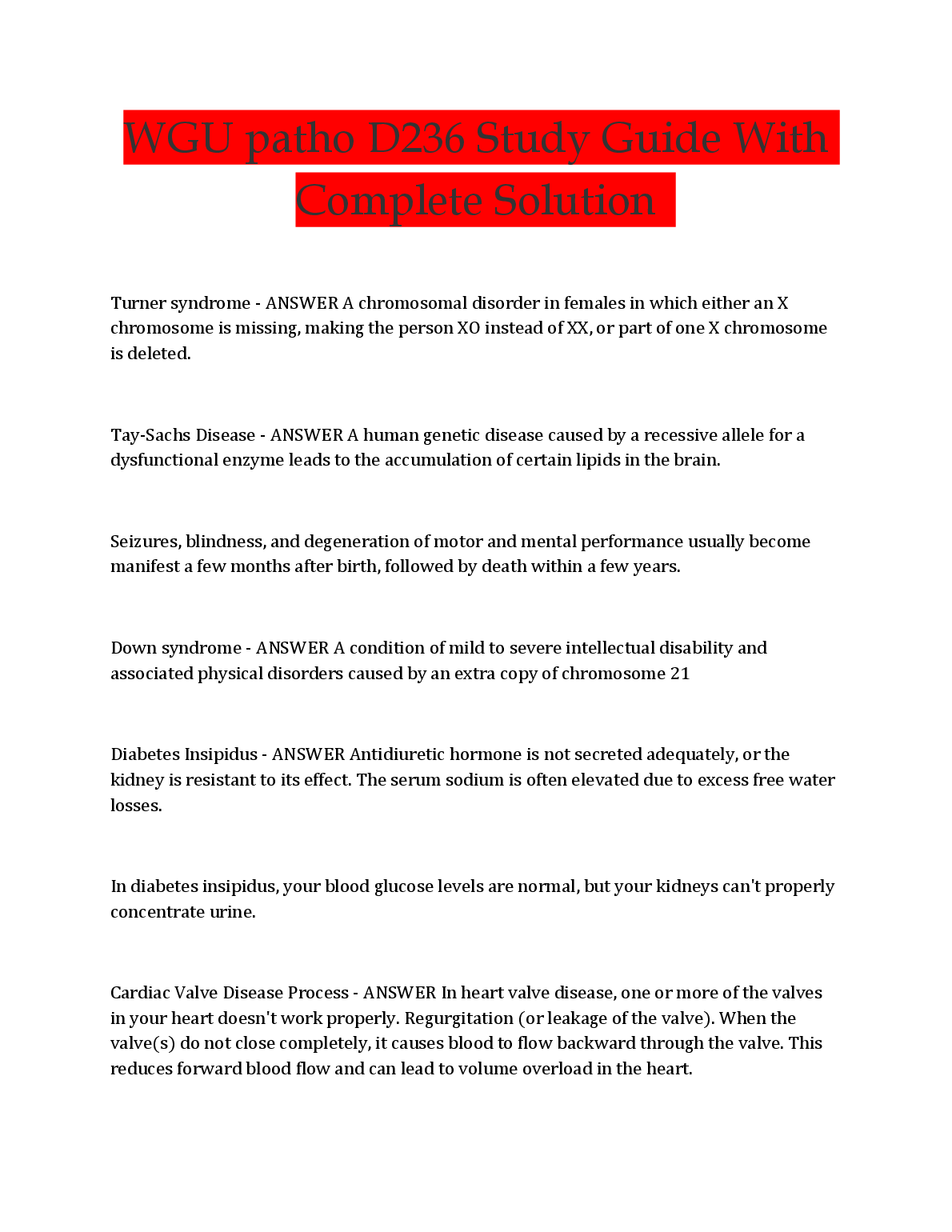
WGU Patho D236 Study Guide with Complete Solutions 2023/2024: Turner Syndrome and Down Syndrome Q&A
WGU Patho D236 Study Guide With Complete Solutions 2023/2024...

Access WGU Patho D236 Study Guide With Complete Solutions. Covers Genetic Disorders,...
$16
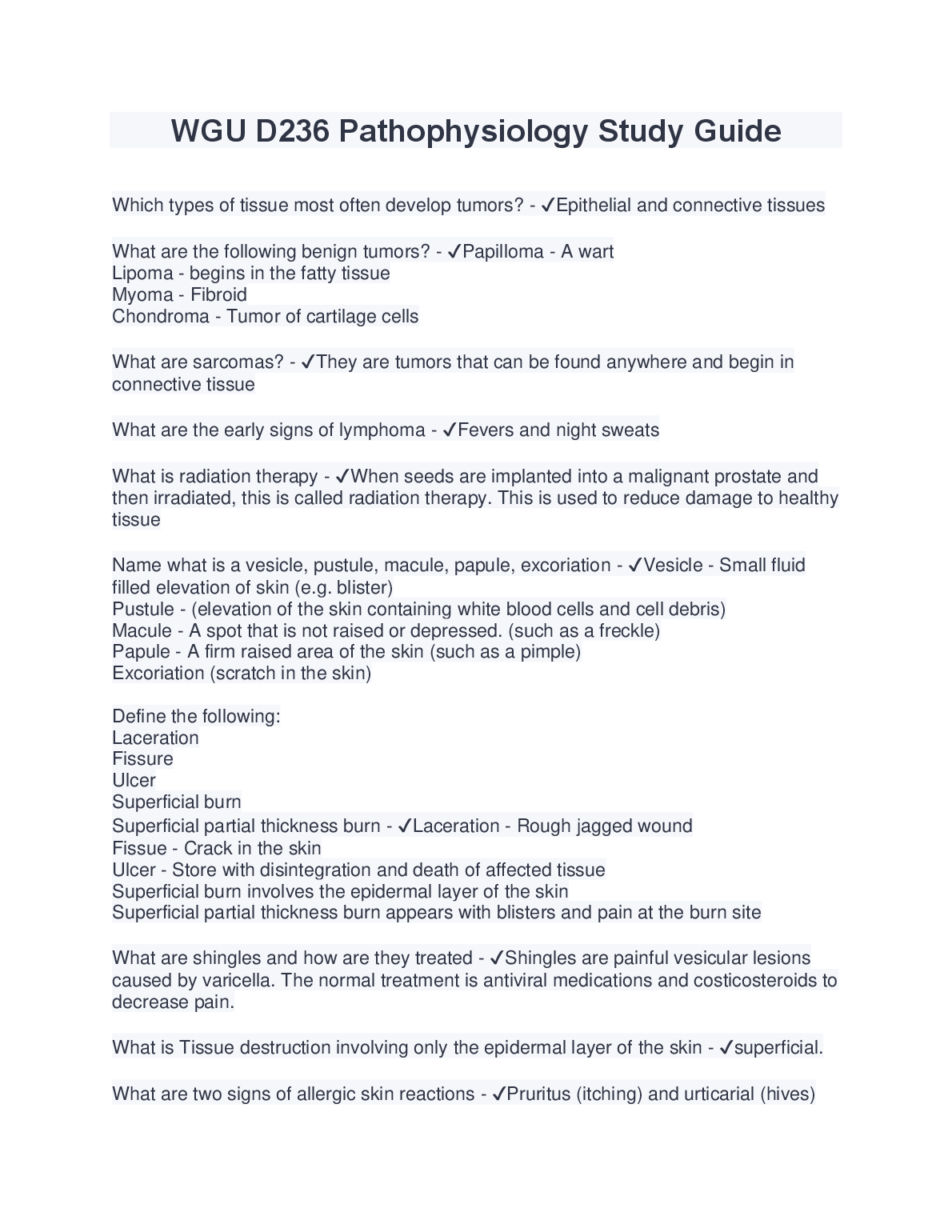
WGU D236 Pathophysiology Study Guide: Comprehensive Review of Tumors, Skin Lesions, and Clinical Terminology for Exam Success
WGU D236 Pathophysiology Study Guide: Comprehensive Review O...

Master WGU D236 Pathophysiology Concepts Including Tumor Types, Skin Lesions, Burns,...

$16
WGU D236 Pathophysiology Study Guide Exam Questions with Correct Answers 2023/2024 Complete Revision Pack
WGU D236 Pathophysiology Study Guide Exam Questions With Cor...

Master WGU D236 Pathophysiology With This Complete Study Guide Featuring Exam Questio...

$16