Bates’ Guide to Physical Examination and History Taking, 14E Bates’ Guide to Physical Examination and History Taking, 14E

Test bank

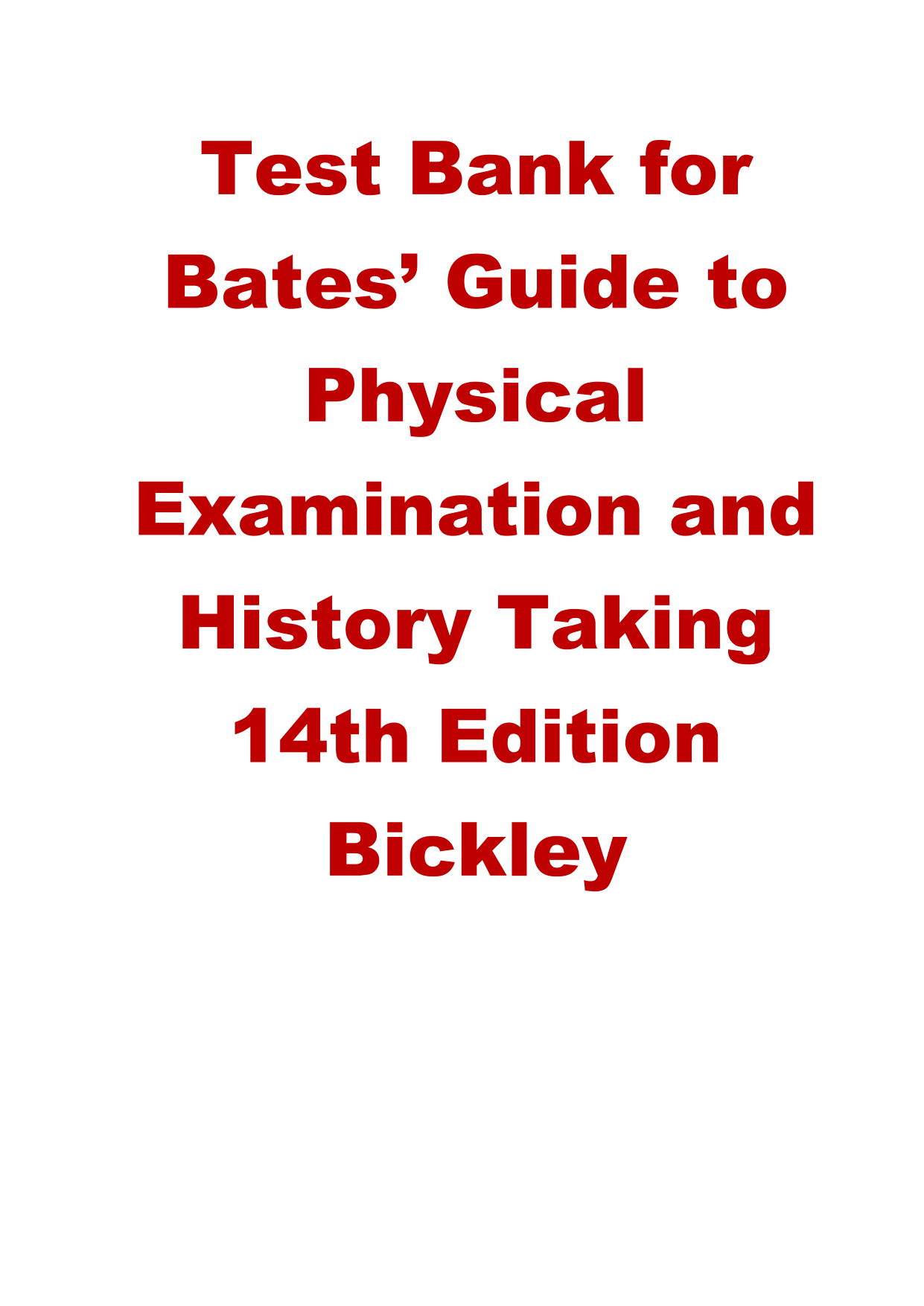
Test Bank For Bates’ Guide To Physical Examination And History Taking, 14th Edition By M.d. Bickley, Lynn S., M.d. Szilagyi, Peter G.


Designed To Reinforce Health Assessment, Physical Examination, Clinical Reasoning, And Exam Preparation.
Description

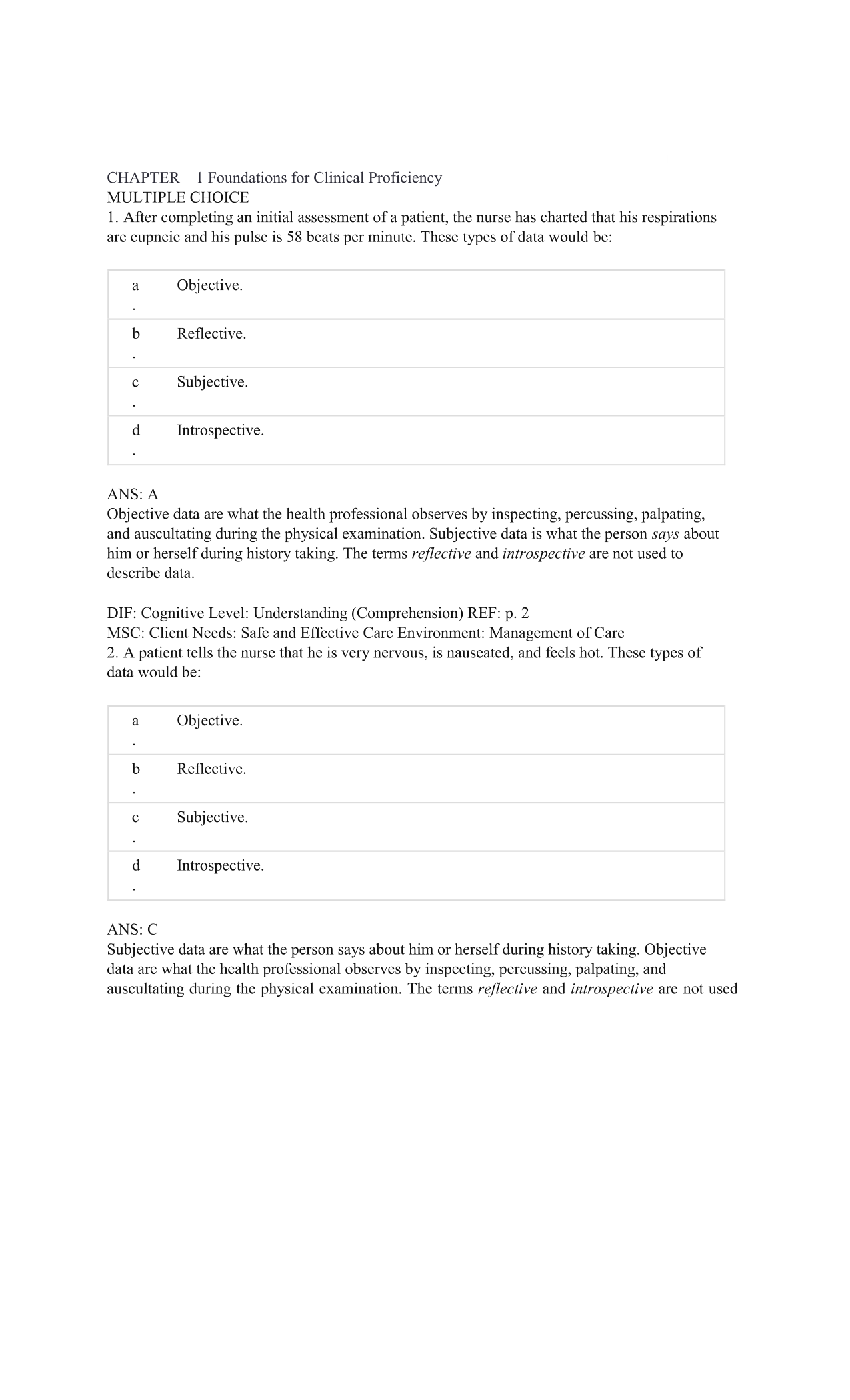
The Test Bank for Bates’ Guide to Physical Examination and History Taking is a study resource designed to help students strengthen their understanding of health assessment, patient interviewing, physical examination, and clinical reasoning. It supports structured review, self-assessment, critical thinking, and preparation for quizzes and examinations.

The resource covers systematic approaches to obtaining patient histories and performing comprehensive physical examinations. Key areas include communication and interviewing, health history, vital signs, general assessment, skin and nails, head and neck, eyes, ears, nose and throat, thorax and lungs, cardiovascular system, peripheral vascular assessment, abdomen, musculoskeletal system, and neurological examination.

Practice questions provide opportunities to review assessment principles, recognize normal and abnormal findings, interpret clinical information, and connect patient history with physical examination results. Students can use the material to identify areas requiring additional study and strengthen their ability to apply assessment concepts in clinical settings.

This resource can complement lectures, textbook reading, laboratory practice, clinical experiences, classroom discussions, and independent study. It is suitable for nursing students, medical students, physician assistant students, nurse practitioner students, allied health learners, and healthcare educators.

Key Features:

Reinforces health assessment concepts
Reviews systematic history-taking approaches
Supports clinical reasoning and critical thinking
Covers major body systems and examination techniques
Helps distinguish normal from abnormal findings
Promotes patient-centered communication
Supports self-assessment and structured review
Helps prepare for quizzes and examinations
Complements classroom, laboratory, and clinical learning

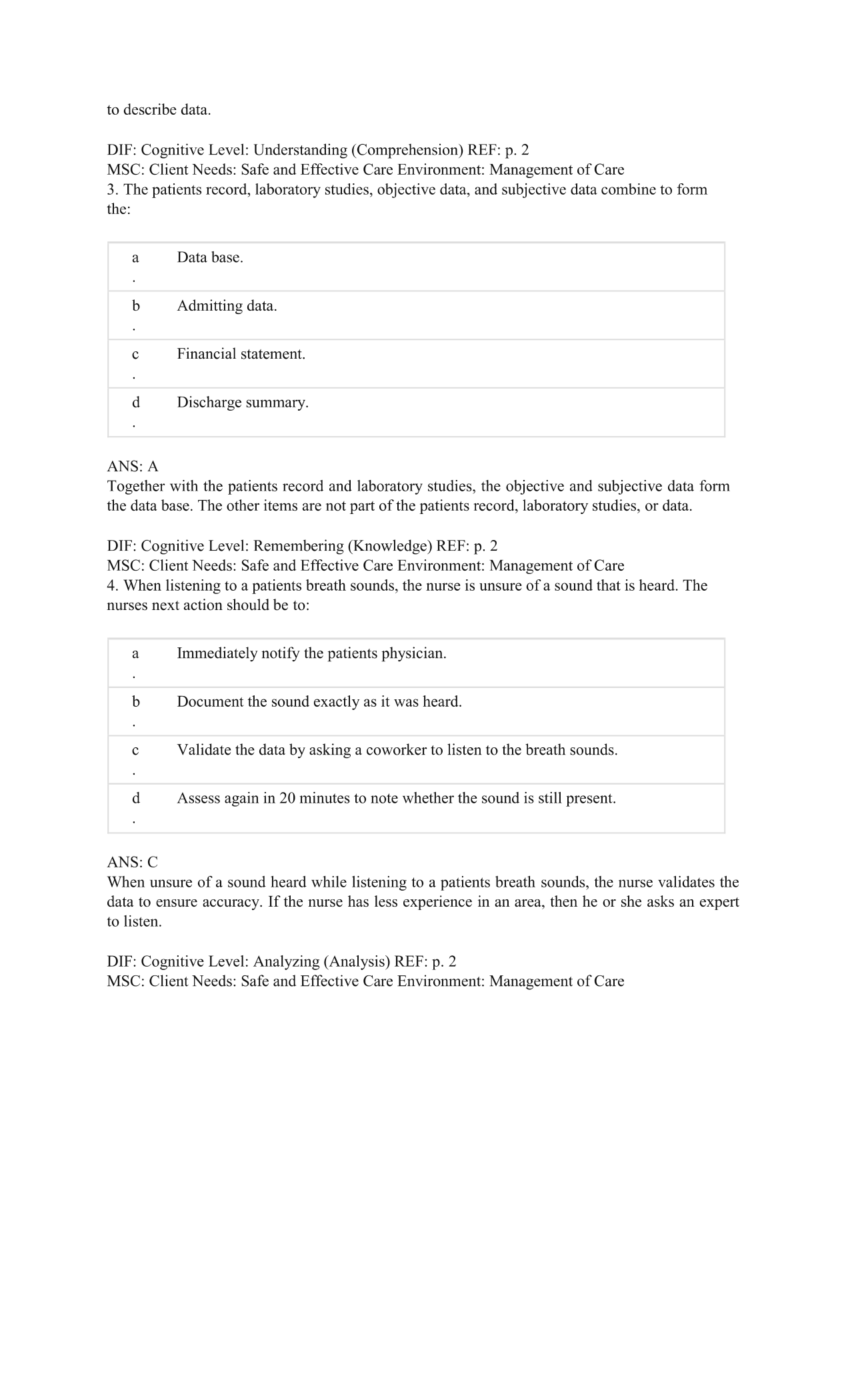
PDF Sample
1 / 3
Bates’ Guide to Physical Examination and History Taking, 14E IMG-1
Bates’ Guide to Physical Examination and History Taking, 14E IMG-2
Bates’ Guide to Physical Examination and History Taking, 14E IMG-3
Who is this Document for ?

Nursing students, instructors, and exam preparation users.

What you will learn ?
⬤Understand the principles of comprehensive health assessment.
⬤Apply systematic approaches to obtaining a complete health history.
⬤Develop effective patient interviewing and communication skills.
⬤Collect accurate subjective and objective health information.
⬤Perform comprehensive physical examinations using appropriate techniques.
⬤Assess vital signs accurately and recognize significant variations.
⬤Evaluate general appearance, behavior, and nutritional status.
⬤Assess the skin, hair, and nails for normal and abnormal findings.
⬤Perform focused examinations of the head and neck.
⬤Assess the eyes, ears, nose, mouth, and throat.
⬤Examine the thorax and lungs using systematic assessment techniques.
⬤Evaluate cardiovascular and peripheral vascular function.
⬤Perform a systematic abdominal assessment.
⬤Assess the musculoskeletal system and functional mobility.
⬤Conduct an appropriate neurological examination.
⬤Differentiate expected findings from abnormal assessment findings.
⬤Integrate health history information with physical examination findings.
⬤Apply clinical reasoning when interpreting patient assessment data.
⬤Recognize findings that may require further evaluation or intervention.
⬤Incorporate health promotion and disease prevention into patient assessments.
⬤Adapt assessment approaches to patients across different ages and backgrounds.
⬤Demonstrate culturally sensitive and patient-centered assessment practices.
⬤Strengthen clinical documentation, critical thinking, and clinical judgment.
⬤Apply evidence-informed approaches to physical examination and health assessment.
⬤Prepare effectively for health assessment and physical examination examinations.
You may also be interested in :
Recommendations for you
Portage Learning NURS 231 Pathophysiology Exam Review Test Bank Graded A+ Study Resource
Portage Learning Nurs 231 Pathophysiology Exam Review Test B...

Master Portage Nurs 231 With This Graded Test Bank. Covers Metaplasia, Dysplasia, And...

$16
NURS 231 Pathophysiology Module 10 Test Bank: Skeletal System Functions and Bone Types Study Guide
Nurs 231 Pathophysiology Module 10 Test Bank: Skeletal Syste...

Review Key Answers For Skeletal System Functions, Bone Divisions, And Cortical Vs Can...

$16
NURS 231 Module 6 Exam Questions and Answers with A+ Grade Results for Nursing Students in the 2023/2024 Academic Year
Nurs 231 Module 6 Exam Questions And Answers With A+ Grade R...

Master Nurs 231 Neurology Topics. Access Detailed Module 6 Exam Questions And Answers...

$16
NURS 231 Pathophysiology Final Exam Questions and Answers Complete Study Resource for Nursing Students 2026/2027 Academic Year
Nurs 231 Pathophysiology Final Exam Questions And Answers Co...

Master Nurs 231 Pathophysiology With This Final Exam Guide. Covers Cell Structure, Ti...

$16