
ANCC Cardiovascular Nursing Exam Prep 2026/2027 Questions

Study guide

ANCC Cardiac & Vascular RN Certification Exam Study Guide And Question Bank For 2026/2027 Success


Master ANCC Cardiac Nursing Concepts With This Exam Resource. Covers Anatomy, ECG Basics And Valve Dynamics For Certification.
Description

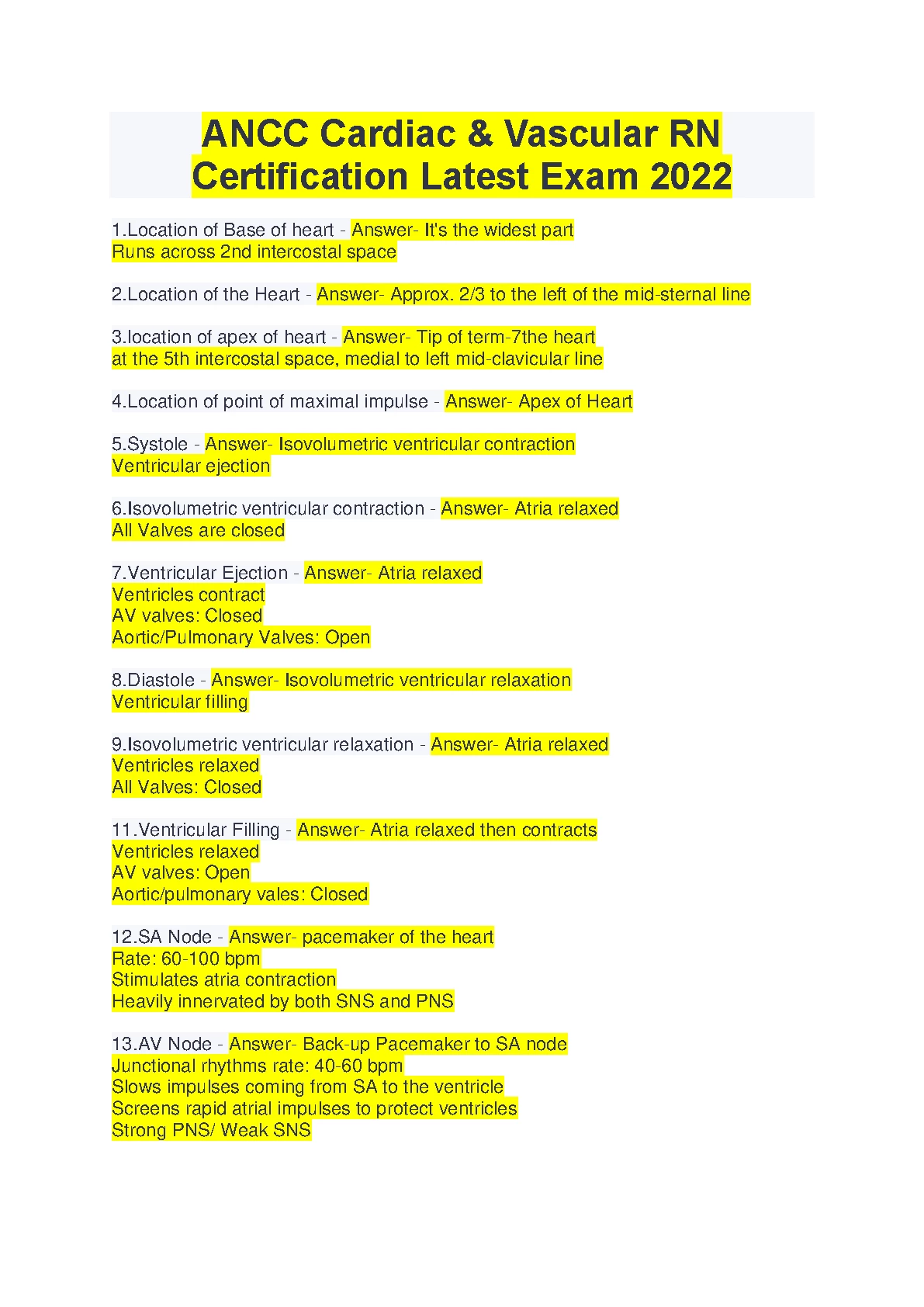
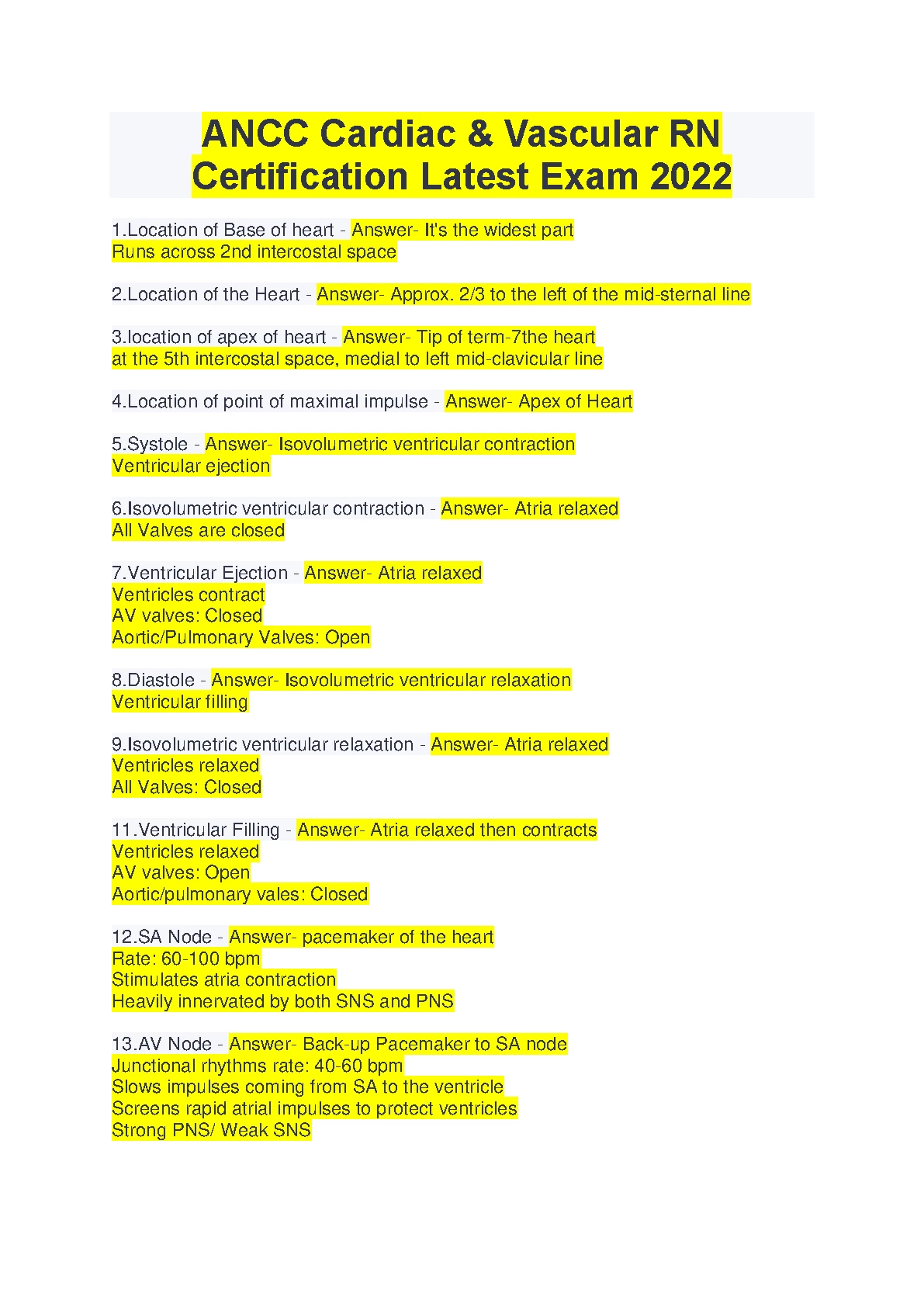
Accelerate your readiness for the American Nurses Credentialing Center Cardiac & Vascular Nursing Specialist examination by mastering high-yield anatomical landmarks and haemodynamic principles. This targeted study material breaks down complex cardiac physiology into accessible, exam-ready facts, ensuring you can confidently identify key locations such as the heart base, apex, and point of maximal impulse. By focusing on specific ventricular phases like isovolumetric contraction and ejection, this resource clarifies valve status and atrial dynamics to prevent common errors during assessment questions. Ideal for candidates seeking a concise review of pacemaker function and conduction system specifics ahead of the 2026/2027 certification window.
PDF Sample
1 / 1
ANCC Cardiovascular Nursing Exam Prep 2026/2027 Questions IMG-1
Who is this Document for ?

This document is designed for registered nurses preparing to sit or re-sit the ANCC Cardiac & Vascular Nursing Certification examination. It serves as a rapid revision tool for candidates who need to reinforce their knowledge of basic cardiac anatomy and physiological cycles before testing day. Tutoring professionals may also use these concise definitions and factual points to support student understanding of core cardiovascular concepts.
What you will learn ?
Identify the precise anatomical locations of the heart base, apex, and point of maximal impulse within the intercostal spaces and clavicular lines as tested in clinical exams. Differentiating between these landmarks helps candidates answer anatomy-based multiple-choice questions with higher accuracy.
Recall the specific valve positions (open or closed) during each phase of systole and diastole, including isovolumetric ventricular contraction and relaxation. Understanding these mechanical states allows learners to deduce haemodynamic changes without relying on rote memorisation alone.
Distinguish between the functions of the SA node as the primary pacemaker (60-100 bpm) and the AV node as a backup mechanism with screening capabilities for rapid atrial impulses. This knowledge is critical for interpreting basic ECG rhythms and understanding junctional rate variations.
Explain the physiological events occurring during ventricular ejection, including ventricular contraction status and the specific opening of aortic and pulmonary valves while AV valves remain closed. Clarity in this sequence aids in answering questions regarding cardiac output mechanics.
Describe the transition from isovolumetric relaxation to ventricular filling, noting how atrial contraction contributes to final ventricular volume when all other valves are initially closed. Grasping these nuances helps avoid common pitfalls in understanding diastolic function.
You may also be interested in :
Recommendations for you
Saunders Comprehensive Review NCLEX-PN 9th Edition Study Guide for First-Time Pass Success
Saunders Comprehensive Review NCLEX-PN 9th Edition Study Gui...

Ace The NGN NCLEX Pn First Try. Master Clinical Judgment And Exam Formats With This C...
$16
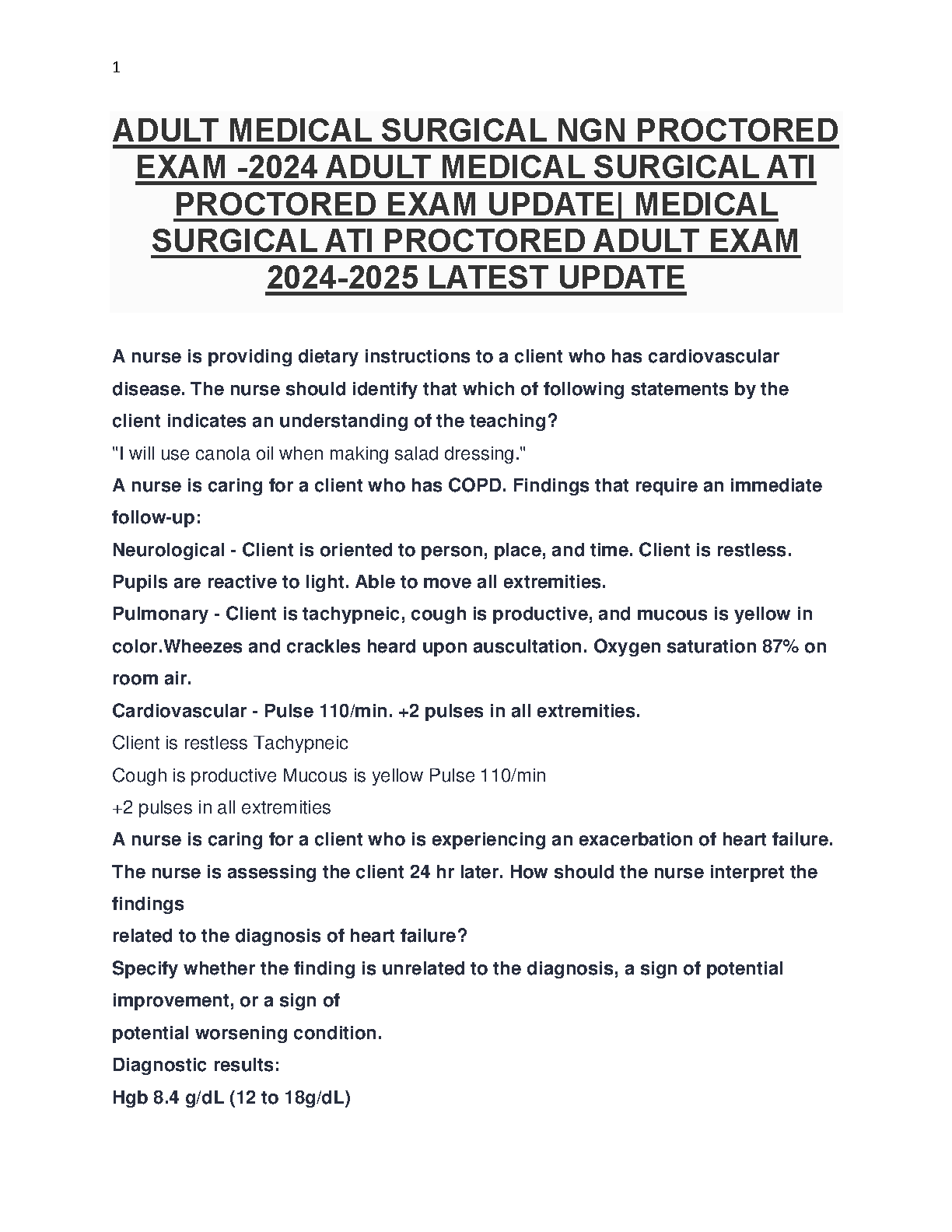
ATI RN Comprehensive Predictor NGN Practice Exams 2025-2026 with Verified A+ Answers and Rationales (Versions A & B)
ATI RN Comprehensive Predictor NGN Practice Exams 2025-2026...

Master The ATI RN Comprehensive Predictor. 180 Verified NGN Questions With Detailed R...
$16
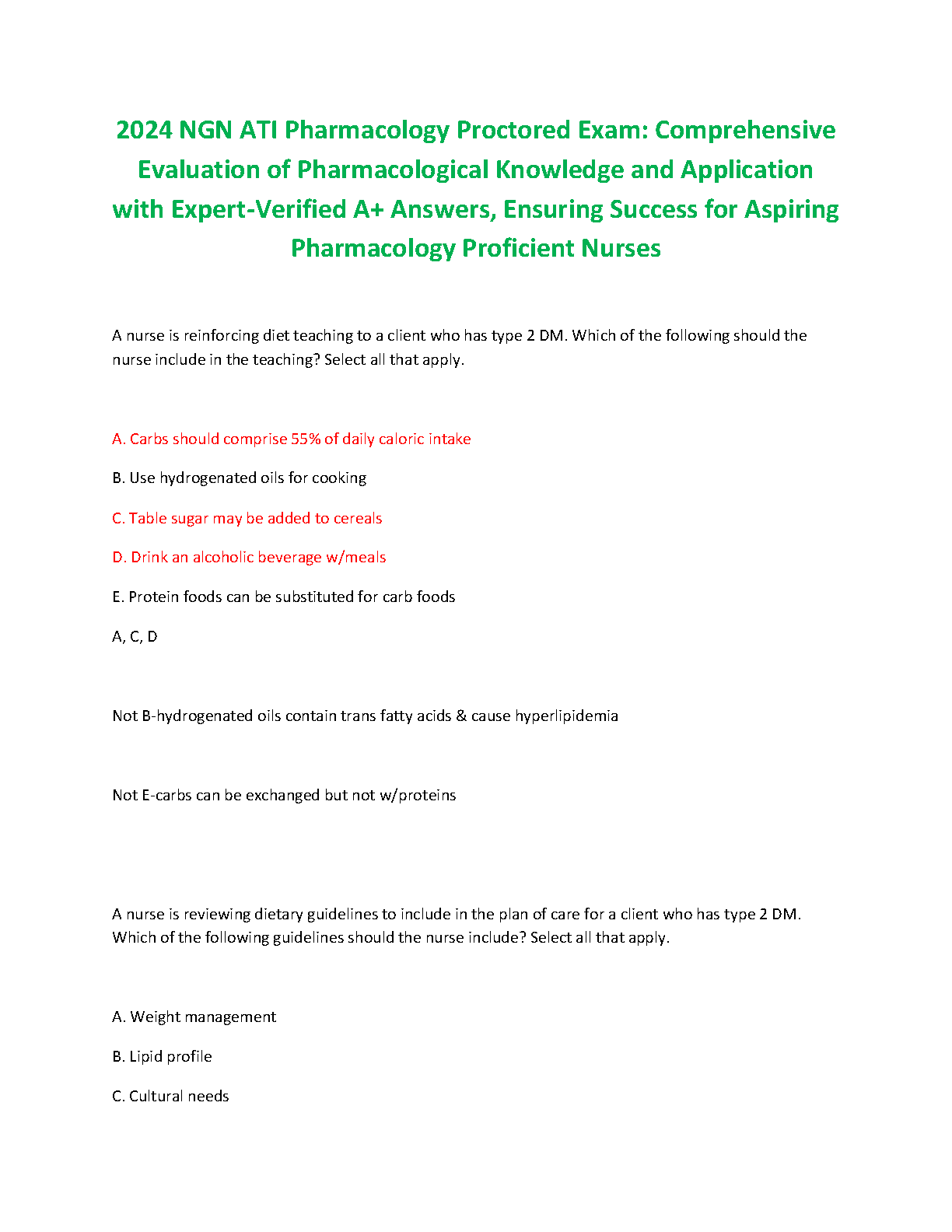
ATI RN Pharmacology Nursing Edition 9.0 NGN Exam Success Guide 2025/2026 Expert Verified Answers
ATI RN Pharmacology Nursing Edition 9.0 NGN Exam Success Gui...

Master The ATI RN Pharmacology NGN Proctored Exam With Expert-verified Answers. Ensur...
$16