
ANCC PMHNP Exam Prep Q&A Guide 2026/27

Test bank

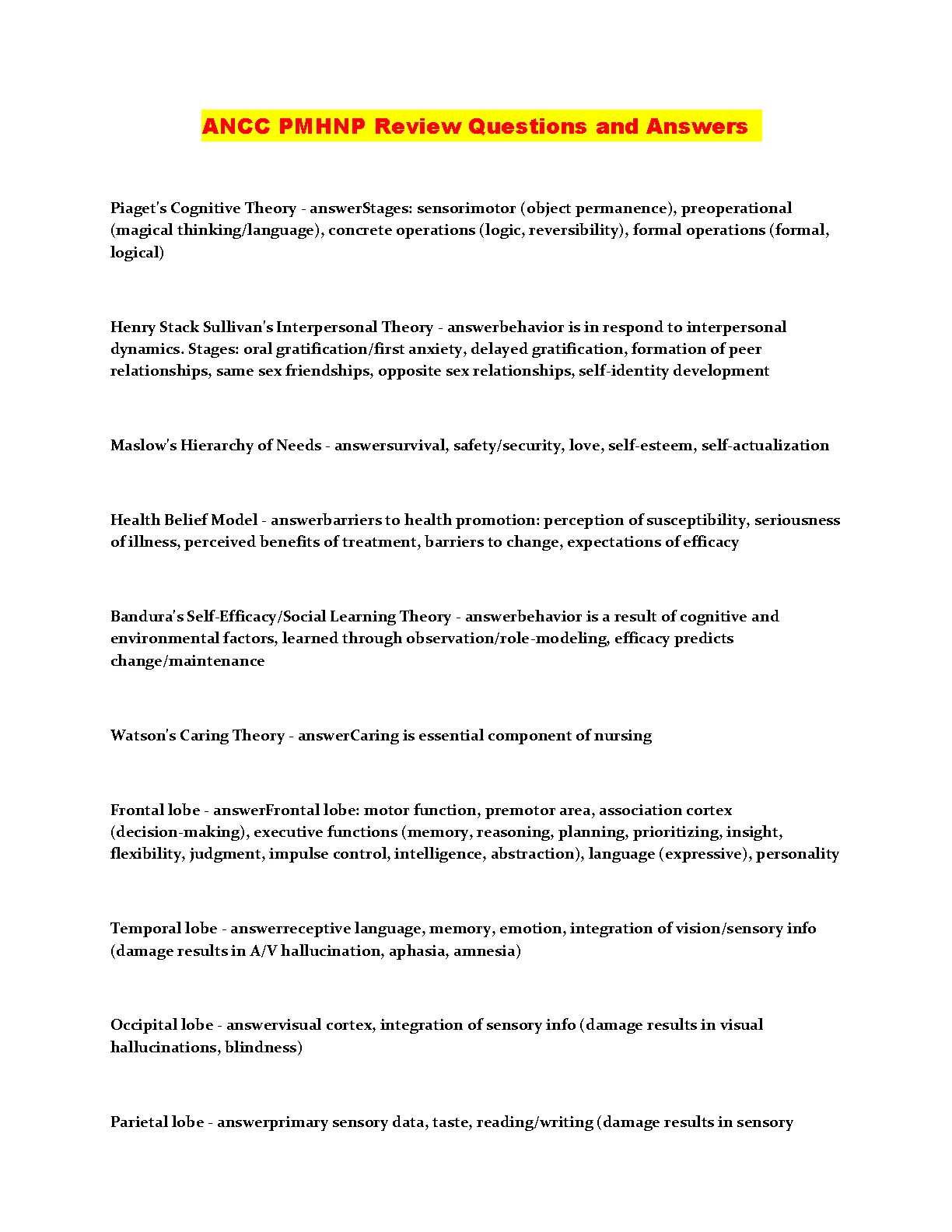
ANCC PMHNP Review Questions And Answers With Verified Psychological Theories And Neuroanatomy Explanations


Master ANCC Psychiatric Nursing Certification With Verified Questions Covering Cognitive Theories, Brain Lobes, And Interpersonal Dynamics.
Description

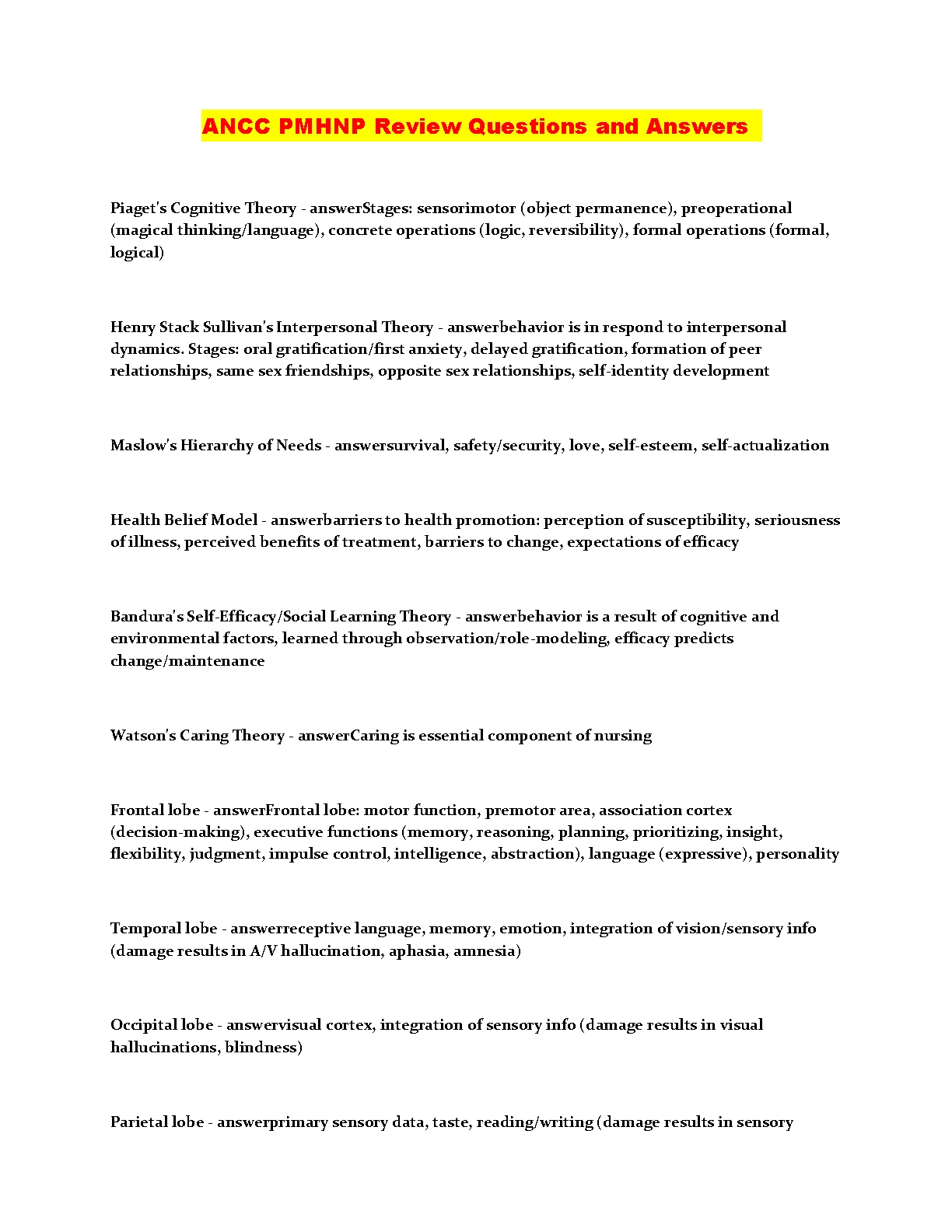
Elevate your psychiatric-mental health nursing competence by mastering high-yield clinical concepts through a curated set of verified review questions. This resource targets critical areas such as Piaget’s cognitive development stages, Sullivan’s interpersonal theory, and the neurological underpinnings of mental health conditions via detailed lobe function analysis. Candidates gain immediate clarity on executive functions in frontal lobe damage versus sensory integration issues in parietal or occipital regions, ensuring precise diagnostic reasoning. By engaging with these specific theoretical frameworks and anatomical correlates, learners build the robust knowledge base necessary to navigate complex psychiatric assessment scenarios with confidence.
PDF Sample
1 / 1
ANCC PMHNP Exam Prep Q&A Guide 2026/27 IMG-1
Who is this Document for ?

This document is designed for nursing candidates preparing to sit the ANCC Psychiatric-Mental Health Nurse Practitioner (PMHNP) certification exam. It serves as a focused revision tool for registered nurses transitioning into advanced psychiatric practice or those seeking board eligibility. Tutors and clinical instructors can also utilise these verified question-answer pairs to supplement teaching on developmental psychology and neuroanatomy within mental health contexts.
What you will learn ?
Apply Piaget’s cognitive theory stages, from sensorimotor object permanence to formal logical operations, to understand patient developmental constraints during assessment.
Analyse Henry Stack Sullivan’s interpersonal theory by identifying how behaviour responds to specific stages of anxiety and peer relationship formation.
Distinguish the clinical implications of damage to different brain lobes, such as expressive language deficits in frontal lobe injury versus visual hallucinations from occipital damage.
Utilise Maslow’s hierarchy of needs and the Health Belief Model to evaluate patient barriers to health promotion and prioritisation of care plans.
Explain Bandura’s self-efficacy theory by recognising how cognitive factors, observation, and role-modelling influence behavioural change and maintenance in therapy settings.
Identify key executive functions governed by the frontal association cortex, including impulse control, planning, and judgement, to better assess patients with personality or motor deficits.
You may also be interested in :
Recommendations for you
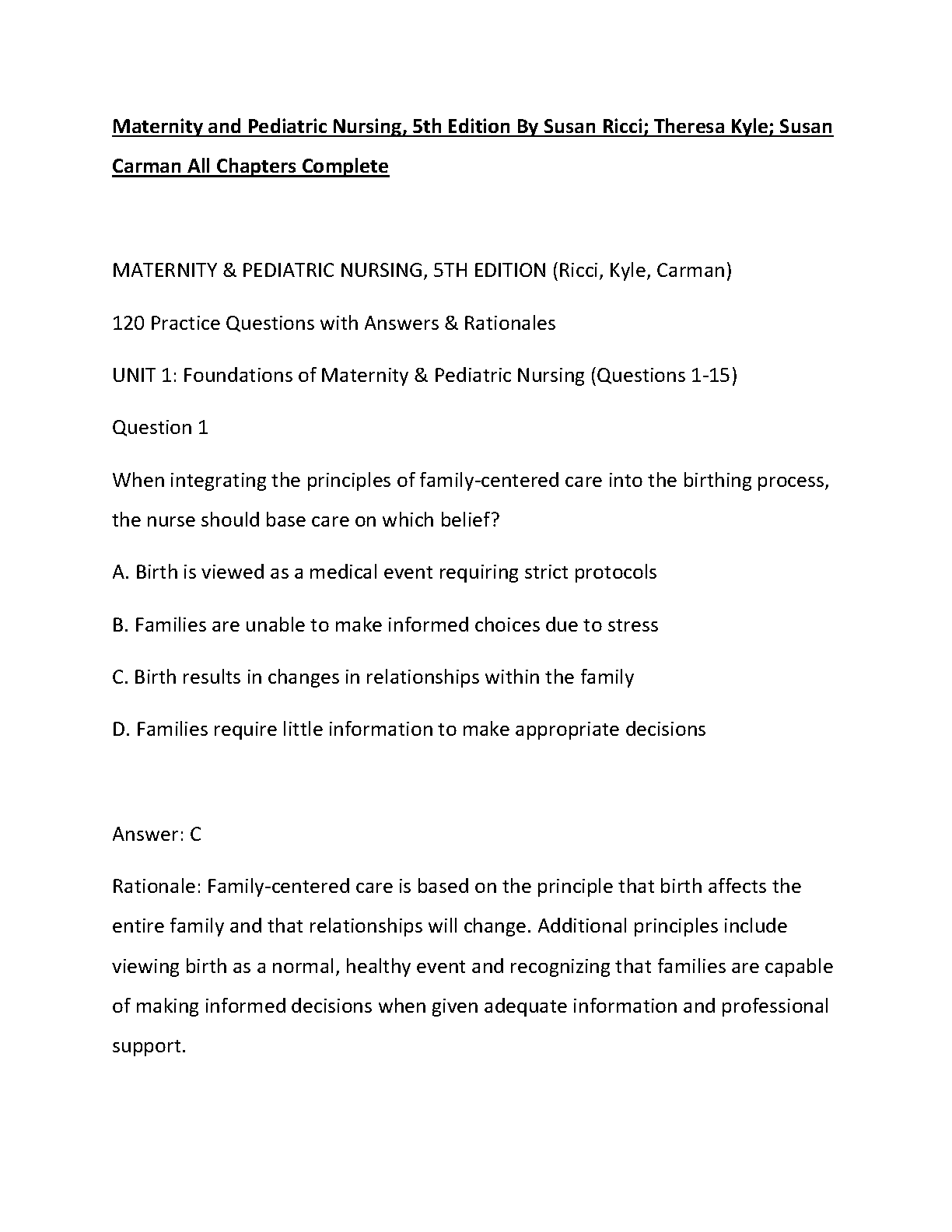
Maternity & Pediatric Nursing Test Bank by Susan Ricci Theresa Kyle and Carman Complete Edition
Maternity & Pediatric Nursing Test Bank By Susan Ricci There...

Access The Complete Test Bank For Maternity And Pediatric Nursing. Includes Rationale...
$16
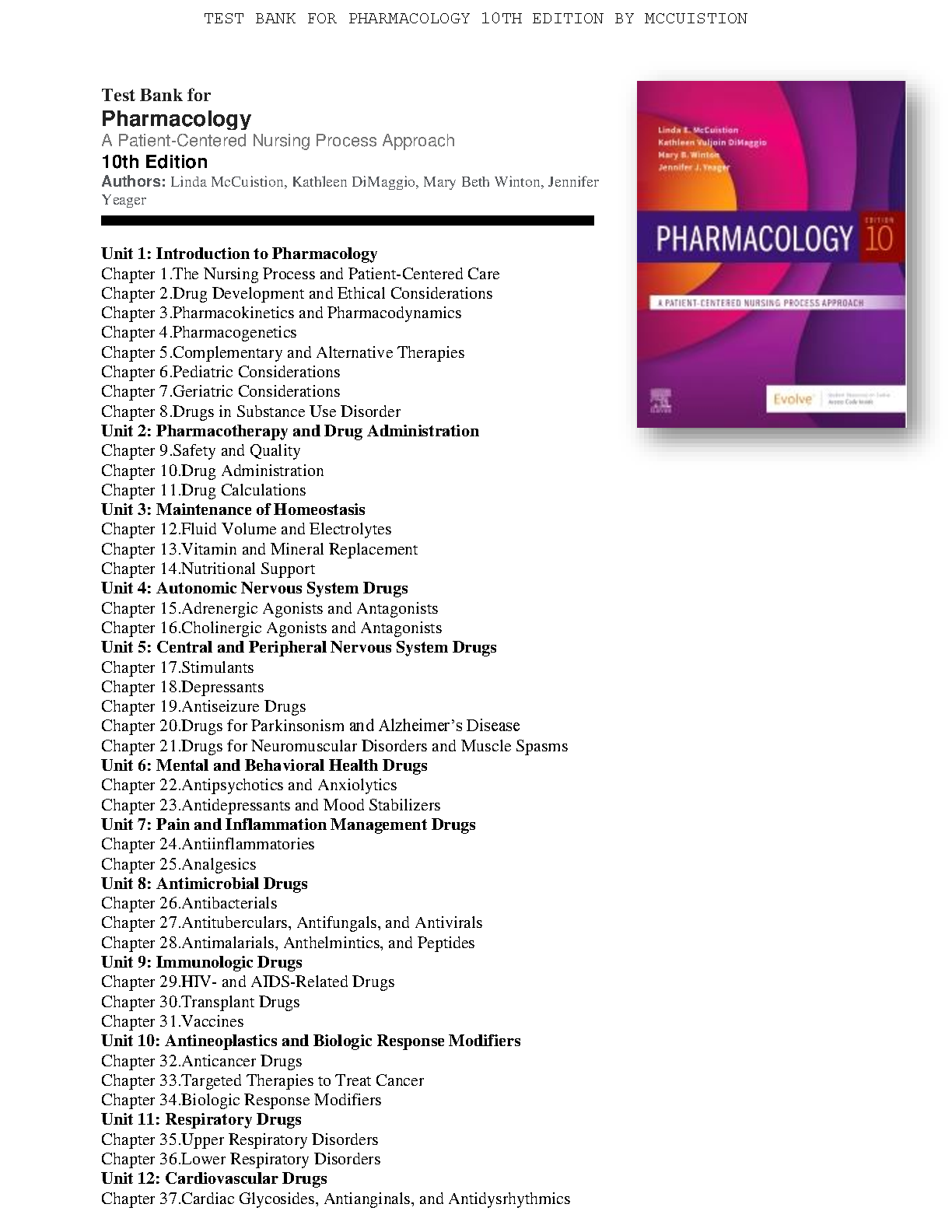
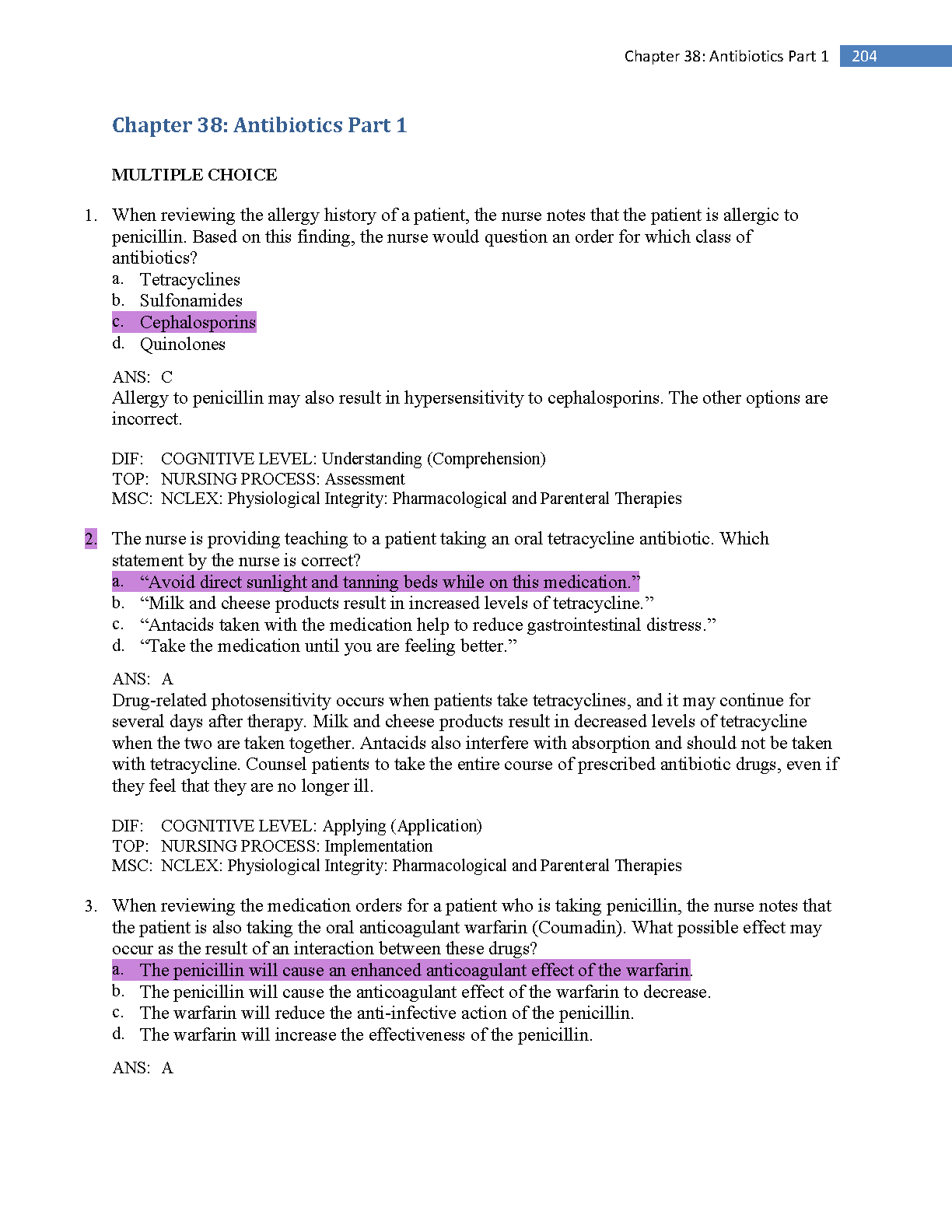
Test Bank for Pharmacology A Patient-Centered Nursing Process Approach 10th Edition by Linda McCuistion et al.
Test Bank For Pharmacology A Patient-centered Nursing Proces...

Master The Nursing Process In Pharmacology. Comprehensive Practice Questions From The...
$16
Pharmacology and the Nursing Process 10e Chapter 38 Antibiotics Part 1 Test Bank with NCLEX-Style Questions & Answers
Pharmacology And The Nursing Process 10e Chapter 38 Antibiot...

Nclex-style Test Bank For Pharmacology And The Nursing Process Ch 38. Master Antibiot...
$16
Test Bank for Pharmacology Patient-Centered Nursing Process Approach 11th Edition McCuistion DiMaggio Winton Yeager
Test Bank For Pharmacology Patient-centered Nursing Process...

Master Nursing Pharmacology With This Official Test Bank. Practice Exam-style Questio...

$16