
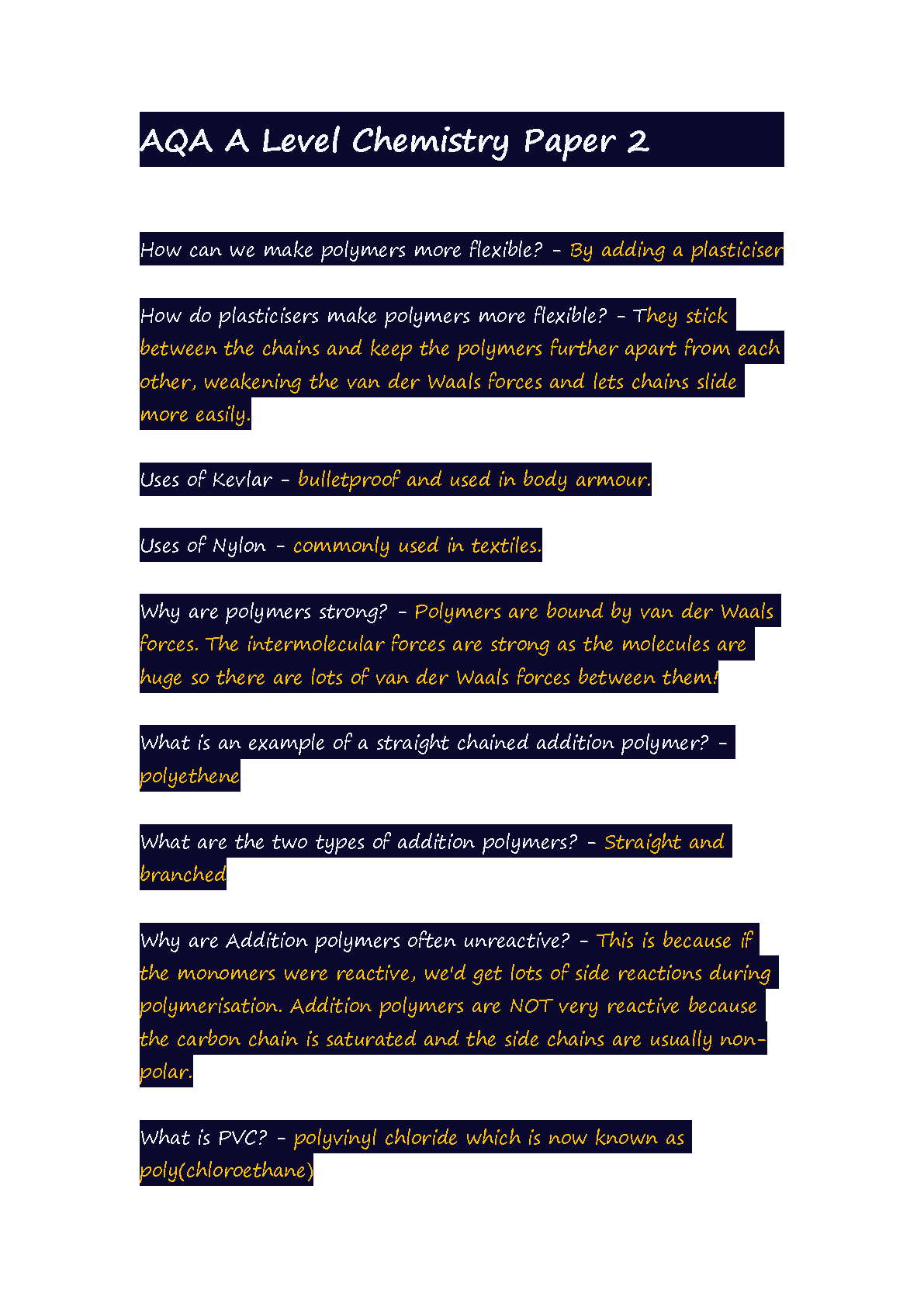
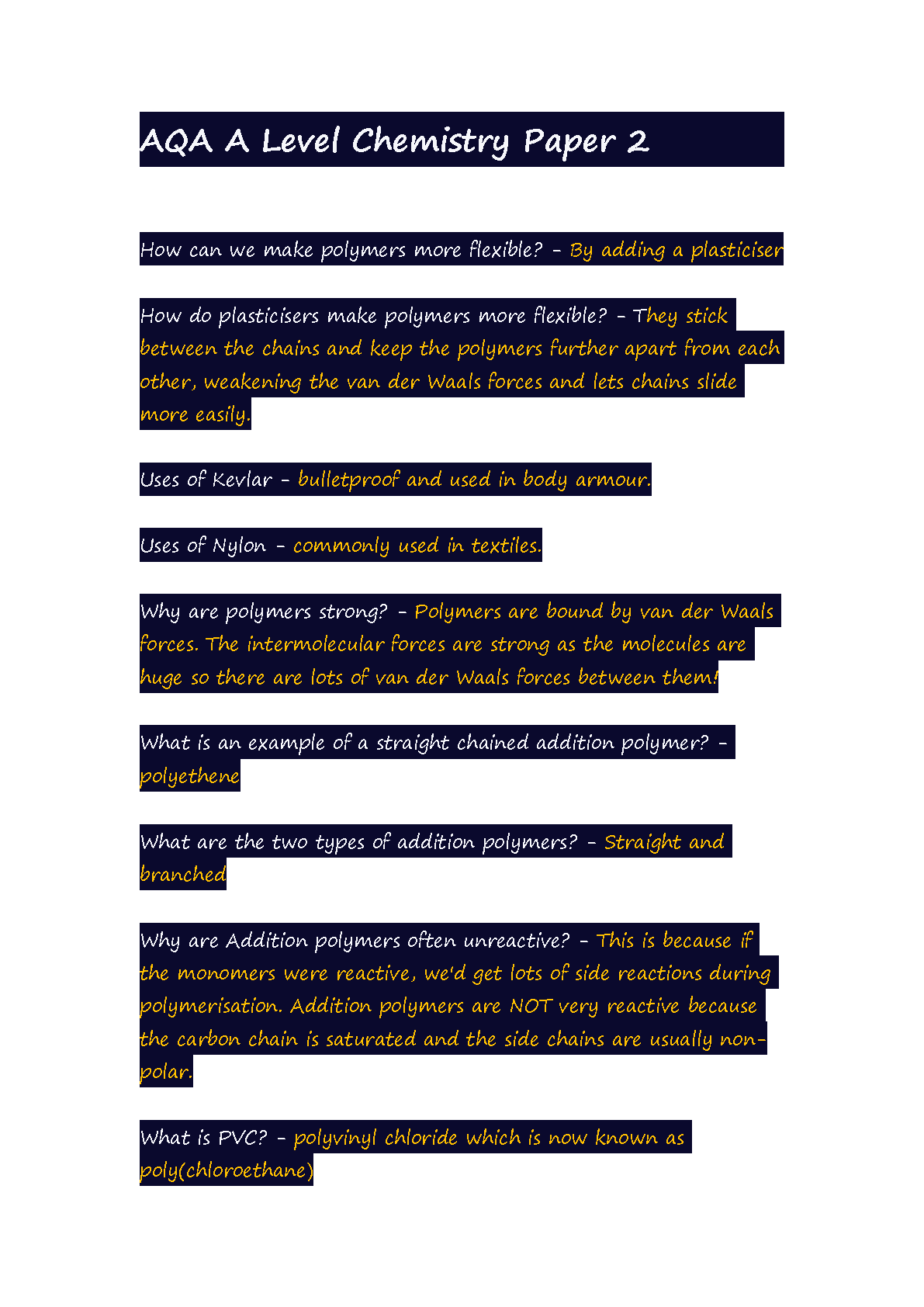
Polymers Chemistry Study Guide 2026/27: Kevlar, Nylon & PVC

Study guide

Chemistry Polymers Study Guide Q&A For 2026/27 Academic Year Covering Plasticisers Kevlar Nylon And Addition Polymer Properties


Master Polymer Chemistry Concepts Including Plasticizers, Kevlar, Nylon, And Addition Polymers With This Targeted 2026/27 Revision Resource.
Description

Accelerate your organic chemistry mastery by unlocking the structural logic behind high-performance materials like Kevlar and Nylon. This focused revision tool demystifies complex intermolecular forces, explaining precisely how plasticisers weaken van der Waals interactions to enhance material flexibility. Gain a competitive edge in exam scenarios by analysing the saturated nature of straight-chained addition polymers such as polyethene and PVC, ensuring you can articulate structural reasons for chemical reactivity with confidence.
PDF Sample
1 / 1
Polymers Chemistry Study Guide 2026/27: Kevlar, Nylon & PVC IMG-1
Who is this Document for ?

Designed specifically for students preparing for their organic chemistry examinations in the 2026/2027 academic year, this resource targets those seeking clarity on polymer structures and applications. It is particularly beneficial for learners who need to distinguish between straight-chained and branched addition polymers or understand the practical implications of molecular flexibility. Tutors and independent revision candidates can use these concise explanations to reinforce foundational concepts related to material science and chemical bonding.
What you will learn ?
Explain how plasticisers increase polymer flexibility by specifically weakening intermolecular van der Waals forces, a common exam requirement for discussing material properties.
Describe the specific structural features of Kevlar that make it suitable for body armor and Nylon for textiles, linking molecular geometry to real-world applications.
Distinguish between straight-chained and branched addition polymers, using polyethene as a primary example to illustrate how chain structure affects physical properties.
Analyse the chemical reactivity of saturated carbon chains in addition polymers, identifying why these structures resist certain types of reactions compared to unsaturated compounds.
Identify and describe the monomer units involved in the formation of PVC (poly(chloroethane)), understanding the link between name and structure in nomenclature.
Articulate the structural reasons behind the strength and rigidity of specific polymers, providing evidence-based answers for high-mark questions on material durability.
You may also be interested in :
Recommendations for you
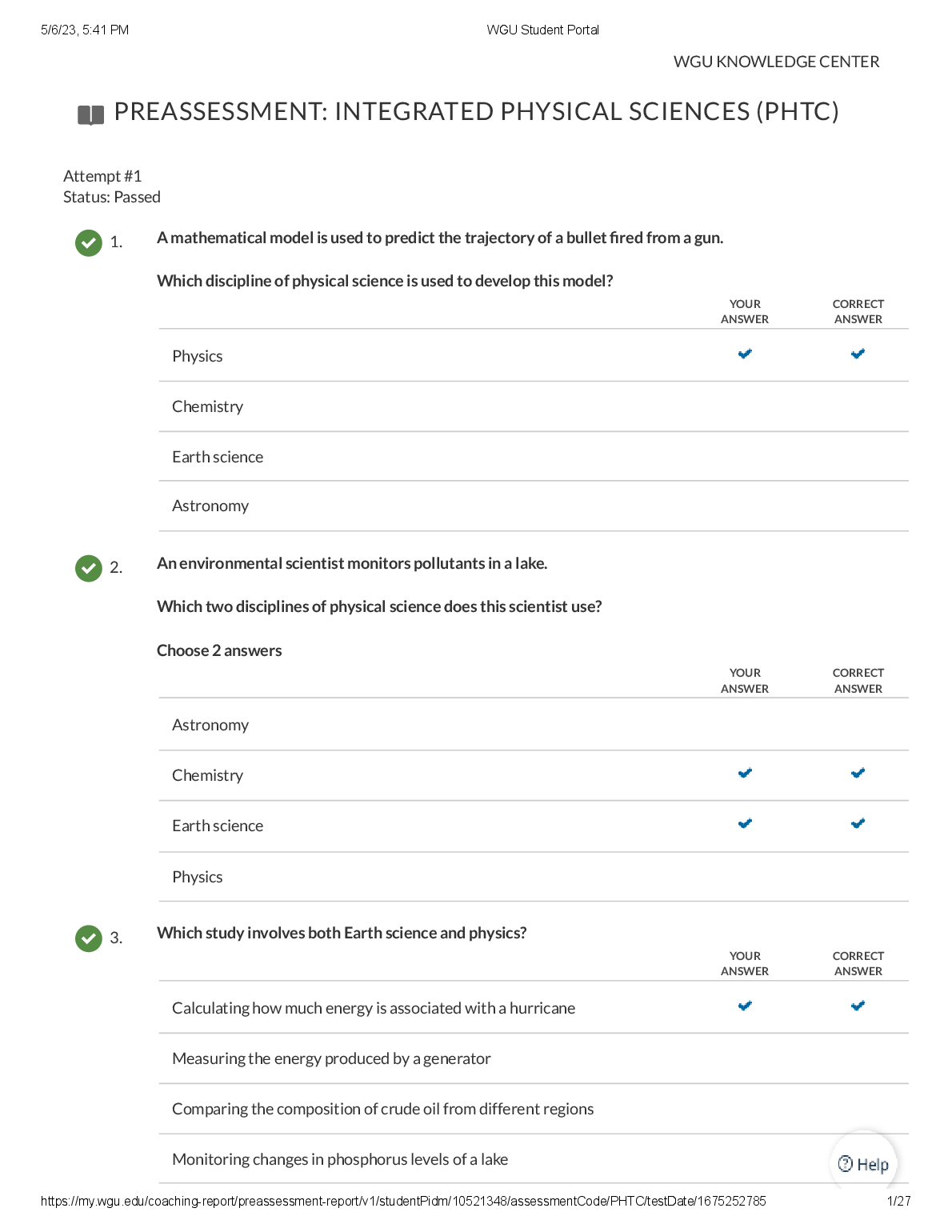
WGU C214 Integrated Physical Sciences Preassessment for 2024-2025 Academic Year Exam Preparation Guide
WGU C214 Integrated Physical Sciences Preassessment For 2024...

Master WGU C214 Integrated Physical Sciences With This Targeted Preassessment. Identi...

$16
WGU C165 Integrated Physical Sciences Memorization Guide for Exam Success in 2024-2025 Edition
WGU C165 Integrated Physical Sciences Memorization Guide For...

Master WGU C165 With Effective Memorization Strategies. This Guide Helps Students Pas...
$16
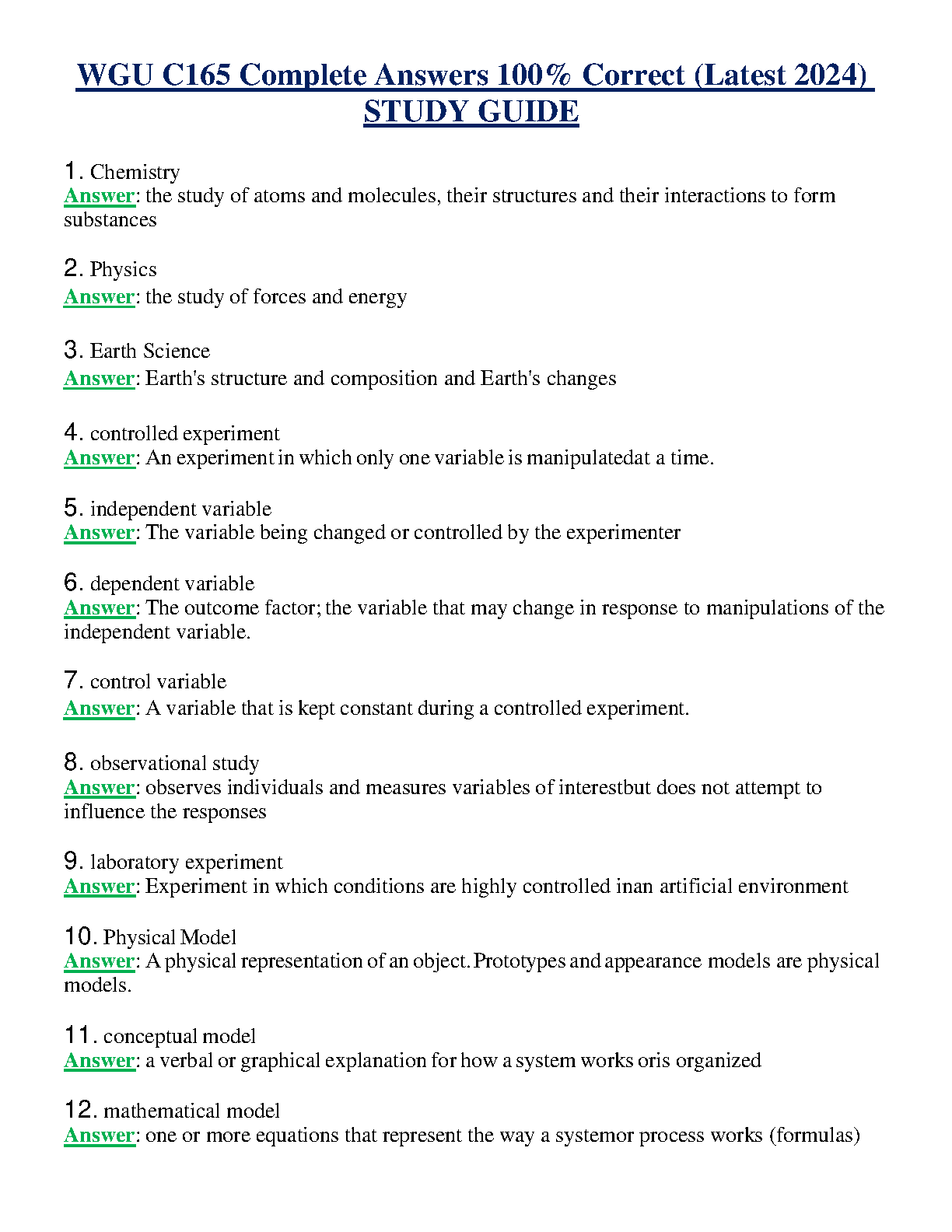
WGU C165 Complete Answers Study Guide: Chemistry, Physics and Earth Science Concepts for First Attempt Success in 2024
WGU C165 Complete Answers Study Guide: Chemistry, Physics An...

Ace WGU C165 With This 2024 Guide. Covers Chemistry, Physics And Experimental Design...

$16
WGU C785 Final Exam Study Guide: Amino Acids & Protein Structure - 2024/2025 Edition
WGU C785 Final Exam Study Guide: Amino Acids & Protein Struc...

Master Amino Acid Structure And Protein Folding For WGU C785. Pass Your Biochemistry...

$16