
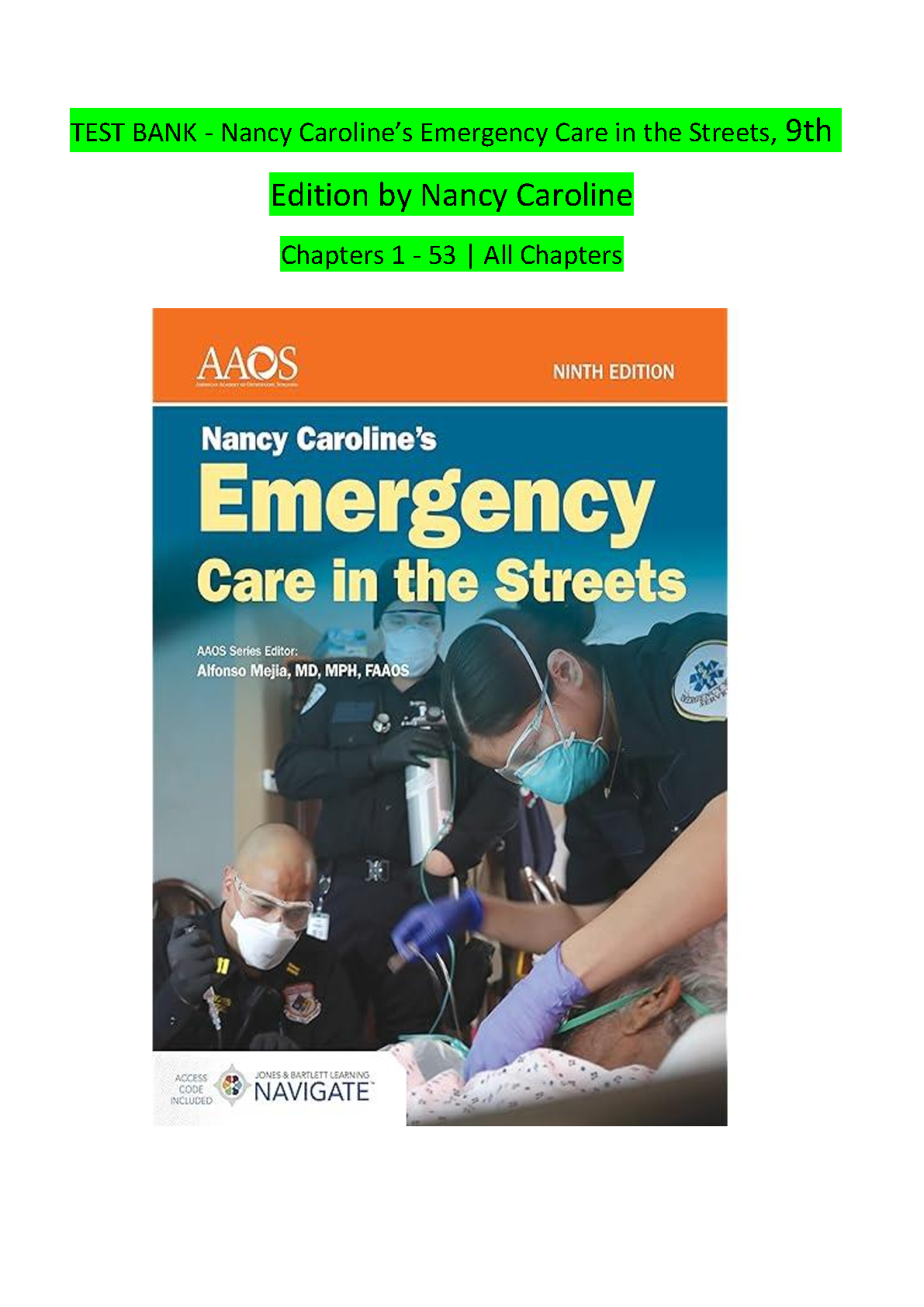
Nancy Caroline’s Emergency Care in the Streets, 9th Edition Nancy Caroline’s Emergency Care in the Streets, 9th Edition

Test bank

Test Bank For Nancy Caroline’s Emergency Care In The Streets, 9th Edition By Nancy Caroline


Support Ems Coursework And Exam Preparation With Practice Questions Covering Key Prehospital Emergency Care Concepts And Patient-care Principles.
Description

The Test Bank for Nancy Caroline’s Emergency Care in the Streets, 9th Edition by Nancy Caroline is a study and assessment resource designed to help learners reinforce foundational and advanced concepts in prehospital emergency care, review key terminology, and prepare for quizzes, examinations, and EMS coursework.

The resource supports structured review across major areas of emergency medical services and prehospital patient care. Practice questions can help learners assess their understanding of patient assessment, emergency response, airway and breathing management, trauma care, medical emergencies, patient treatment priorities, and EMS operations.

Students can use the material alongside textbook reading, lectures, practical training, classroom activities, assignments, and independent study. Regular practice can help identify topics requiring additional review, reinforce clinical concepts, and develop confidence when applying emergency-care knowledge to patient situations.

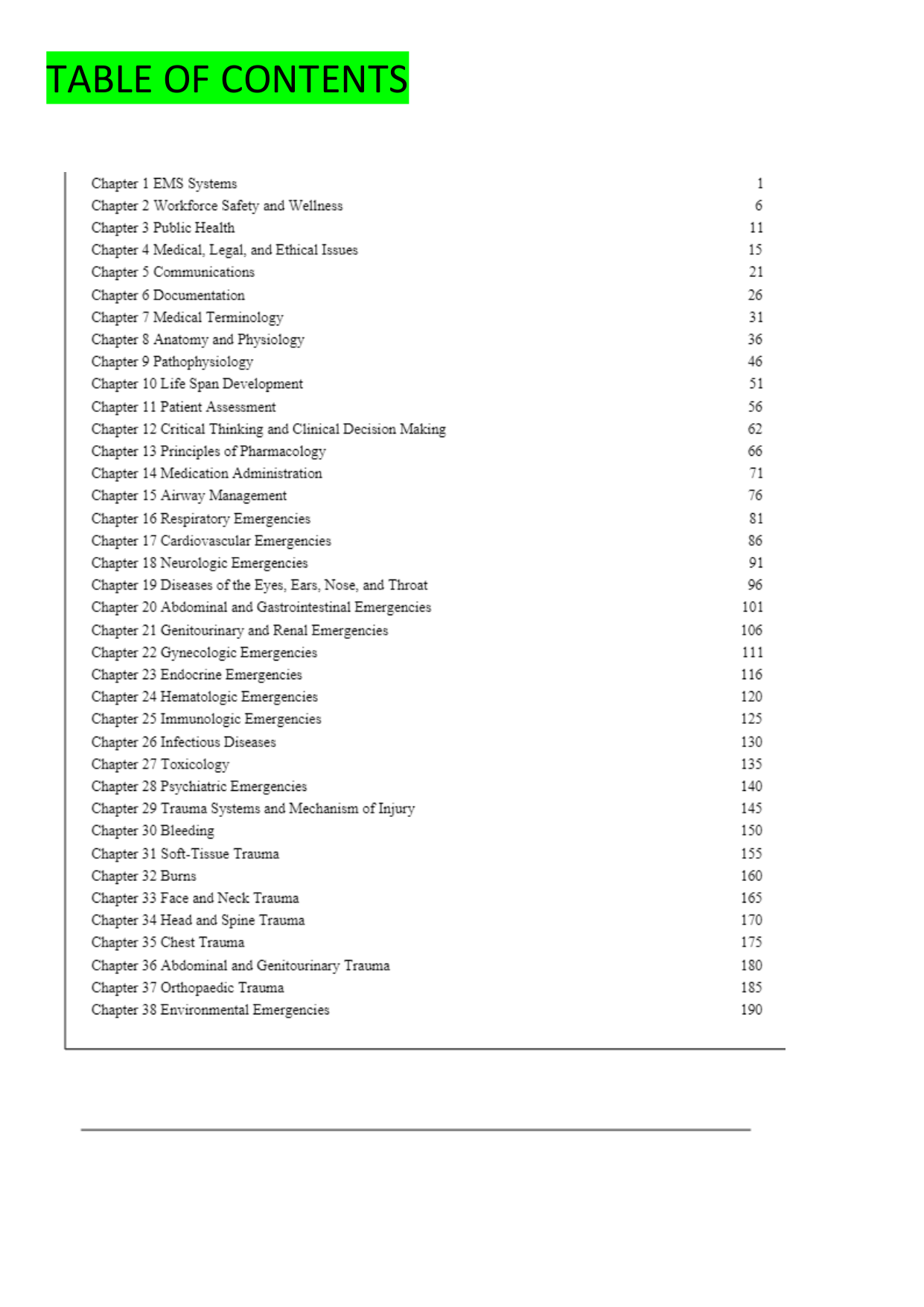
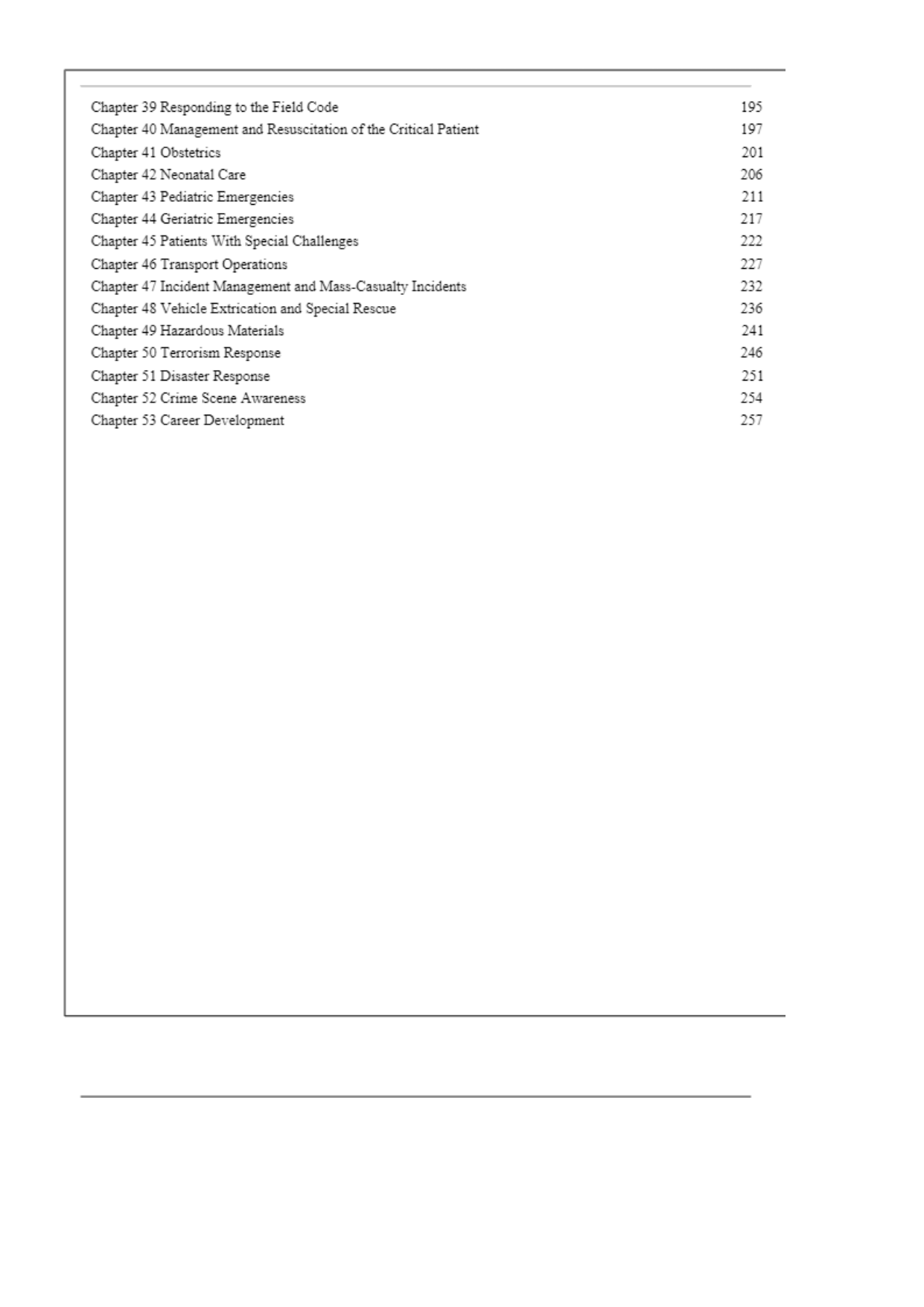
Key areas may include EMS operations, scene assessment, patient evaluation, vital signs, airway management, respiratory and cardiovascular emergencies, neurological conditions, shock, trauma assessment, bleeding and soft-tissue injuries, musculoskeletal injuries, environmental emergencies, special populations, and prehospital patient management.

The resource is particularly useful for students preparing for EMT, paramedic, EMS, emergency medical care, and related healthcare programs. It can support self-assessment while helping learners connect theoretical knowledge with realistic prehospital care situations.

Key Features:

Reinforces prehospital emergency-care concepts
Supports structured practice and self-assessment
Reviews scene assessment and EMS operations
Covers primary and secondary patient assessment
Reviews airway and respiratory management
Explores medical and traumatic emergencies
Covers trauma assessment and patient management
Reviews shock and circulation concepts
Addresses neurological and environmental emergencies
Covers special-population considerations
Strengthens clinical reasoning and prioritization
Develops EMS terminology and decision-making skills
Supports independent study and coursework review
Helps prepare learners for EMS and emergency-care assessments
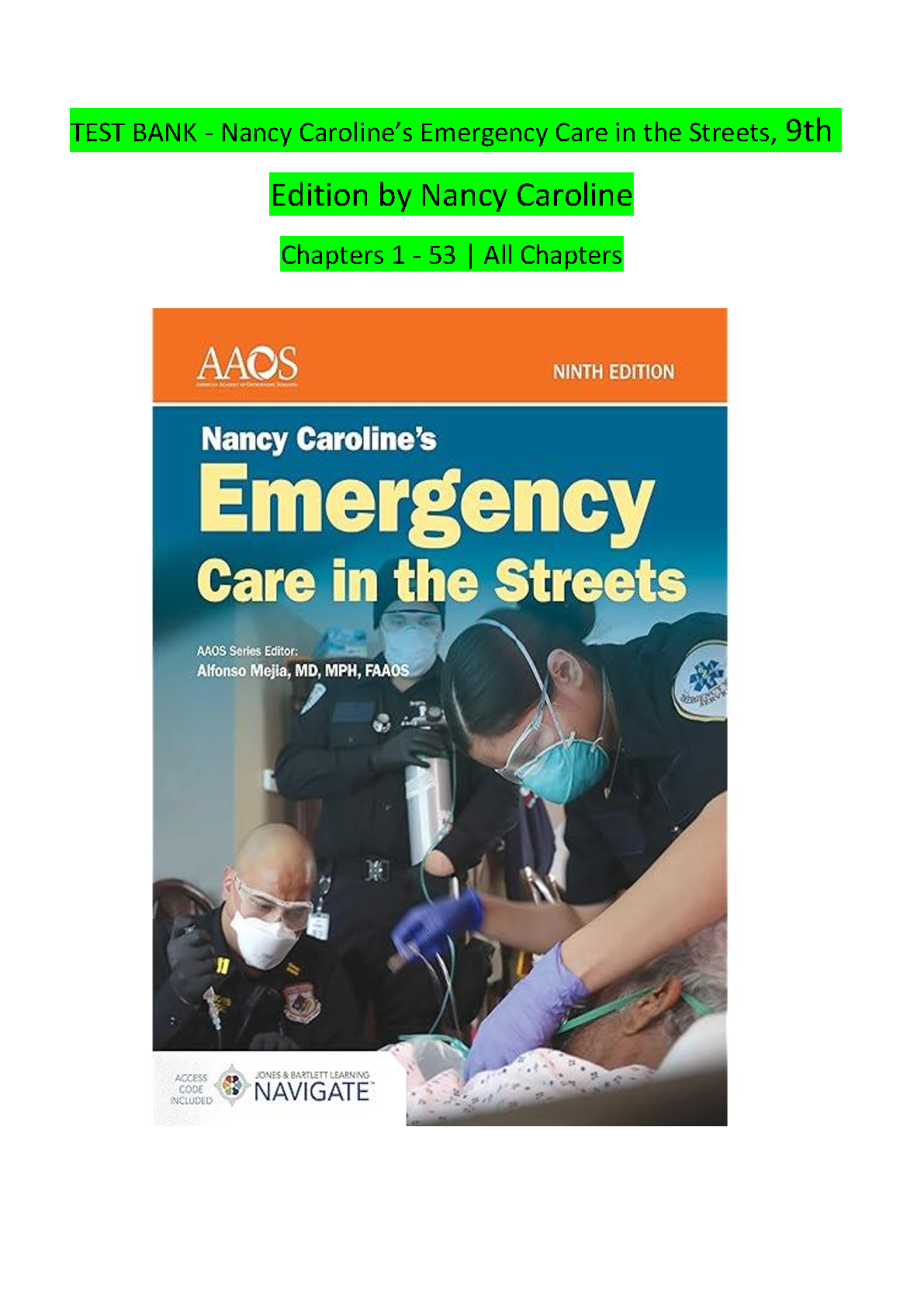
PDF Sample
1 / 3
Nancy Caroline’s Emergency Care in the Streets, 9th Edition IMG-1
Nancy Caroline’s Emergency Care in the Streets, 9th Edition IMG-2
Nancy Caroline’s Emergency Care in the Streets, 9th Edition IMG-3
Who is this Document for ?

Nursing students, instructors, and exam preparation users.

What you will learn ?
⬤Understand the principles and scope of prehospital emergency medical care.
⬤Explain the roles and responsibilities of EMS and prehospital care providers.
⬤Apply appropriate scene assessment and safety principles.
⬤Perform systematic primary and secondary patient assessments.
⬤Recognize important signs, symptoms, and changes in patient condition.
⬤Assess and manage airway and breathing concerns according to appropriate protocols.
⬤Recognize common respiratory emergencies and related treatment priorities.
⬤Understand cardiovascular emergencies and appropriate prehospital care considerations.
⬤Recognize signs of shock and understand emergency management principles.
⬤Apply foundational principles of trauma assessment and patient care.
⬤Recognize and manage common bleeding and soft-tissue injuries.
⬤Understand assessment and care considerations for musculoskeletal injuries.
⬤Recognize common medical emergencies and associated signs and symptoms.
⬤Understand emergency considerations for neurological conditions.
⬤Apply appropriate principles for environmental emergencies.
⬤Understand prehospital care considerations for pediatric, geriatric, and other special populations.
⬤Recognize situations requiring rapid intervention and appropriate transport decisions.
⬤Apply infection-control, personal-safety, and scene-management principles.
⬤Develop clinical reasoning and prioritization skills for emergency patient situations.
⬤Strengthen communication, documentation, teamwork, and professional decision-making.
⬤Apply emergency-care knowledge to realistic prehospital scenarios.
⬤Evaluate treatment priorities based on patient presentation and available information.
⬤Identify areas requiring additional study, practice, or review.
⬤Prepare effectively for EMS, EMT, paramedic, and emergency-care examinations.
You may also be interested in :
Recommendations for you
Portage Learning NURS 231 Pathophysiology Exam Review Test Bank Graded A+ Study Resource
Portage Learning Nurs 231 Pathophysiology Exam Review Test B...

Master Portage Nurs 231 With This Graded Test Bank. Covers Metaplasia, Dysplasia, And...

$16
NURS 231 Pathophysiology Module 10 Test Bank: Skeletal System Functions and Bone Types Study Guide
Nurs 231 Pathophysiology Module 10 Test Bank: Skeletal Syste...

Review Key Answers For Skeletal System Functions, Bone Divisions, And Cortical Vs Can...

$16
NURS 231 Module 6 Exam Questions and Answers with A+ Grade Results for Nursing Students in the 2023/2024 Academic Year
Nurs 231 Module 6 Exam Questions And Answers With A+ Grade R...

Master Nurs 231 Neurology Topics. Access Detailed Module 6 Exam Questions And Answers...

$16
NURS 231 Pathophysiology Final Exam Questions and Answers Complete Study Resource for Nursing Students 2026/2027 Academic Year
Nurs 231 Pathophysiology Final Exam Questions And Answers Co...

Master Nurs 231 Pathophysiology With This Final Exam Guide. Covers Cell Structure, Ti...

$16