
Test bank
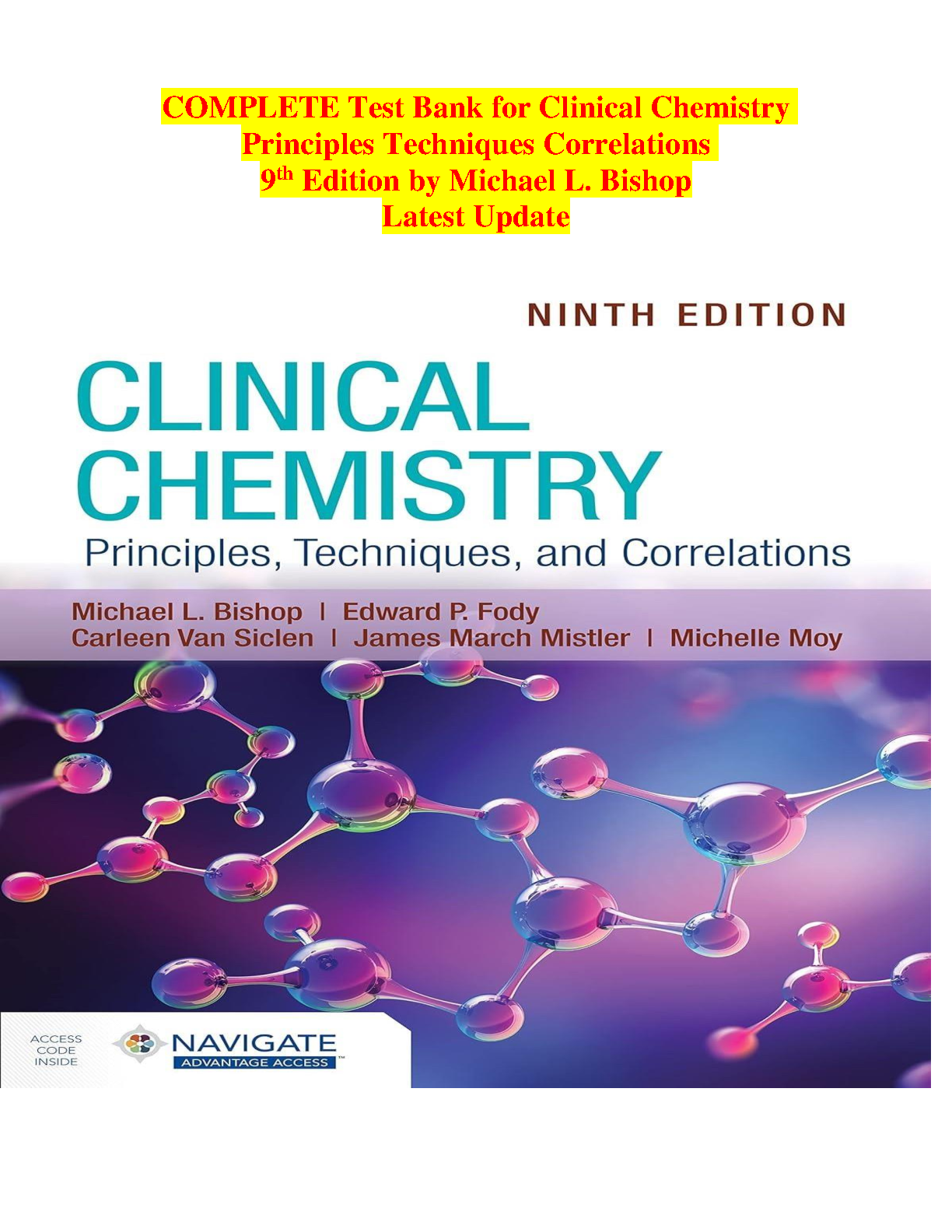
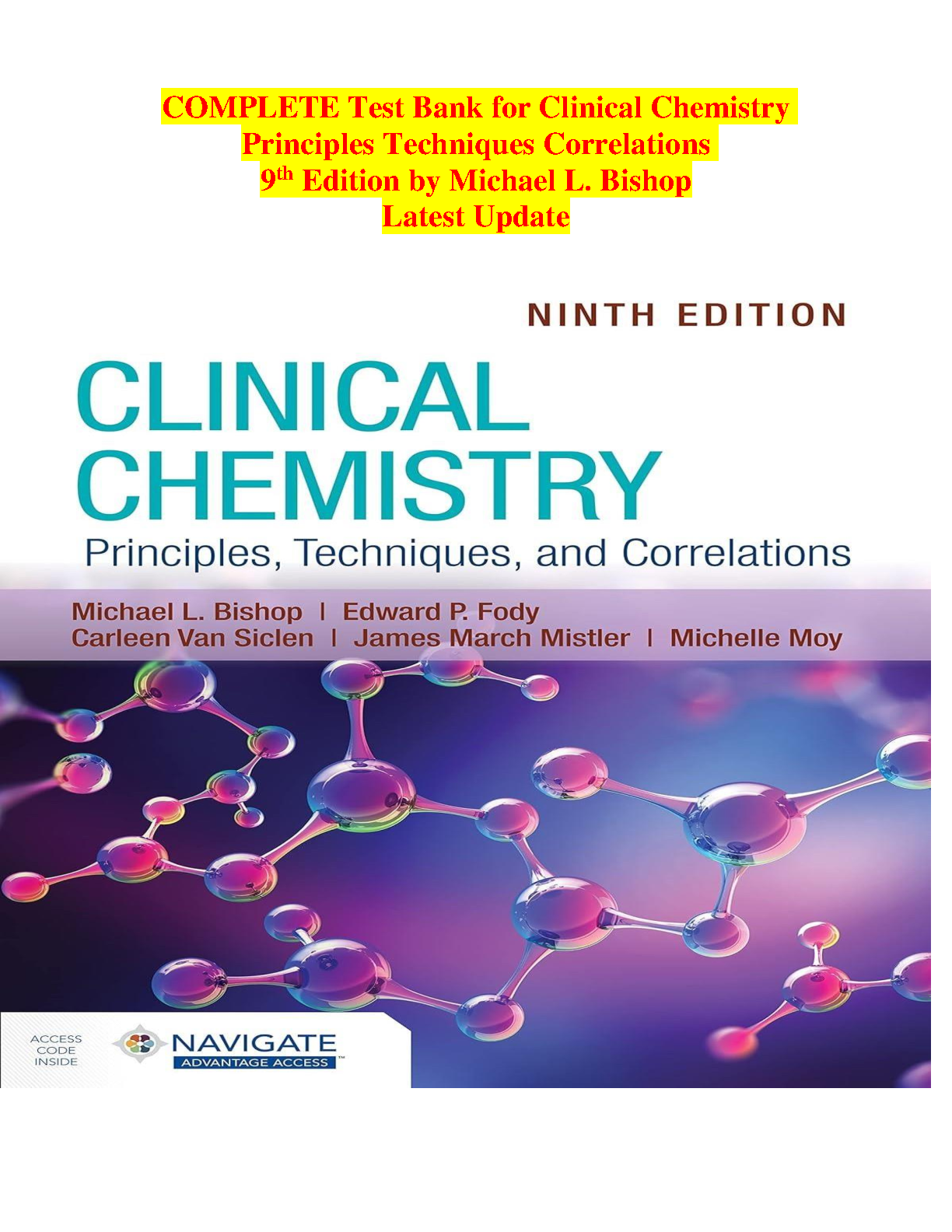
Test Bank For Clinical Chemistry: Principles, Techniques, And Correlations, 9th Edition By Michael L. Bishop, Edward P. Fody, Carleen Van Siclen, James March Mistler
Test Bank For Clinical Chemistry: Principles, Techniques, and Correlations, 9th Edition by Michael L. Bishop, Edward P. Fody, Carleen Van Siclen, and James March Mistler, provides a foundation for understanding the scientific principles and practical applications of clinical chemistry. An original study companion can help learners review analytical concepts, laboratory techniques, instrumentation, biochemical testing, and the relationship between laboratory findings and clinical conditions.
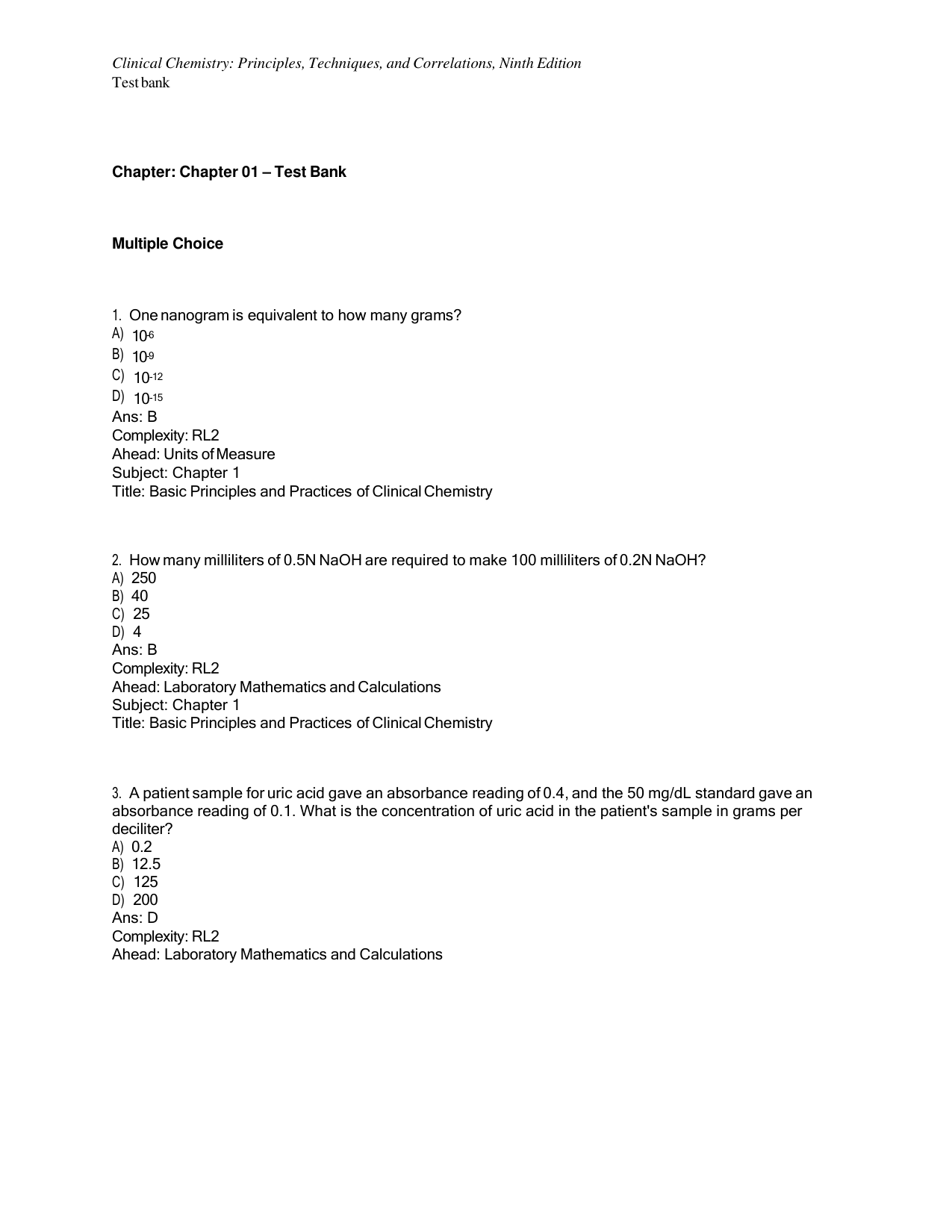
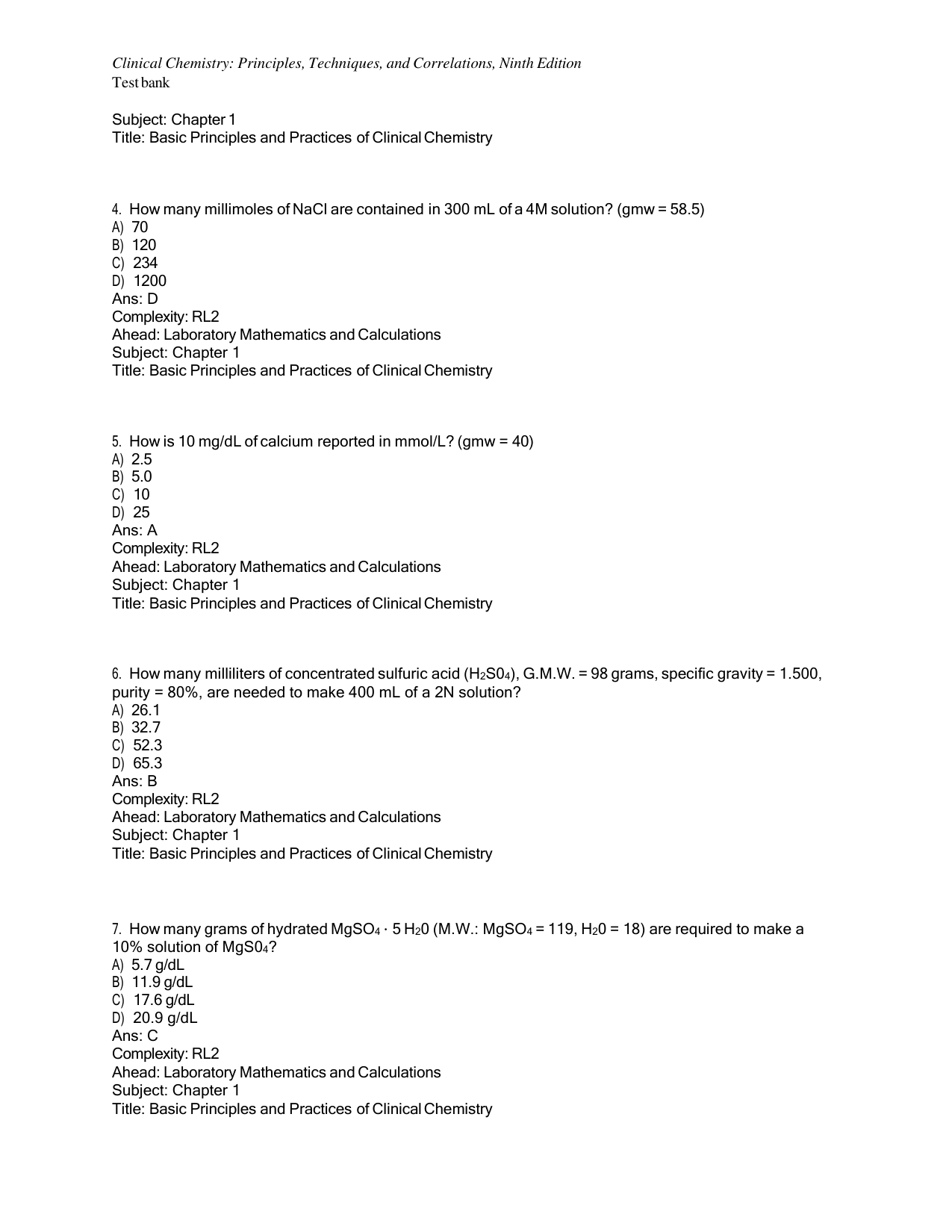
The resource can support study of fundamental chemistry and biochemistry concepts, specimen collection and handling, analytical methodologies, laboratory calculations, instrumentation, quality control, reference concepts, and common biochemical analytes. Learners can also examine how changes in laboratory measurements relate to physiological processes and disease conditions.
Students can use the material alongside assigned textbook chapters, lectures, laboratory exercises, instructor resources, and independent study. Reviewing terminology, comparing analytical methods, and applying concepts to hypothetical laboratory cases can strengthen problem-solving, laboratory reasoning, and interpretation skills.
The resource is particularly appropriate for students studying clinical chemistry, medical laboratory science, clinical laboratory science, medical technology, biomedical science, and related health-science disciplines. It can help learners connect laboratory theory with practical testing and clinical correlations while building foundational knowledge for advanced laboratory and healthcare coursework.
Key Topics
Principles of clinical chemistry
Analytical techniques
Laboratory instrumentation
Biochemistry concepts
Clinical chemistry analytes
Specimen collection and handling
Laboratory calculations
Quality control and assurance
Reference intervals
Analytical errors and interferences
Clinical correlations
Diagnostic laboratory testing
Laboratory result interpretation
Students studying clinical chemistry, clinical laboratory science, or medical laboratory science.
Medical technology and biomedical-science students.
Learners enrolled in clinical chemistry and laboratory medicine courses.
Students studying analytical methods, instrumentation, biochemical testing, and clinical correlations.
Healthcare students preparing for assignments, laboratory activities, quizzes, examinations, and coursework.
Learners developing laboratory calculations, analytical reasoning, and result-interpretation skills.
Students preparing for careers in clinical laboratories, diagnostic services, medical technology, or biomedical science.
Educators developing original classroom and laboratory review activities concerning clinical chemistry.
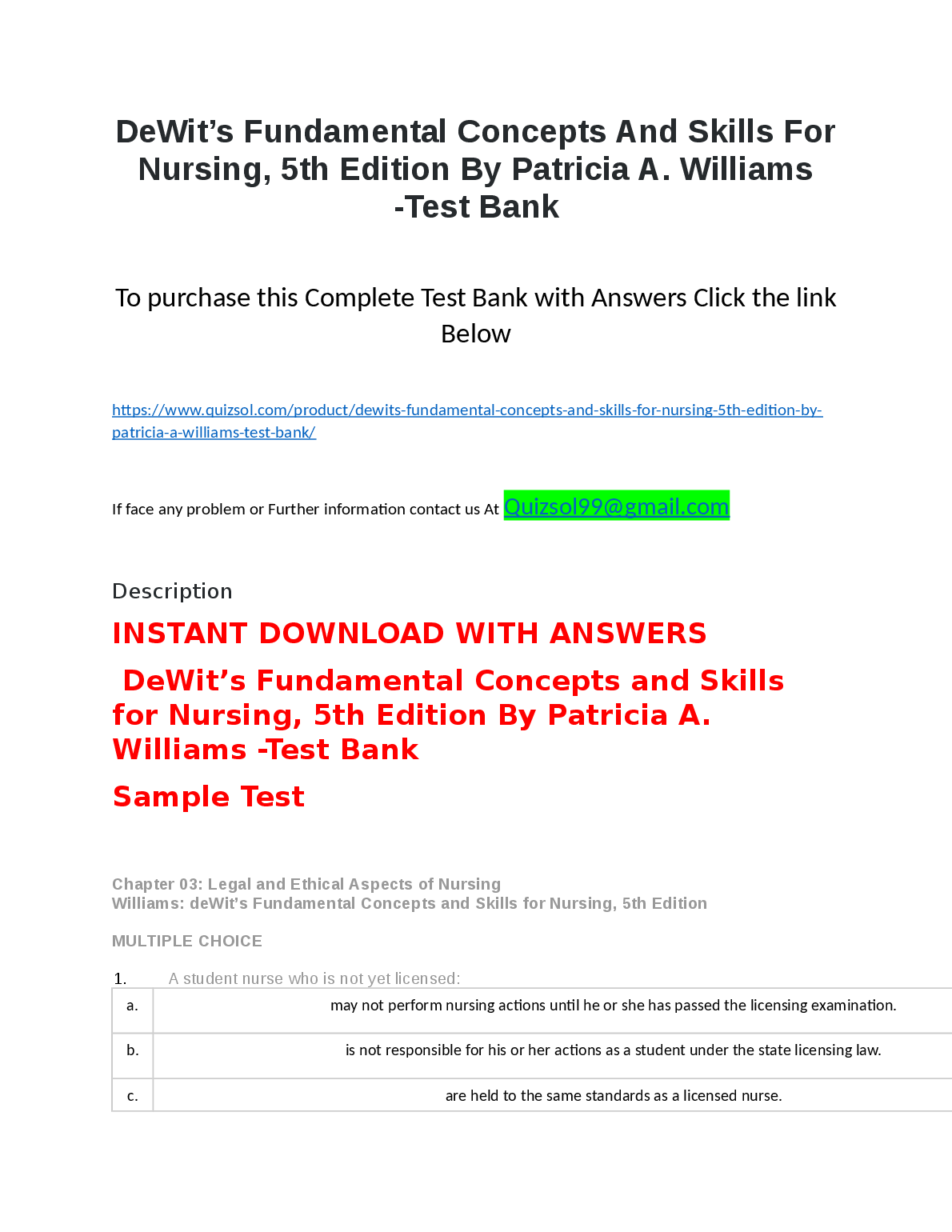
Access Comprehensive Test Bank Questions For Dewit's Fundamental Nursing 5th Ed. Idea...
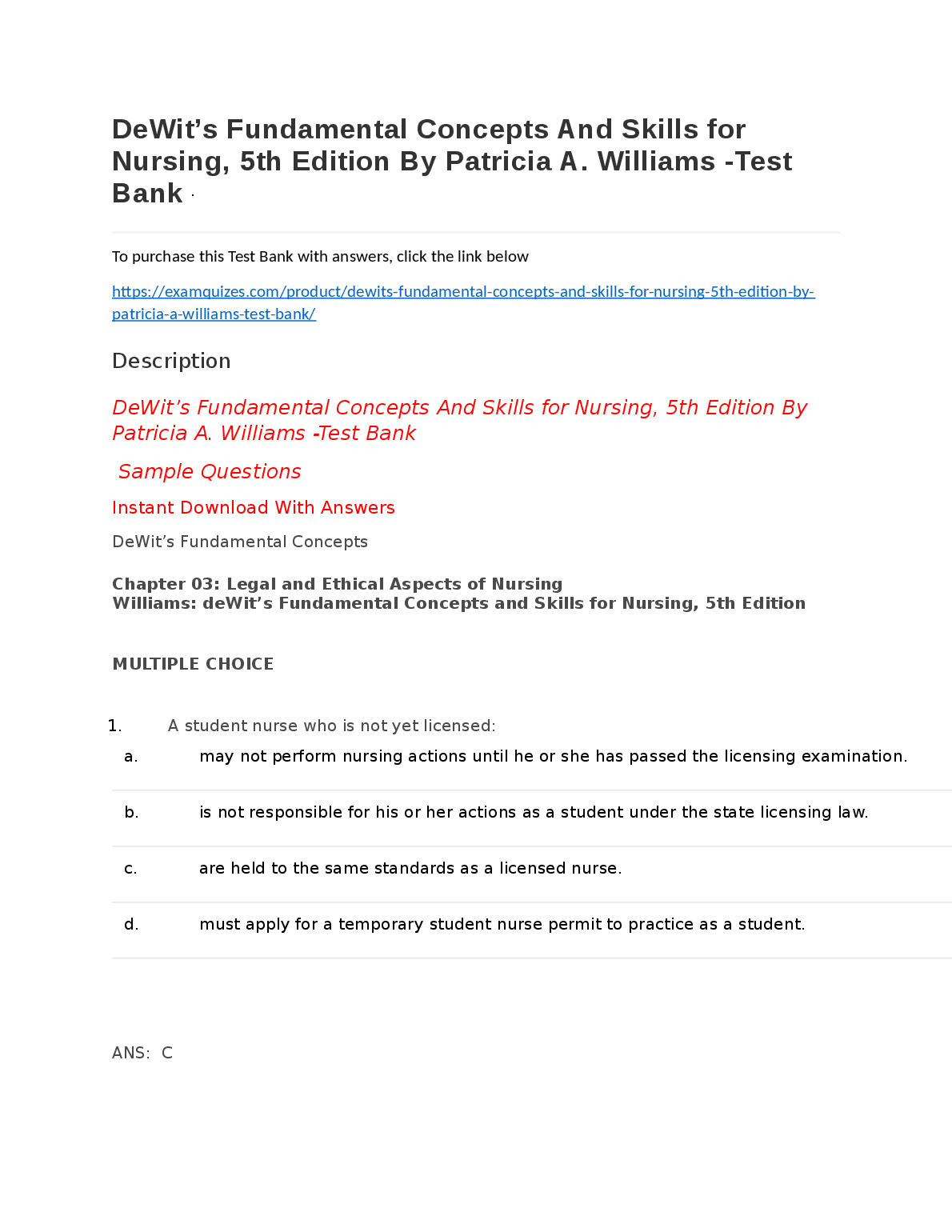
Access Dewits Fundamental Concepts And Skills For Nursing 5e Test Bank. Practice Ncle...
Master Nursing Fundamentals With This Comprehensive Test Bank From Fundamental Concep...
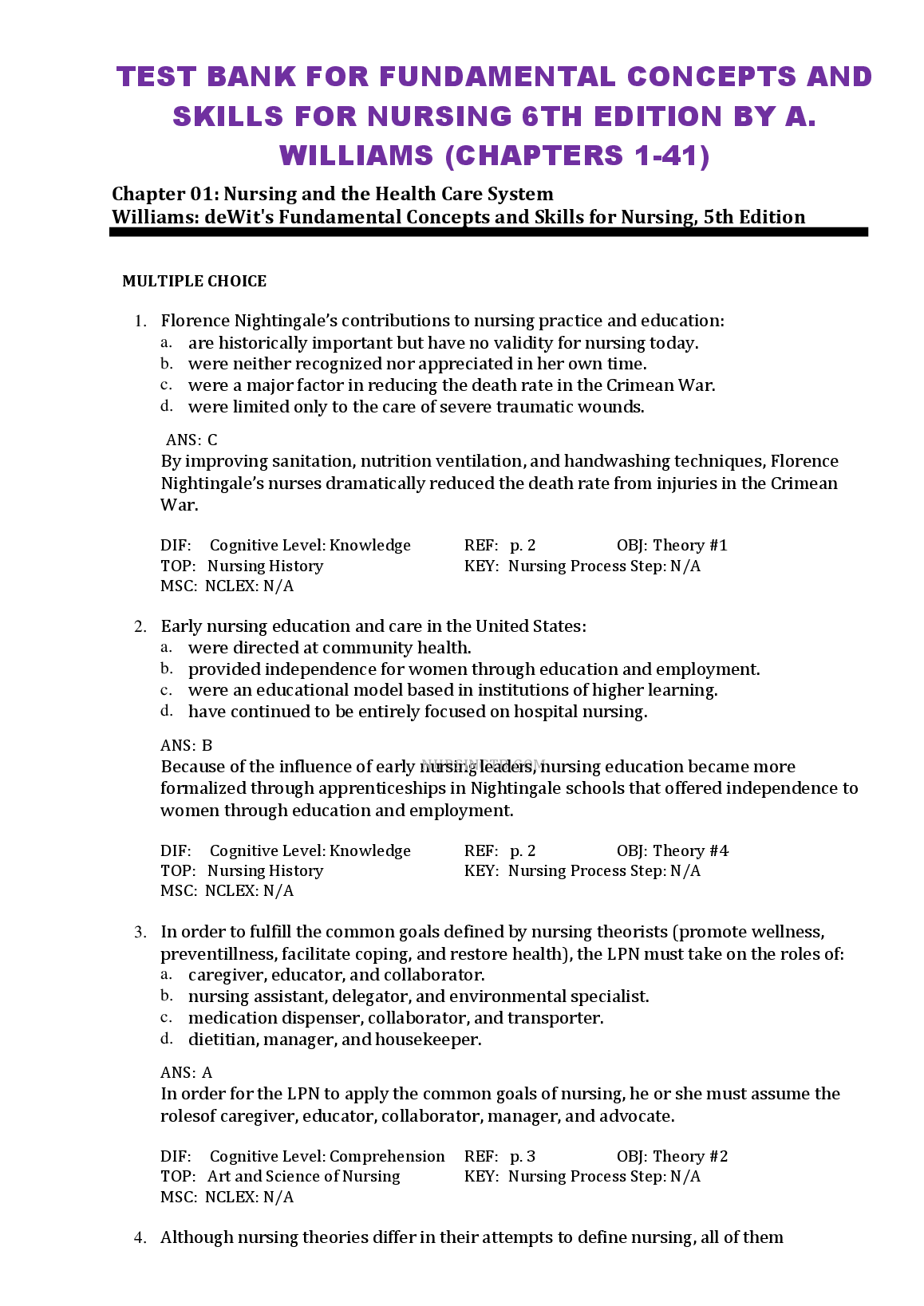
Master Nursing Fundamentals With This Complete Test Bank For The 6th Edition Textbook...