Cryptography Exam Prep 2026/27: Feistel & DES Q&A Cryptography Exam Prep 2026/27: Feistel & DES Q&A

Study guide

Crypto Study Guide 2026-2027: Verified Questions On Feistel, Des & Symmetric Encryption


Master Cryptography Fundamentals With Verified Exam Questions On Feistel Ciphers, Des, And Diffusion For 2026/27. Ideal For Cybersecurity Students.
Description

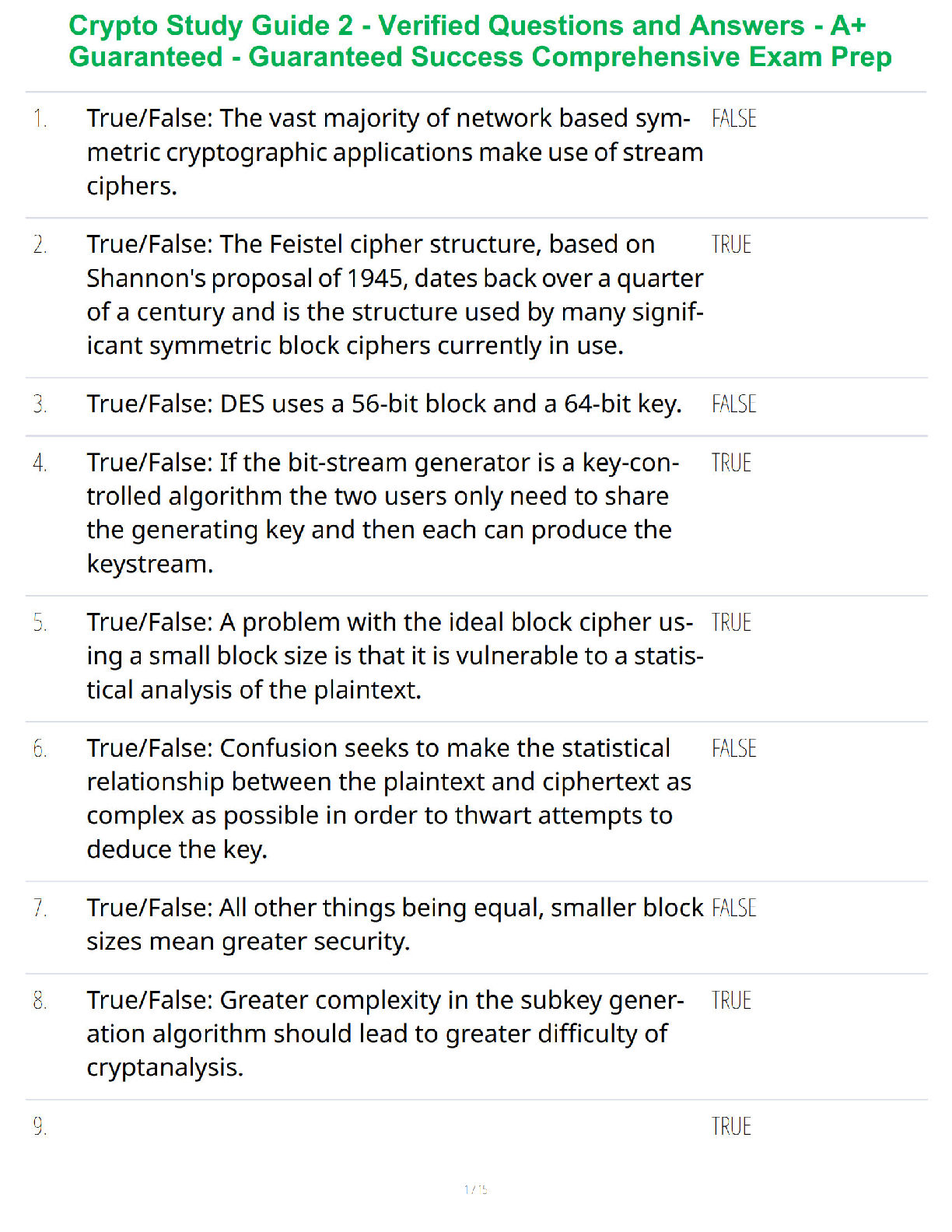
Accelerate your mastery of cryptographic principles through a curated collection of verified true/false examination questions tailored for the 2026/2027 academic cycle. This resource provides targeted revision on symmetric encryption mechanisms, including stream ciphers and block cipher structures like DES and Feistel networks. You will gain clarity on critical design criteria such as Shannon’s confusion and diffusion principles, S-box configurations, and strict avalanche properties. Strengthen your analytical skills regarding key schedule algorithms and brute-force vulnerabilities to achieve exam readiness in cybersecurity and information security courses.
PDF Sample
1 / 2
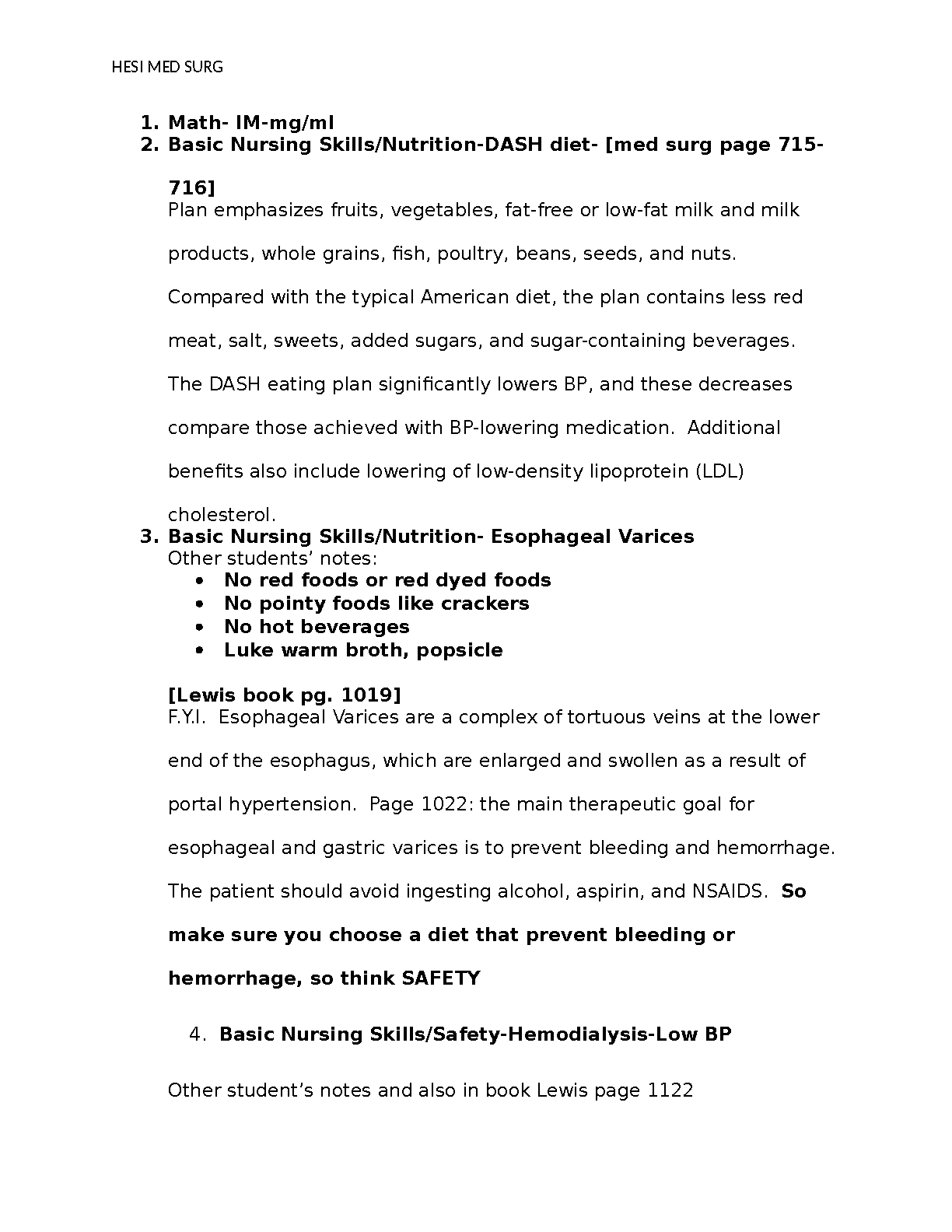
Cryptography Exam Prep 2026/27: Feistel & DES Q&A IMG-1
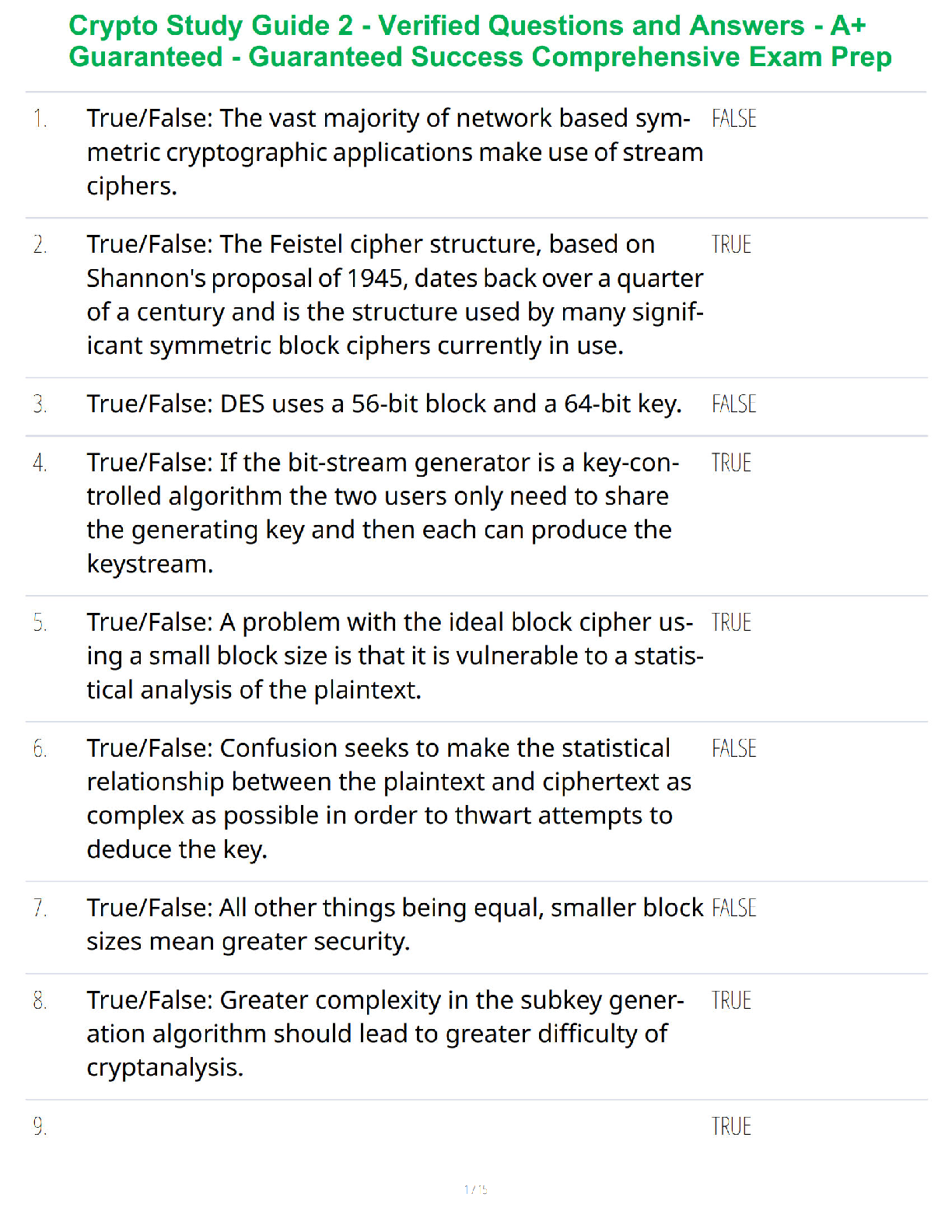
Cryptography Exam Prep 2026/27: Feistel & DES Q&A IMG-2
Who is this Document for ?

This resource is designed for undergraduate students enrolled in cybersecurity or information security modules requiring proficiency in classical cryptography. It serves as an essential revision tool for candidates preparing for university examinations, certification tests, or academic assessments focused on encryption standards. Tutors and instructors may also utilise the verified question bank to construct practice quizzes or assess student comprehension of complex algorithmic concepts.

What you will learn ?
Analyse the structural components of Feistel ciphers and understand how they facilitate reversible encryption processes in symmetric key systems.
Differentiate between stream cipher operations and block cipher mechanisms, specifically evaluating the security implications of DES implementations.
Apply Shannon’s principles of confusion and diffusion to assess the robustness of cryptographic algorithms against statistical cryptanalysis.
Evaluate S-box design criteria and the strict avalanche criterion to determine how small input changes propagate through encryption rounds.
Interpret key schedule algorithms to understand how master keys are derived into round sub-keys for iterative cipher operations.
Identify vulnerabilities related to brute-force attacks by analysing key space sizes and computational limits in symmetric cryptographic schemes.
You may also be interested in :
Recommendations for you
CIS120B Cybersecurity Fundamentals Part 2 Exam Guide with Verified Answers and Study Questions for Academic Year 2026-2027
Cis120b Cybersecurity Fundamentals Part 2 Exam Guide With Ve...

Master Cis120b Cybersecurity Fundamentals Part 2. Access Control, Vpns & Firewalls Wi...

$16
WGU D334 Shawns Study Guide Verified Q&A 2026/2027 Academic Year Ultimate Exam Prep for Cybersecurity Concepts
WGU D334 Shawns Study Guide Verified Q&A 2026/2027 Academic...

Master WGU D334 With Verified Study Guide. Covers Aes, Bitlocker, Encryption Methods...

$16
Manual of Molecular Microbiology: Fundamentals and Applications, 1st Edition by Randall T. Hayden, Karen C. Carroll, John P. Dekker, Alexander J. McAdam, Donna M. Wolk
Manual Of Molecular Microbiology: Fundamentals And Applicati...

Support Microbiology And Laboratory-science Coursework With Structured Review Of Mole...

$17