
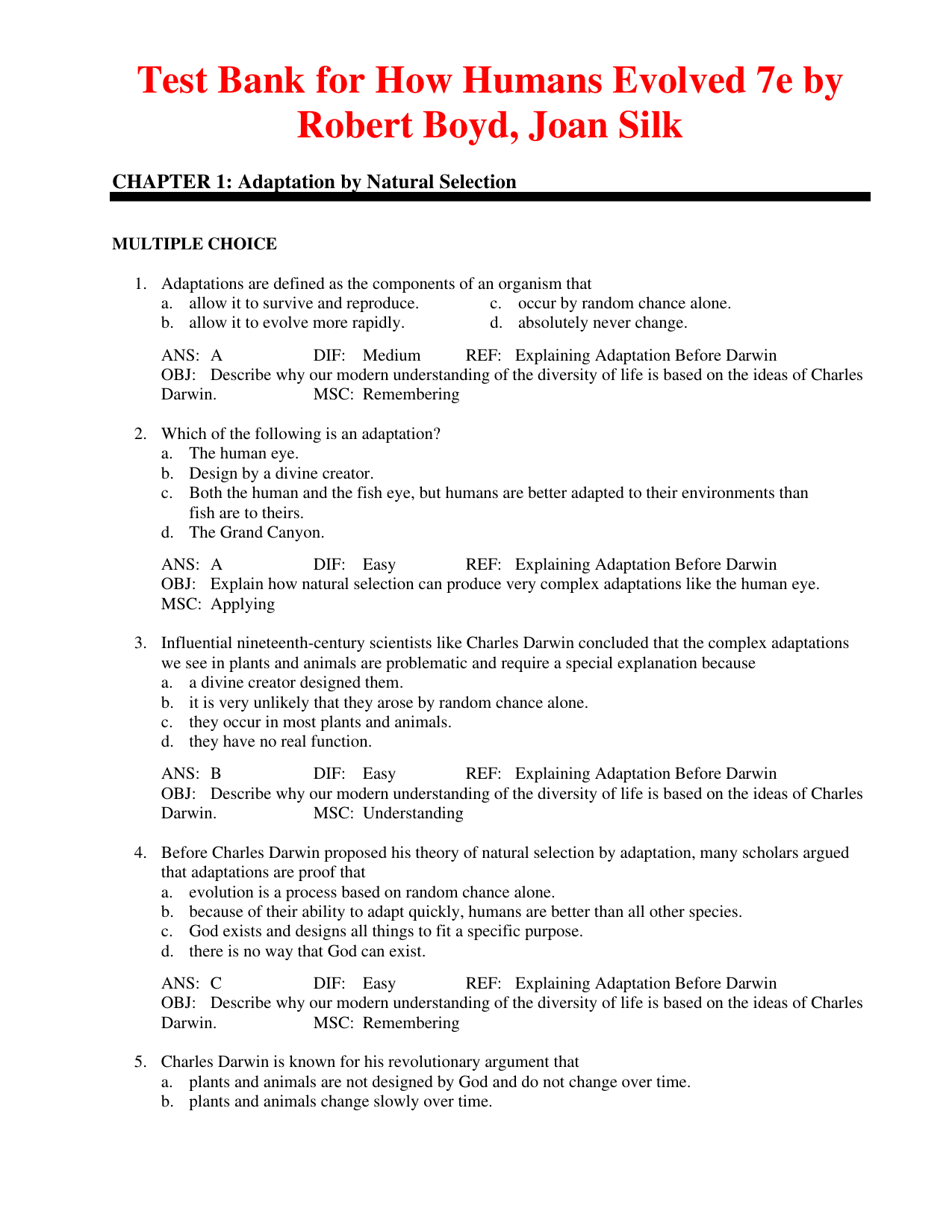
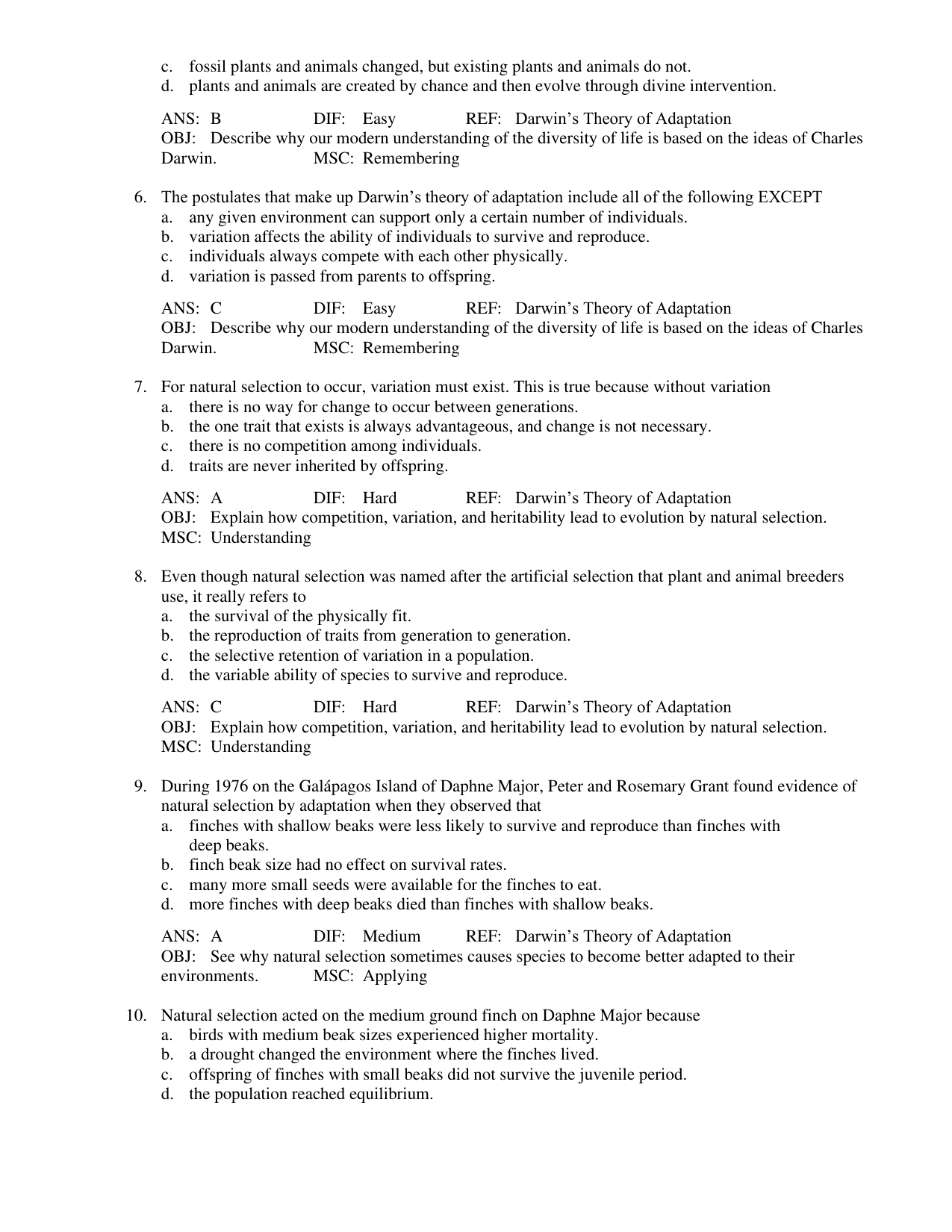
Test bank
How Humans Evolved 7th Edition Test Bank
Test Bank for How Humans Evolved (7th Edition) is a comprehensive instructor resource designed to support education in biological anthropology and evolutionary science by providing structured assessment materials aligned with the textbook. It helps educators evaluate students’ understanding of evolutionary principles, human origins, biological processes, and the scientific evidence used to explain human evolution.
Organized by textbook chapter, the test bank covers foundational concepts in evolution, including evolutionary theory, genetics, natural selection, adaptation, population variation, and the mechanisms that drive biological change. It introduces students to the scientific methods used by anthropologists and evolutionary biologists to study the history and diversity of life.
The resource explores primate evolution and behavior, including primate anatomy, social behavior, communication, reproduction, and the evolutionary relationships among primates. It examines the fossil record, human ancestors, hominin evolution, and the biological changes that contributed to the emergence of modern humans.
Key topics covered include:
* Evolutionary theory and evidence
* Genetics and inheritance
* Natural selection and adaptation
* Population genetics and human variation
* Primate biology and behavior
* Fossil evidence and human ancestry
* Hominin evolution and human origins
* Brain evolution and cognitive development
* Bipedalism and changes in human anatomy
* Human adaptation to different environments
* Cultural evolution and the interaction between biology and culture
* Modern human diversity and evolutionary perspectives
The test bank emphasizes scientific thinking by encouraging learners to interpret evidence, evaluate evolutionary explanations, analyze biological patterns, and apply concepts to questions about human origins and diversity. It supports critical thinking and helps students connect evolutionary principles with real-world biological and anthropological issues.
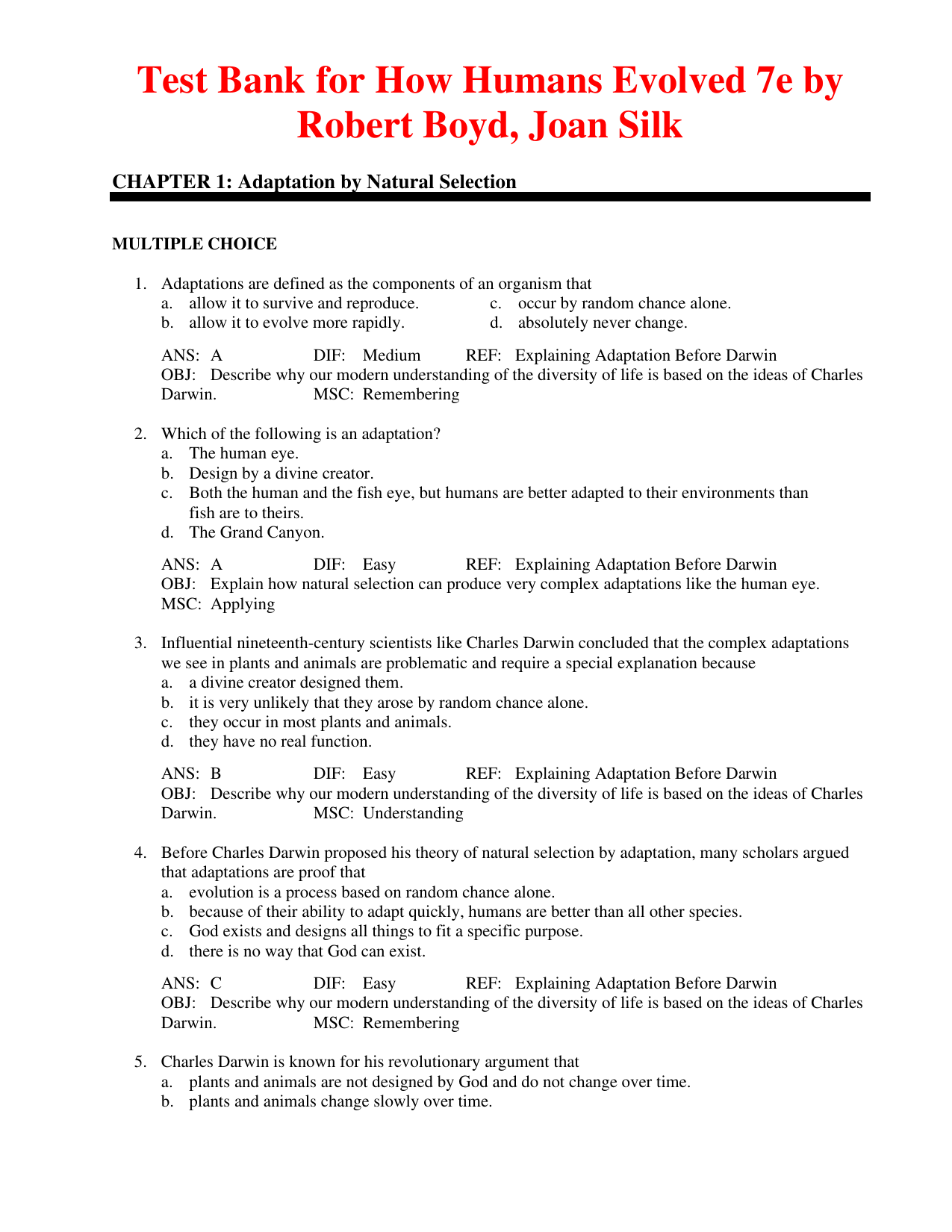
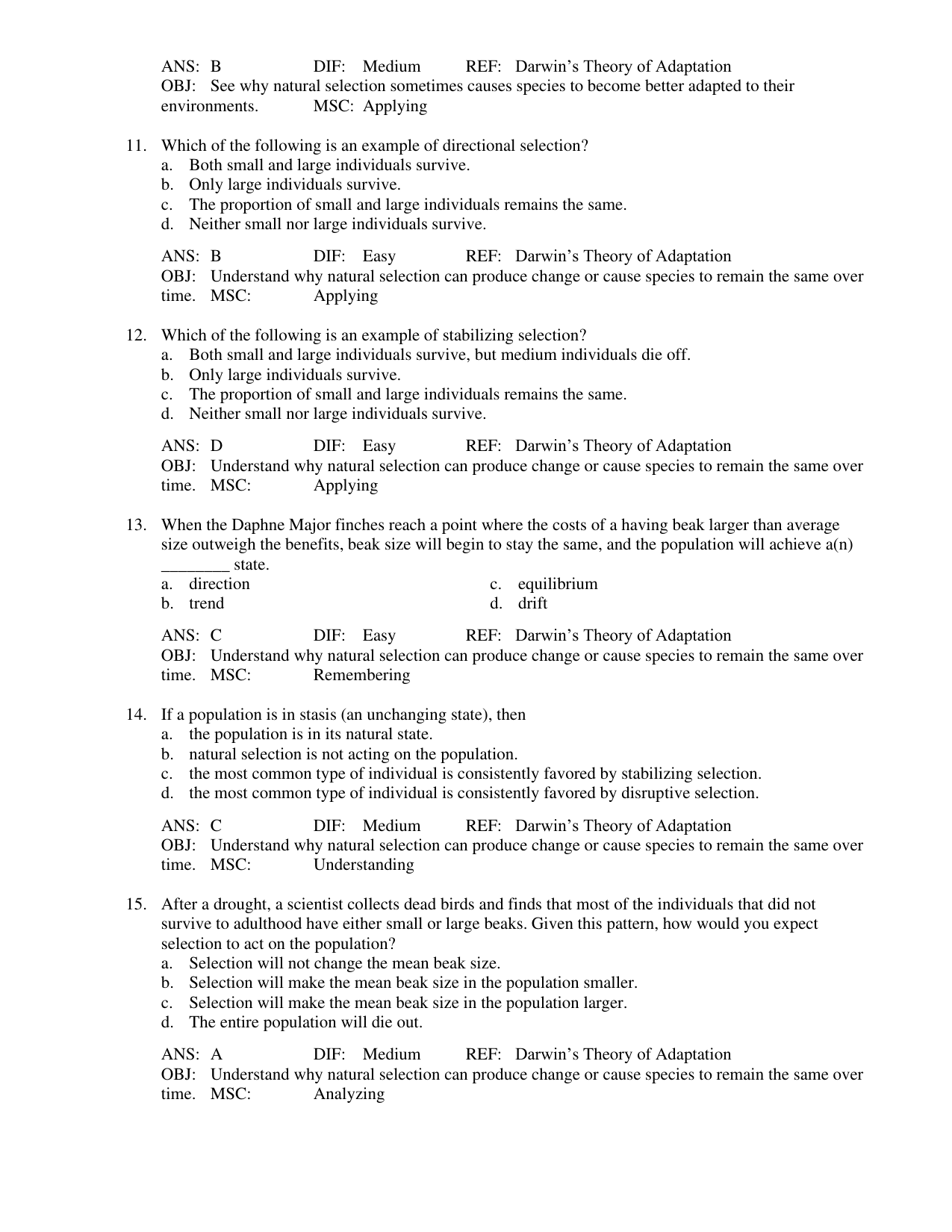
The test bank typically includes a variety of assessment formats, such as:
* Multiple-choice questions
* True/False questions
* Matching questions
* Concept identification questions
* Evolutionary analysis questions
* Data interpretation questions
* Case-based anthropology scenarios
* Critical-thinking and application questions
Additional instructional features commonly include:
* Chapter-by-chapter organization aligned with the textbook
* Answer keys
* Questions ranging from basic evolutionary concepts to advanced applications
* Practice with genetics, fossils, primate studies, and human evolution concepts
* Support for quizzes, examinations, assignments, and classroom assessments
This resource is intended for instructors and students studying anthropology, biology, evolution, human origins, and related sciences. It supports learners in developing an understanding of how evolutionary processes have shaped humans, improving scientific reasoning skills, and applying evidence-based approaches to the study of human biology and culture.
Anthropology students, instructors, and exam preparation users.
Biology students
Psychology and behavioral science students
Archaeology and human sciences students
Science educators
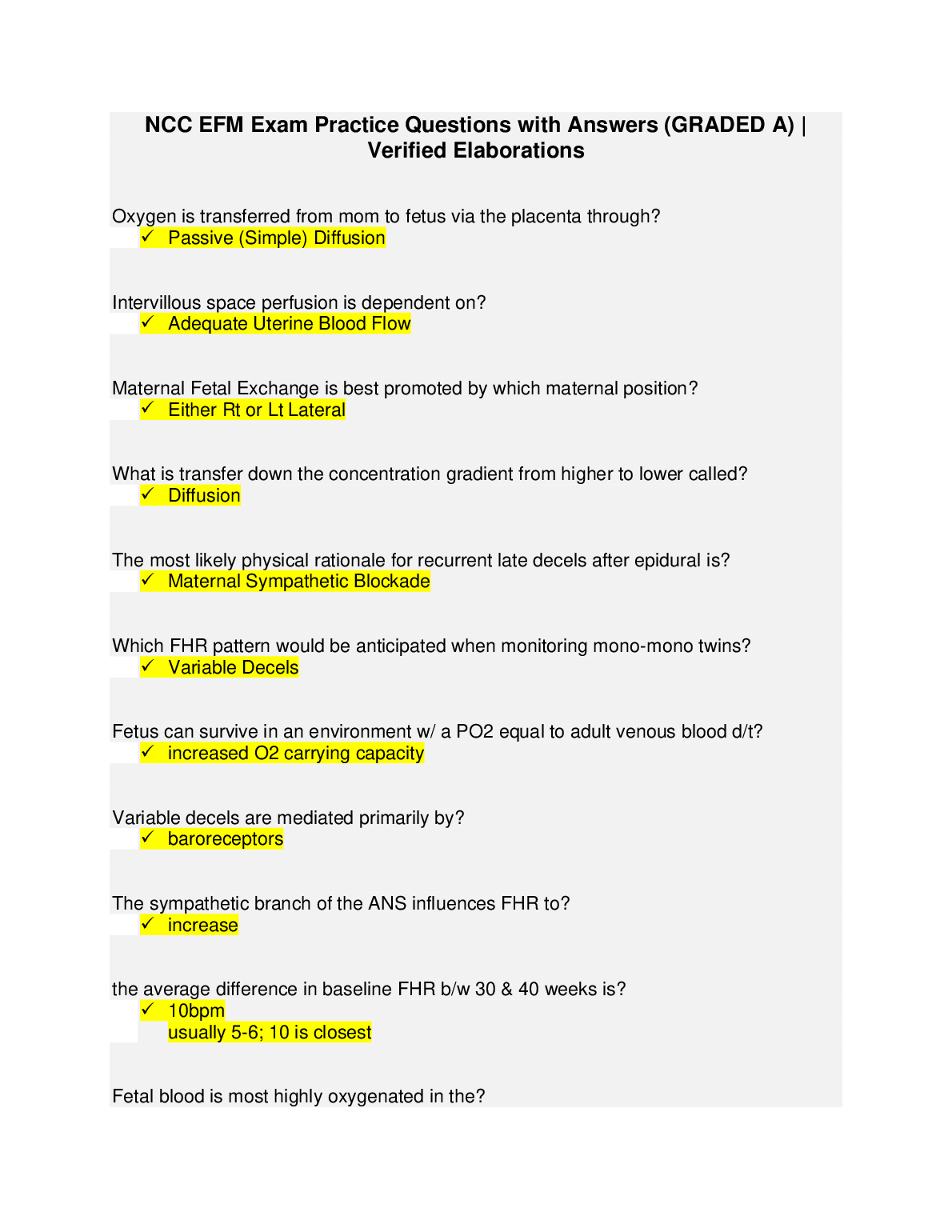
Master Ncc Efm Exams With Graded Practice Questions On Fetal Heart Rate Monitoring, V...
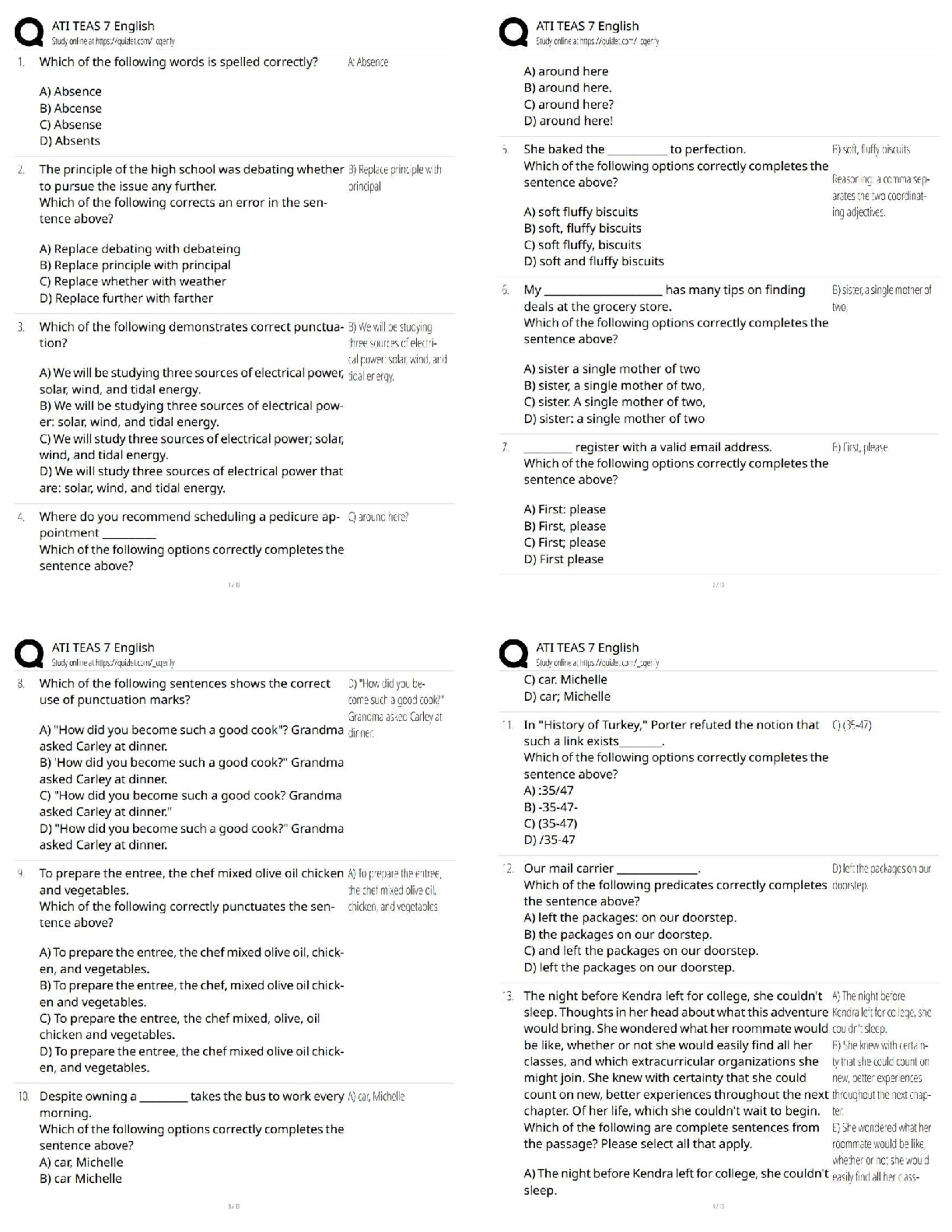
Master The ATI TEAS 7 English Section With This Verified Test Bank. Improve Grammar,...
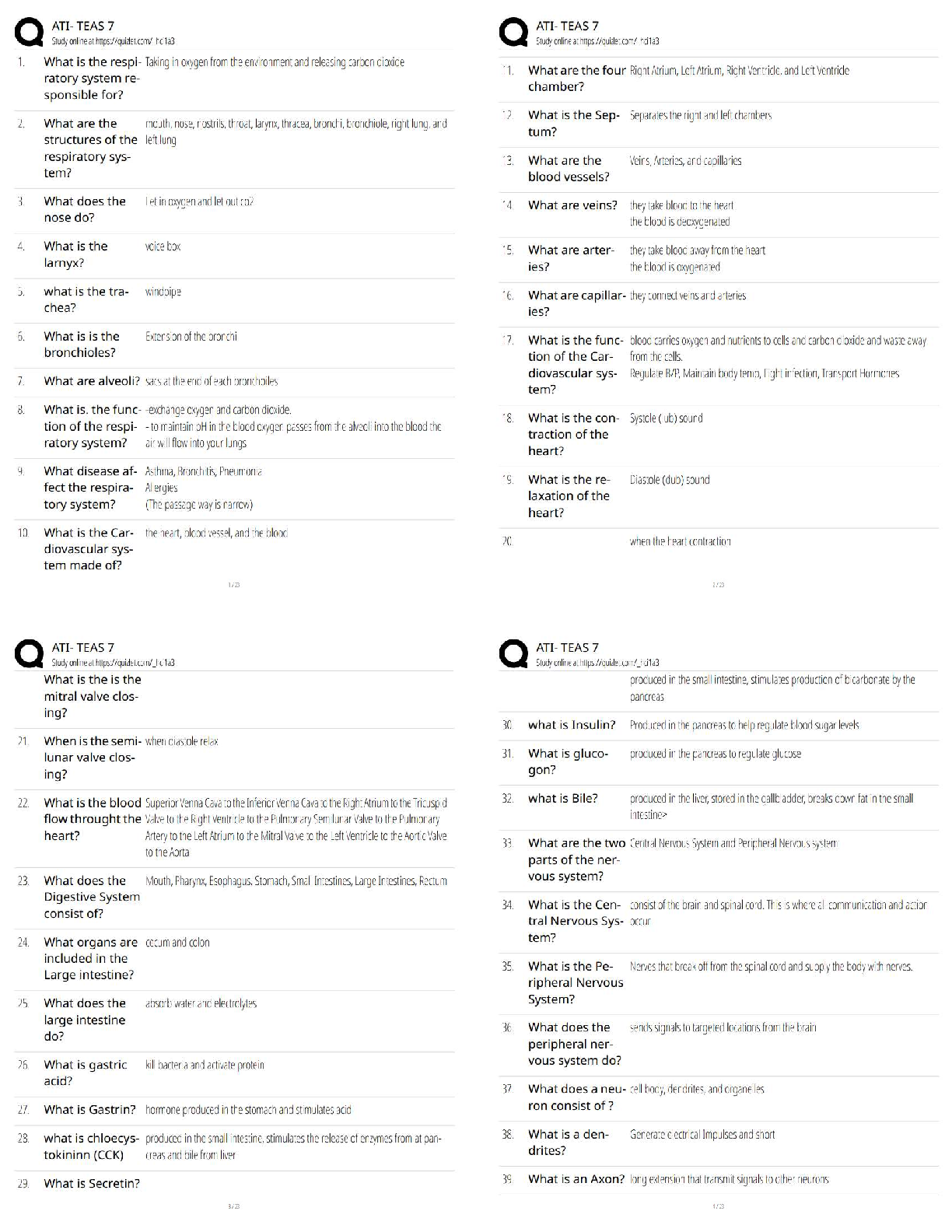
Master ATI TEAS 7 With Our Verified 2026 Test Bank. Covers Respiratory, Cardiovascula...
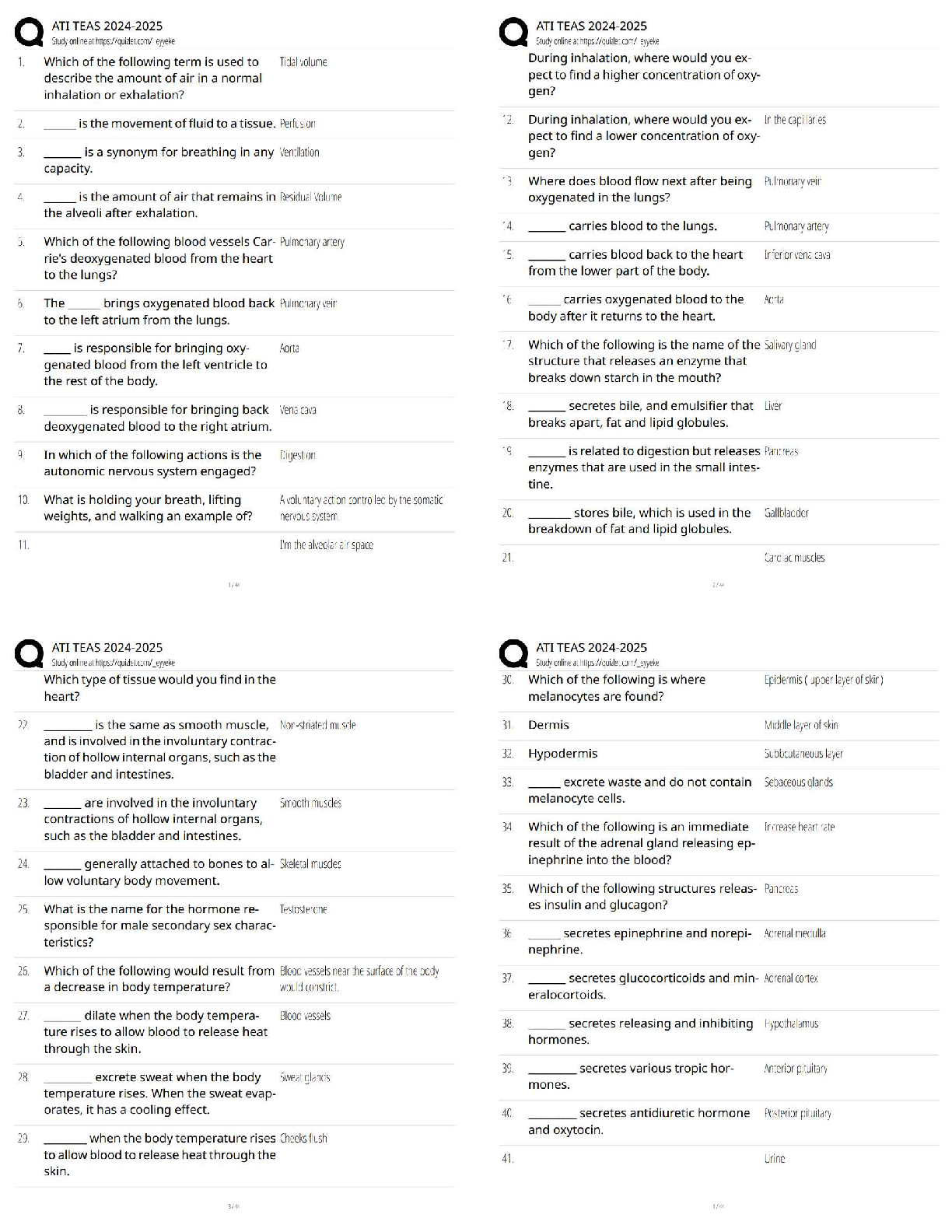
Ace The ATI TEAS 7 Exam On Your First Try. Access Hundreds Of Practice Questions, Det...