
Test bank
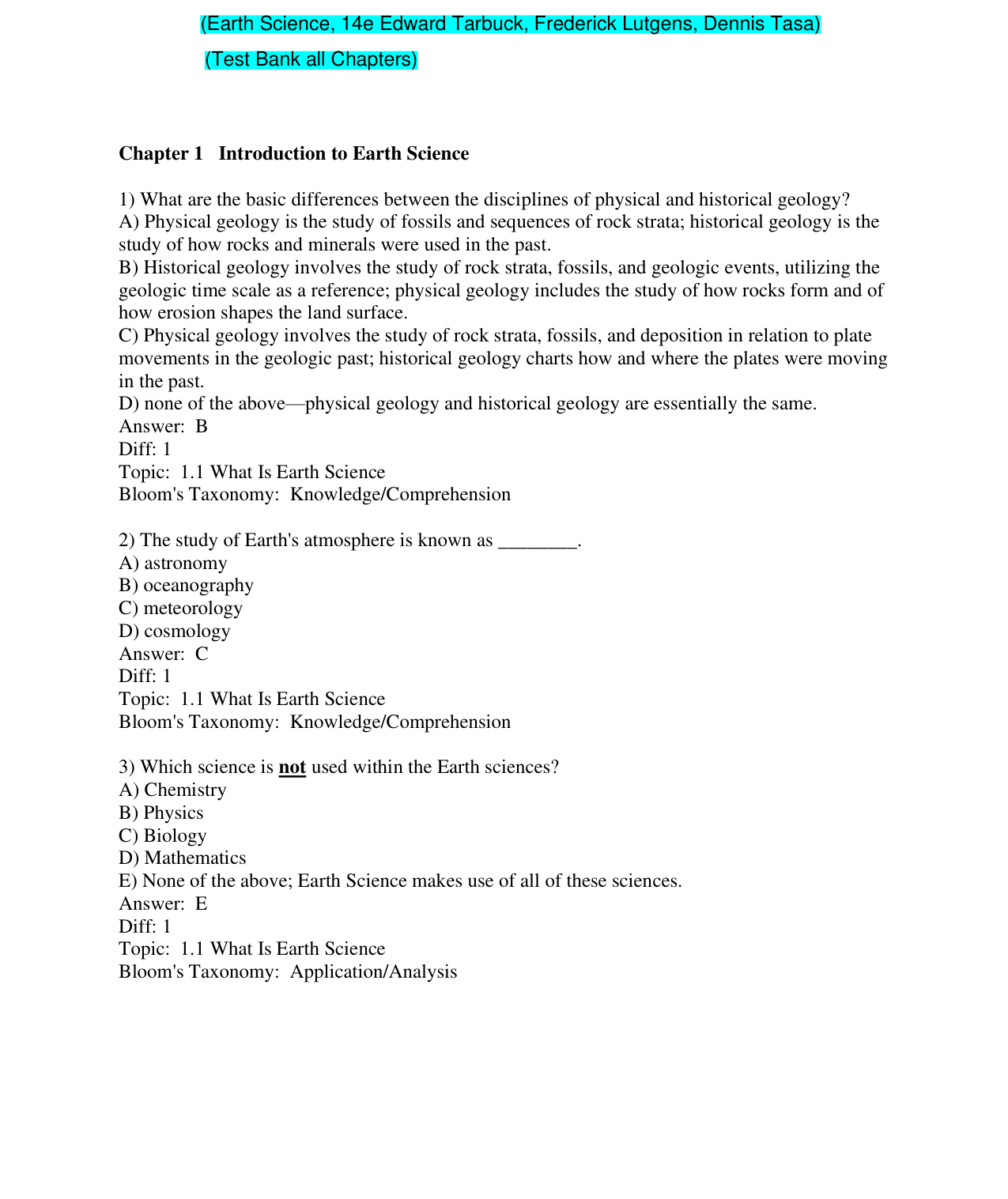
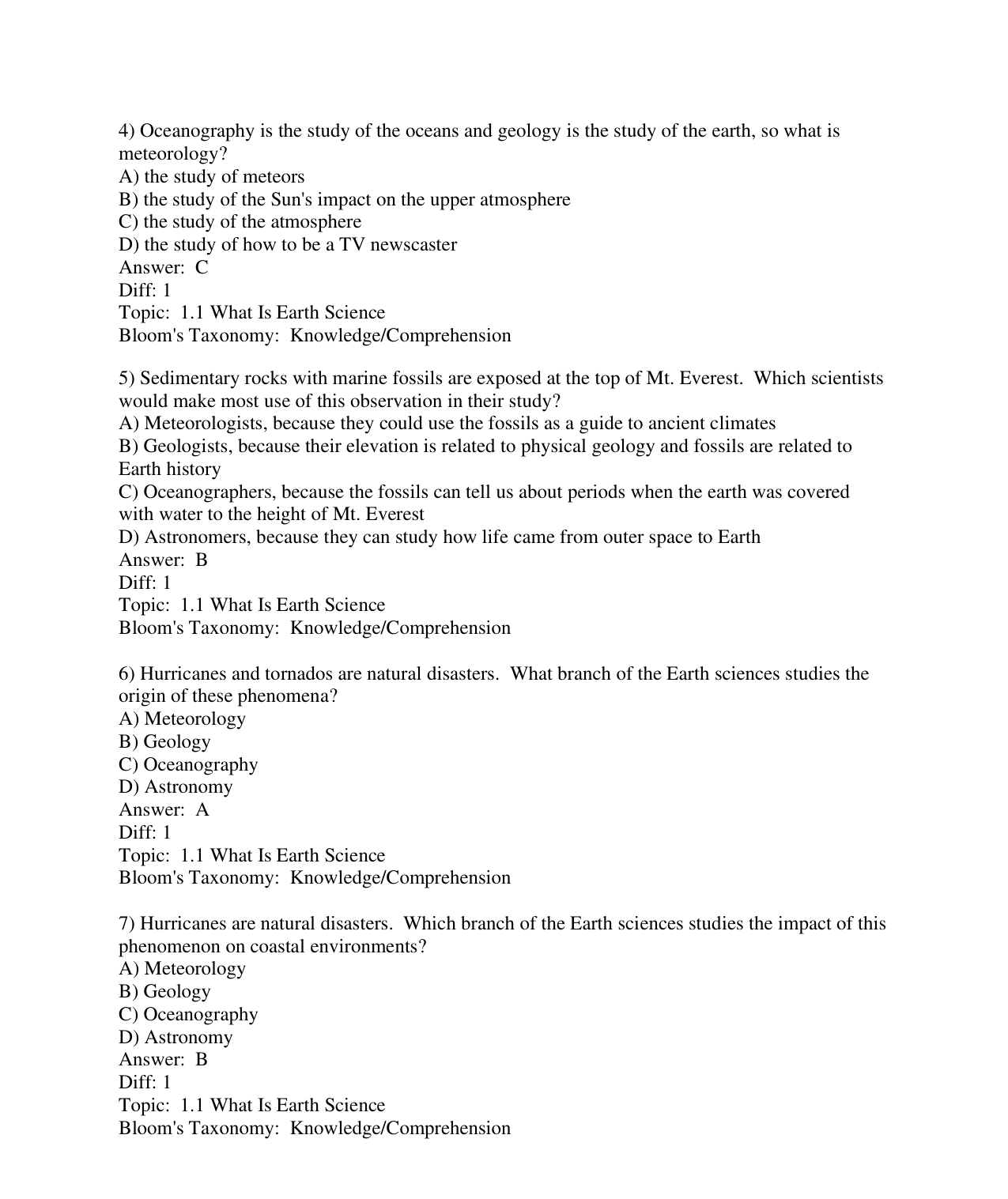
Earth Science 14th Edition Test Bank
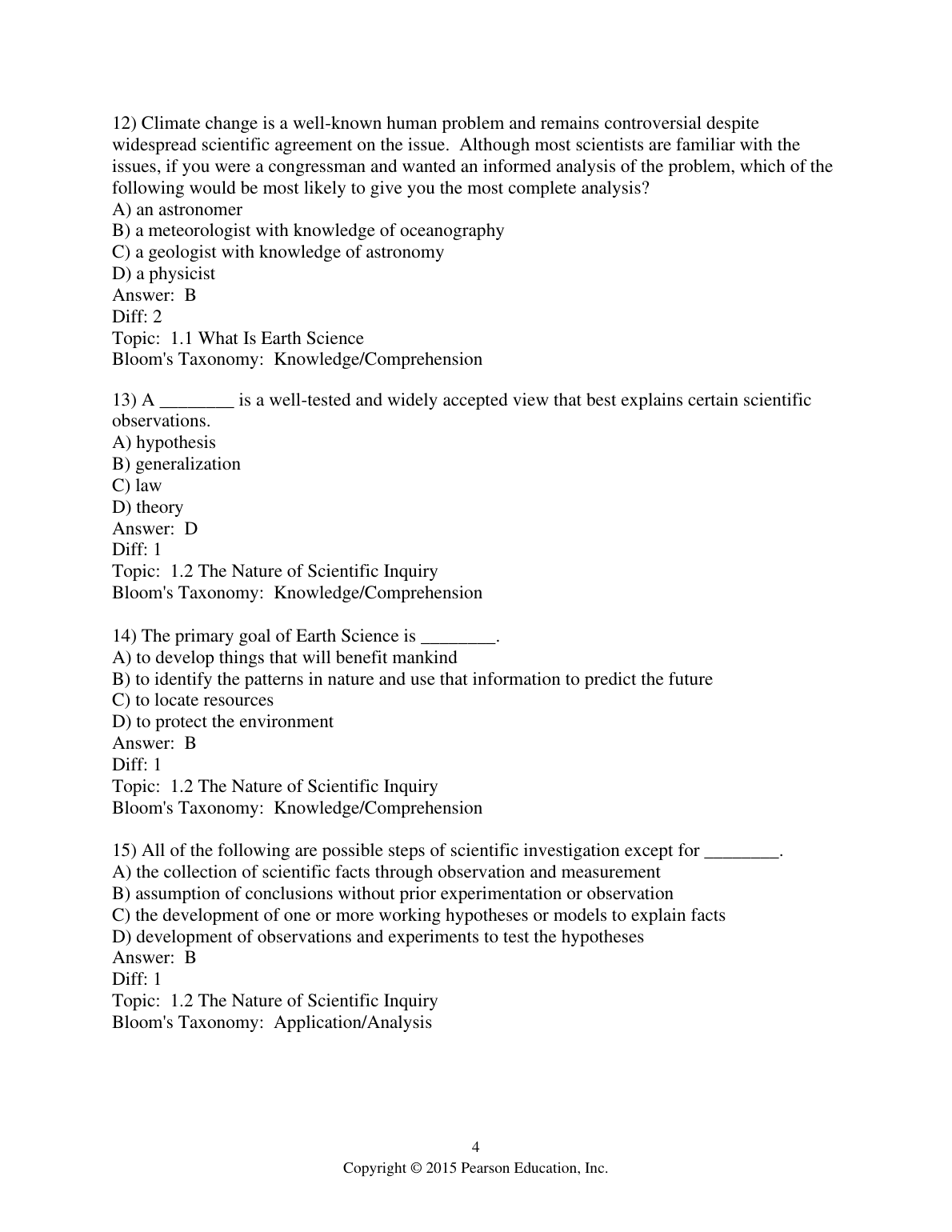
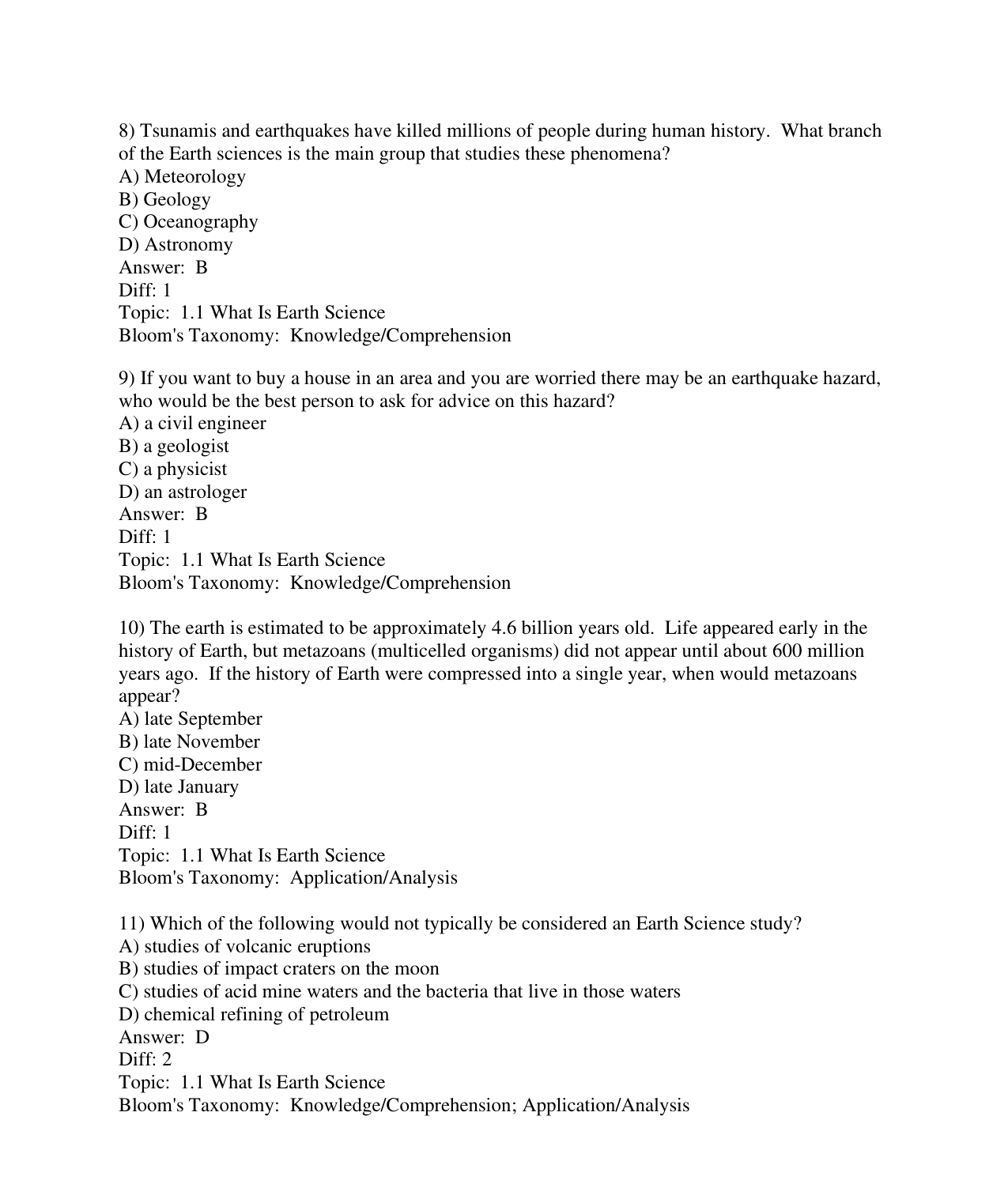
Test Bank for Earth Science (14th Edition) is a comprehensive instructor resource designed to support Earth science education by providing structured assessment materials aligned with the textbook. It helps educators evaluate students' understanding of the physical processes that shape Earth, its atmosphere, oceans, climate, and place within the solar system while reinforcing scientific reasoning and evidence-based inquiry.
Organized by textbook chapter, the test bank covers the major disciplines of Earth science, including geology, meteorology, oceanography, astronomy, and environmental science. It emphasizes the relationships among Earth's systems and the natural processes that influence landscapes, weather, climate, and life on Earth.
The resource addresses core Earth science topics, including:
* Earth's origin, structure, and composition
* Minerals, rocks, and the rock cycle
* Plate tectonics and continental drift
* Earthquakes, volcanoes, and mountain building
* Weathering, erosion, and soil formation
* Rivers, groundwater, glaciers, and surface processes
* Oceanography and marine environments
* Atmospheric structure and composition
* Weather systems and forecasting
* Climate, climate change, and global environmental processes
* Astronomy, the solar system, stars, galaxies, and the universe
* Natural resources and environmental sustainability
The test bank also explores geologic time, fossils, Earth's history, energy resources, geologic hazards, environmental issues, and the interactions among the geosphere, hydrosphere, atmosphere, and biosphere. It emphasizes scientific observation, data interpretation, and the application of Earth science concepts to real-world environmental challenges.
Questions are designed to strengthen analytical thinking by encouraging learners to interpret maps, diagrams, graphs, satellite imagery, weather data, geologic evidence, and scientific models. The resource promotes scientific literacy, quantitative reasoning, and problem-solving through practical Earth science applications.
The test bank typically includes a variety of assessment formats, such as:
* Multiple-choice questions
* True/False questions
* Matching questions
* Diagram and map interpretation questions
* Data analysis and graph interpretation exercises
* Case-based Earth science scenarios
* Critical-thinking and application questions
Additional instructional features commonly include:
* Chapter-by-chapter organization aligned with the textbook
* Answer keys
* Questions ranging from introductory Earth science concepts to more advanced analytical applications
* Practice with geologic interpretation, weather analysis, environmental assessment, and scientific reasoning
* Support for quizzes, examinations, assignments, and classroom assessments
This resource is intended for instructors and students studying Earth science, geology, environmental science, geography, physical science, and related disciplines. It supports learners in developing a strong understanding of Earth's dynamic systems, natural processes, environmental interactions, and scientific investigation.
Geography students, instructors, and exam preparation users.
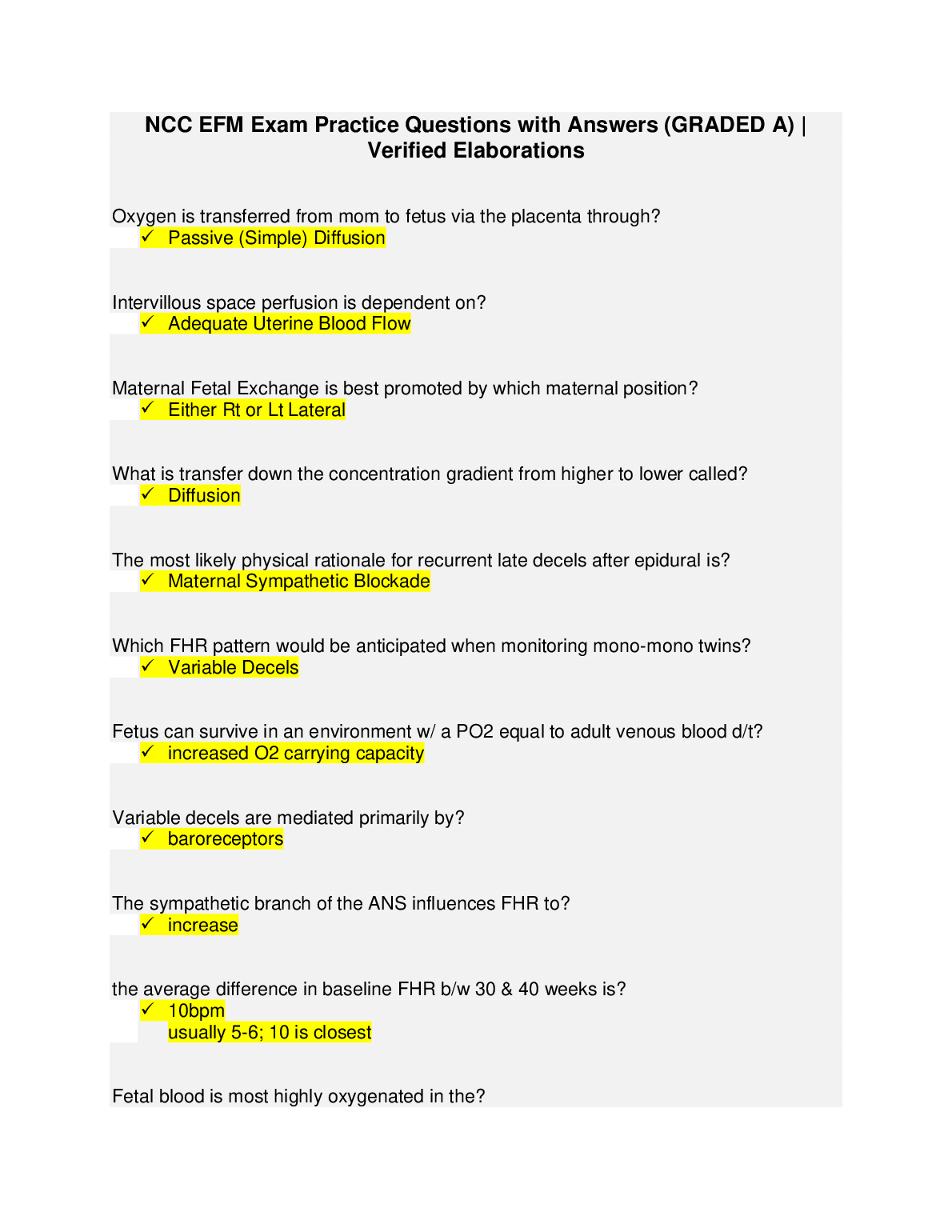
Master Ncc Efm Exams With Graded Practice Questions On Fetal Heart Rate Monitoring, V...
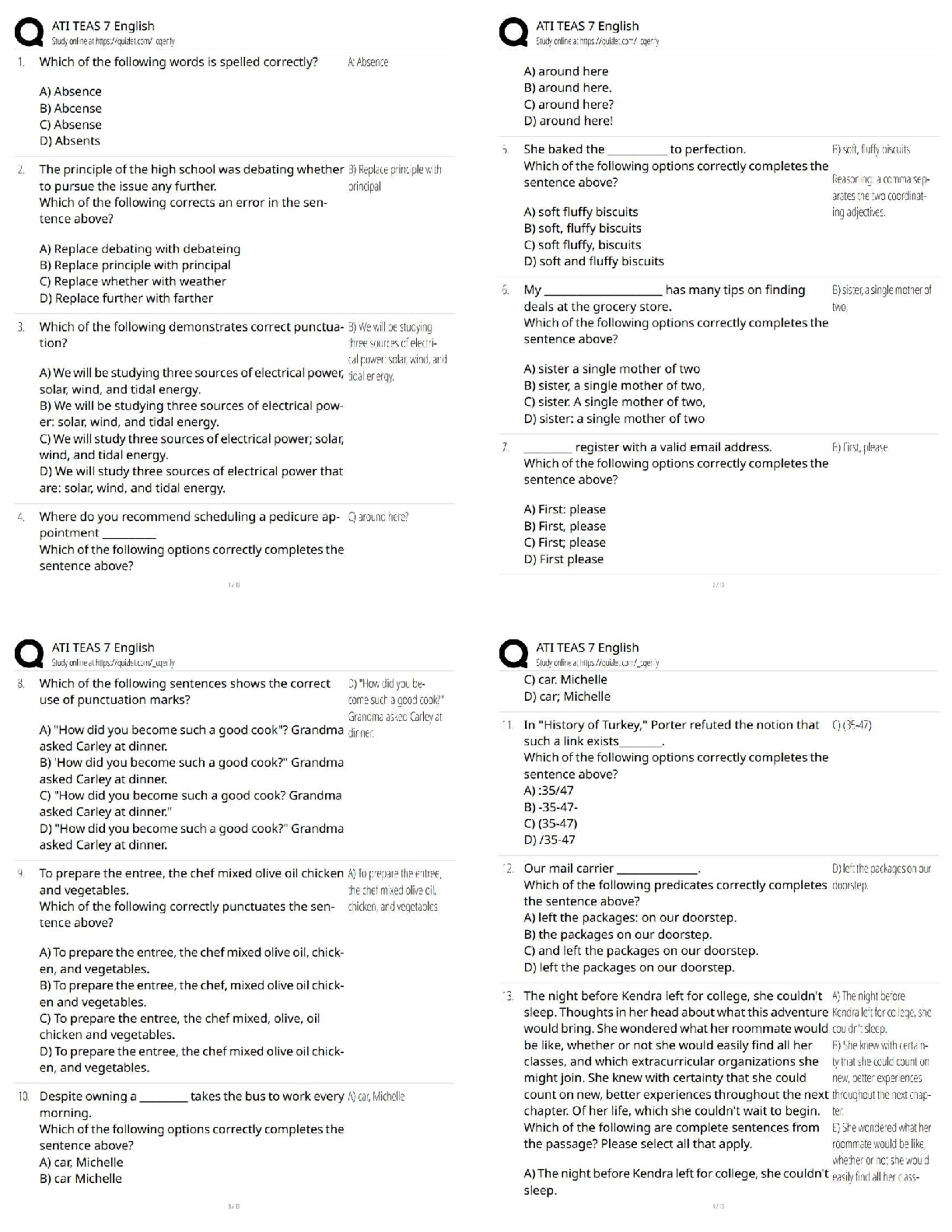
Master The ATI TEAS 7 English Section With This Verified Test Bank. Improve Grammar,...
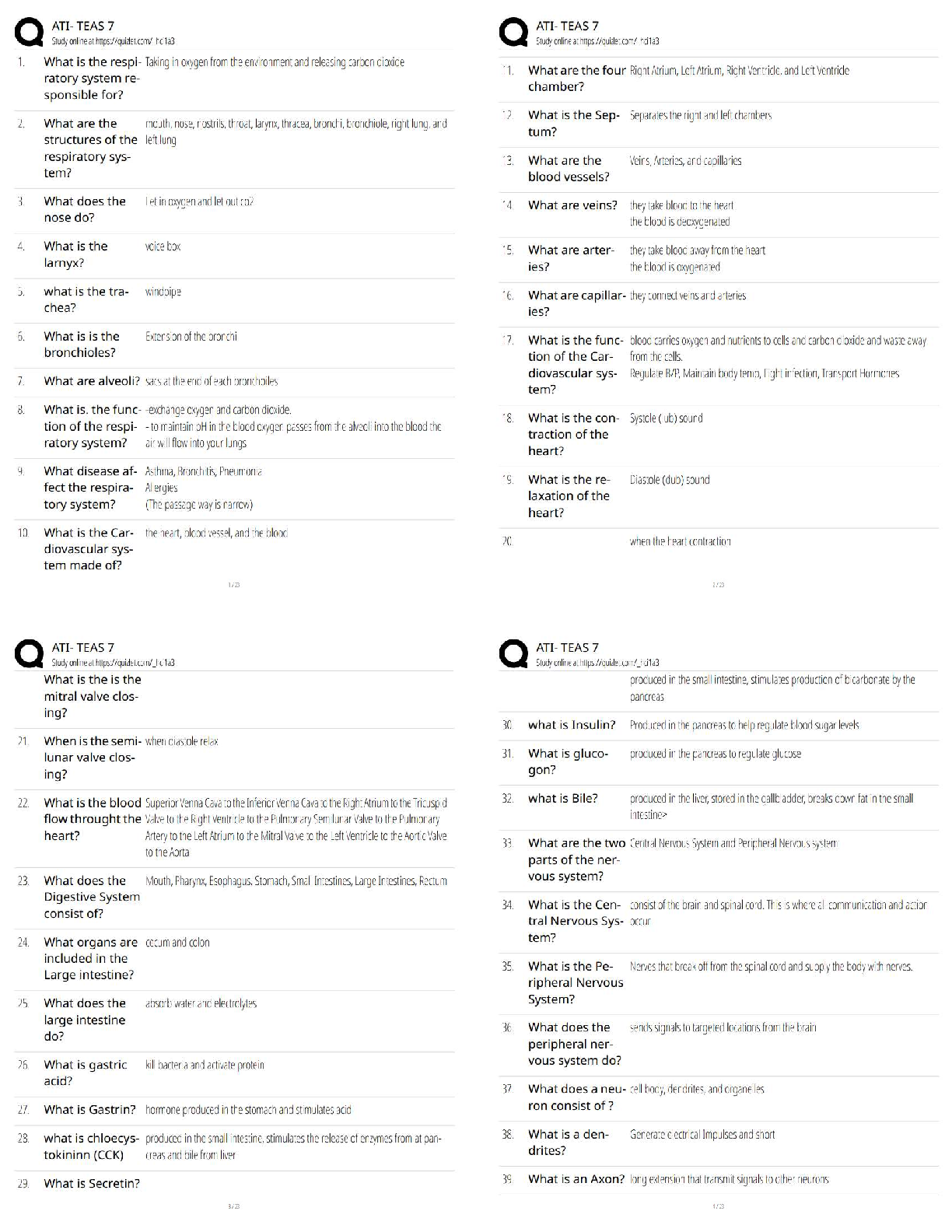
Master ATI TEAS 7 With Our Verified 2026 Test Bank. Covers Respiratory, Cardiovascula...
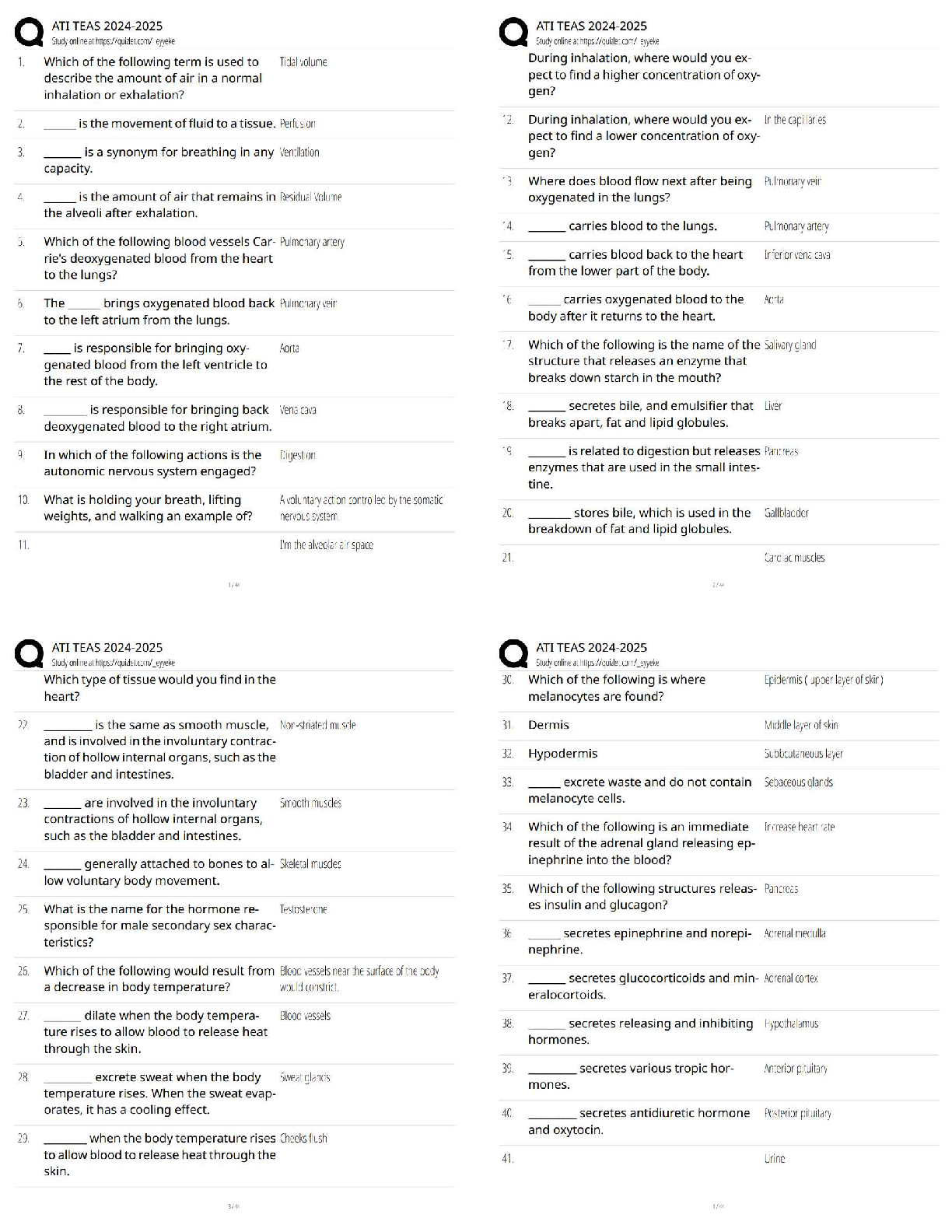
Ace The ATI TEAS 7 Exam On Your First Try. Access Hundreds Of Practice Questions, Det...