
Test bank
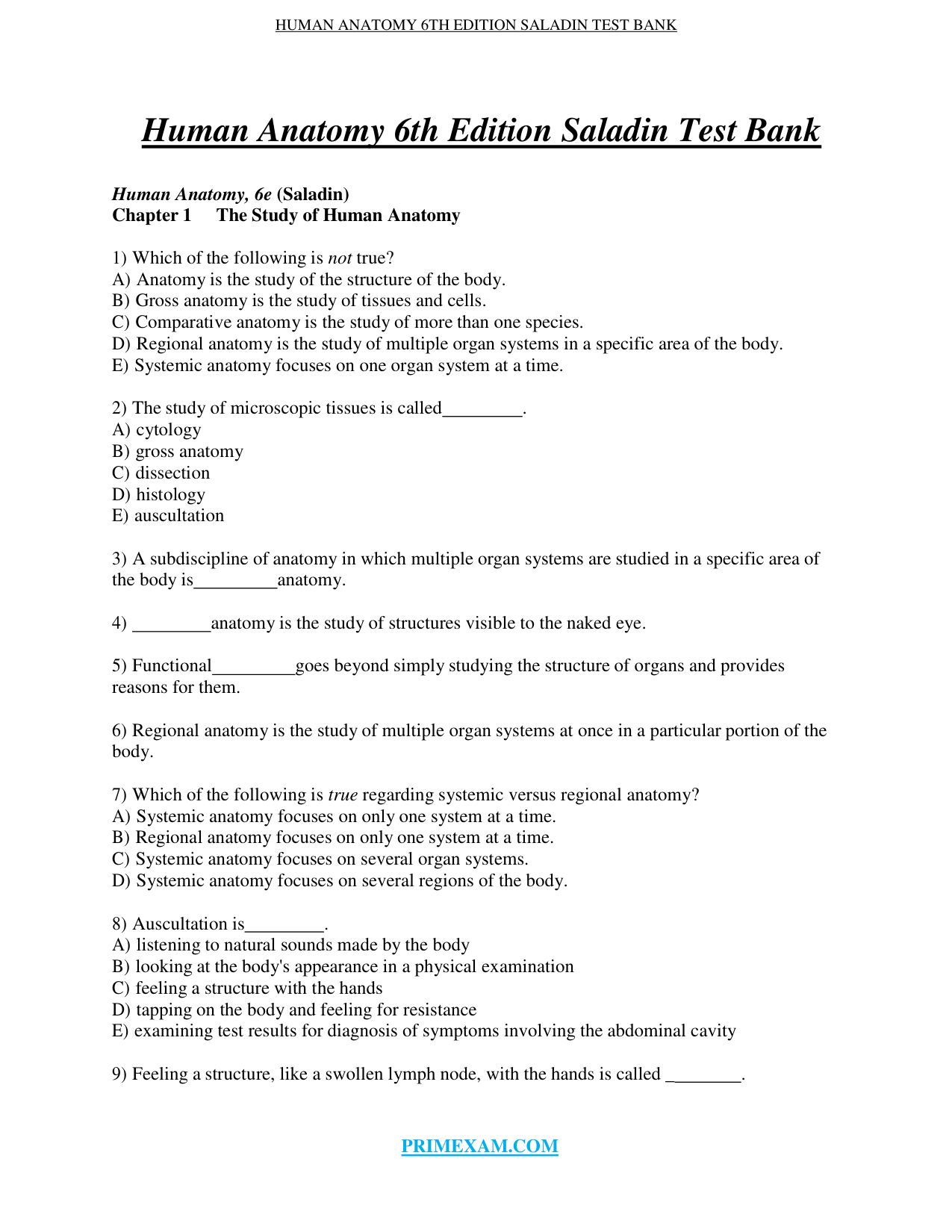
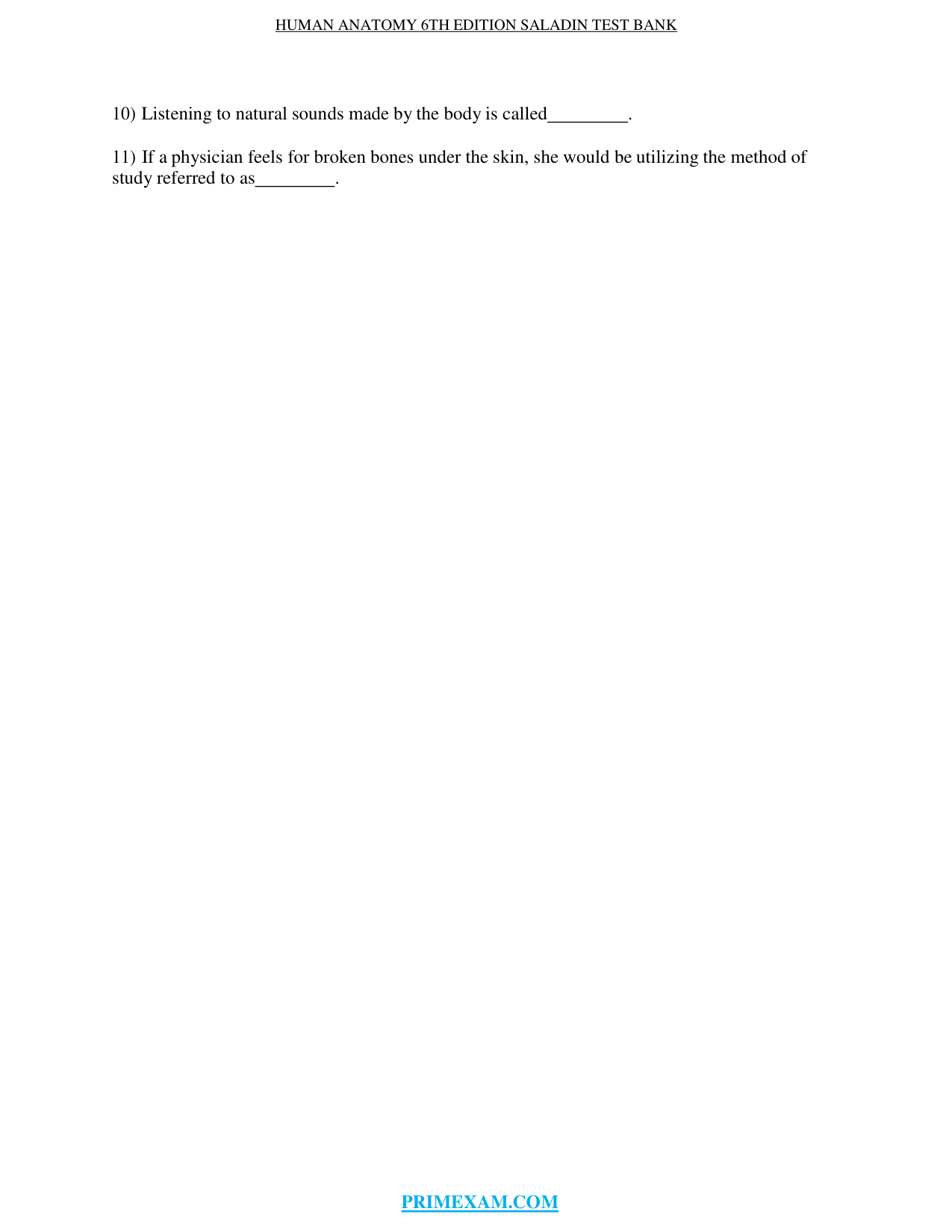
Human Anatomy 6th Edition Test Bank
Test Bank for Human Anatomy (6th Edition) by Kenneth S. Saladin is a comprehensive instructor resource designed to support anatomy education by providing structured assessment materials aligned with the textbook. It helps educators evaluate students' understanding of human anatomical structures, body organization, and the relationships among organ systems while reinforcing foundational knowledge required for healthcare and life science professions.
Organized by textbook chapter, the test bank emphasizes the identification, organization, and function of anatomical structures using a regional and systemic approach. It promotes critical thinking by encouraging learners to apply anatomical knowledge to clinical, laboratory, and healthcare-related situations.
The resource covers major anatomy topics, including:
* Introduction to human anatomy and anatomical terminology
* Anatomical position, planes, and directional terms
* Levels of structural organization and body cavities
* Histology and tissue organization
* Integumentary system
* Skeletal system and bone anatomy
* Joints and articulations
* Muscular system and muscle anatomy
* Nervous system structure and organization
* Brain, spinal cord, and peripheral nerves
* Special senses and sensory organs
* Endocrine glands and anatomical relationships
* Cardiovascular anatomy and blood vessels
* Lymphatic and immune system anatomy
* Respiratory system anatomy
* Digestive system anatomy
* Urinary system anatomy
* Male reproductive anatomy
* Female reproductive anatomy
* Embryology and developmental anatomy (where applicable)
* Surface anatomy and clinical anatomical correlations
The test bank emphasizes anatomical identification and application by requiring learners to recognize structures, understand spatial relationships, interpret anatomical diagrams, and apply anatomical concepts to clinical practice. Questions reinforce understanding of body organization and prepare students for laboratory identification, practical examinations, and healthcare coursework.
The resource typically includes a variety of assessment formats, such as:
* Multiple-choice questions
* True/False questions
* Matching questions
* Anatomical identification questions
* Labeling and image-based questions (where applicable)
* Clinical application questions
* Critical-thinking and analysis exercises
Additional instructional features commonly include:
* Chapter-by-chapter organization aligned with the textbook
* Answer keys for assessment and review
* Questions ranging from foundational anatomy concepts to advanced clinical applications
* Practice with anatomical terminology, structural identification, and organ system relationships
* Support for quizzes, examinations, laboratory assessments, classroom instruction, and practical review
This resource is intended for students and educators in anatomy, nursing, medicine, physician assistant studies, physical therapy, occupational therapy, athletic training, exercise science, biology, and other health and life science programs. It supports learners in developing competency in anatomical terminology, structural identification, spatial relationships, and clinical anatomy while preparing for laboratory practicals, academic examinations, and professional healthcare education.

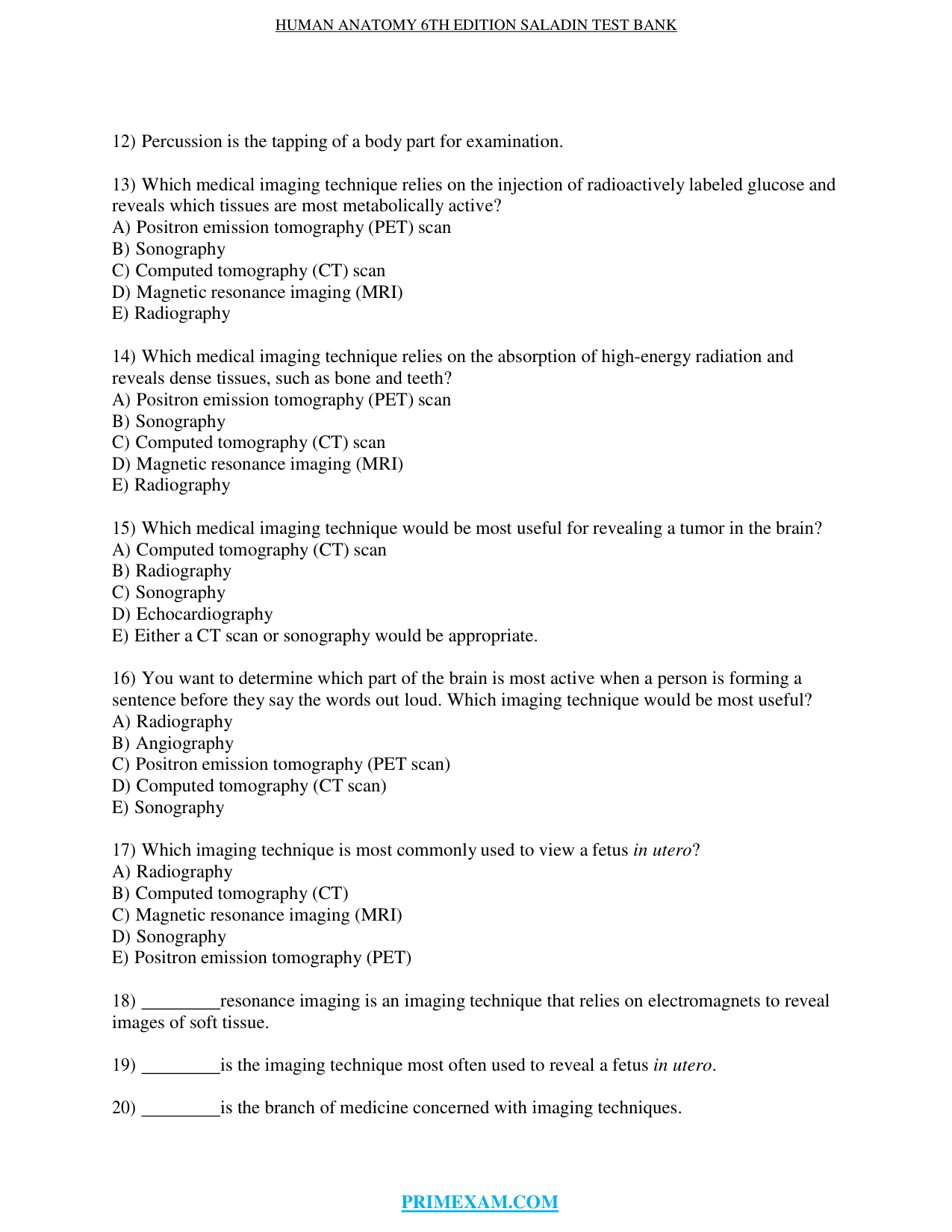
Nursing students, instructors, and exam preparation users.
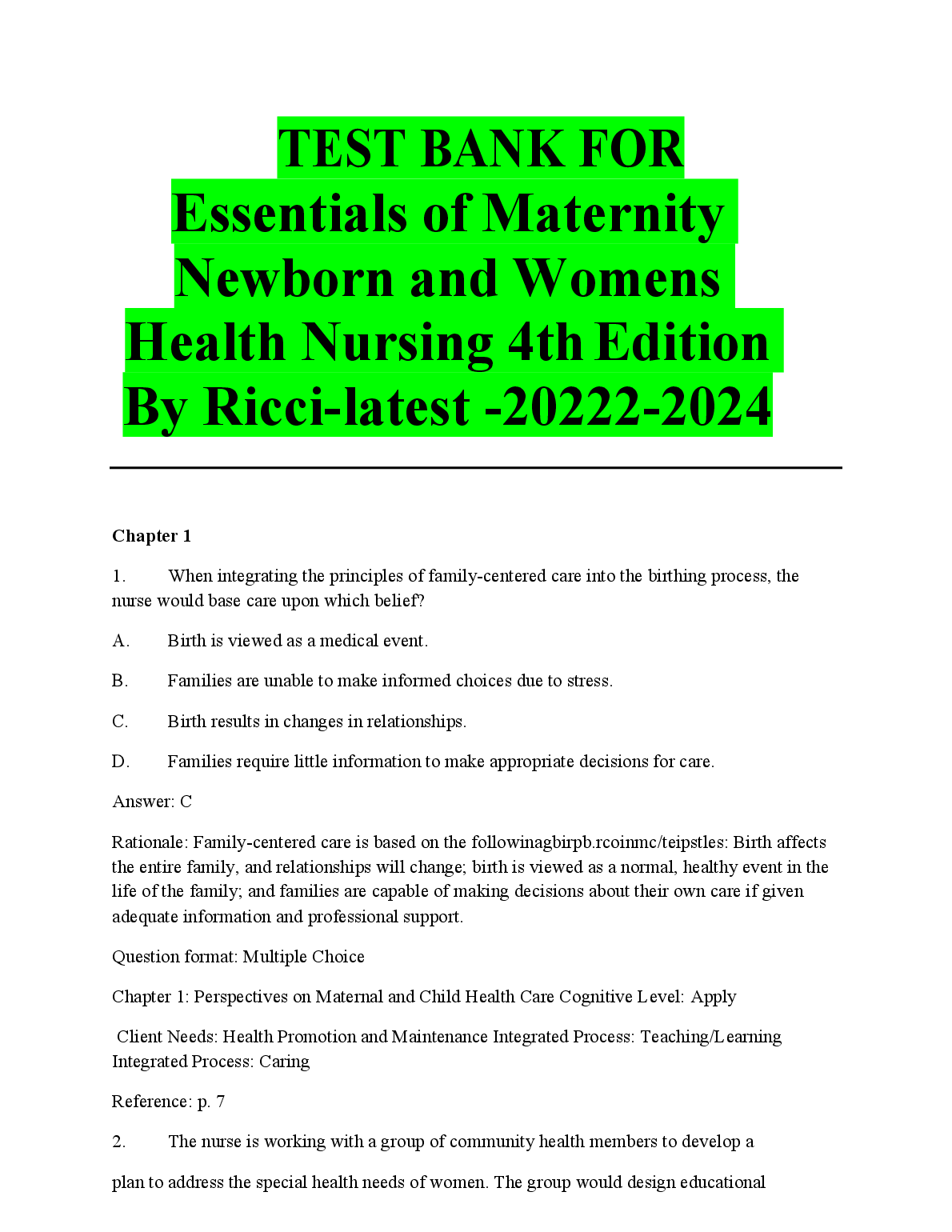
Comprehensive Test Bank For Essentials Of Maternity Newborn And Women's Health Nursin...
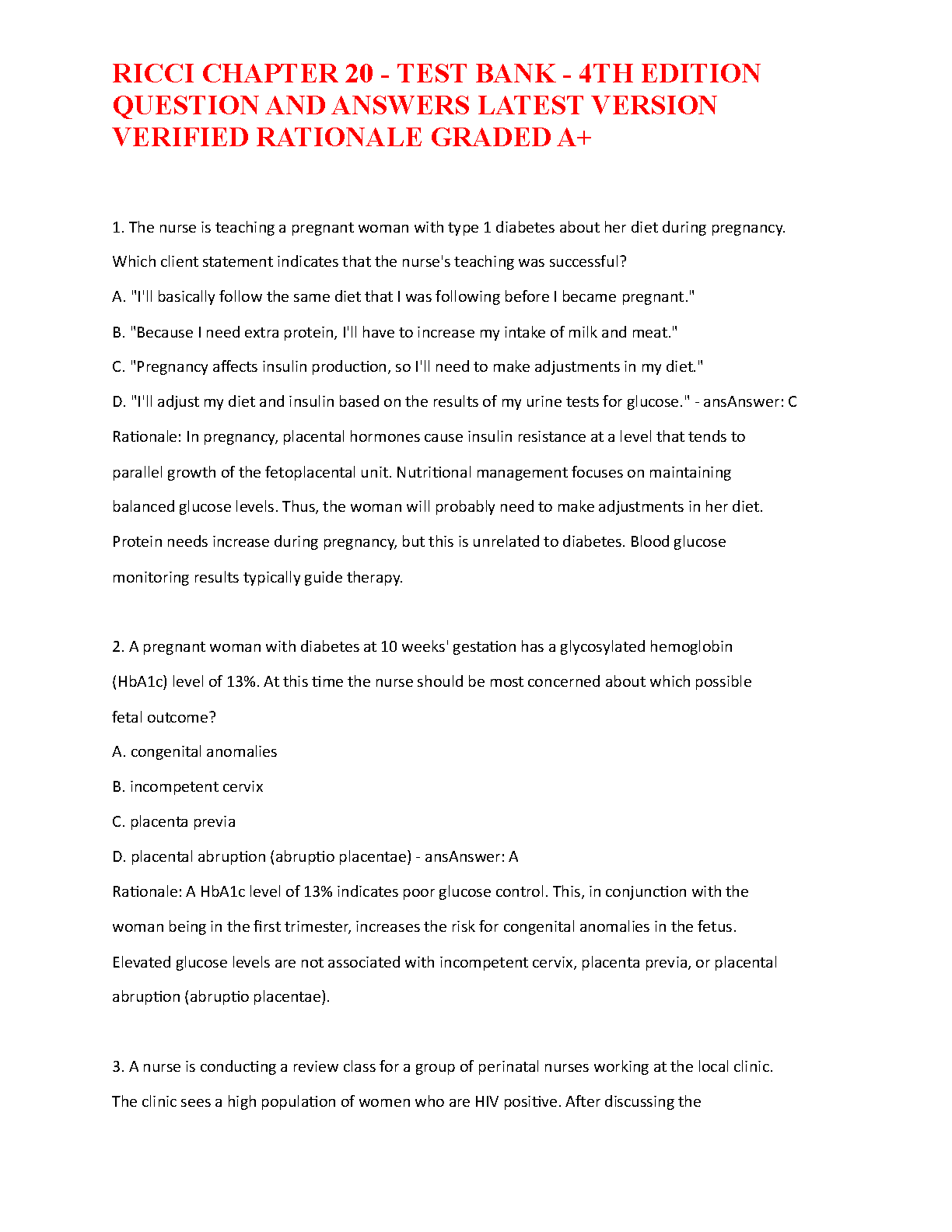
Verified Ricci Chapter 20 Test Bank Answers With Rationales. Ideal For Nursing Exam P...
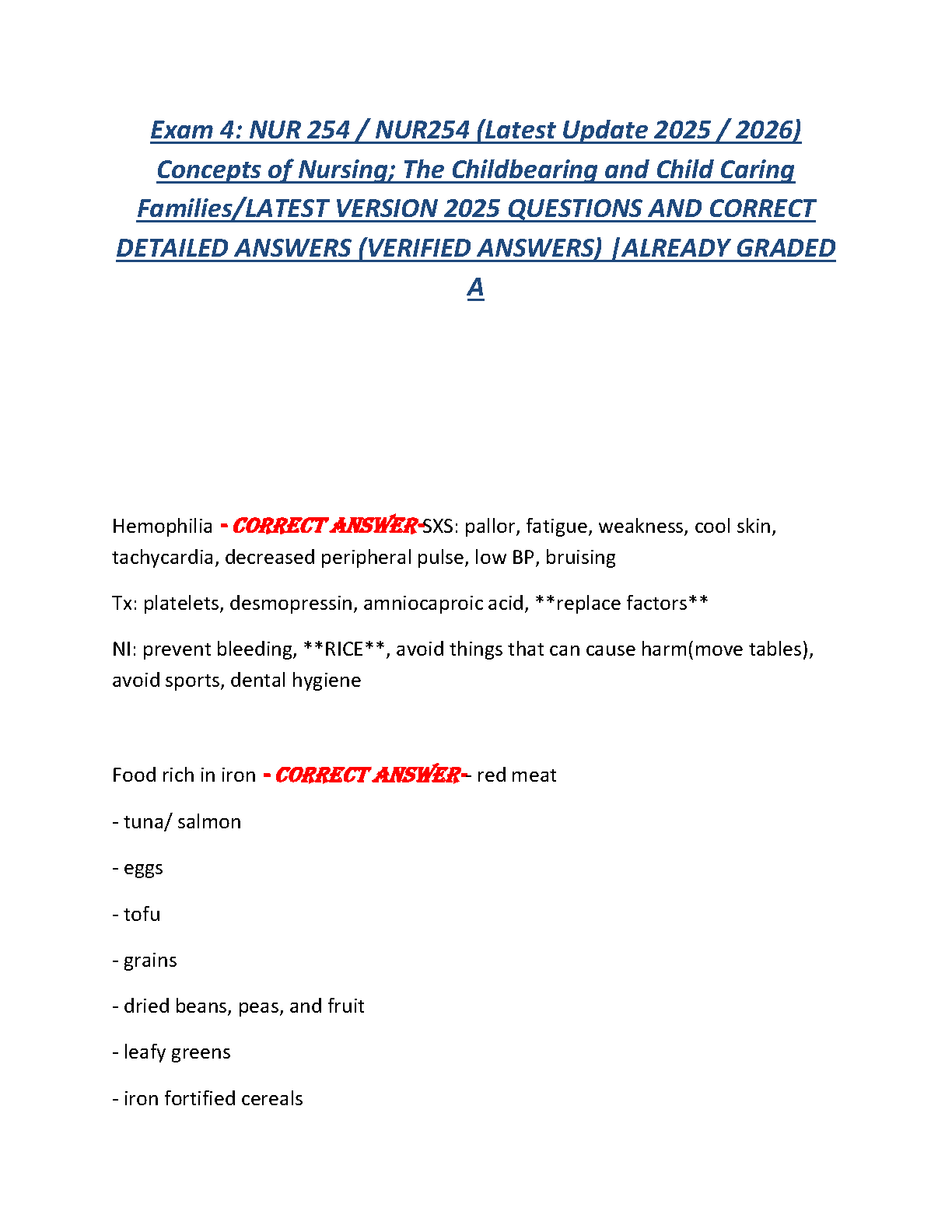
Verified Nur 254 Exam 4 Questions And Answers For Concepts Of Nursing, Childbearing F...
Access Official Test Bank Questions And Rationales For Maternal And Child Health Nurs...