
PFT Terms & Spirometry Interpretation Nursing Study Guide

Study guide

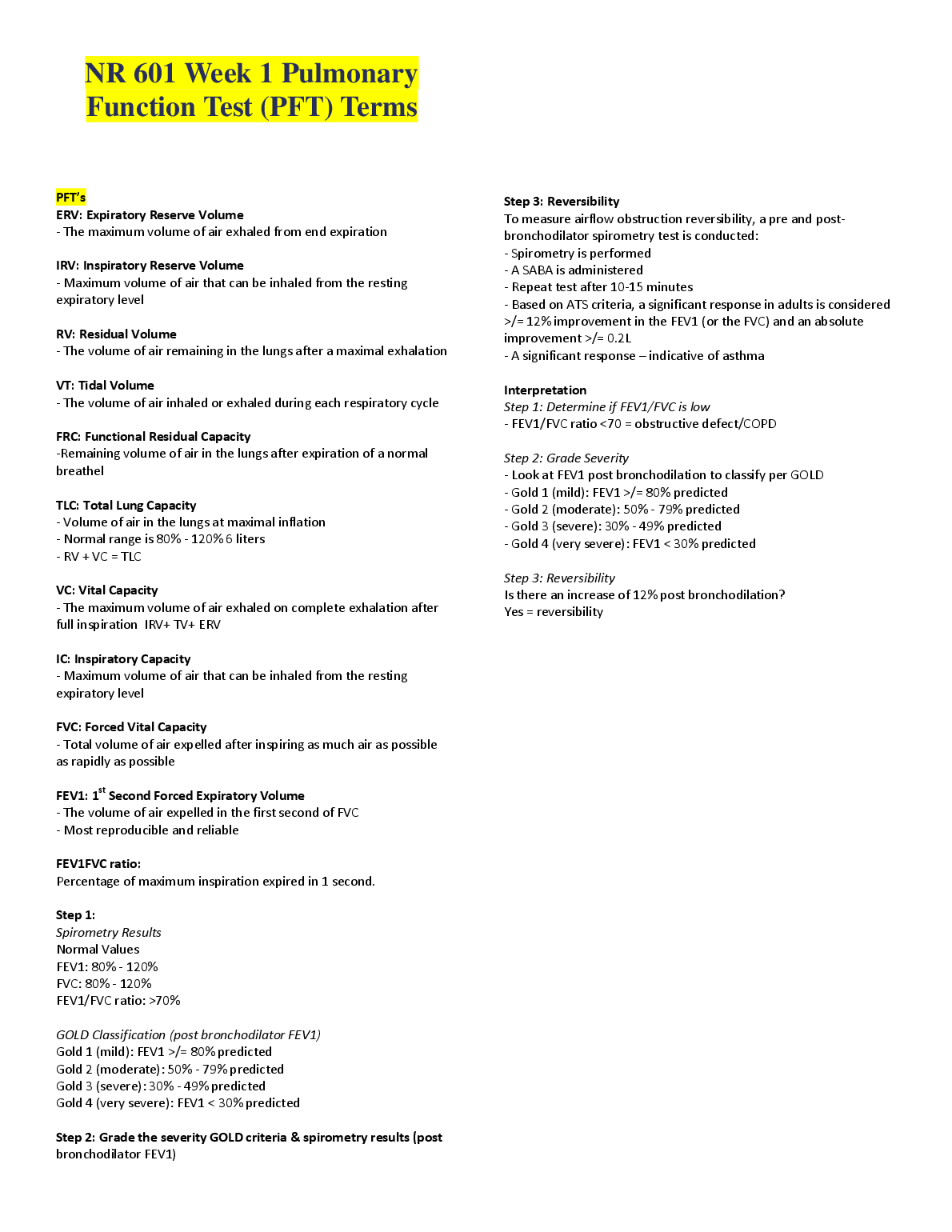
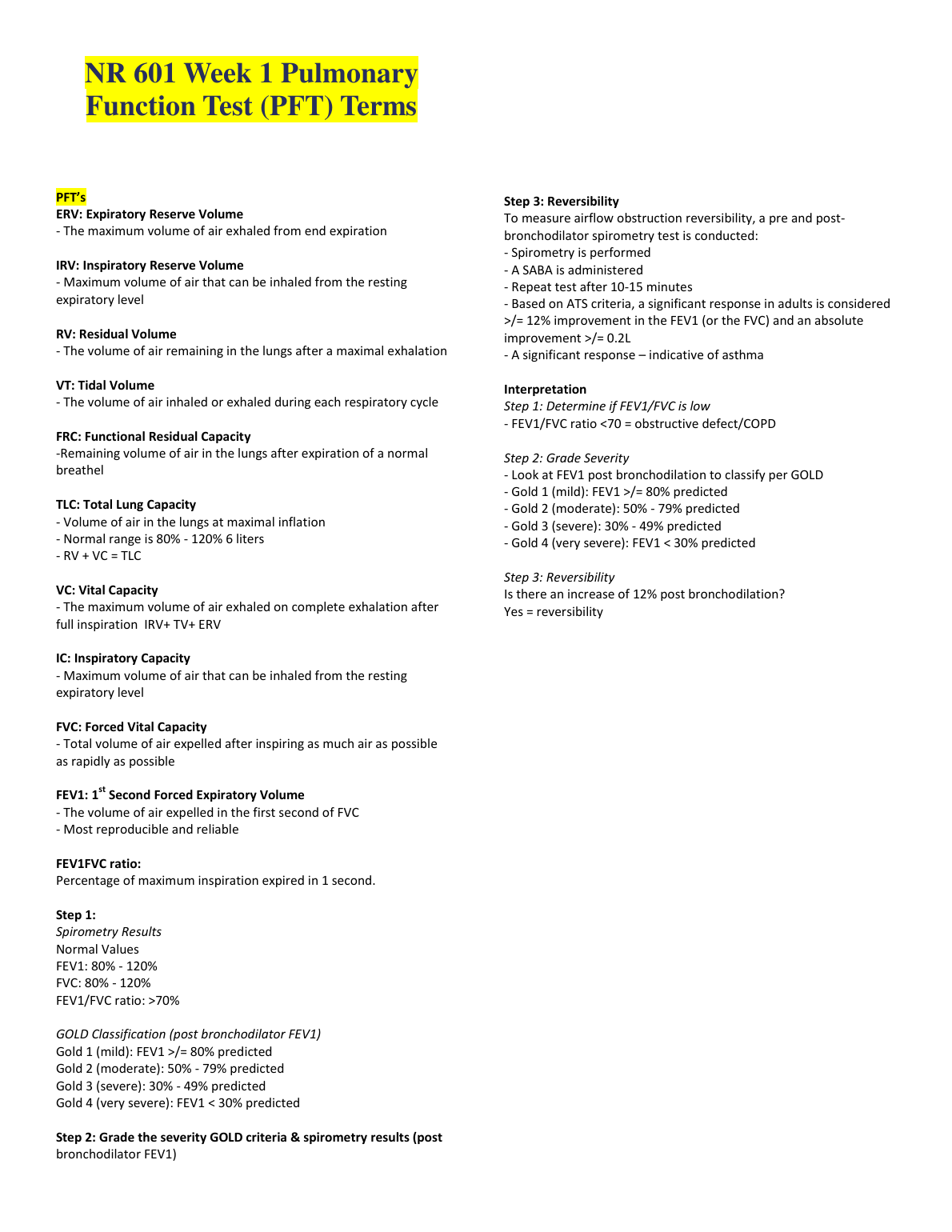
NR 601 Week 1 Pulmonary Function Test Pft Terms, Spirometry Interpretation & Gold Criteria Study Guide 2023/24


Master NR 601 Pulmonary Function Tests. Learn Fev1/fvc Ratios, Gold Severity Grading And Reversibility Criteria For Nursing Exams.
Description

Build a robust foundation in respiratory assessment by mastering the essential terminology of Pulmonary Function Tests (PFTs) and spirometry analysis. This resource provides clear definitions for critical lung volumes such as Residual Volume, Tidal Volume, and Functional Residual Capacity to ensure precise clinical understanding. It guides learners through the systematic interpretation of spirometry results, including normal value ranges and the application of GOLD criteria for classifying COPD severity post-bronchodilation. By focusing on specific reversibility thresholds defined by ATS criteria, this material equips students with the analytical skills necessary to distinguish between obstructive defects and other respiratory conditions effectively.
PDF Sample
1 / 1
PFT Terms & Spirometry Interpretation Nursing Study Guide IMG-1
Who is this Document for ?

This document is designed for nursing students enrolled in NR 601 courses who require a concise reference for respiratory assessment concepts. It serves as an effective revision tool for candidates preparing for midterms or finals that cover pulmonary function testing and spirometry interpretation. Tutors and educators may also utilise this structured summary to support lessons on lung volume calculations and the diagnostic criteria for chronic obstructive pulmonary disease.
What you will learn ?
Define key pulmonary volumes including Expiratory Reserve Volume (ERV), Inspiratory Reserve Capacity (IRV), Residual Volume (RV) and Tidal Volume (VT) with their precise clinical definitions.
Calculate Total Lung Capacity (TLC) by understanding the additive relationship between Vital Capacity (VC) and Residual Volume, noting normal ranges of 80% to 120% of predicted values.
Interpret spirometry results by identifying obstructive defects through a FEV1/FVC ratio below 70%, distinguishing this from restrictive patterns in clinical contexts.
Classify the severity of chronic obstructive pulmonary disease using GOLD criteria post-bronchodilation, ranging from mild (Grade 1) to very severe (Grade 4).
Apply ATS standards for reversibility testing by recognising a significant response as an improvement of at least 12% and 0.2L in FEV1 or FVC after SABA administration.
Differentiate between asthma indications and stable COPD based on the presence of airflow obstruction reversibility following bronchodilator therapy.
You may also be interested in :
Recommendations for you
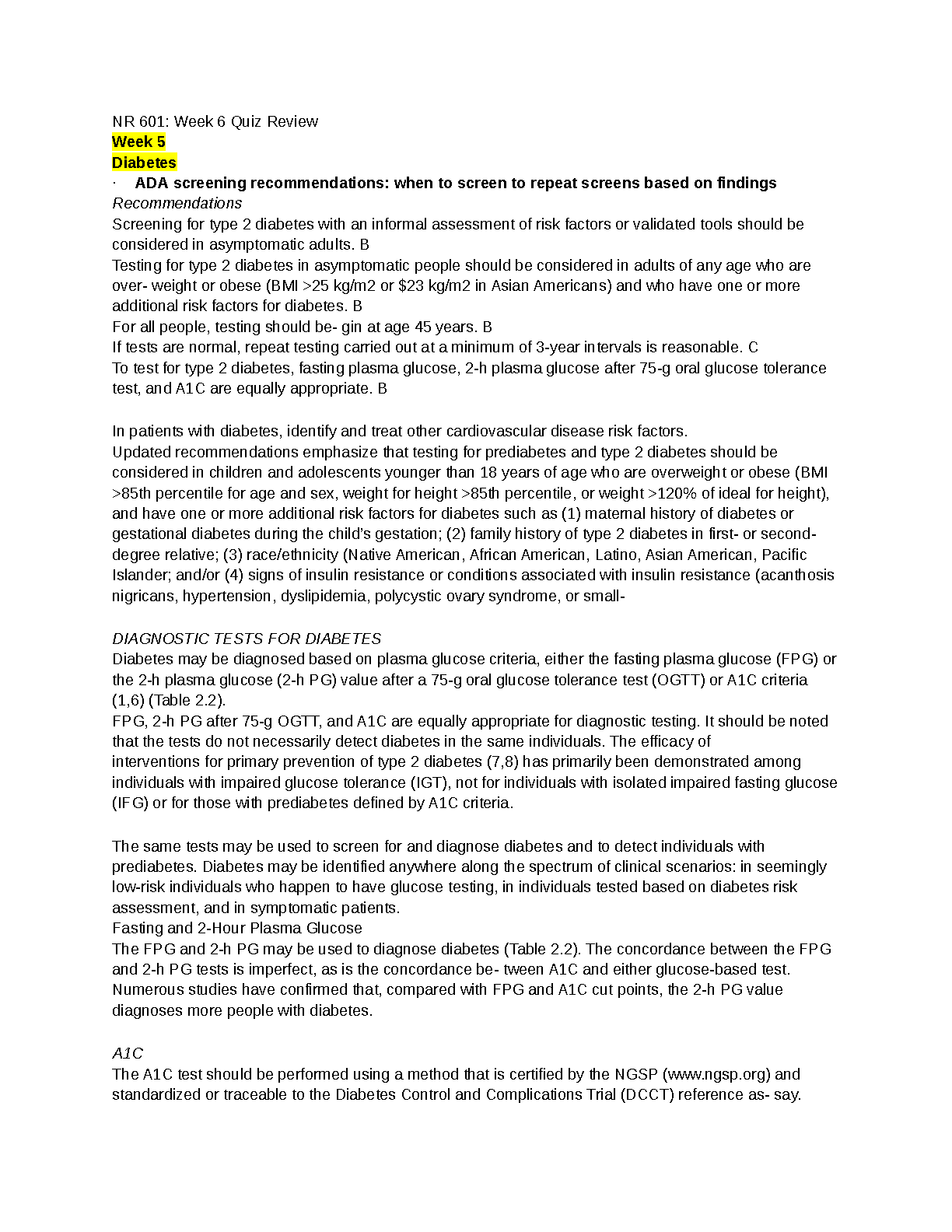
NR 601 Week 6 Quiz Review: Diabetes Screening, ADA Recommendations & Diagnostic Tests Study Guide
NR 601 Week 6 Quiz Review: Diabetes Screening, Ada Recommend...

Master NR 601 Diabetes Quiz Content With Detailed Coverage Of Ada Screening Recommend...
$16
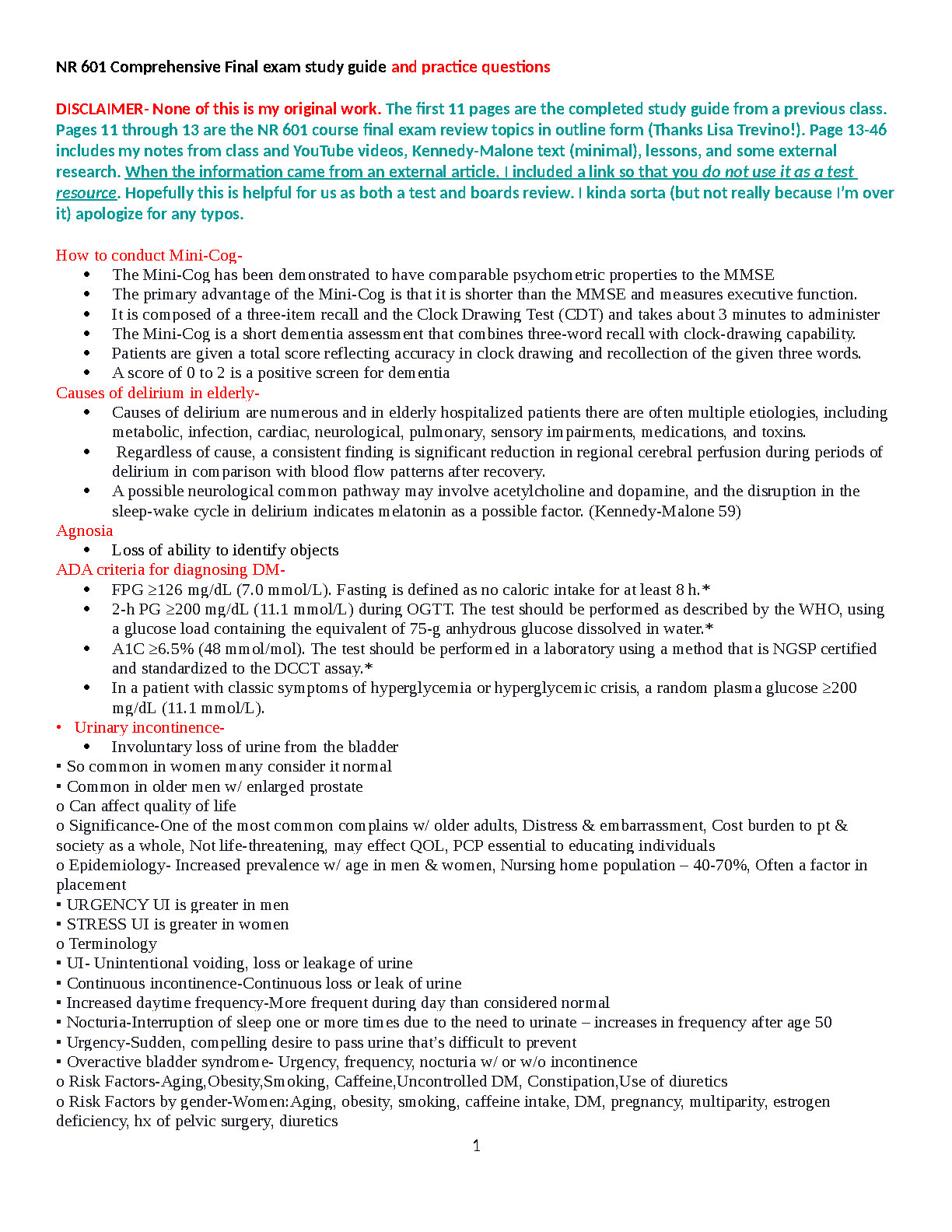
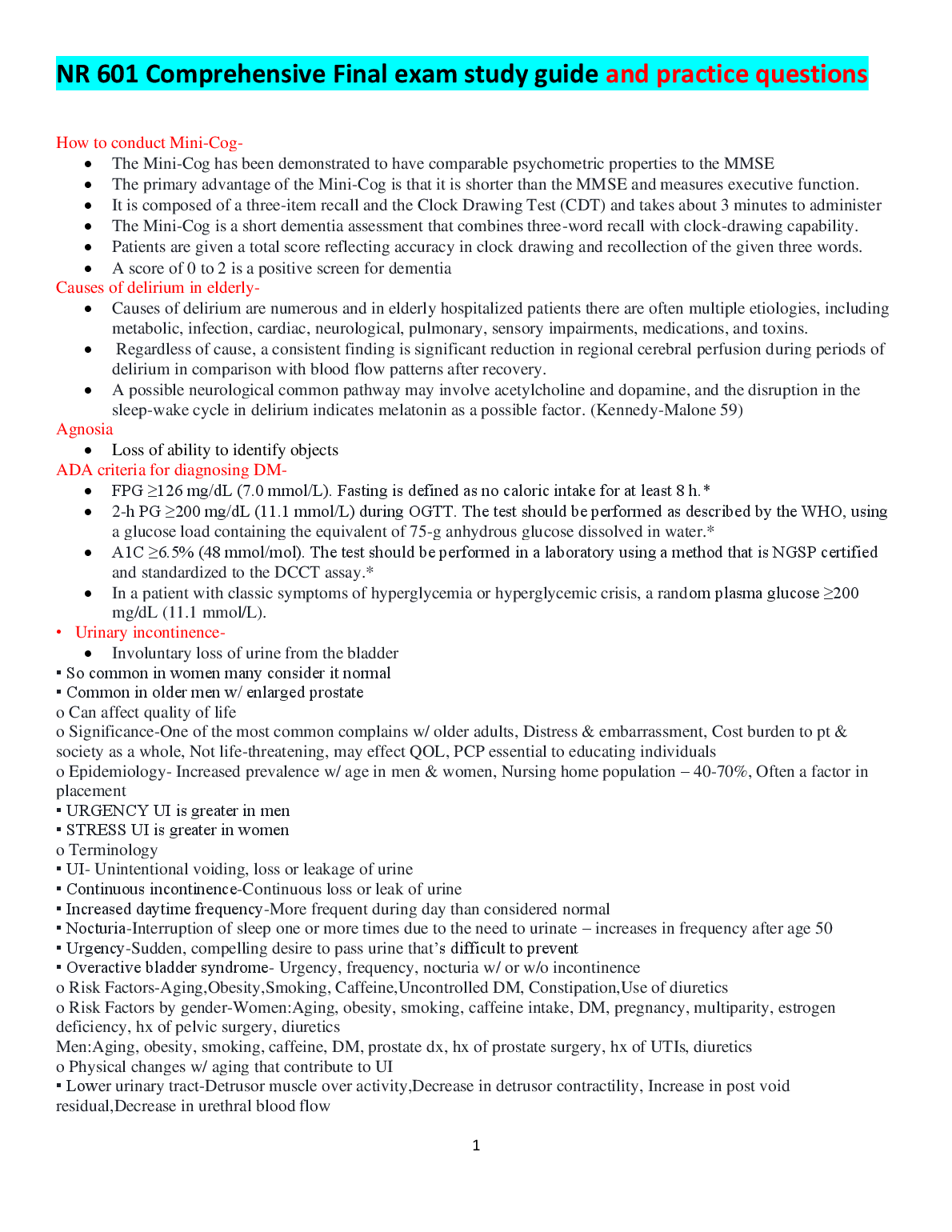
NR 601 Comprehensive Final Exam Study Guide and Practice Questions with Solutions A+ Rated
NR 601 Comprehensive Final Exam Study Guide And Practice Que...

Master NR 601 Nursing Concepts Including Mini-cog, Delirium Causes, DM Criteria, And...
$16
NR 601 Comprehensive Final Exam Study Guide: Geriatric Nursing Practice and Clinical Assessments
NR 601 Comprehensive Final Exam Study Guide: Geriatric Nursi...

Master NR 601 Final Exam Concepts With Verified Study Guides Covering Mini-cog, Delir...
$16
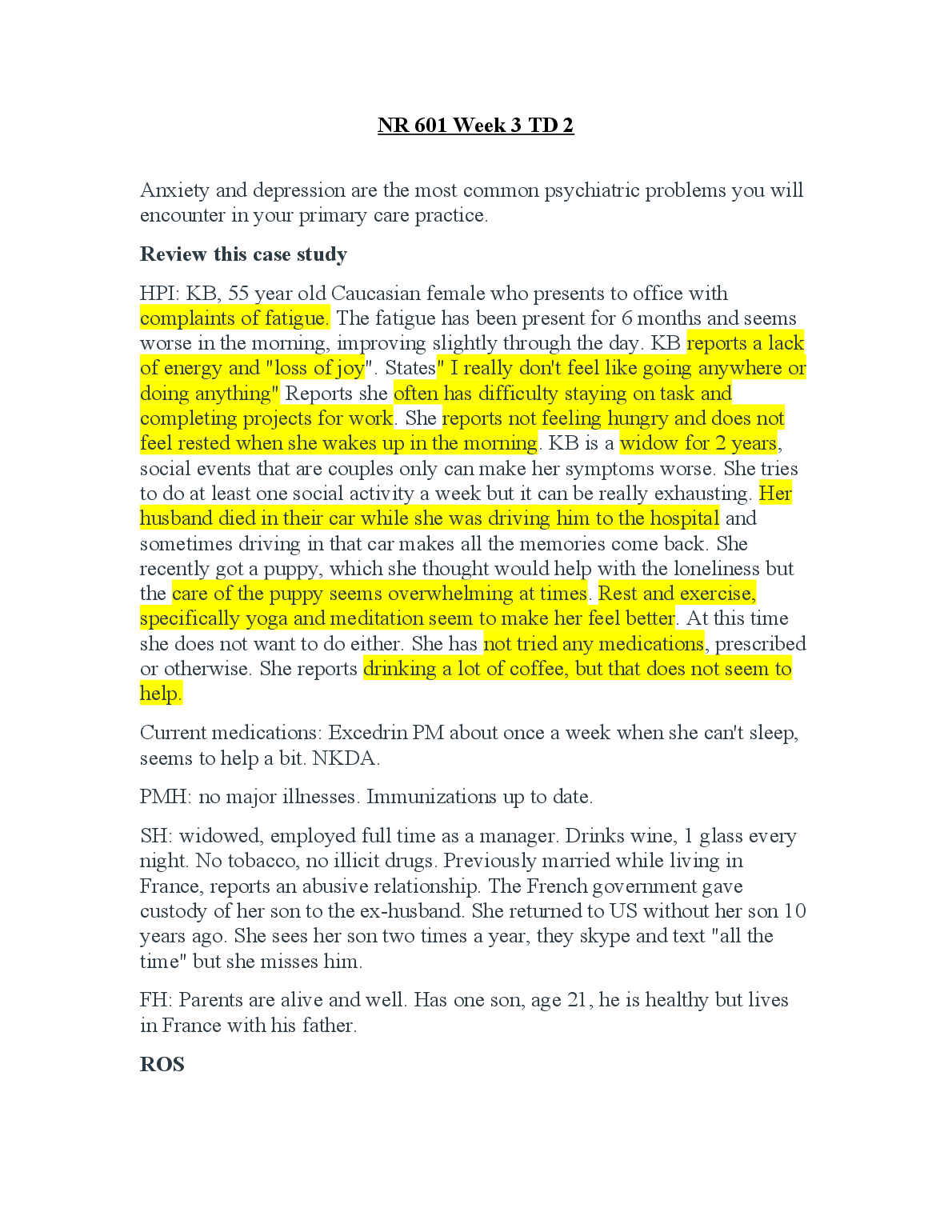
NR 601 Week 3 TD 2 Study Guide for 2023/2024: Mental Health Nursing Case Analysis and Assessment Strategies
NR 601 Week 3 Td 2 Study Guide For 2023/2024: Mental Health...

Master NR 601 Mental Health Nursing Concepts With This Week 3 Study Guide, Featuring...

$16